i learned about randy martin’s ‘an empire of indifference’ from a haymarket interview with the brilliant Ruthie Wilson Gilmore. thx for posting Léopold.
i find martin’s comparison of financial risk management with the war on terror/present day american imperialism to be incredibly useful. it helps us articulate the contours of permanent war as everyday business. the binary of those who ‘take risks’ in order to make profit and those who cannot do so and are therefore ‘at risk’ is also enlightening. perhaps it can explain the divide between ‘citizens’ (risk managers) and ‘others’ (unmanageable/at risk) which is something i’ve been struggling with for a while. also love the parallels between domestic policy (wars against crime, AIDS, drugs and poverty) and american foreign policy/militarism. so important. here is more.
Jesse Goldstein: What distinguishes financialization from other forms of accumulation is the focus upon wealth extraction through risk management. Hence, the “imperial unconscious” has shifted its focus from victory – defined in terms of sovereign control or development – to an active indifference, or the management of permanent war.
[…] the Federal Reserve initiated a period of monetarist policies centrally concerned with preempting inflation through the careful management of interest rates. This emphasis on the risk of potential inflation finds its correlate in financialized warfare, where the risk of potential terrorist acts could – like inflation – disrupt the regular operations of business and the free flows of capital. Hence, the war on terror represents a shift away from the cold war’s focus on deterrence, to a newly asserted focus on preemption as a strategy of risk management. There is a shift from enemies with weapons of mass destruction to enemies that ‘seek’ them, enemies that are potential, but not-yet, risks. American war (by which Martin means US militarism) manages the racialized others of its terror war as if they were all potential terrorists.
The strength of Martin’s approach is to always trace a topography of capital where apparently disparate social relations or institutional forms can be seen to display parallel logics. And so for instance, securitization – now infamous as the central pillar of the subprime crisis – need not be left to the financial pages, but can be seen more broadly as the de-localization of risk through its conglomeration and then abstract segmentation and management. Similarly, the war on terror links its disparate targets through their imperial securitization – in other words, the war homogenizes its enemy as terror, and then manages this de-localized risk through ‘leveraged’ interventions.
The securitized state, both domestically and militarily, is Martin’s attempt to financialize Foucault’s concept of biopolitical rule, the injunction ‘to make live and let die.’ He draws connections between the current terror war and the domestic policy wars against crime, AIDS, drugs or poverty of the ‘80s and ‘90s. These are not, as with Lyndon Johnson’s war against poverty, efforts to rehabilitate, but are instead efforts to police, punish and criminalize. The culture of poverty meets its correlate with a culture of terrorism, and the key binarization underlying this financialized logic is a division between those who are able to avail themselves of risk as opportunity, and those who are at risk; the self-managed and the unmanageable. More here.
i wrote this in the middle of our move, because it means that much to me. a new exhibit based on the work of radical bengali feminist rokeya hossain is now at the Memorial Art Gallery of the University of Rochester (until june of this year). that’s something to rejoice, except that hossain’s muslim identity is completely erased in the discourse about the project both on MAG’s website as well as in artist chitra ganesh’s description of the work on her own website.
this erasure is particularly jarring at a time of anti-muslim progroms in india as well as the weaponization of the pandemic (it’s being called covid jihad) to stoke islamophobia.
Listen. You don’t have to vote for Joe Biden. No matter how intensely you’re cajoled, nagged, and coerced, you have no obligation to confer power to a man you dislike or to humor a system anathema to your personal or political values (which should be one and the same, but anyway)–a system, remember, that managed to whittle contenders for its presidency, from a population of many millions, to an incoherent sexual predator and his foil. If for whatever reason you want to vote for Biden, fine. You can do that, too. Just quit trying to convince us that a passive, top-down spectacle predicated on guilt and discipline is exceptionally democratic.
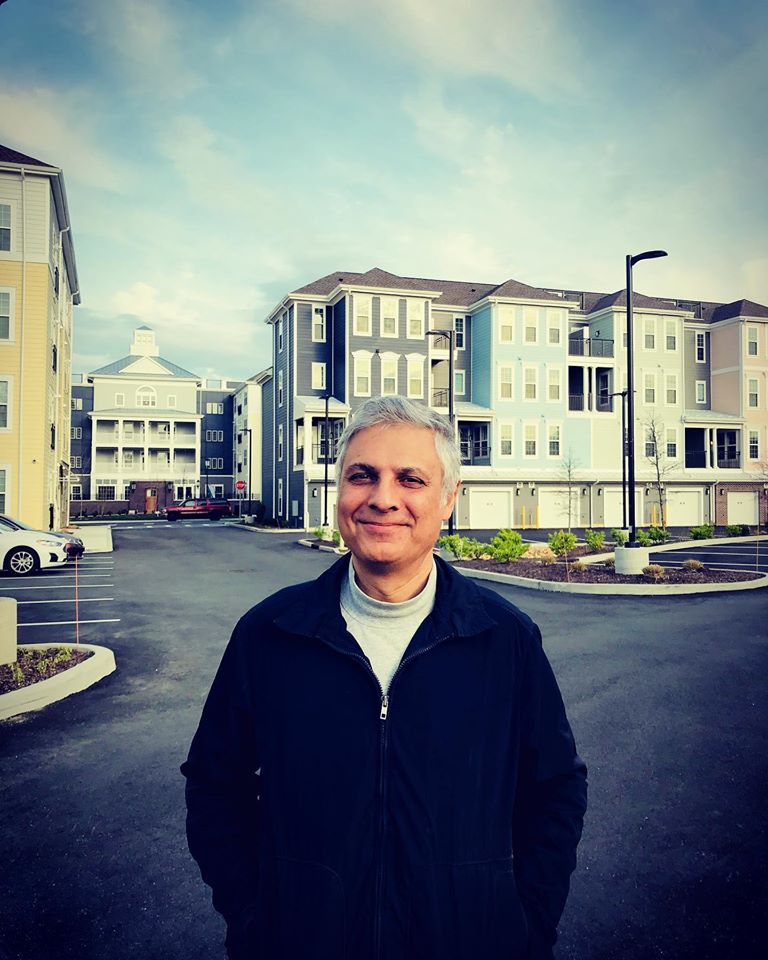
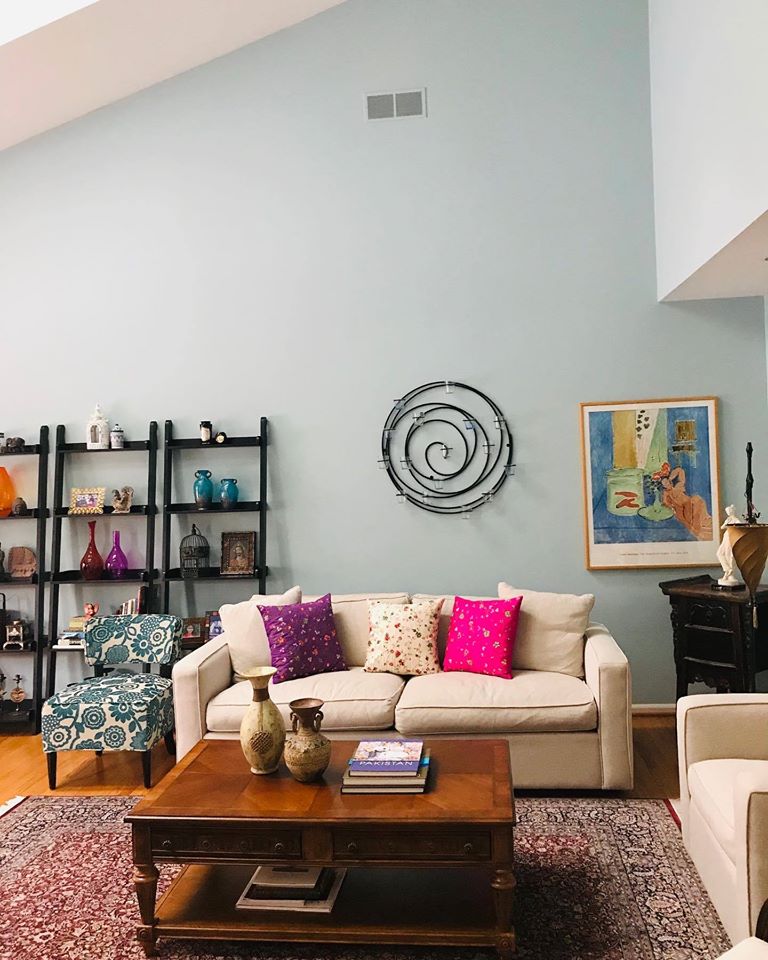
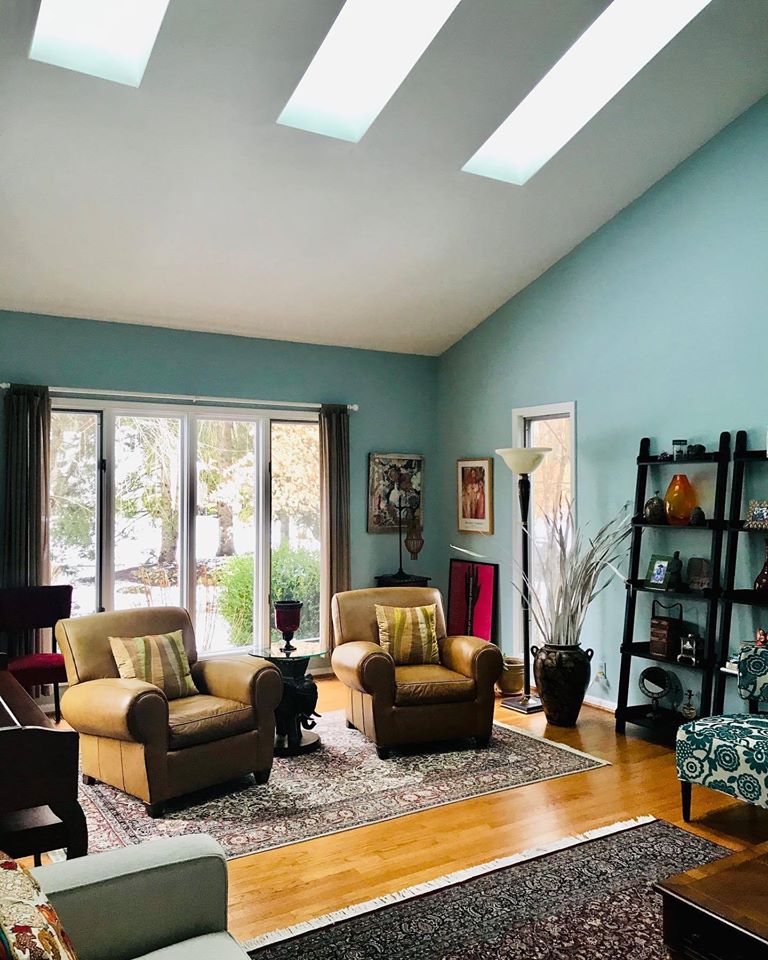
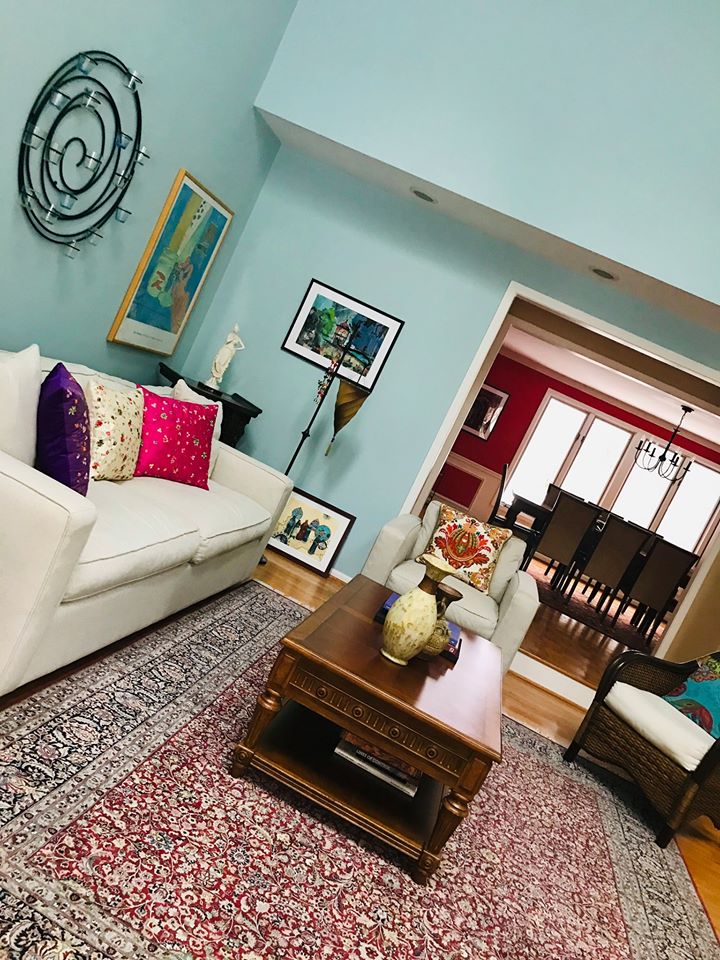
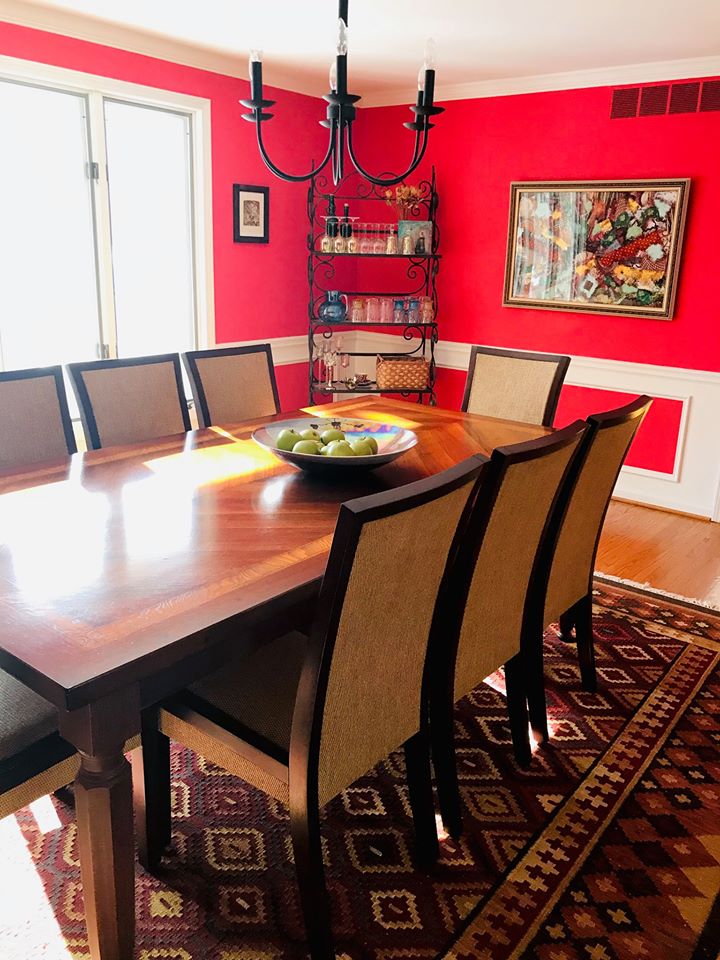
the apartment is coming along, slowly but surely. gone are most of the cardboard boxes, folded flat and placed in storage. the kitchen is fully functional. artwork just went up on our family room walls. next project: bedrooms:)
so i had hired a local business to move us from rochester to long island on april 8th. then cv-19 hit and our movers backed out of driving to nyc, right in the eye of the pandemic. the owner is a small businessman, with young children. he said he didn’t want to take chances. i understood. so the movers came by and loaded our trucks yesterday. yes, we ended up renting two trucks instead of one – my bounteous artwork, packed in some 20-30 large boxes, is partly to blame:) this morning we traveled as a caravan – my husband driving a 26 foot truck, my son managing a 20 foot truck, my daughter in our sedan, and yours truly forging ahead in an suv. all i can say is, it’s good to have grown-up kids:)
navigation was easy all the way – empty highways, not more than 2-3 cars in service areas, a few people scurrying around wearing masks, no toll tickets, no delays on approaching nyc. the george washington bridge seemed haunted. just two cars in front of me. in my 27 years of living around and traveling frequently to nyc, i’ve never seen anything like it. it felt disturbingly quiet, unnatural, somber. throughout the trip signs on highways urging people to stay at home, limit travel, stop the spread, #flattenthecurve.
my brother called to find out how we were doing. the car picked up his phone call. he told me his ex-neighbor in NJ, the guy they lived next to for a whole decade and who saw his kids grow up, just died of corona. he had an allergic reaction to something, went to the ER, got infected, died within a few days. in his early 50s. i am not one to panic but this piece of news shook me.
so between these misgivings (could we have delayed the closing on our house?), the thrill of living next to a city i love, the waves of emotion as i realized i was gradually moving away from the people i love, the profusion of texts, emails, and phone calls from family and friends all holding me warmly in their prayers and good wishes, the bone-tiredness from packing up a commodious house filled with 17 years of life and film and art-making, and finally the news that bernie sanders had just ended his presidential run, i couldn’t quite focus on any one feeling.
yet there is a connection – a complete sense of disconnection. being uprooted with milestones and memories packed precariously in cardboard boxes, the fear of losing people we love, the undignified randomness of loss, the arbitrariness of what we mark as ours in time and space, the irrationality of viruses and politics, the fragility of life and human-made systems, the strength of love and relationships that bind us to a center – some multifaceted, metaphysical core that saves us from disintegrating into meaningless fragments.
we are home, in this new home. it’s a gorgeous apartment. small but perhaps that’s all we need for our small family. everyone is asleep. goodnight fam and pls stay safe.
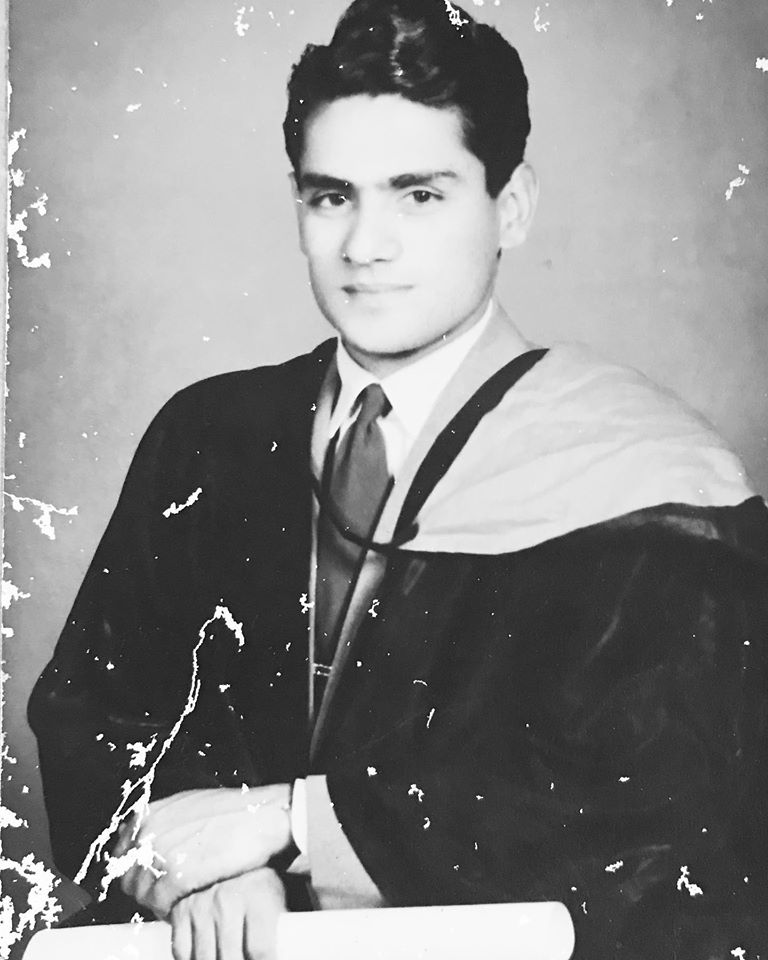
pakistan air force in the 1960s: first person on the left is my khaloo (my uncle), followed by my mamoon (my mom’s brother), a lady i don’t know, and then my khala (my mom’s sister). don’t know the person on the right. it was a different era.
i have to write about this. so we are moving to long island on april 8th, inshallah, and i have been selling a lot of stuff on fb at fairly low prices – from a treadmill to a yamaha piano, to bedroom furniture, bookcases, cameras, skis and bikes. i’ve also donated tons: i post on fb, add pictures of the stuff, and people come and pick it up for free. there is plenty of social distancing as they help themselves from shelves in my garage, with no human contact at all. it’s been one of the loveliest experiences ever.
not only did i get to meet a large number of my rochester neighbors (an extremely diverse group based on race, ethnicity, class, gender, age, and more) but i also got to know their stories and their visions for the stuff they’re picking up.
some send me pictures of how they’re using those things in their homes. one young guy and his wife bought two bookcases, then joined them to another piece of furniture, added moulding, painted everything, and created a gorgeous entertainment center. he messaged me photographs.
it does my heart good to see how my things, which were loved and cared for, will have another life after they leave our home, that someone else will use them and cherish them as well. they are only things of course, but this opportunity to share with our community has been incredibly joyful. many times when people buy one thing, i give them another for free. someone bought a camera, i gave them a tripod for free. the reactions are priceless, unforgettable. i love rochester so much, and this has been a life-affirming way of saying goodbye.
Ryan Cooper: Washington state, despite being the site of the earliest cluster of confirmed cases in the U.S., has contained its outbreak better than any state, and many other sub-national regions as well. This simply must be because Governor Inslee started testing earlier, implemented clampdown measures earlier, and tightened them earlier. By late February it was clear that Washington would suffer a serious outbreak, and Inslee declared a state of emergency on the same day, Feb. 29, that the state recorded its first COVID-19 death. Working closely with Seattle Mayor Jenny Durkan, Inslee first strongly encouraged people to avoid groups and stay at home, then started requiring them to do so in early March. The state set up a command center to coordinate the overall response and direct resources to where they were most needed, and Inslee began regular briefings to inform the public about what was going on.
A month later, Washington has less than a tenth as many cases as New York, and its hospitals have so far been strained but not overwhelmed. It easily could have been just as bad — Washington is only somewhat smaller than Lombardy, where the devastating Italian outbreak has been centered. As we have learned over and over and over, quick action is absolutely vital when it comes to containing the coronavirus.
Now, Inslee was lucky to have access to the world-class medical research centers of the University of Washington system, and the bottomless pockets of Bill Gates, who has provided a lot of resources and assistance to the state. Even his efforts fell far short of Taiwan’s or Vietnam’s, which actually squelched their outbreaks almost entirely. But on the other hand, Inslee was and is seriously hampered by the lack of a coordinated federal response. With the doddering lunatic Donald Trump in the White House, Washington state is heavily limited in what it can do — and yet has managed better than many European cities.
This is what competence looks like: not some faux-macho media hound going on television a lot, but careful, agile governance informed by the best available information. Inslee may not get such an approval bump from role-playing as the Important Leader, but his quick work saved thousands of lives. More here.
‘Fanon’s thought is marked by an axiomatic commitment to an immediate and radical egalitarianism – including the recognition of a universal capacity for reason. It is shaped, in its deep structure, by a profoundly dialectical sense of the capacity for the human to be in motion. His thought, taken as a whole, did not waver from what Aimé Césaire, the extraordinary surrealist poet, described as the obligation ‘to see clearly, to think clearly — that is, dangerously’.
Liberation must, Fanon insists, restore ‘dignity to all citizens, fill their minds and feast their eyes with human things and create a prospect that is human because conscious and sovereign persons dwell therein’. For Fanon, the restoration of dignity is not a matter of return. The journey towards what, in the last year of his life, in a letter written to the Iranian intellectual Ali Shariati, he called ‘that destination where humanity lives well’ is undertaken via a constant process of becoming and enlargement of the sphere of democratic reason. As Lewis Gordon notes, for Fanon, legitimacy is not a matter of offering proof of racial or cultural authenticity; rather, it emerges ‘from active engagement in struggles for social transformation and building institutions and ideas that nourish and liberate the formerly colonized’.
For the university-trained intellectual, Fanon poses a simple demand, but one that retains its radical charge almost sixty years later: to move beyond the ontological and spatial ordering of oppression and commit to a form of insurgent and democratic praxis in which ‘a mutual current of enlightenment and enrichment’ is developed between protagonists from different social locations.’ More here.
wonderful story by ana naomi de sousa about portugal’s ‘the house of students of the empire’ which she describes as her favorite ‘fuck u to imperialism’. what i love about it is our power to subvert the most horrific and oppressive of systems, how writing (and poetry in particular) can inspire and sustain revolutions, and how solidarity across the globe is something historical and real. thank u léopold.
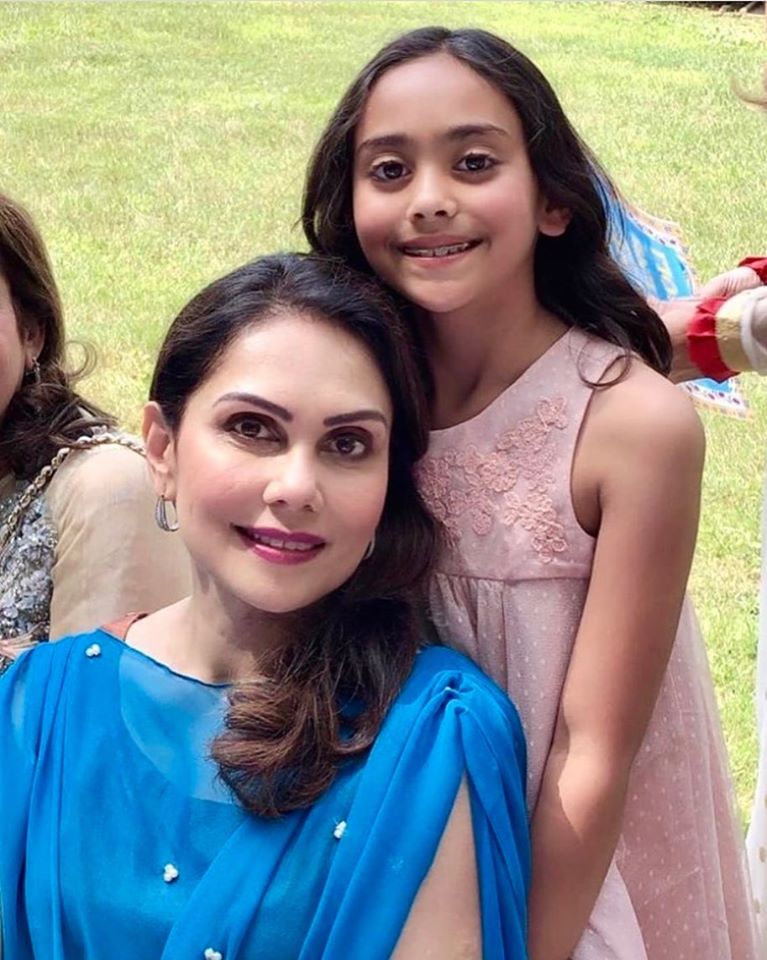
and then there’s my most glamorous sib. gul or dr syed. two years my junior. accomplished rheumatologist and mother of two. always up for some fun and adventure, gym-fit, natural fashionista. strong, strong, strong. focused and unsparingly direct. she was the kind of kid in school who could schedule study time for exams, with 100% accuracy, execute that plan with ease, and set aside a decent bunch of hours for R and R. always said she’d fail, inevitably aced her exams – all the way to med school. gul is mindful of the importance of family. makes great chai. has a quirky sense of humor. my favorite thing? when she and my brother riff off of each other and have us crying with laughter. she adds color, drama and style to our family. love u gul. [my sister gul with her daughter]