
Marcos Gonsalez: No matter how much confidence I gain as a critic, Shakespeare’s oeuvre still confounds me. I boggle over lines, dwell on stanzas, wonder on the motivations of characters. I change my mind over meanings I thought were settled. I possess no mastery of these texts. And it takes me a long time to reconcile with the fact it’s okay to not understand or to feel like the text rejects me. It takes me a long time to learn it’s okay to linger in not knowing because there’s pleasure, there’s knowledge, to be gained in the mystery of words, of what words can do.
This kind of relationship to literature, however, is a privilege given to particular writers. The language of Shakespeare, like the language of a Melville, Whitman, Faulkner, Foucault, is difficult, hard at times, elusive and allusive, and sometimes inaccessible. And they are literature, read widely and read in classrooms. Other kinds of writers—the Morrisons or the Torres or the Kincaids—we expect to represent and identify, to speak for entire cultures and communities, to be forthcoming and transparent. We expect those who are not like the Shakespeares and the Whitmans and Foucaults to not put up a fight to be understood, to be unchallenging and welcoming, accommodating and unobtrusive.
[…] From the moment I can think, I make the connection between whiteness and language. Not to mention my Spanish is taken from me as a child in speech pathology classes, and the Purépecha language which my family at one point spoke is a twice removed robbery. Whiteness is an aspiration, a fantasy of upward mobility, a pseudo-guarantee that I and my kind will be removed from generational poverty and racial violence, a condition hundreds upon hundreds of years in the making. The tone of whiteness as it is used in the university, or in kindergarten classrooms, or creative writing workshops, or the emails one has with an editor, is one to make distinctions between who is worthy of opportunities and financial security, and who is not.
There I am through these nearly 30 years of life, being Caliban, wanting to learn the language of my many Prosperos in order to use it against them. And my family? Those dark and huddled masses? Who plays them in Shakespeare’s comedy? They are Sycorax, banished from the plot, no dialogue, no stage directions, outside the margins of one of literature’s greatest masterpieces. More here.
Author: mara.ahmed
The Black Bolsheviks
Rather than glorify (or even dignify) war on Memorial Day, here’s a tribute to solidarity – the opposite of war. Let’s uphold Edward Said’s ‘internationalism and cosmopolitan humanism’ and remember the Black Bolsheviks.
Paul Heideman: Cyril Briggs held no illusions in the country’s ruling class, on whom he placed the vast bulk of responsibility for the oppression that Black people faced. But the call to interracial struggle against capital seemed to him a risk not worth betting Black lives for.
By late 1919 (around the time the African Blood Brotherhood was founded), however, Briggs had begun to take more of an interest in Marxism and socialism. Undoubtedly influenced by the lively intellectual milieu of Harlem radicalism, in which political giants like Hubert Harrison regularly lectured on Marxist theory on street corners, Briggs began reading more deeply in Marxism.
[…] Briggs and the other Black radicals who looked to Russia did so because they believed that racism and colonialism could not be defeated without a total remaking of their society.
They came to this conclusion by a number of routes. The sheer scale and brutality of American white supremacy in those years, crystalized during the Red Summer of 1919, dealt a serious blow to the idea that racism could be eliminated either through Black Americans reforming their own behavior, as the followers of Booker T. Washington suggested, or through a gradual process of changing laws and changing minds, as was the strategy of the NAACP.
At the same time, the explosion of class struggle across the globe, from Italy to Russia to the U.S. (which witnessed the biggest strike wave in its history in 1919), helped make concrete the hope that another world was possible. In this context, Black radicals like Briggs saw the liberation of Black people as part of a global insurrection against oppression everywhere.
In today’s world, these kinds of massive ambitions for liberation are rare. Several decades of neoliberal assault, and the parallel weakening of movements for liberation, have made it much harder to imagine a worldwide fight against all forms of oppression.
The story of the African Blood Brotherhood, which recruited and trained the first generation of Black socialist cadre in the U.S. More here.
happy eid / happy birthday
eid mubarik everyone! and happy birthday to our daughter who turns 20 today! the baby of our family. officially speaking, for the first time in many years, we won’t have a teenager in our house anymore – the beginning of a new era. love u mims <3
365 pelham
I can’t wait to read ‘This Is One Way to Dance’ by Sejal Shah <3
‘My life is a ranch house—laid out squarely—not coyly, in levels like the Colonial homes on the street. No dormer windows or dreamy second story verandas or slight, whimsical balconies in my house. No attic bedroom or interesting third story. I am straightforward, to a fault, often without decoration.
Sometimes I think I am uncomplicated, but I know it’s not true. Ranch houses have their hidden spaces and places, too, even if they are not as old, not as interesting, not as layered as the fake Tudors and the Capes; they suggest a vision of family I could never quite get behind. Ranches present a large formal living room with picture windows and wide, open spaces. Pictures of a happy family. I never wanted anyone to be able to see into my home—houses are for privacy, places to read and restore.’ More here.
The Worlds of Edward Said
Rashid Khalidi: Said’s alienation and worldliness were at the heart of the complexity and richness of his work; they lent him a sharper awareness of and sympathy for other cultures and stirred inside him a pointed disdain for the placid provincialism and monoglot lack of reflection among many leading figures in the American academy. Although he shared the class and educational background of many of his peers, he insisted that we see beyond the parochial bounds of the ivory tower and the self-referential culture of the West. While this critical attitude was expressed most saliently in Orientalism, it characterized much of Said’s mature work, both critical and political. In one of his last offerings, “The Return to Philology” (on what he called this “most unmodern” branch of learning), his erudite analysis is informed by a sense of the larger stakes of the specific political moment: the war in Iraq and Secretary of State Madeleine Albright’s casual dismissal in 1996 of the thousands of Iraqi deaths in that decade as a result of US-mandated sanctions.
Said deftly interlaced philosophy and literature with political critique. Although his political writings could be blunt, even scalding, he most often wielded a sharp scalpel in his criticism and did so with elegance and élan.
[…] As After Said and the Selected Works reveal, Said was not only politically committed; he never really stopped arguing. His vision remained, to the end, both worldly and alienated. He insisted that we see past our own national or parochial cultures in order to better understand them. He called on us to expand the narrowness of our moral and political imaginations and to see the world in its entirety as our common home. As an exile as comfortable in New York as in Beirut, Cairo, Paris, or London, he infused his literary style with a cosmopolitan ease and his often urgent politics with a cosmopolitan humanism—a humanism that remains a potent antidote to the cloistered and often nationalist chauvinism that seems to be ascendant even in an age of global crises.
Said’s internationalism and cosmopolitan humanism are perhaps his most important legacies. Human life and its challenges—whether they be pandemics, climate change, perpetual war, or neoliberal policies that impoverish the many to enrich the few—force us past the confines of national or cultural boundaries. One can only imagine how Said would have responded to the malign forces that have sabotaged the effective handling of these ongoing crises. As Saree Makdisi proposes in “Orientalism Today,” “the most appropriate thing” in the face of such folly “would be to read Edward Said all over again, as though for the very first time.” More here.
ramadan in kashmir
ramadan, or the coronavirus, have not slowed down the violence of india’s occupation in kashmir.
Hafsa Kanjwal: This Ramadan has not been one of much comfort and ease given the relentless assault of India’s occupation in Kashmir. The corona virus is the least of their concerns given the number of civilians and rebels killed, the ransacking of entire villages, the horrifying cordon and search operations, and the legal changes made that will enable demographic change to occur—at a rapid pace.
A friend just sent over this photo though, of a Quran that survived an attack by Indian forces on an entire neighborhood today—where over 15 homes were burnt and razed to the ground. So many families have lost their loved ones and their homes this past month.
But this “miracle” served as a reminder, in ways I find hard to articulate now. But, I thought to share in case others are also similarly struggling with the immense weight of injustice around them.
happy birthday malcolm x
From Noura Erakat: Happy born day to the visionary who saw strength in our unity, who imagined us as an Afro-Asian collective, who never appealed for inclusion but insisted on liberation on our own terms. May our ongoing efforts do justice to your sacrifice. Today and everyday. #MalcolmX #Freedom
COVID-19 is a practice run for climate change
great piece by my friend kate. a couple of sentences i would love to reframe:
‘It is a national security risk even when we ourselves don’t face famine. Droughts in one country displace refugees, who cause political disruption and a rise in nationalist violence in others.’
rather than look at a crisis in another country (climate change or pandemic related) as a ‘national security risk,’ we need to focus on/feel the cost of a catastrophe in terms of human suffering and the impact on our planet.
refugees are not the cause of disruptions, they are the effect of wars and climate change activated by rich countries. similarly, the cause of nationalist violence is not refugees, it’s white supremacy, which is an important part of this equation.
this is why i don’t believe in borders – because they allow us to separate and otherize based on geography and the economic privileges we aim to protect.
…
Kate Kressmann-Kehoe: …the pandemic and climate change are both threat multipliers: They amplify existing problems and bring previously hidden vulnerabilities to the surface. COVID-19 is wreaking havoc not just in the restaurant industry, but in the education system, pharmaceutical supply chains, global scientific research and more. It is highlighting economic inequities and racism, from the lack of the option to work from home, to higher death rates. More here.
Engaging the Oppressor Within
Nadia Ben Youssef (granddaughter of Tunisian revolutionary Salah Ben Youssef): Our own freedom is dependent on our capacity to rid ourselves of the imposed and internalized fear of the freedom of those we have criminalized, subjugated, dehumanized, and othered. This is the groundwork of social change, a constant undoing of our attachment to any manufactured elevation where we believe we come out on top. Only when we build upon this foundation can we rupture the systematized lie of human hierarchy, and ensure that our visions of liberation are not mere replicas of oppression.
[…] No oppressor can be reassured that when resources, power, and consequence are equitably allocated, they will not face profound loss and accountability. Because they must experience both. On the other side is healing and liberation, but if this truth is not enough to set you free, the fundamental work remains.
That the individual journey of dismantling internalized supremacy is fundamental and lifelong, however, can in no way be used to justify delay in justice or social transformation. Were we to wait for the critical reckoning by every member of every dominant group, the deadly, institutionalized status quo would persist into perpetuity. On the path towards justice, material conditions must be urgently altered, and harm must be immediately reduced. More here.
recreating mughal miniatures
mughal miniature of prince shah shuja, second son of emperor shah jahan, india, ca 17th century / re-creation of miniature by my son, long island, new york, 2020
mughalminiature #southasia #mughals #miniaturepainting #art #inspiration #quarantinelife

headwrap
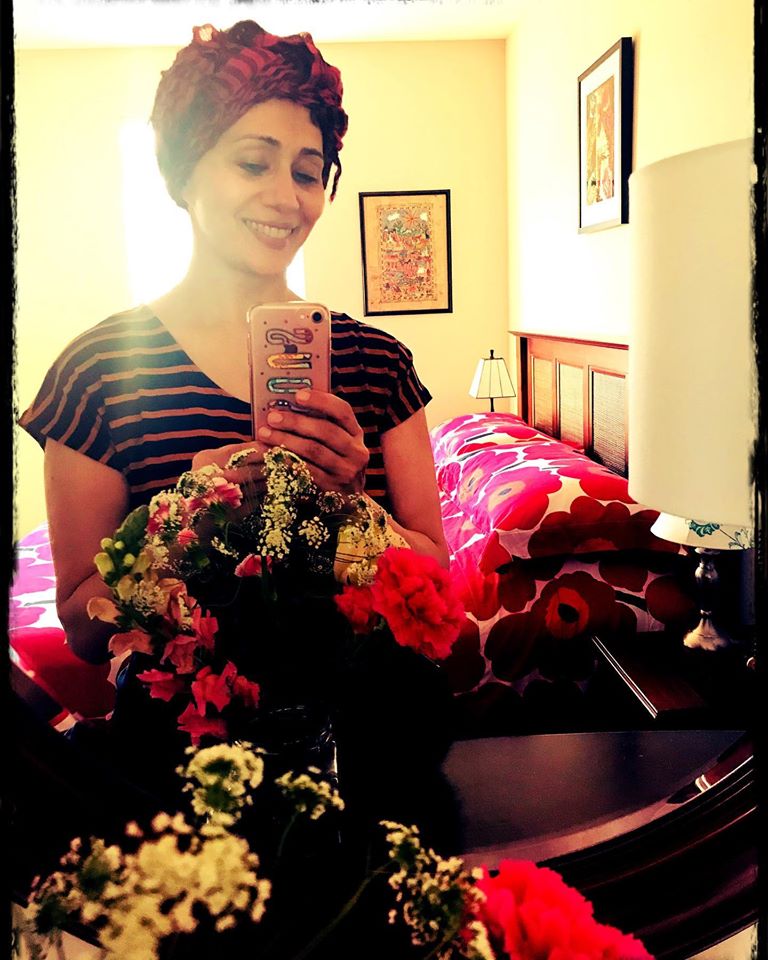
my first experiment with a #headwrap. always wanted to wear one. was perpetually inspired by Luticha (the swankiest). finally saw a video posted by my dear friend Debora, looked online, and decided to use one of my scarves. love it so much. this is just the beginning folx – will keep u posted 🙂
my son is 25
and just like that, in the blink of an eye, he was 25 years old. i cannot believe it. my son <3
From Maternity Ward to Cemetery, a Morning of Murder in Afghanistan
no words. so much solidarity with the people of afghanistan.
Violent death here is so frequent, and so scattered, that an accurate count is an impossible task. But by dusk on Tuesday, when the reported deaths of the day from all sides had been tallied, the Afghan war had most likely taken 100 lives.
Of course, the night brings more death — and the next day more tallying.
What is crushing Afghans is not just the sheer brutality of the attacks with newborn babies soaked in blood and deprived of mothers before they have even gotten a name, but the failure of anything to bring a reprieve. More here.
lily pond park
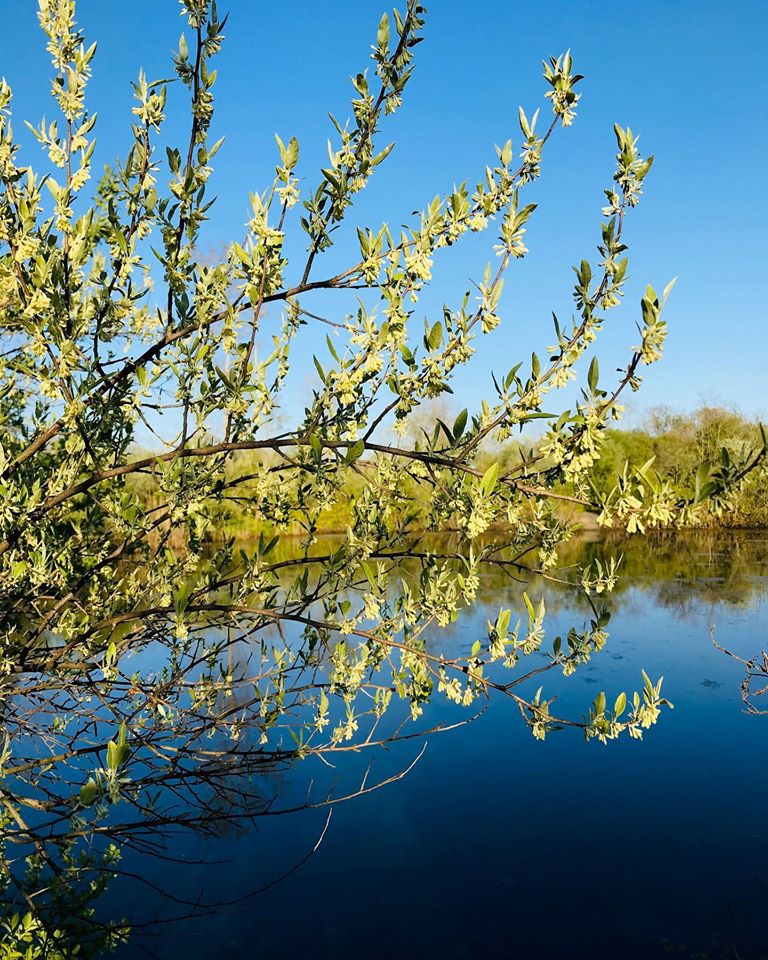
today lily pond park near #nesconset – a place full of birdsong and fairy tales. lilypondpark #longisland #suffolkcounty #newyork #ny

the funambulist – states of emergency
my treat for this weekend! thx léopold!
