
Amazing day. Met one of my dearest friends and her beautiful daughter after 12 years. So much to talk about, discuss, share, while enjoying a lovely lunch. Then a sumptuous dinner with my cousin and his fabulous fam, along w my mom and dad. Lahori hospitality and love right here in Canada ♥
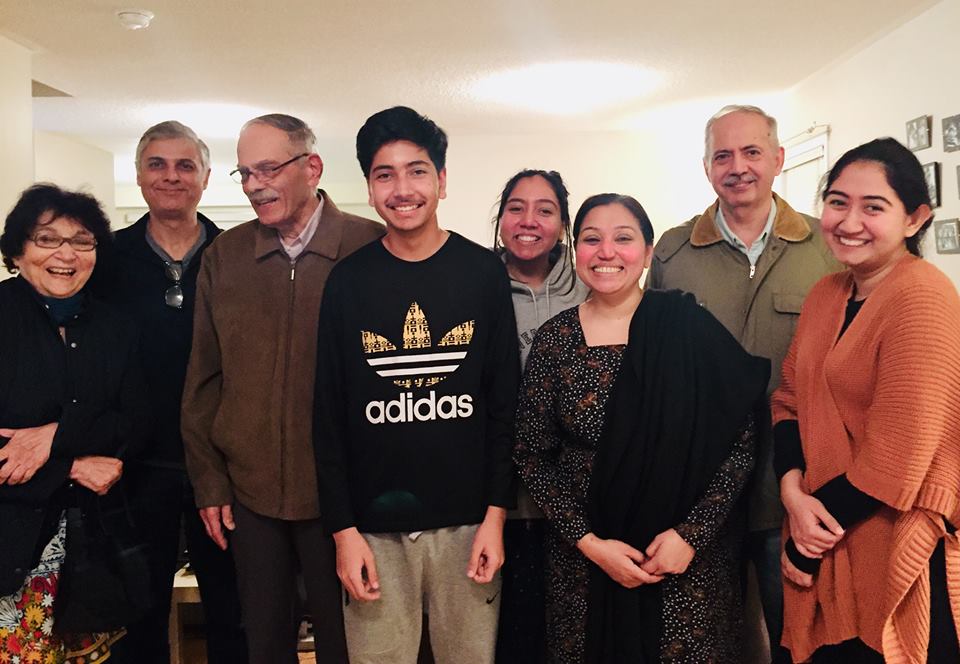
In Toronto with Ammi Abbu
Mara Ahmed’s unwavering lens
Am so very moved by and thankful for E.C. Salibian’s attentive, honest, and profound writing about my work. Published in the first issue ever of the Rochester Beacon (a group of veteran journalists and others with deep ties to the Rochester community providing local news coverage and analysis), the article quotes/mentions so many people I love and am grateful for. This gives me more pleasure than anything. Thank you Nilofar Saleem, Saleem Murtaza, Aitezaz Ahmed, Gibran Ahmed, Mimi Ahmed, Muhammad Shafiq, Cat Ashworth, Rajesh Barnabas, Mariko Yamada, Joyce Edwards, Surbhi Dewan, Donna K. Khorsheed, and Tonya Noel ♥
Read article here.
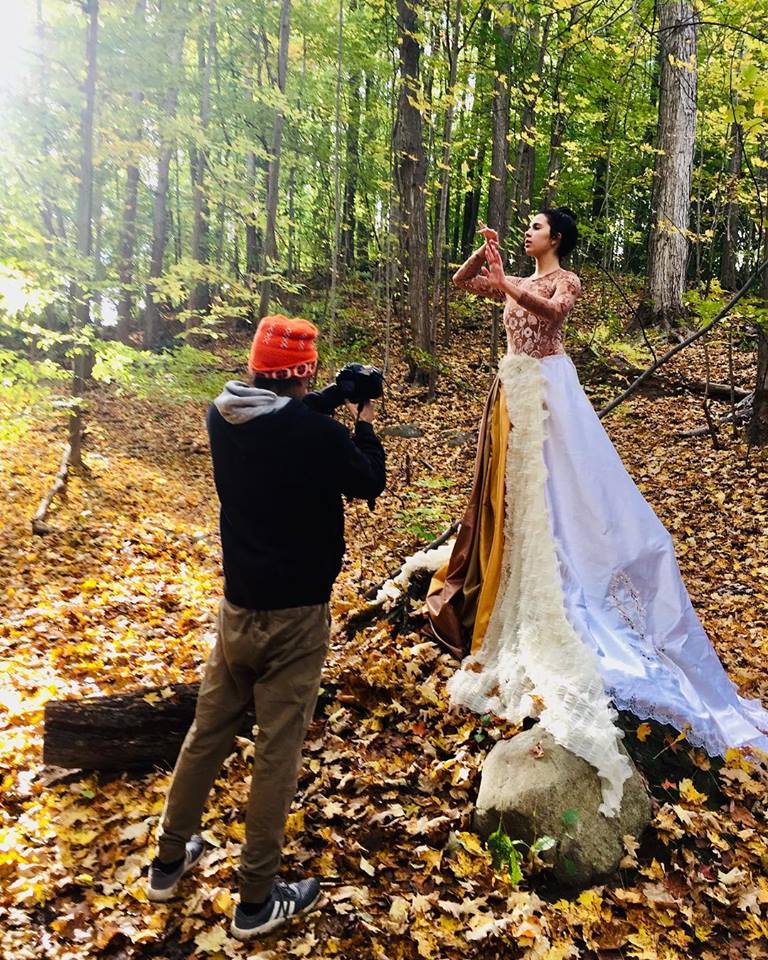
prelude to ballet performance at tryon park
#gorgeous #dance #shoot at #tryonpark today in #rochesterny for The Injured Body: A Film about Racism in America
a #prelude to a #ballet #performance that #celebrates the #fall
#inspired by the #work of #artist #maimounaguerresi
#performed by María José Rodríguez-Torrado
#choreography by Mariko Yamada
#cinematography by Rajesh Barnabas
#directed by Mara Ahmed
Kundiman at the Spirit Room: A Fall Reading
Dear friends, I am honored to be reading my work with Asian American writers and poets Albert Abonado, Chen Chen, and Margaret Rhee at The Spirit Room Rochester on Sunday, Oct 28 at 7pm. I’ve written a brand new piece about the languages I love and live in. Thank u Sejal Shah for organizing this. Hope u can make it 🙂
Talking of assassinations…
The expansion of legal rules around targeted killings by the United States is one of the most consequential legacies of the post-9/11 era. Under both the Bush and Obama administrations, the U.S. government arrogated itself broad rights to kill individuals far from any battlefield. The legal reasoning that former President Barack Obama used to publicly justify the ramped-up drone warfare program had its origins in a similar past effort by Israeli military lawyers to justify Israel’s targeted killings of Palestinians in the West Bank and Gaza Strip.
This month, The Intercept published an article about the history of this Israeli legal effort. In the story, Harvard law professor Gabriella Blum explained how, when she was a young lawyer working for the Israel Defense Forces, she and her team sought to give a legal justification for Israel’s burgeoning assassination program. Noura Erakat, a human rights attorney and author of the forthcoming book “Justice for Some: Law and the Question of Palestine,” spoke with The Intercept.
Noura Erakat: There is a direct relationship that we can trace between knowledge production in the academy and what states seek to legally justify during armed conflict. What legal scholars publish contributes to an aspect of opinio juris, or what states believe is legal, which together with state practice constitutes something called international customary law. This is a form of international law, which, in contrast to treaties, is effectively a form of tacit consent. Effectively, legal scholars publish opinions which indirectly help shape customary law. If there is robust objection to what states do based on these opinions, then it falls into the realm of illegitimacy. But if, in contrast, the practice and the legal concepts gain traction, it can become the seed for new customary law, which can develop overnight or over a long period of time. If it crystallizes into a new norm, then it not only applies to the state proposing the law, but will be applicable to other states in the international community as well. More here.
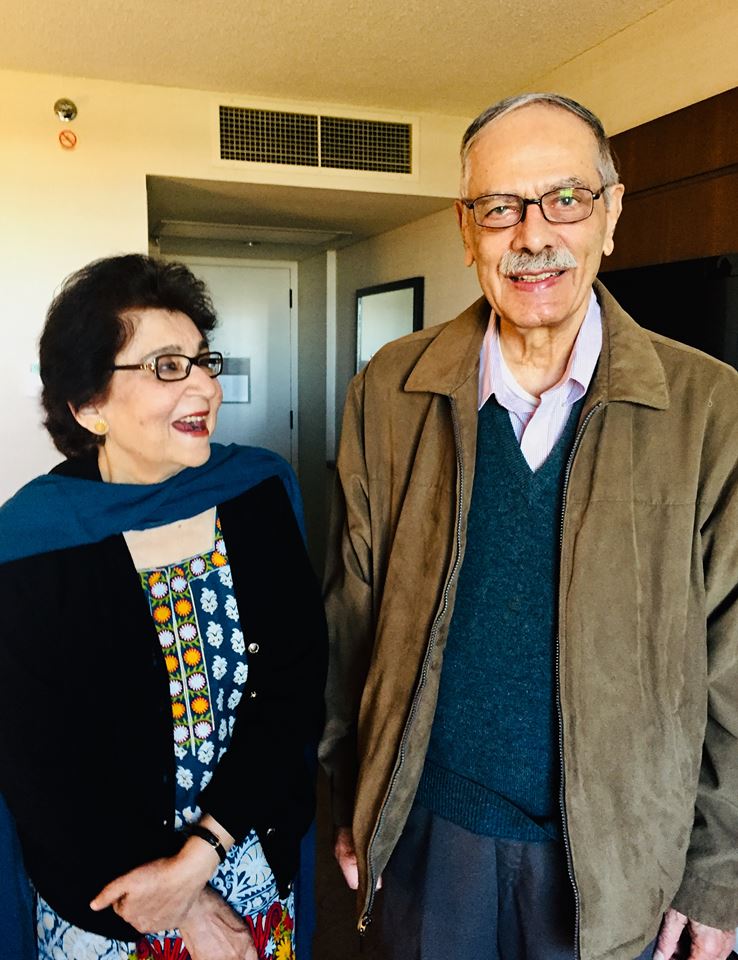
ammi abbu in rochester

A Poem for an Unjust World – Power Trip – Medium
‘We must be able to “touch the destruction within,” in the words of Audre Lorde, or else become corrupted. Poetry alone cannot change the material conditions of an unjust society, but I challenge anyone to name a substantive freedom movement that does not have poetry.’ More here.
the muslims i know at SJFC
speaking to #students after a #screening of my #film #TheMuslimsIKnow for a #class in #anthropology at #stjohnfishercollege this #morning. thank u to my #beautiful #sister roja singh for #inviting me ♥

On brink of ‘worst famine in 100 years’
The United Nations is warning that 13 million people in Yemen are facing starvation. It’s calling on the military coalition, led by Saudi Arabia, to halt air strikes which are killing civilians, and contributing to what the UN says could become “the worst famine in the world in 100 years”. More here.
After several high-profile murders in Iraq, here’s what headlines missed about their cause
Zahra Ali: In my book “Women and Gender in Iraq,” I show how the rise of conservative social and religious forces dates to the humanitarian crisis provoked by United Nations sanctions in the 1990s. The sanctions deeply altered the social fabric of Iraqi society and created new forms of patriarchies that were worsened by widespread poverty. The U.S.-led invasion and occupation of Iraq put in power conservative and sectarian Islamist political groups that have normalized these hyper-patriarchal norms and intensified social control over gender issues. And the militarization of the Iraqi streets with armed men at checkpoints and the proliferation of militias has created new mechanisms of social control.
However, these shocking events also shed light on dynamics going beyond exacerbated social and religious conservatisms. While the violence of Shiite Islamist groups has been largely ignored, Iraqi authorities focus primarily on the violence perpetrated by the (Sunni) Islamic State organization as “religious extremism” and “terrorism.”
In post-invasion Iraq, brutal settling of accounts among armed and tribal groups has become part of everyday life. And the weakness of the state’s institutions and the collusion of members of the Iraqi elite with tribal leaders and militia members render vain any investigation or prosecution of such crimes. More here.
rain by any other name
i read this piece at a speak easy today, about how much i love rain – its fragrance and sounds take me back to lahore. in the Q&A, i was asked about how many words there are for rain in urdu. since rain is so rare, and crucial, in the subcontinent perhaps we have more words for it than in english (famously, there are 50 eskimo words for snow). i asked my mom and dad and this is what we came up with. friends who are urdu speakers, can u think of more?
1) baarish
2) bundabandi
3) pohar
4) rimjhim
5) musaladhar
6) barkha
7) saanvan
8) bochharh
9) barsaat
10) baraan-e-rehmat
11) abr-e-karam
12) meenh
13) pani parna
my reading at rochester spoken word
#reading a #piece about #rain in #lahore at Rochester Spoken Word today. so #wonderful to share #memories #contexts and a #monsoon #raag with the #audience
watch a clip here.
childhood memories
#brussels #belgium with my #brother and #sisters back in the day – i am the one on the left 🙂

The generative passion of Walter Rodney
Angela Davis: Those of us who refuse to concede that global capitalism represents the planet’s best future and that Africa and the former third world are destined to remain forever ensconced in the poverty of “underdevelopment” are confronted with this crucial question: how can we encourage radical critiques of capitalism as integral to struggles against racism, as we advance the recognition that we cannot envision the dismantling of capitalism as long as the structures of racism remain intact? More here.