China’s Government Has Ordered a Million Citizens to Occupy Uighur Homes. Here’s What They Think They’re Doing

Darren Byler: Over the past year, reports have found their way out of the Xinjiang Uighur Autonomous Region in western China of a campaign of religious and cultural repression of the region’s Muslims, and of their detention and confinement in a growing network of razor-wire-ringed camps that China’s government at times has dubbed “transformation through education centers” and at others “counter-extremism training centers” and, recently, amid international criticism, “vocational training centers.” The government describes such efforts as a response to terrorism. Indeed, these camps can be seen as a logical, if grotesque, extension of the government’s decades-long endeavor to eradicate the perceived “terrorism, separatism, and religious extremism” of its ethnic minority Muslim population in Xinjiang. The region, and the country, have certainly experienced spasms of unplanned mass violence as well as cases of premeditated violence born of Uighur desperation over decades of discrimination and persecution; the government’s current set of policies to avoid future strife, however, appears to rest on the assumption that most Uighurs are extremists-in-waiting.

Much reporting has focused on the unprecedented scale and penetration of the surveillance technology deployed to carry out this campaign and on the ways China’s government has pressured other countries to assist in the work of forcibly repatriating Uighurs living abroad. But less attention has been paid to the mobilization of more than a million Chinese civilians (most members of the Han ethnic majority) to aid the military and police in their campaign by occupying the homes of the region’s Uighurs and other Muslim minorities, and undertaking programs of indoctrination and surveillance, while presenting themselves as older siblings of the men and women they might then decide to consign to the camps. More here.
Three generations of women’s rebellion in Kashmir

MOST WRITING ABOUT KASHMIR, ever since militancy began in the valley in the late 1980s, has confined itself to issues of human-rights violations or national-security frameworks. It has not documented the changes that have occurred over the last three decades in the daily lives of Kashmiris—in their beliefs, dreams, friendships, livelihoods and even notions of honour and shame. Kashmir’s children have changed, and so have the games they play. People’s fears and their ability to trust and love have altered. The ordinary moments of their lives unfold in the presence of extraordinary garrisons of the Indian state, set up across the valley since 1990s. Resistance has become part of their routine and renders their lives exceptional.

Kashmiri society has lived far too long under the shadow of death and brutality. The battle for Kashmir’s territory has also led to the demonisation of its people’s faith, while their efforts to defend it have fostered religious orthodoxy. Many kinds of Islam now contend for supremacy. Amid everyday violence and the hyper-masculine discourses of nationalism and religion, the space for women has shrunk, and much that was progressive and valuable in the cultural traditions of Kashmir has been degraded or lost. The left-liberal writing on Kashmir misses this nuance, and tends to criticise the militant movement for the lack of women in it. Kashmir’s many women soldiers have long been fighting from within but their struggles seldom grab attention. More here.

Solidarity Shabbat

This is where I’ll be speaking this Friday evening. Hope that you can join us too.

“Last Shabbat we witnessed the deadliest act of antisemitism in North American history. This Shabbat we are responding with a continent wide show of solidarity with the Jewish community of Pittsburgh and all other communities who have been the victims of such hateful attacks.” More here.

What Happened To Danye Jones? Son Of Ferguson Activist Found Hanged From Tree

Earlier this month, on Oct. 17. Ferguson activist Melissa McKinnies found her 24-year-old son #DanyeJones dead, hanging from a tree. McKinnies, well known in her community, having participated in numerous protests in Ferguson since the Aug. 2014 death of Michael Brown, believes that her son was lynched. In a Facebook post that has since been deleted, McKinnies shared graphic images of her son under the caption, “They lynched my baby.”

Jones’ death has once again stirred conversation around various other activists in Ferguson who have died since 2014 under seemingly suspicious circumstances.

In 2014, Deandre Joshua, 20, was found shot once in the head, and then set on fire inside his car the same day a grand jury refused to indict Darren Wilson in the shooting death of Michael Brown. Prominent Ferguson activist Darren Seals was also found dead inside of a burning car back in 2016. He had also been shot. And then there was the 2017 death of Edward Crawford, the activist captured in the iconic photo tossing a canister of tear gas away from those protesting Brown’s death. Police claimed that he died of a “self-inflicted” wound while in the back seat of his own car. More here.

The Media & Big Business: Friends of Fascism?

excellent discussion with Oscar Guardiola-Rivera about the far right in brazil and a new fascist international with both trump and bolsonaro in power. this show was recorded a little before the election, but it assumes (correctly) that bolsonaro will win. there is much latin american context here and some terrible predictions about what could happen in the americas, including war. pls watch here.

I’m Dreaming About a Modern World That Doesn’t Erase Its Indigenous Intelligence

Matika Wilbur: I focus on what I can do.

I become an Indigenous mental abolitionist.

And you can, too.

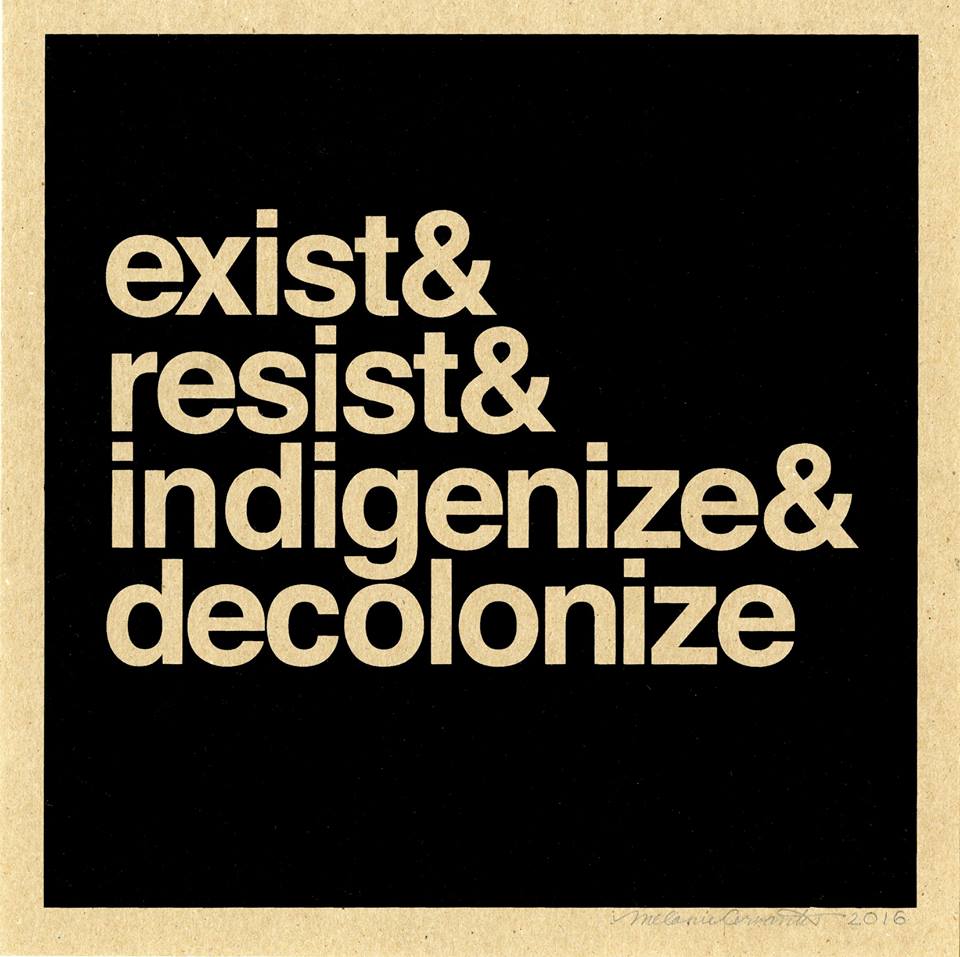
That begins by imagining that our Indigenous ancestors’ belief systems are worthy of saving. Michael Yellow Bird and Waziyatawin in For Indigenous Minds Only: A Decolonization Handbook say, “Only then will we be positioned to take action that reflects a rejection of the programming of self-hatred with which we have been indoctrinated. We will also learn to assess the claims of colonizer society regarding its justification for colonization and its sense of superiority. When we regain a belief in the wisdom and beauty of our traditional ways of being and reject the colonial lies that have inundated us, we will release the pent-up dreams of liberation and again realize the need for resistance to colonization.” More here.

My piece: Struggling against anti-Semitism is permanently intertwined with the fight against Islamophobia

My piece on Mondoweiss. I wrote it on the day of the attack on the synagogue in #Pittsburgh. It could have been more fleshed out, but I wanted to share these thoughts urgently. More here.

At The Spirit Room Rochester

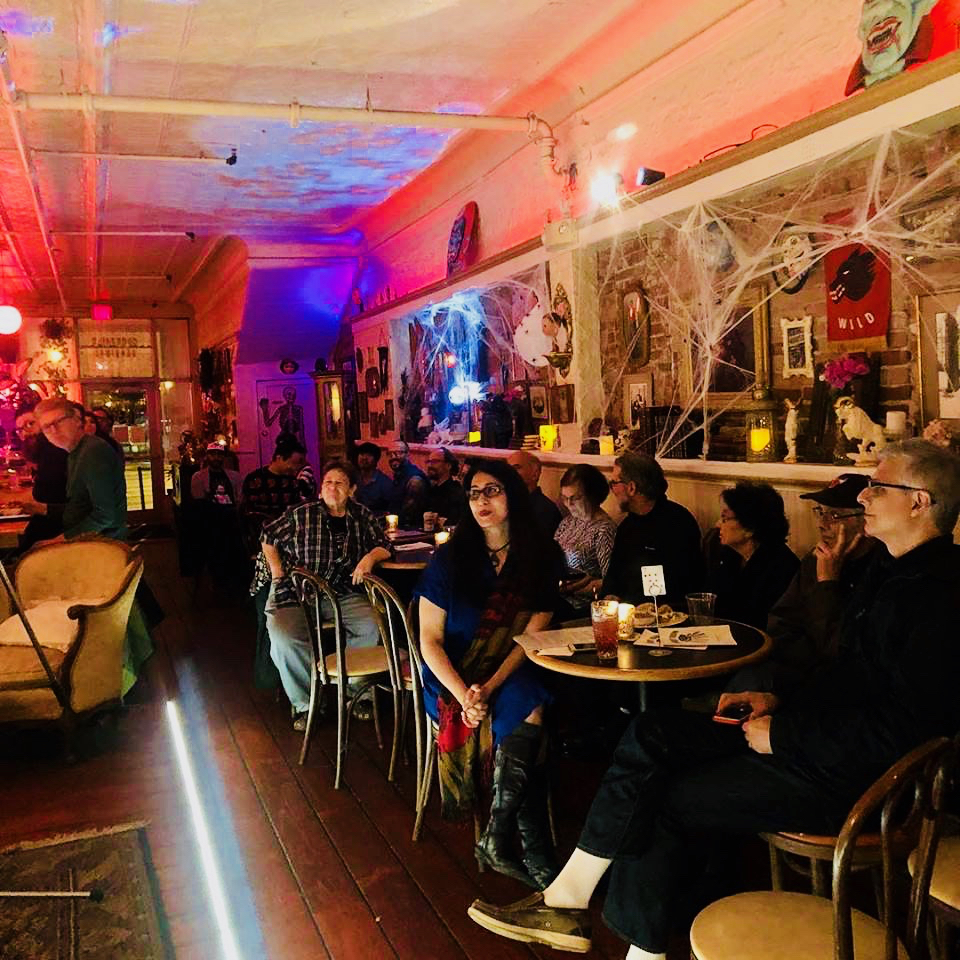
At The Spirit Room Rochester tonight where Albert Abonado, Chen Chen and myself read our work. So lovely to be surrounded by/share with other writers of color, in such a warm, welcoming space. Thx for organizing Sejal Shah and thx to all those who came out to support us. View pictures here and short video clip here.

mara ahmed at the spirit room

racism in belgium – it’s personal

it’s so disconcerting to see racist, stereotypical (read terrorist misogynist) depictions of muslim culture/religion on the fb pages of friends from my childhood in belgium. it’s sad that their interactions with me and my family (and hopefully with other muslims over the years), have not in any way shaken their god given right to, for example, post racist cartoons that take the “presumed qualities of a whole people and broadcast them by use of a single image.” they rely on their sense of being besieged by an alien culture and the attacks on belgian soil as justification for such stereotyping/so-called “humor”. no one has exclusive rights over violence. belgians with their troubled, genocidal history in the congo and in rwanda should be particularly aware of how they built the systems/nation state they now profit from. right after the brussels attack, two years ago, Democracy Now! talked to Frank Barat and Joshua Hersh in order to give some context to what happened. worth watching. making fun of the other is easy. asking questions and making uncomfortable connections is harder but much more useful.