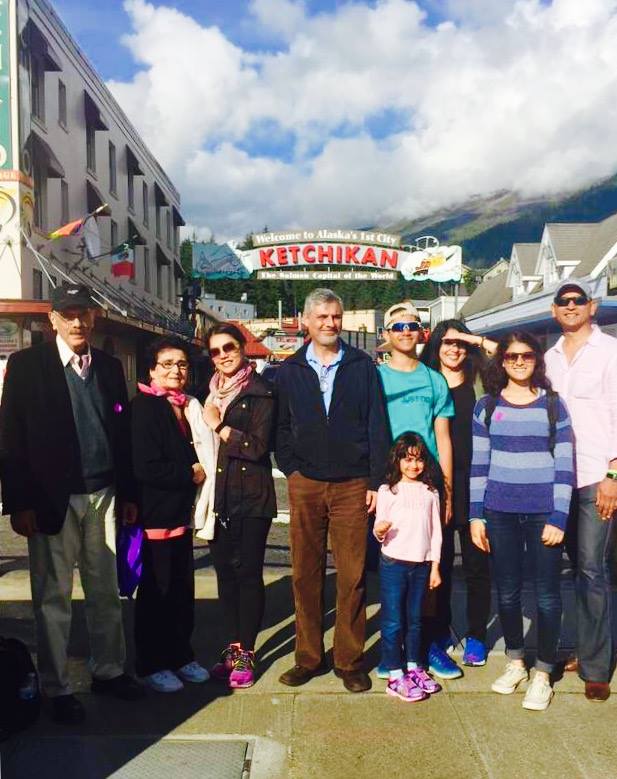
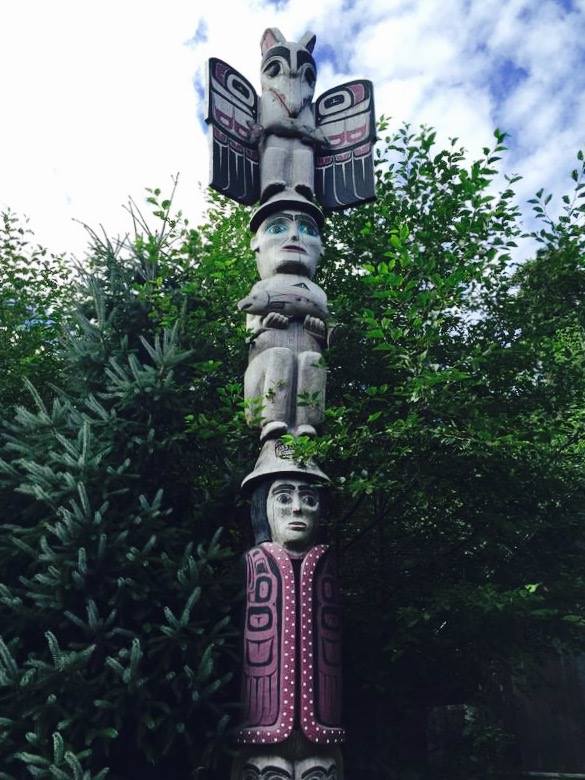
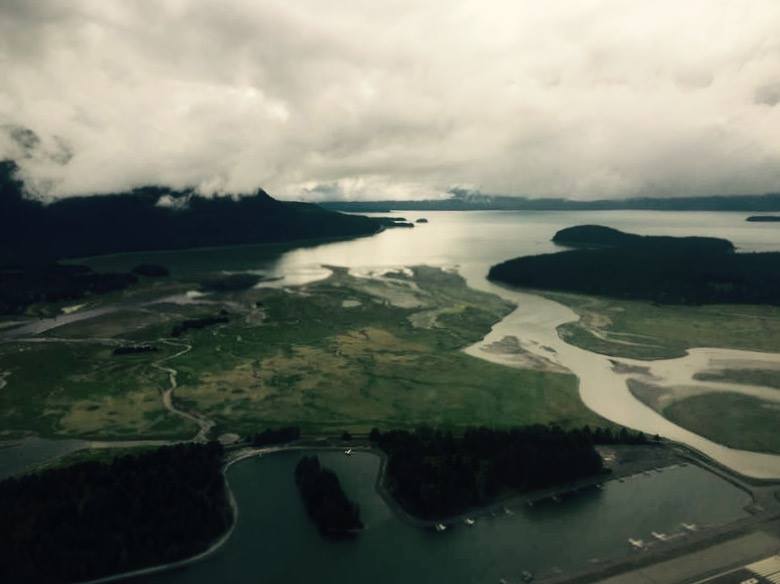
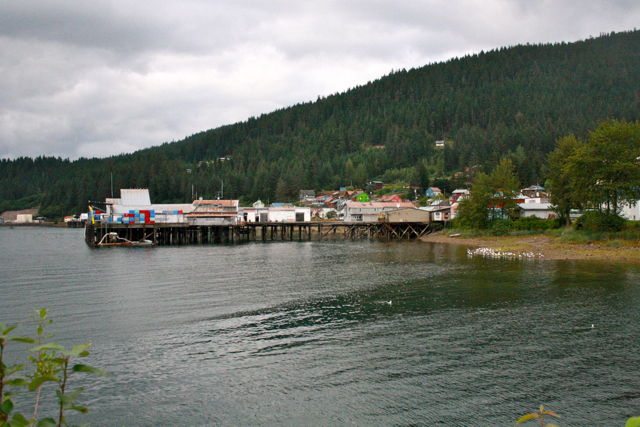
Last post about Alaska: our visit to Ketchikan, named after Ketchikan Creek which flows through the town, and the capital of Native American totem poles. We visited Potlatch Park, built on the old fishing grounds of the Tlingit Natives of Southeast Alaska and home to some beautiful Native American art, and Creek Street, Ketchikan’s old red light district. It was built over water because it was too hard to blast away the rocky hills surrounding the creek, a common story in Ketchikan.
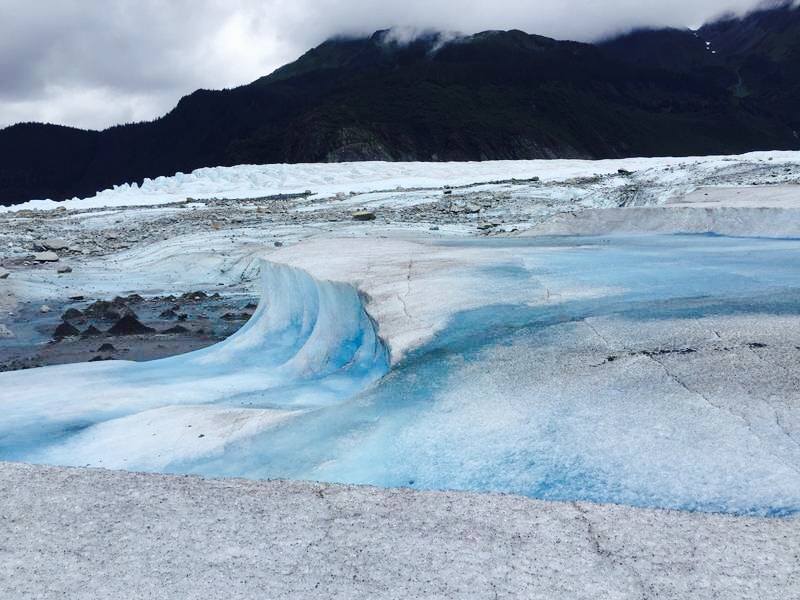
August 12, 2016: Helicopters flew us on top of Mendenhall Glacier, which is part of the Juneau Icefield. It was cold and windy up there and we were glad for our hats and gloves. The ice was as dense and spectacularly blue as ever, with tiny streams running over the surface of the glacier. Our guide showed us how to get into push-up mode and drink directly from a stream. Mendenhall Glacier is a remnant of the Little Ice Age which began 3,000 years ago. It is retreating i. e. its ice is melting faster than snowfall can accumulate to form new glacial ice. The glacier’s melt has created Mendenhall Lake, where we kayaked later that day. The lake drains into the Inside Passage thru Mendenhall River. As the glacier moves steadily away from the ocean, it presses against the mountains surrounding the lake, exerting immense force on account of its mass and weight, ripping off rocks, and pulverizing them within its compressed layers. Ground up rock forms silt and sediment, which produce abundant plankton life, which in turn sustains the crustaceans, krill, and larvae that feed numerous marine creatures including whales. A veritable primordial soup.
Later in the afternoon, we kayaked across Mendenhall Lake, a deep basin filled with freshwater from the glacier. If reminded me of Saiful Muluk, a mountainous lake located at the northern end of the Kaghan Valley in Pakistan, that feeds the Kunhar river.
The water was relatively still but it was cold and wet and extremely foggy. We could see Mendenhall glacier towering over the lake on our left and Nugget Falls, a waterfall downstream of the Nugget Glacier, right in front of us. We were the only ones on the lake at the time and in between paddling and orienting ourselves, I tried to absorb the lake’s grandeur and mystical beauty, its dreamlike abstraction and formidable physical history. It was like being in one of Whistler’s Nocturne paintings. Hauntingly beautiful. Sacred.
Mendenhall glacier, Juneau, AlaskaMy nephew and I kayaking across Mendenhall Lake
Yesterday morning started with the Mt Roberts aerial tramway in Juneau. Completed in 1996, this vertical tramway climbs 1,800 feet from downtown Juneau to the Mountain House, with stunning views of Gastineau Channel. Once we got to the top, we decided to ignore the light drizzle and go on a hike along one of the trails. The first thing that hit me was the smell: pine cones, wild flowers, damp soil, and drenched trees. Took me right back to Costa Rica’s rainforest. The Proustian phenomenon. It’s a fragrance that’s not just full-bodied and earthy but invigorating. The smell of life and death, permanently twisted together into a continuous band. A thick mist stretched over the tops of evergreens like a gauzy canopy that shapes and reshapes the landscape’s contours. Area wise Juneau is the second largest city in the US (2,701.9 square miles) with a population of 33,000 people, 30,000 bald eagles, and a large portion of Alaska’s 3,500 brown bears and 21,000 humpback whales (the whale population has rebounded from near extinction half a century ago). I find it quaint (and quite lovely) that Juneau is not accessible by road, one can only fly or sail into (and out of) the city.
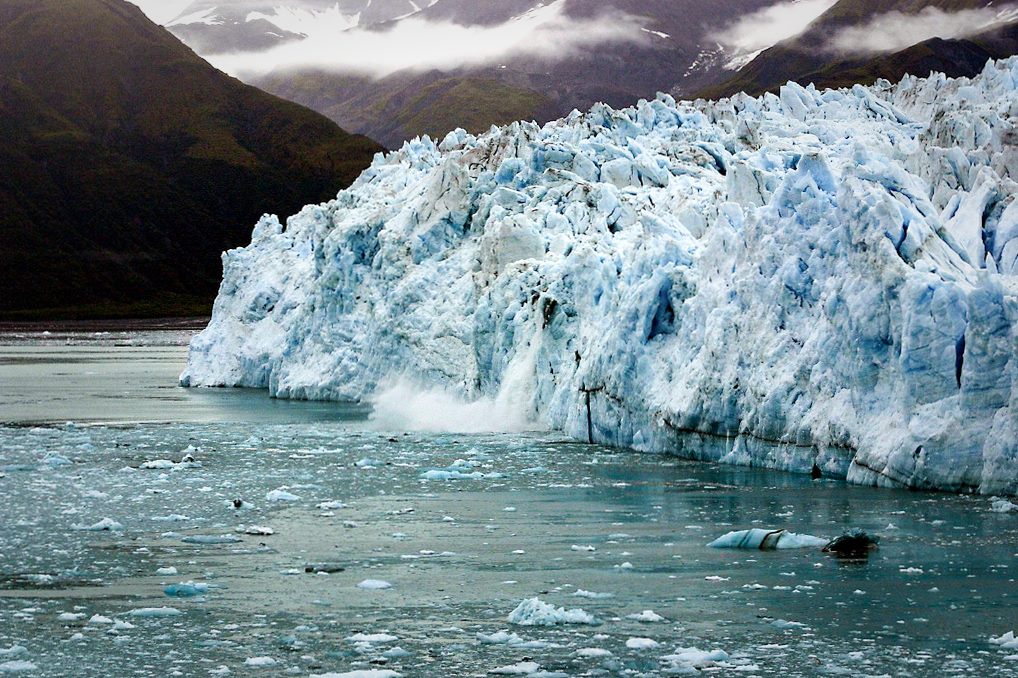
This morning at around 9 am we came face to face with Hubbard Glacier. What an awesome encounter! There are hundreds of shades of blue here in Alaska: the sky is washed in azure, the sea has a steel blue sheen to it, and the glacier ice is this gorgeous turquoise encrusted with translucent white, an otherworldly color fashioned by the density of the ice which absorbs all the colors of the spectrum except for blue, which is reflected. Hubbard is a calving glacier, i.e. it was created when pieces of a tidewater glacier broke off and fell into the sea. The process of its creation is still evident, 400 years later. Ice continues to crack softly as the glacier shifts and moves and, every now and then, there is a huge, thunderous boom as large chunks of ice become detached and drop spectacularly into the sea. It’s awe-inspiring. Puts things into perspective. Hubbard Glacier is 76 miles long, 7 miles wide, and 600 feet tall (350 feet exposed above the waterline and 250 feet below). Interestingly enough, rather than thinning and retreating, Hubbard Glacier has been thickening and advancing steadily into Disenchantment Bay since measurements began in the late 1800s. [photograph from www.alaska.org]
Today we reached Icy Strait Point and visited the small village of Hoonah. We learned some Tlingit history thru music and dance, and a short play based on the story of the Raven. “The Tlingit people of Southeast Alaska have two moieties (or descent groups) in their society, each of which is divided into a number of clans. Each clan has its own history, songs, and totems, and each forms a social network of extended families which functions as a political unit. The two moieties of the Tlingit people are the Raven and Eagle/Wolf.”
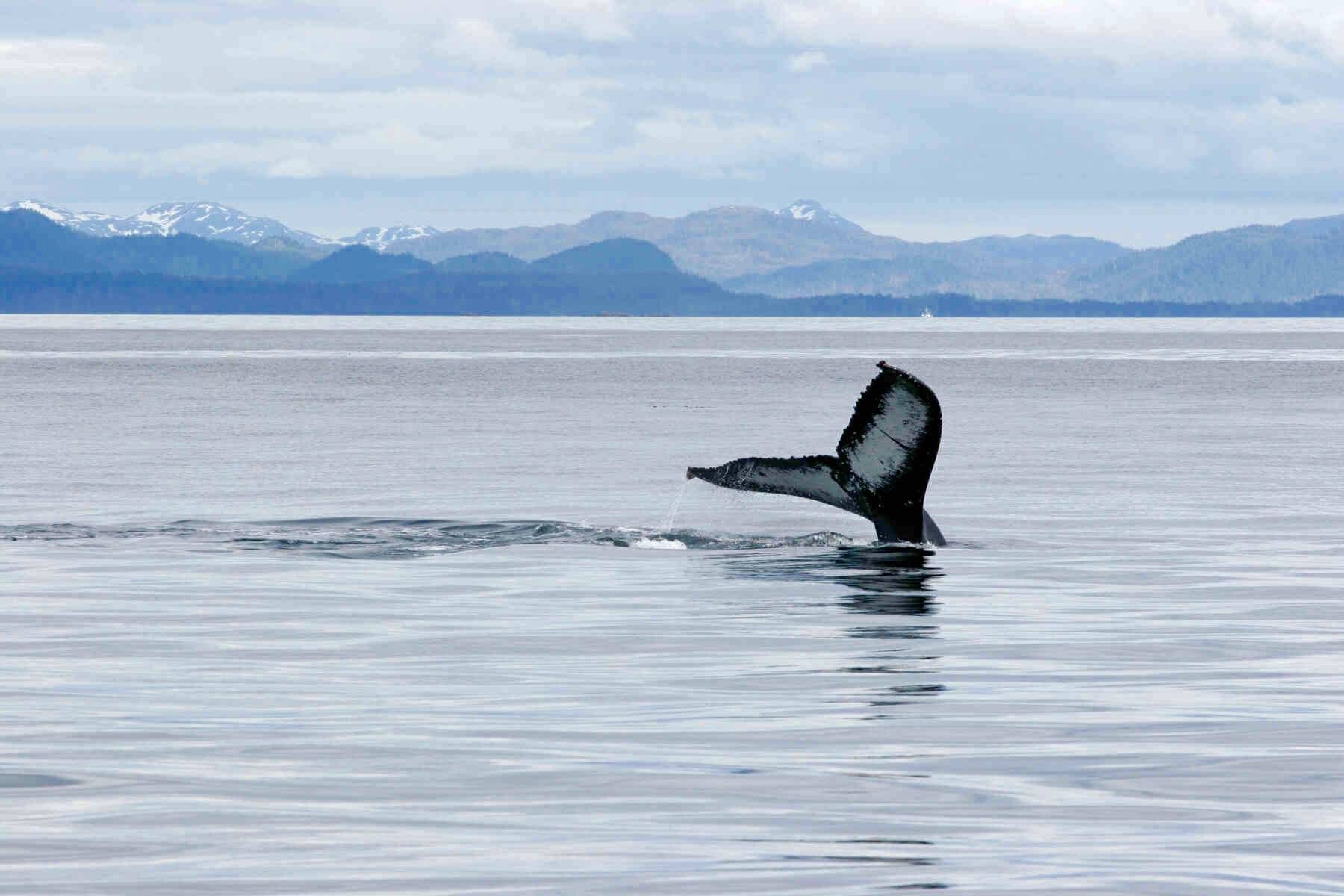
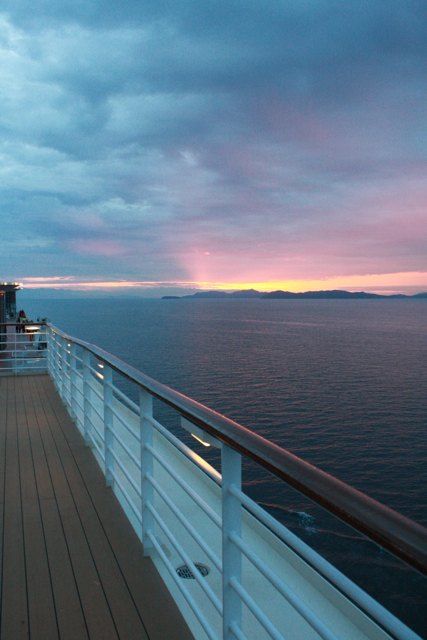
Yesterday was tough. We began to travel through the Inside Passage, “a network of passages which weave through the islands on the Pacific coast of North America,” and hit some open ocean. It was turbulent and in spite of the Sea Bands and anti-nausea patch behind my ear, I had a hard time functioning. By the afternoon, the waters had calmed down and I started to feel like myself again. We had some tea and hot chocolate and watched whales diving into the ocean. First a spray of air and water, then a fin, and finally the sleek tail with distinctive flukes. This morning, as we continue to sail towards Icy Strait Point in Alaska, the sea looks like a smooth sheet of pale blue glass and the mountains in the distance seem insubstantial, floating on top of clouds. Layers of glassy blue sea, snow-white mist, black mountains with patches of sunlit green, and a sky that mirrors the colors of the sea, all combine to create an ethereal scene, a poem to perfection… [photograph from alumni.psu.edu]
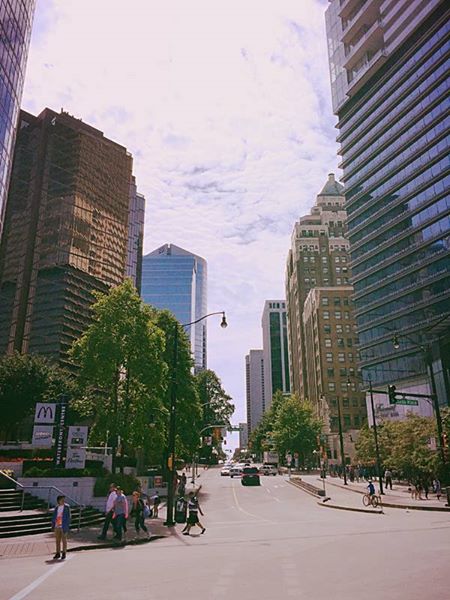
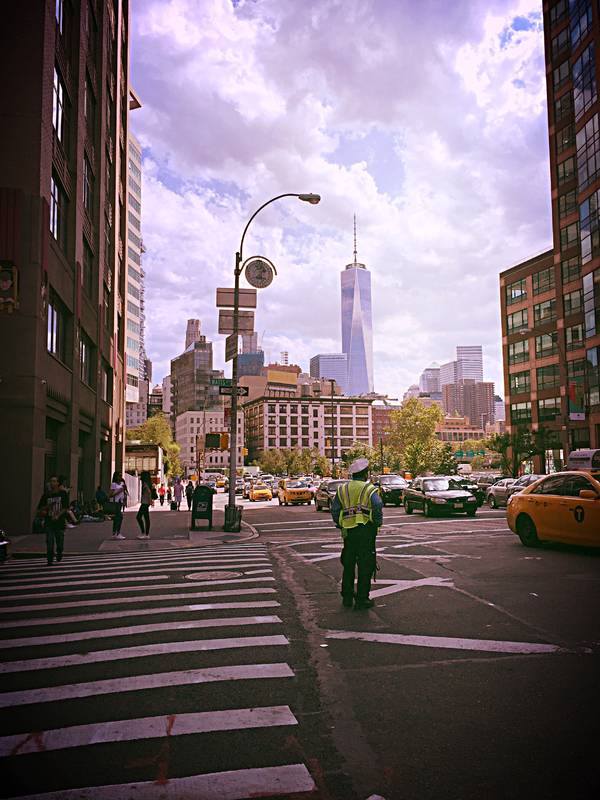
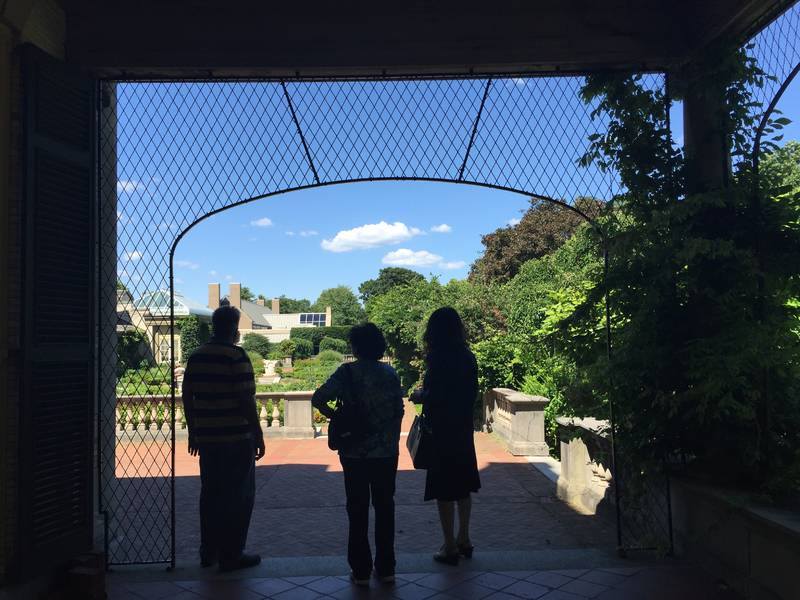
concert in prospect park, brooklynsoho, nyc, near our hotelfamily wedding in canadaon the ferry to center island, canadageorge eastman house, rochesterwith friends at another wedding in canadaaja noodle with my mom and dad
Last weekend we attended Celebrate Brooklyn in Prospect Park and were regaled with fantastic music by Bombino, a Tuareg guitarist and singer-songwriter from Niger, and by Femi Kuti, a Nigerian musician who’s the eldest son of afrobeat pioneer Fela Kuti. It was a hot summer day but the concert started later in the evening, when the sun’s harsh heat had begun to settle down. It was a free community event attended by an amazing crowd of diverse people – every possible color, culture, accoutrement, age group and dancing style was duly represented. As I looked around, I saw a vast and happy slice of humanity, fixated on a single idea – to lose themselves in the energetic beat of the music. I couldn’t help smiling and thinking to myself how this is the kind of world we should all be living in. Thx Aliya apa for clueing us in 🙂