
the aggression of white self-righteousness about how exactly to ‘save’ the other. the confidence/ arrogance to voice most clearly what’s good for the rest of us. still pisses me off, even now with all my efforts at being more mellow and not canceling people too much.
Category: self-authored
A grant for my project
I am beyond thrilled to share that I have been awarded a NYSCA (New York State Council on the Arts) grant for my project “Return to Sender: Women of Color in Colonial Postcards and the Politics of Representation.” This project will involve a short film, an art exhibition, artist talks, and a community discussion led by three women of color. The film premiere will be at Cinema Arts Centre in Huntington, NY, on Oct 1st this year.
There are so many amazing people to thank: first of all, Patty Eljaiek at Huntington Arts Council, Inc. without whose encouragement I wouldn’t have applied for this grant and whose consistent support was invaluable; Emily Dowd, Kieran Johnson and everyone at @huntingtonarts; Stephanie Gotard at @huntingtonhistoricalsociety who is my community partner (and my biggest cheerleader); Dylan Toombs who shot the footage for the film with dazzling artistry; Boris Sapozhnikov for additional cinematography; the beautiful and talented Fatimah Arshad, Urvashi Bhattacharya, and Sumayia Islam who are the stars of the film; Rajesh Barnabas and Darien Lamen who will be helping with postproduction; Nia Adams, Madeline Churney, and Farhana Islam for agreeing to lead a post-screening discussion; Jeremy Dennis for being open to a screening at Ma’s House & BIPOC Art Studio; and finally, Dylan Skolnik and René Bouchard for a film premiere and discussion at Cinema Arts Centre in spite of many complications.
Also trying to get a student intern from Stony Brook’s Women’s and Gender Studies dept to curate the art exhibition — thank you to the faculty there.
I will write more about the film, but for now I want to thank all my people — everyone who has worked with me, believed in me, and inspired me. Love you all!
This project is made possible with funds from the Statewide Community Regrant Program, a regrant program of the New York State Council on the Arts with the support of the Office of the Governor and the New York State Legislature and administered by The Huntington Arts Council, Inc.

some good news
this makes me sooooo happy. as i’ve said before, give me michelle yeoh all day and every day. to more films that center the stories of and performances by people of color, immigrants, refugees, minorities, marginalized communities, and women, especially older women. it will make for much better art, as is proven over and over again. we want our culture to reflect our realities. the days of the ubiquitous straight white dude are over.
my review: triangle of sadness
saw ‘triangle of sadness’ by ruben ostlund, then went back and watched ‘the square’ again. will rewatch ‘force majeure’ as well. what a brilliant, hilarious, provocative filmmaker. have been thinking about his work and how to encapsulate it. he likes to invert or complicate what is ‘normal.’ he strips away western society’s veneer of civilization, exposes its violent vulgar core, and pokes holes in what is considered the social contract.
he does this stylistically as well, by inserting sounds and visual disturbances in his scenes (an elevator door that keeps closing in the middle of an intense convo, baby cries during a marketing pitch, chairs crashing to the ground while a couple confront each other after an awkward one-night stand, etc).
he reaches for some of the mightiest, most glittery symbols of high culture (modern art, fashion, even winter sports), roots them out from their aesthetic safe place, and reveals the social rot, money, privilege, and absurdity they engender.
his films are always set in exclusive, elitist contexts – a bougie ski resort, a contemporary art museum, a luxury yacht – where the rich and beautiful prance and prevaricate about their wealth. a russian capitalist who quotes ronald reagan, a cute old couple who’ve made their fortune as arms dealers, a museum curator who is proudly liberal but couldn’t cut it without the privileges he wields, art collectors and aristos who remain paralyzed in the face of an assault on one of their own, how power hierarchies can be flipped like a switch, how the elite are completely bereft of survival skills, ideas of masculinity, the marginalization of people of color, horrors of the service industry, capitalism and homelessness, capitalism and art, beauty as trade and industry, the list goes on.
there’s always so much to unpack.
goodbye dear robert
as we start the new year, i can’t help but reflect on the linearity of time (a western concept imposed on many of us). i hope to continue to struggle against that programming. in urdu, for example, kal means both yesterday and tomorrow. it’s the same word. there are no borders between the past, present and future.
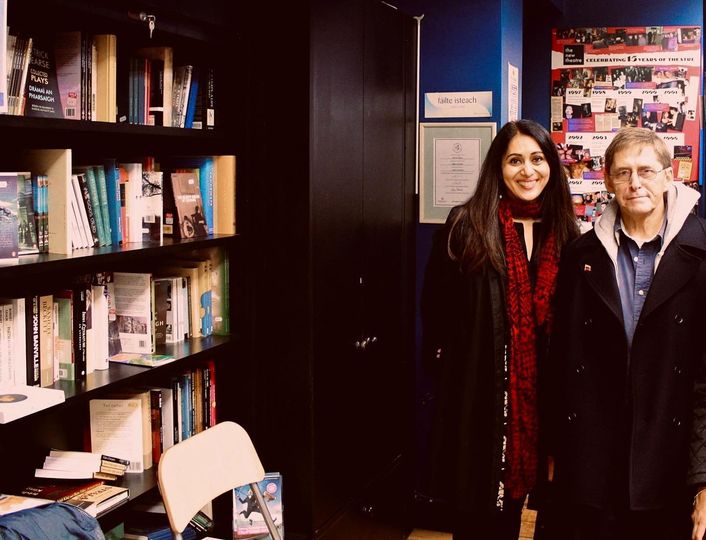
we lost a dear friend and comrade yesterday, on new year’s eve. my friend Robert Navan. i went to ireland three times, in 2013, 2016 and 2018. each time i met robert. he always gave me a little tour, took me out for coffee and pastries, for cuban food and beer in the most authentic pubs (even though i stuck with lemonade) and had plenty of recommendations about what to do in dublin.
most importantly, robert supported my work via the progressive film club. they screened ‘pakistan one on one’ and organized a brilliant screening/community event for ‘a thin wall’ (one of the best post-screening discussions i’ve ever had). they also put together a retrospective of my work and showed all three documentaries, including ‘the muslims i know.’
how lucky, how amazing to have audiences engage with my work, on the other side of the pond, in a country that’s special to me. i have always been proud to say i have wonderful friends in ireland, all of them opposed to war and imperialism, all of them fervent supporters of justice in palestine. robert was/is one of them. an old school socialist who had been to cuba many times. he told the best stories. they will continue to be with me. how i will miss him. rest in power my friend <3
morocco in the semi finals
yes, there are serious problems with fifa, with professional sports in general, with the horrors that come from hosting large scale international events, and with oppressive war-making regimes. btw most countries of the world fall within those parameters.
however, whatever happens on wed, when morocco goes against france in the semi finals, this much is clear:
1. solidarity from the global south: whether african, amazigh, arab, maghrebi, middle eastern, south asian, muslim, brown or black, people from the colonized south have rallied and celebrated morocco’s history-making games en masse
2. we are the majority: from 1492 to 1914, most of the world was colonized by tiny european nations with limited resources and infinite animus toward each other. therefore, 80% of humans are still coming to grips with colonization and genocide
3. colonialism never ended (it simply transformed and metastasized): we are still controlled by and embedded in racist, capitalist systems so the fight is not over. this is why when the western military-industrial complex goes into overdrive and never-ending wars are activated (like the war on terror or the war on drugs), they whisk together disparate regions and peoples with no regard for history, culture, or political realities – afghanistan, iraq, pakistan, libya, syria, somalia, sudan, yemen, the philippines, cambodia, vietnam, laos, colombia, cuba, guatemala, haiti, honduras, mexico, nicaragua, panama, and puerto rico can all become a monolithic ‘other’
4. consistent support for palestine: palestine has become a symbol of colonial subjugation and a rallying cry for resistance to global systems of oppression. it’s obvious that no amount of political or economic finagling can change that. people are not their governments or regimes, many of which are installed and protected by the colonizing west. the palestinian flag is a f—k you to censorship, political blackmail, and economic arm twisting
so whatever happens on wednesday friends, this is a historic moment. let’s remember it.
what a day yesterday!
morocco beats portugal and makes history. the global south celebrates en masse. it’s also my birthday. i get to hear from lovely people i’ve known across decades and continents – primary and middle school in brussels, high school in islamabad, college in karachi, university in connecticut, filmmaking / activism / beloved community in rochester, new friends on long island, like-minded compadres on facebook, and family all over the world. my husband and i spend the day in nyc. we meet our kids and have dinner at ‘let’s meat’ in koreatown. after enjoying an excellent meal, we walk to my son’s apt, eat cake, play with the fabulous loulou, and watch ‘top gun: maverick’ together. how fun is that? thank u everyone for all the warmth, love and sweet wishes – i couldn’t be more grateful <3

Farha on Netflix
i finally watched ‘farha,’ a film by jordanian director darin sallam, on netflix last night. i knew that it’s a film about the nakba (or the catastrophe) in which more than 700,000 palestinians were forcibly expelled from palestine in 1948, to make room for the jewish-supremacist state of israel.
i also knew that the israeli government has been applying pressure on netflix to censor/remove the film from their library. a bit funny considering the heretofore love affair between israel and netflix. you can read about it in belén fernández’s excellent piece ‘netflix and israel: a special relationship’ in which she shows how “netflix has been willingly subsumed into the israeli hasbara industry.”
the nakba is a vast and important episode in human history, yet sallam’s approach is small, specific, and spare. the story is told through the eyes of a 14-year old girl who becomes an unwitting witness to shocking atrocities committed by israeli soldiers. as we spend most of the film seeing the world through farha’s eyes, we too are called to witness and testify.
the experience transforms farha – gone are her dreams of studying in the city and investing her life in her community. the nakba was meant to destroy palestinian society, very deliberately, one bureaucratic and military step at a time, over multiple decades and generations.
israel’s war on ‘farha’ is enraging. not only because palestinians might be some of the few people in the world who are not allowed to tell the stories of their own dispossession and ethnic cleansing, but also because the facts of what we see in the film are not new. the terror (including theft, rape and massacres) wielded against palestinians during the nakba is well-known and well-documented, including testimonies by israeli soldiers who carried it out.
u’d have to live under a rock not to have heard of the deir yassin massacre, for example. many parts of tel aviv itself are built on depopulated palestinian villages.
in any case, the bots are out in huge numbers trying to sabotage farha’s ratings, so pls watch the film, ‘love’ it on netflix (two hearts), make an imdb account, give the film 10 stars, go to the film on google and letterboxd and give it 5 stars. write a review if u like.
let’s make sure we see more stories by and about the oppressed and their histories, and less state propaganda packaged as art. we can make a difference.
the prime of miss jean brodie
watched ‘the prime of miss jean brodie’ again last night, with the magnificent maggie smith. this film, made in 1969, always shocks me on account of its boldness and contemporary relevance. the characters, including the titular jean brodie, are deeply flawed, their trespasses unsettling, the emotional tenor of the film (novel by muriel spark) is ambiguous, everything painted in grey, without the comfort and predictability of black and white. in short, it’s a fearless portrayal of life with all its contradictions and unsavory realities (including the allure of fascism). i remember a teacher somewhat like that in high school, back in islamabad. it was an all girls school. i was never in her orbit but she created some commotion in our midst, before being let go.
Editing The Injured Body: Amanda
Listening to Amanda Chestnut talk about ‘The Negro Artist and the Racial Mountain’ by Langston Hughes and what a profound effect it had on her work as a Black artist. The essay provides trenchant clarity to all artists of color by confronting the assimilationist instinct of a colonial mentality.

part of nature
i try to take breaks in between editing (which requires sitting at a computer for long periods of time, staring intently at a screen).
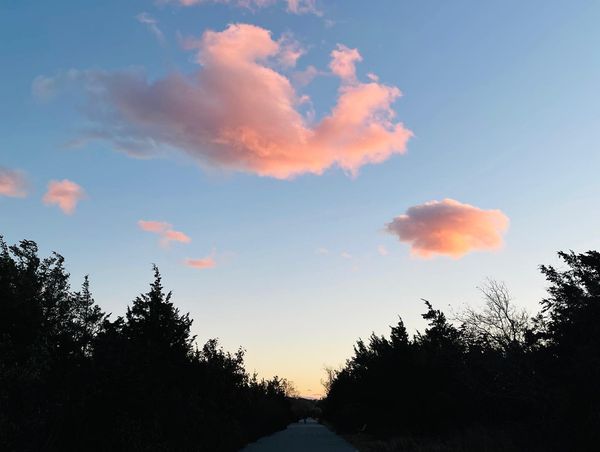
it’s super windy today, so much so that temperatures feel 10 degrees lower than they are. the husband was too cozy reading his book, so i put on my hat and jacket, grabbed my ski gloves and went to west meadow wetlands reserve (next to our house) for a 45 min walk.
i half walked, was half carried by the wind. it was invigorating to feel its force on my body and skin. the trees around me were twisting in the same gusty gale, the grass flattened by it, combed with little bits of sunlight, a few obstinate leaves held on to their branches like yellow tongues licking the sky, everything imbued with a deceptively warm rusty glow.
the clouds waited patiently, capturing and refracting each shade and emotion. the sun finally set in a climactic scene, birds windsurfed overhead, deer walked by me as if it was the most natural thing in the world. what a beautiful home, our planet. it’s the lifeblood that activates our minds and bodies. grateful to be alive, to be present.
highlights from my playlist: tu aja (remix by DJ usman bhatti), yamaha (dacosta), more than this (roxy music), 1979 (the smashing pumpkins), island in the sun (weezer), and float on (modest mouse)

My questions for Shirly Bahar
The obligatory selfie after a satisfying dinner. It was a full house at Hofstra on Nov 9th for a discussion about Shirly Bahar’s book, ‘Documentary Cinema in Israel-Palestine: Performance, the Body, the Home,’ and my film, ‘The Injured Body.’ Here are my questions for Shirly:
1) You say that although oppression and racialization have impacted Palestinians and Mizrahim differently, the documentaries you discuss in the book share a political commitment and performative affinities. They defy the removal of the pain of Israel’s marginalized people from public visibility.
You discuss how documentary performances of pain by Palestinians and Mizrahim, when seen together, invite us to contest the segregation of pain and consider reconnection. Could you elaborate on that?
2) There is one sentence in your book which hit me hard. It is the commonly held notion that ‘the trauma of witnessing destruction directly harms the usage of language.’
Meaning that those who are occupied (on whose minds and bodies violence is constantly enacted) are never seen as credible witnesses of their own pain, of their own lived experiences, based on dominant codes of credibility. It’s like the gaslighting I was talking about in the context of microaggressions. You take issue with this notion. Could you tell us more?
3) Since we are talking about language and violence, I also wanted to bring up the constant threat of violence. You talk about Palestinian children experiencing ‘withheld violence.’
Your words reminded me of Fanon of course, and the muscular contraction of the colonized body. What does this imply in the P/I context?
4) I would like to end with something you say in the book, that ‘it takes perpetual learning and training to try and relate to the pain of others in a politically informed and committed manner.’
You also say: ‘More often than not, those who care for the pain of others are found in relative vulnerability themselves—political, physical, mental—thus chancing their becoming further undone.’
I think of the #BLM movement and its principled support for justice in Palestine. Could you expand on this important point.

from the metamorphosis by franz kafka
it’s incredible that this book (written in 1912) continues to be a propos, fascinating, a literary feat today, in 2022, exactly 110 years later. it provokes disbelief and uproarious laughter, remains steadfast as a masterpiece, and ends with heartbreaking pathos.
there are as many interpretations of ‘the metamorphosis’ as there are readers (and that means a lot). some believe that gregor samsa “like other of kafka’s doomed protagonists, errs by failing to act, instead allowing himself to be acted upon.” others draw comparisons to willy loman from ‘death of a salesman’ and write about the degradation of modern capitalist work. there are those who see a freudian twist to the story and focus on gregor’s overbearing father. still others think the metamorphosis relates to gregor’s sister, grete, and her evolution over the course of the novella.
my take is sobering. to me the metamorphosis is about othering. the idea of otherness has been addressed elsewhere but mostly in terms of gregor’s own alienation, loss of identity, and lack of agency.
i see othering that can make someone seem ugly, disgusting, and less than human. without being threatening, difference can be turned into something dangerous and attacked with impunity. and this change can happen overnight, so that the other can now be crushed underfoot, starved to death, and left to die.
in the same way, children can be arrested, villages bombed, people tortured with the benediction of the law, and those committing the violence whine about being the victims. it’s always the monster who forces their hand.
#themetamorphosis#franzkafka#othering#difference#violence#selfvictimization#theotherisamonster

mount greylock
last set of pictures from our fall adventures. a trip to mount greylock, the highest point in massachusetts, for breathtaking views.
#mtgreylock #mountgreylock #massachusetts #highestpoint #fallphotography #fallfoliage #fallinstagram #autumnphotography #autumninstagram #panoramicviews #berkshires


hiking in the berkshires
hiking with my favorite human last tuesday. too much beauty to soak in. sheer joy and overwhelming gratitude for being alive <3
#sheephill #williamstown #massachusetts #berkshires #fallfoliage #fallphotography #fallinstagram #autumnphotography #autumninstagram #toomuchbeauty #gratitude

