
at the daachi foundation’s arts & crafts show this morning where my daughter and i wanted to buy everything, tea with uncle zafar, and dinner at good old salt & pepper, still one of my favorite burger joints in lahore.
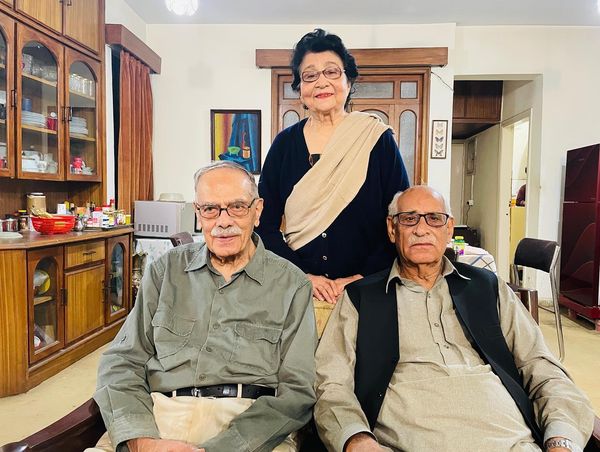
at the daachi foundation’s arts & crafts show this morning where my daughter and i wanted to buy everything, tea with uncle zafar, and dinner at good old salt & pepper, still one of my favorite burger joints in lahore.
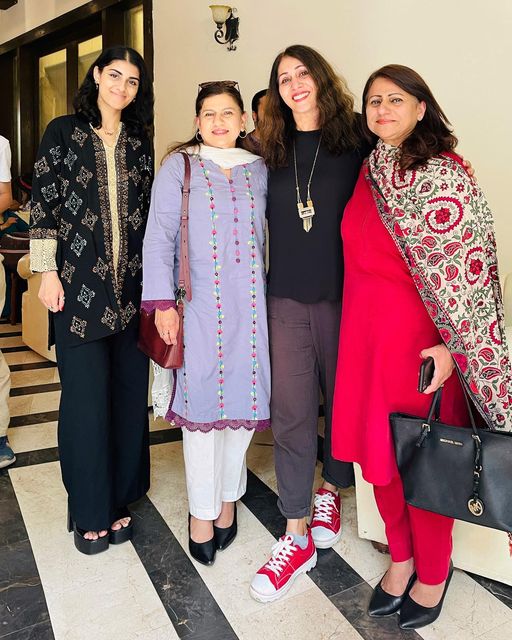
look who we found at the daachi arts & crafts show in lahore today – my dearest friend abeela from rochester and her sister!!! what are the chances? amazing
yesterday pakistani art at artsoch contemporary and ejaz gallery and then a delicious lunch at cafe beirut in gulberg. we had mutabal (an eggplant dip with a smoky flavor, sprinkled with pomegranate seeds), arayes (grilled pita stuffed with spiced ground beef, onions and parsley, a street food), and om ali, which i fell in love with in oman (it means mother of ali, a traditional egyptian bread pudding, layered with puff pastry, milk, and cream, flavored with rose water and sprinkled with lots of nuts). in the evening i took my parents and daughter to see a play at alhamra. more about that later.

badshahi mosque, lahore fort, and lunch at cooco’s den in old lahore with my bacha. the mosque is so beautiful it moved me to tears. commissioned by mughal emperor aurangzeb. built between 1671 and 1673. majestic. grand. but in constant dialogue with its surroundings. every arch a different framing of the mosque and courtyard. the proportions perfection. the artistic taste level divine. breathtaking beauty.


pyari zainab, i cannot believe that you left us so soon. i am heartbroken dearest. you will always be a sweet girl to me. the one who brought her girls over, whenever i was in lahore. you wanted us to be close, even though we lived across oceans. how will i meet you this time?
i know there were struggles. i know how much you missed your dear mom and dad, our smiling phuppo aunty iffie and our soft-spoken phuppa. it will be so hard for your daughters. you were the center of their universe. for once, i have no words. just infinite sorrow.
inna lillahi wa inna ilayhi raji’un. surely we belong to god, and to god we return.

breakfast at lahore gymkhana with the amazing anjum (my dear friend from high school), a photo shoot with my daughter, and then high tea with my husband’s nephew hassan and his lovely wife.


back at the lahore literary festival. wonderful to hear palestinian writer adania shibli talk about her stunning book, minor detail. not sure about the panel – she was paired with william sieghart, a british entrepreneur, publisher and philanthropist, who kept talking about the ‘conflict’ and how dialogue can solve all problems.
so glad adania addressed the use of language and her issues with the word conflict. it’s colonialism, she said. she explained how language can become complicit in a crime, how it can disappear it, and that there is no dearth of dialogue between palestinians and israelis – there is constant contact but it’s a certain kind of interaction, based on power differentials, where palestinians are forced to confront and challenge power structures day in, day out.
adania spoke about her love for the arabic language, how playful, free, and open it is. how important it is to palestinians. ‘adab’ in arabic means both literature and ethics. she also spoke about translation and how it’s essential, even in english, to create a scarred language with a memory of arabic.
finally, she talked a lot about narration and silences. the impossibility of narrating. the linear structure (beginning, middle, end) is not accessible to palestinians, therefore she can only imitate coherence. it’s better to accept silence rather than put words in someone’s mouth. we come to language from two sides of silence – both the reader and writer engage with language in silence.
my favorite session so far.
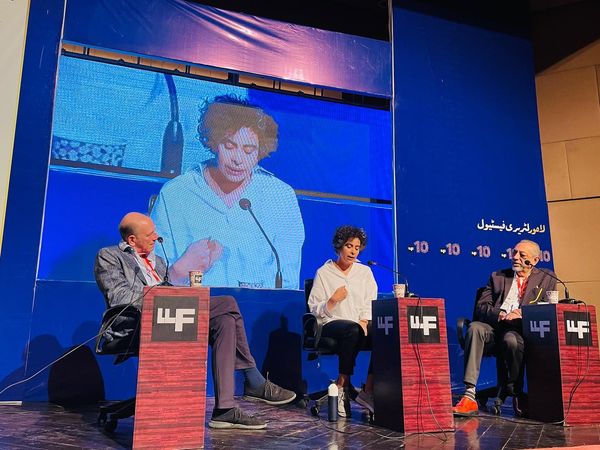
landed at the lahore literary festival today (thx for letting me know saira). went to alhamra to listen to daisy rockwell whose translation of “tomb of sand” by geetanjali shree won the booker prize, historian corinne lefèvre whose book “consolidating empire: power and elites in jahangir’s india (1605–1627)” resets the history of jahangir’s rule, mohsin hamid who talked about “the last white man” (a book i have read), and finally nobel laureate abdulrazak gurnah who discussed his work in: across centuries and continents, colonialism and the fate of the refugee in the gulf between cultures and continents.
obviously, i was thrilled by a discussion on decolonizing literature and history, and so i wanted to ask mr gurnah about writing in english and the complications of producing decolonial literature in an imperial language. i referenced ngugi wa thiong’o’s “decolonizing the mind” and how he describes the disconnect between a colonized person’s mind and body – the mind functions in the colonial language while the body remains stuck in its native tongue. as colonized people ourselves, here in south asia, i was hoping to engage in an interesting discussion, but mr gurnah became defensive. perhaps he thought this was a personal attack on his work. he didn’t really address my question, saying simply that he didn’t agree with me or with ngugi who was welcome to do his own thing. i was hoping for more nuance and engagement.
anyway, later in the day i was approached by a woman who didn’t seem to be pakistani. she recognized me and said my question truly spoke to her and her husband, esp the idea of the mind-body split. they are french-speaking algerians and understand what it means to think and write in the language of the colonizer. there was an immediate connection between us. we talked about the algerian war of independence and frantz fanon. finally.

lunch with bina, my little sister in karachi, at xander’s (where the calamari is to die for), and before that frere hall where saba and i spent most of our time in the sadequain gallery. amazing!


ast night: dinner with my dear friend umar and his beautiful fam (such a treat to spend time with his brilliant kids mashallah) and a short but sweet meeting with the lovely lovely rabab (we met after high school i think – what a step back in time).

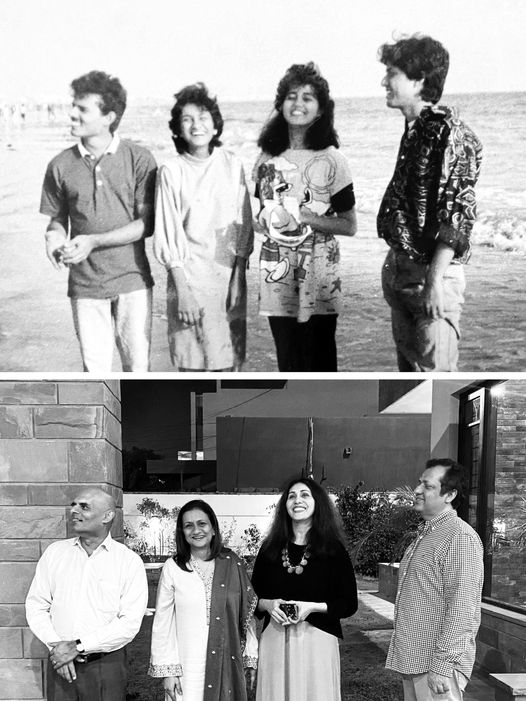
before and after. with some 30 years in between :))
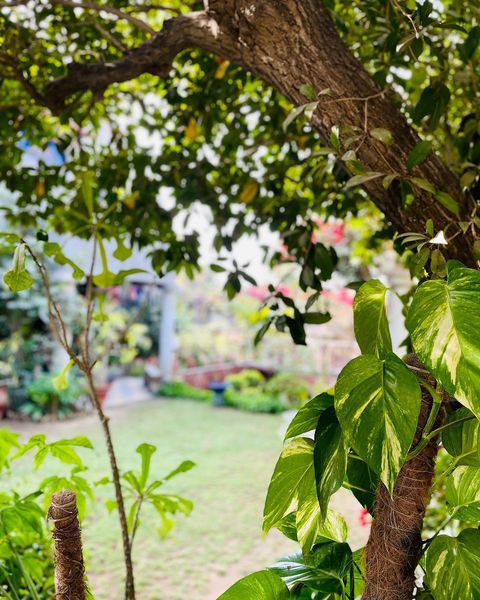
mornings in saba and najeeb’s enchanted garden. this is what i wake up to. i walk around, take pictures, and savor the sounds of pakistan.


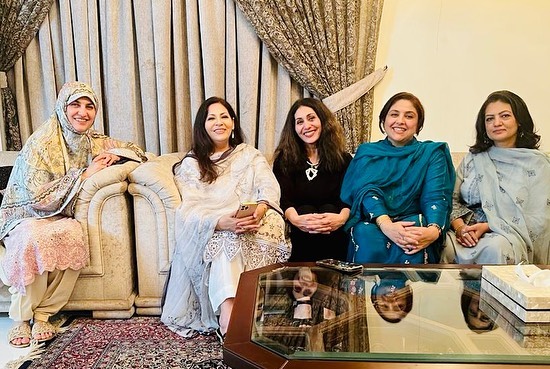
lovely dinner with fam last night. thank u dear huma for such a sumptuous dinner and for getting everyone together so beautifully. such warmth and generosity <3
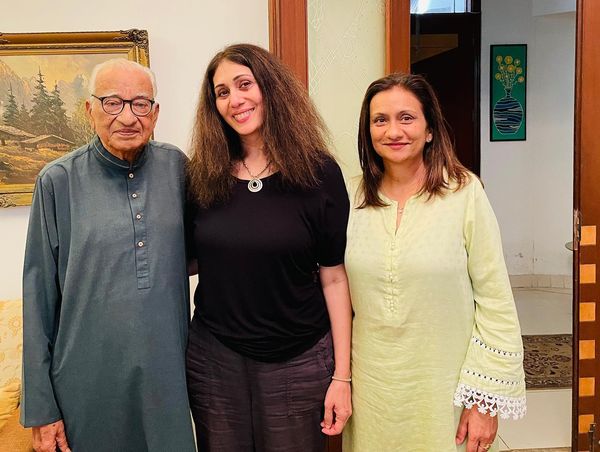
lunch at colette’s (the savory crepes are delish) with my peeps then tea with uncle razi, someone who never ceases to amaze me <3


today the mohatta palace in karachi with the lovely saba. commissioned as a summer residence in 1927, designed by agha ahmed hussain, the first muslim architect of india. made of yellow gizri and pink jodhpur stone in a mughal revivalist style. fatima jinnah lived here until her death. now a beautiful museum and exhibition space.
