
as we step into 2025 (an arbitrary threshold with just one meaning at this moment – the shattering reality that a holocaust has been enabled and supported for more than a year in full view of the world), i feel unsettled. the cognitive dissonance that many of us have experienced since october 2023 (or since forever) seems heavy. on the one hand, i am thankful for my family and friends and the fact that we live in relative security, on the other, i am intensely aware of the suicidal gluttony, violence and vulgarity that underpin all systems promising safety in exchange for genocide. the brutal murder of robert brooks in a graphic video that’s impossible to watch, reminds me of the bodies being starved, exploded, pulverized, and piled into mass graves in gaza. i want to write something about the racial dynamics of it. the word ‘dehumanization’ is so overused, it’s lost all meaning. what is truly happening when the black or brown body is savagely penetrated, its skin broken, its borders breached? the mind boggles at the viciousness embedded in white supremacist colonial ideologies, and the widespread silence, convoluted justifications, and hardcore denial they entail. i have no faith in any of these systems – capitalism, the nation state, settler colonial logics, imperial bs, or international ‘rules’ and pompous political rhetoric. the only thing that makes sense is community, resistance, and indigenous/ palestinian ways of living in concert with the land and its inhabitants, with respect and generosity. may 2025 be a year of peace and connection. may 2025 be the year we celebrate palestinian freedom.
Category: self-authored
Elizabeth Catlett’s work at the Brooklyn Museum
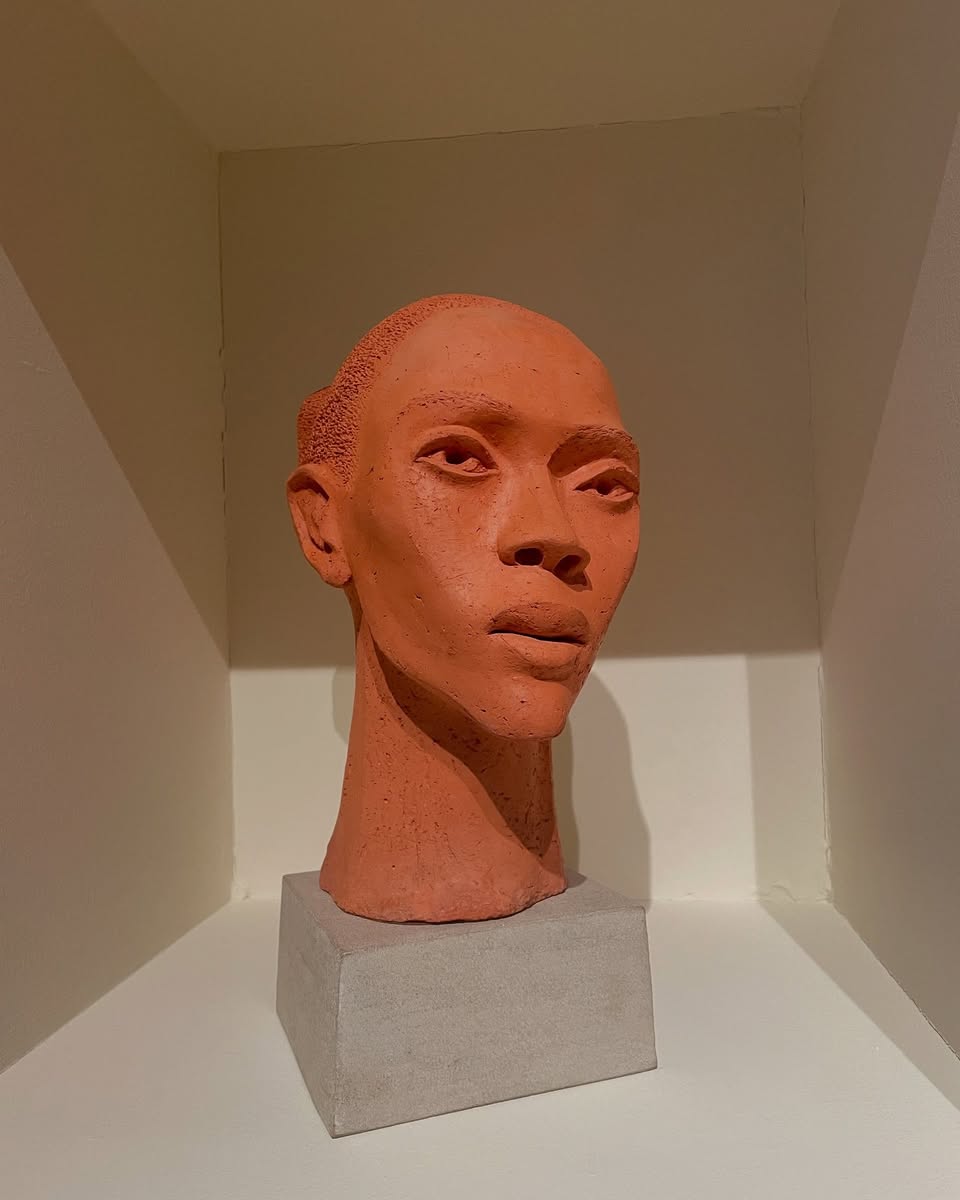
A couple of weeks ago I saw Elizabeth Catlett’s work at the Brooklyn Museum. I had already seen ‘Target’ as part of the exhibition ‘We Wanted a Revolution: Black Radical Women, 1965–85’ in Buffalo, in 2018. It’s a beautiful bronze bust of a Black man, his distinguished face seen through the crosshairs of a rifle scope made of metal and drilled roughly into the wood block that holds the sculpture. Fierce.
‘Elizabeth Catlett (1915-2012) was an avowed feminist, a lifelong activist, and an astutely observant artist. Spanning 75 years of diverse production, Catlett’s career was guided by her bold creative artistry, rigorous practice, and deep commitment to social justice and political activism.’
The first thing one sees in Brooklyn, as one enters the exhibition, is an exquisite terra cotta sculpture of a woman’s head. I was completely overcome by the delicate beauty of the piece.
In 1946, Catlett moved to Mexico as a guest artist at the printmaking collective, Taller de Grafica Popular. It was in Mexico City that she learned the terra cotta technique she later employed in her work (building a hollow shape from coils of clay) from the artist Francisco Zuniga. This indigenous technique, which allows the gentle definition of features, was in use long before the Spanish invaded and colonized. ‘Tired’ which depicts a physically depleted Black woman claiming a moment of respite and ‘Mother and Child,’ a smaller piece which brims with tenderness and the sense of safety we should all be allowed to feel in our parent’s arms, are stunning. The mother’s muscular legs seem to be rooted in the soil beneath her and reminded me of Soviet monuments and Diego Rivera’s murals.
‘While ultimately becoming a Mexican citizen, Catlett never lost sight of the Black liberation struggle in the United States. She embraced a political radicalism that merged the goals of the Black Left in the United States with the lessons of the Mexican Revolution and international feminist movements. Her transnational identity fueled a critical understanding that Black Americans and Mexicans were linked with other oppressed people around the world in a struggle against poverty, racism, and imperialism. As a result, she developed a rich visual language through which she articulated her solidarity politics across various media.’
Her sketches, lithographs, woodcuts, lino prints, watercolors, and sculptures bridge the gap between aesthetics and politics.
Catlett’s work will be on display at the Brooklyn Museum until Jan 19, 2025.
Bapsi Sidhwa (1938 – 2024)
Bapsi Sidhwa has passed away. She was a national treasure. I read ‘The Crow Eaters’ when I was in college. My friend Najeeb had just finished reading the book and was kind enough to lend me his copy, with much enthusiasm. What I loved most about the book was its location – the vibrant, bustling, mythical city of Lahore, the city of my birth. The story took place during British colonial rule and focused on the Parsi community, a Zoroastrian community settled in the Indian subcontinent since the 7th century. The writing, in English, was sharp, colorful, bawdy. I had never read anything like it before, least of all from a Pakistani woman novelist. The bright intensity and earthiness of her work stayed with me. I read ‘An American Brat’ soon after I moved to the US in my 20s, and it spoke to me loudly – as an immigrant trying to find an emotional anchor to a new home and a young woman configuring and reconfiguring the various pieces of her identity. Later I read ‘Ice Candy Man,’ the book about the partition of India that inspired Deepa Mehta’s film, Earth. Many consider Sidhwa’s book to be an important intervention in the telling of the partition story. Countless papers have been written about its decolonial approach, its feminist lens, its centering of minorities, its understanding of spatiality, its hyphenated perspectives, and polyphonic narrative experiences. It’s a book that’s semi-autobiographical and shows how the violent tear of the partition was multi-tiered and enduring. Sidhwa had been living in the US since the 1980s. A true pioneer. May she rest in peace.
my khala, dureshewar aziz khan, passes away
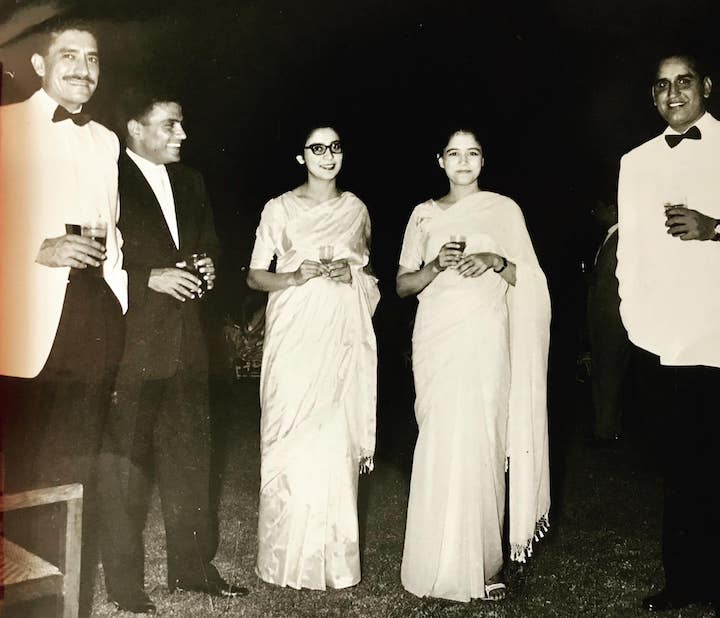
our dear khalajaani, dureshewar aziz khan, has passed away. named after the beautiful princess durrusehvar sultan, daughter of the ottoman caliph abdulmejid, my khala was the star of a family of extraordinary people – writers, speakers, political activists, athletes, linguists, lovers of art and poetry but also sports and outdoor life. khalajaani excelled at her studies from early on. she graduated from medical school, became an OBGYN, and worked as a doctor for the pakistan army, attaining the rank of captain. this was back in the 1960s when women all over the world had not yet won some of the rights (however tenuous they might be) that we take for granted now. she married a dashing air force officer and lived an adventurous life, spending years in libya where her husband was posted and going on ski vacations at a PAF resort in the karakoram, the second-highest mountain range on earth. i still remember how their home in rawalpindi was filled with classical music and expressionist art. after we moved from brussels to islamabad, my mom and khala organized many fun excursions together. we would have picnics at lotus lake and climb trees that seemed as tall as hills. our moms were young, sporty, vibrant. the trips ended abruptly when khalajaani had to deal with a heartbreaking family tragedy. she did it with a reserve of strength, positivity, and intelligence that was nothing short of heroic. in middle age she became a psychiatrist perhaps to better heal herself and those around her. she wrote a book on the subject. in their 70s, my khala and khaloo made the courageous decision to move to the US, to be close to their only son. he was everything to them, and later his children became the heart of their existence. some years ago i remember khalajaani calling my mom. i picked up the phone and we began to talk. she asked me about my political and film work. i tried to be brief so as not to bore her but she asked a lot of questions. she shared her own ideas and then asked me what i thought. she considered my opinions carefully and even changed her mind at times. she was already ill and bedridden in those days, but her mind could still be as sharp as a tack. there was a lifetime of brilliance and intellectual curiosity to sustain it after all. may she rest in power. inna lillahi wa inna ilayhi raji’un.
[my khaloo is on the left, next to him is his friend, my attique mamoon, my khala is the beautiful young woman on the right, the one without glasses]
Recognizing the Stranger: On Palestine and Narrative by Isabella Hammad
Last night I finished reading Isabella Hammad’s Recognizing the Stranger: On Palestine and Narrative.
The first section of the book is based on her speech for the Edward Said Memorial Lecture at Columbia University in September 2023. It’s a speech that’s remarkably erudite, as Rashid Khalidi has said, with references to the work of Edward Said of course but also Aristotle, Freud, Kanafani, Wynter, Lindqvist, Darwish, Ferrante and many more. The tone is calm, analytical, cerebral. I felt immense joy reading it for I was privy to an extraordinary process of sculpting with words, carving ideas and connections ever so gently until a flawless shape is achieved.
From Between the Covers Podcast: ‘[Hammad] looks at the middle of narratives, at turning points, recognition scenes and epiphanies; which explores the intersection of aesthetics and ethics, words and actions, and the role of the writer in the political sphere; and which complicates the relationship between self and other, the familiar and the stranger.’
Certain paragraphs brought tears to my eyes, as there was a shock of recognition. For example this: ‘Rather than recognizing the stranger as familiar, and bringing a story to its close, Said asks us to recognize the familiar as stranger. He gestures at a way to dismantle the consoling fictions of fixed identity, which make it easier to herd into groups. This might be easier said than done, but it’s provocative—it points out how many narratives of self, when applied to a nation-state, might one day harden into self-centered intolerance. Narrative shape can comfort and guide our efforts, but we must eventually be ready to shape-shift, to be decentered, when the light of an other appears on the horizon in the project of human freedom, which remains undone.’
The speech was delivered a few days before October 7th, before the genocide. Earlier this year, in January 2024, Hammad wrote an afterword to the speech, which occupies a third of the book. The style of writing has changed, it’s now direct, urgent, political, based on numbers and dates. It’s full of questions. She sees the proximity of humanism to European colonialism and colonial violence. It’s as if Hammad has reached her own turning point, her own scene of recognition. I was choked with emotion as I read the last part of the book, I took many notes so I could re-read paragraphs like this:
‘In his essay on Shatila, [Jean] Genet speaks extensively of the beauty of the Palestinians, who remind him of the beauty of the Algerians when they rose against the French. He describes it as “a laughing insolence goaded by past unhappiness, systems and men responsible for unhappiness and shame, above all a laughing insolence which realizes that, freed of shame, growth is easy.” The Palestinians in Gaza are beautiful. The way they care for each other in the face of death puts the rest of us to shame. Wael Dahdouh, the Al Jazeera journalist who, when his family members were killed, kept on speaking to camera, stated recently with a calm and miraculous grace: “One day this war will stop, and those of us who remain will return and rebuild, and live again in these houses.”’
afshan noreen qureshi (1955 – 2024)
she was a hero to so many – women and children whose lives she transformed. she never said no to any woman who needed protection, help or encouragement. one of a kind, fearless, but also extraordinarily generous, a pioneer and indeed a changemaker. we will miss u dear afshan. our community will not be the same without u. may u rest in power and may god give strength to sohail bhai and the kids. inna lillahi wa inna ilayhi raji’un.

congrats arshad nadeem
in a world full of violence and death, some stories manage to sparkle like drops of sunshine and make one’s heart sing. look at imane khelif who grew up in an algerian village and sold scrap metal to pay for bus trips to the city where she trained as a boxer. her dad is a welder, her mom sold couscous to support her daughter’s dream. now arshad nadeem from a small village in pakistan, who built his skills in javelin throwing by practicing tent pegging, has broken olympic records with a stunning throw of 92.97 meters. his dad is a mason who makes as little as $1/day at times. when gas bills got too high, the family was forced to use a coal pit for cooking, but they made sure arshad continued to have the diet he needed. to rise from such humble beginnings and become the best in the world, to compete with athletes trained by states and given an abundance of resources, to come from the global south and win in colonial empires – what incredible power and audacity! u make us proud!
btw still boycotting the olympics. come across these stories on social media and in whatsapp groups 🙂
in new york city
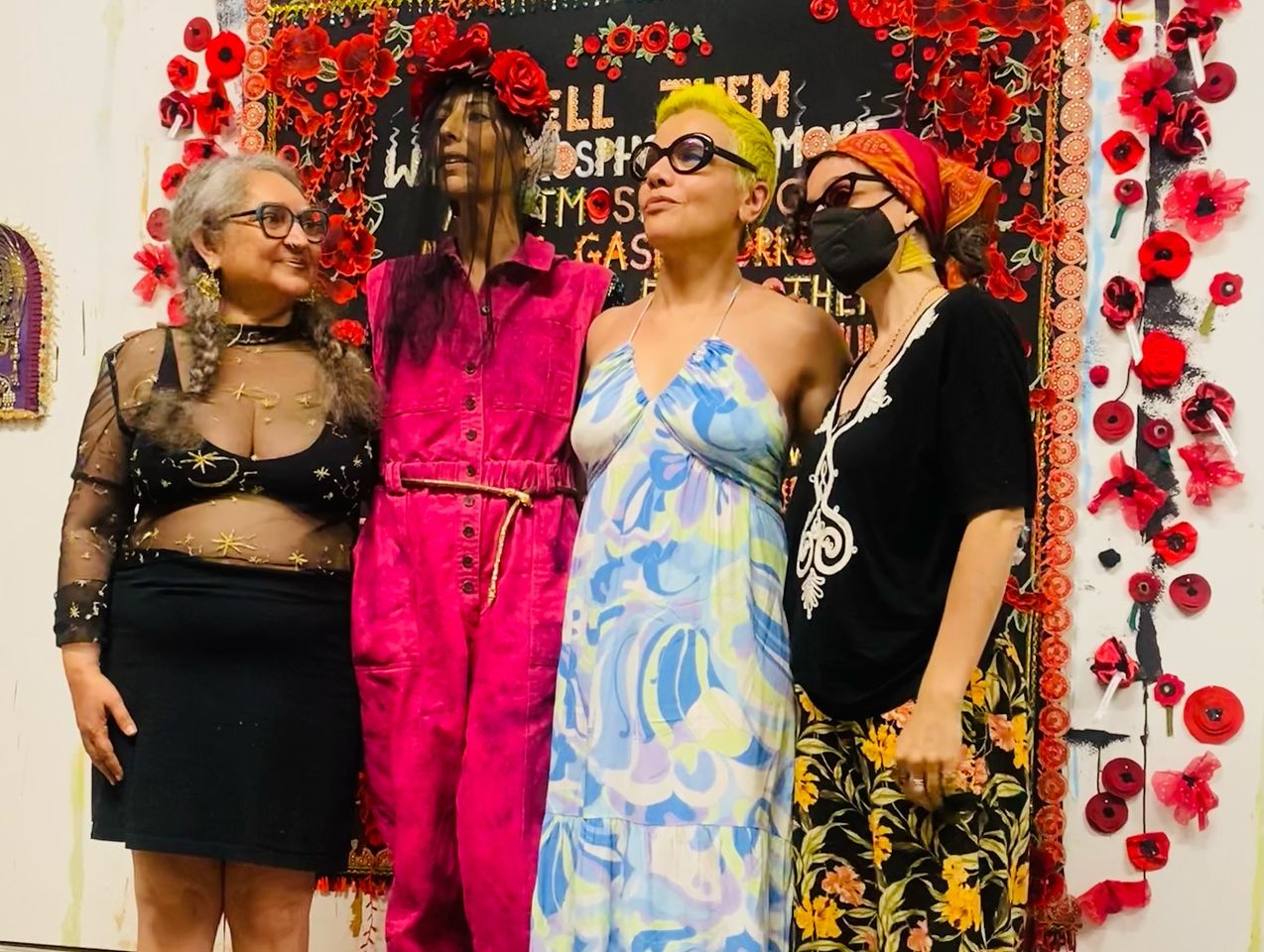
a recap of moments: walk by battery park at night with my daughter and looking at nyc thru her eyes, listening to françoise hardy again and feeling this profound emotional tug, remembering donald sutherland in ‘ordinary people’ and the extraordinary brilliance with which he talked about sculpture in one of his interviews, attending a gaza fundraiser organized by global feminists for palestine at jaishri’s studio in brooklyn (yes, that’s suheir hammad in the black veil) and being in community with other artists and writers, and finally dinner at tacombi’s with the lovely zeenat – it means everything to me to spend time with my friends’ kids and know that they are thriving.

last day at kolaj fest
friday june 14th in new orleans: started the day with a big breakfast at who dat cafe – had many brunches there back in feb. best biscuits and homemade jellies. arrived at cafe istanbul a bit late – apparently there is another ‘istanbul cafe’ on royal st and that’s the address i gave uber by mistake. so went on a longish car ride just to loop back to where i started. attended ‘collage & poetry’ followed by ‘time & fragmentation: collage theories.’ clive knights’ presentation intrigued me as i’ve been thinking about fragmentation in the context of war and its impact on the social/ political/ individual body. met the wonderful jenny veninga, a fellow activist and scholar, who shared other brilliant ideas with me. attended ‘getting organized: collage projects’ and then after a quick lunch at st. roch market, was inspired by ‘take me to the water: a baptism in collage,’ a workshop with the amazing lavonna varnado-brown, who talked about claudia rankine’s book ‘citizen’ and the idea of the body having memory – a major inspiration for my work. watch ‘the body has memory’ a video poem i created in 2022 and for which i won best in show at a juried exhibition organized by the huntington arts council in ny. link in comments 
ended the day with collage & kiki, at the john thompson legacy center, hosted by lavonna varnado brown and jennella young. created collages with other artists and spent a lovely evening. so thankful to kolaj institute for creating this wonderful space at the intersection of art, activism, and academic research. hope to make this an annual ritual inshallah.

block celebrities
cate blanchett wears a dress at an award ceremony with some of the colors of the palestinian flag and everyone is thankful. it’s so little, folx. so very little for someone with that kind of platform and privilege. celebrities, except for susan sarandon, are useless. they will risk nothing, not even a tiny role in a film or a random award, to speak out against genocide. tiktokers urging people to block celebrities have the right idea.
Ibsen’s An Enemy of the People
Went to see Ibsen’s An Enemy of the People at the Circle in the Square in NY last Sunday – a Broadway revival directed by Sam Gold, w Jeremy Strong and Michael Imperioli.
The stage is long and narrow, surrounded by audience members, lit by oil lamps, with various scenes taking place at different ends. It’s the late 1800s, we are in a Norwegian coastal town. The tone is set in the beginning, with actors singing Norwegian folk songs.
Jeremy Strong plays the protagonist, Dr Stockmann, w warmth and intensity. As my daughter said, the ensemble comes to life as soon as he steps on stage. He radiates sincerity.
The story is well-known. The economy and future of the town are intertwined with its recently opened Baths, which are meant to transform it into a health resort. Stockmann discovers that the waters are contaminated and his brother, the Mayor, goes to work doing everything he can to suppress his brother’s report and turn the townspeople against his “theories” which will destroy local businesses.
Stockmann is a typical Ibsen anti-hero – upright and courageous, yet also deeply flawed. There is a brief detour into eugenics and part of Stockmann’s crusade for the truth is activated by his arrogance, but Jeremy Strong endows him with vulnerability and earnestness, and breaks our hearts when the doctor is attacked and humiliated.
The parallels with our present reality cannot be overstated. As people are targeted, fired, silenced, and turned into pariahs for speaking the truth about settler colonialism and genocide in Palestine, we are seeing the same kind of crucifixions by ideological mobs.
I loved Strong’s performance in Succession, where he finessed his role into a complex Shakespearean character. Film is polished and controlled, whereas theater is raw, visceral, unfinished. Strong is absolutely brilliant. The end of the play is abrupt, and he was visibly shaken – still trying to sort his emotions as he took the final bow.
Amy Herzog’s adaptation is a seamless update of Ibsen’s language, a trimming down of the story and characters, and apt humor. After being pilloried by the townspeople, Stockmann thinks about moving to the US: “This could never happen in America.” Prolonged, raucous laughter from the audience.
Set design and direction are inventive, with a light touch. The town hall scene begins with a bar descending from the grid, serving Norwegian Linie with music by A-ha. Audience members gathered on stage to get drinks but then the actors appear and the town hall begins right in that setting. A fantastic crossing over of time and geography. This is what theater should be – unexpected, exhilarating, moving.

uncle razi passes away
my dear uncle razi has passed away. verily we belong to god and to god we return.
he was my friend saba’s father. when i was studying at university in karachi, saba’s family was like my own family. i stayed with them often and learned consistently from saba’s wise and compassionate parents.
he was the embodiment of what we call a strong pillar of the community. in many ways, his story as a young man tracked the story of pakistan.
he was barely 15 at the time of partition, when his family left everything behind in india and settled in karachi, pakistan. he joined the navy and since every institution in the newly created state of pakistan had to be built from scratch, he was sent to england to train with the british navy. he was 17 when he left his family and headed for an entirely new country, culture, and language. he was a midshipman when elizabeth II was crowned in 1953. he remembered the naval review at spithead that accompanied the coronation.
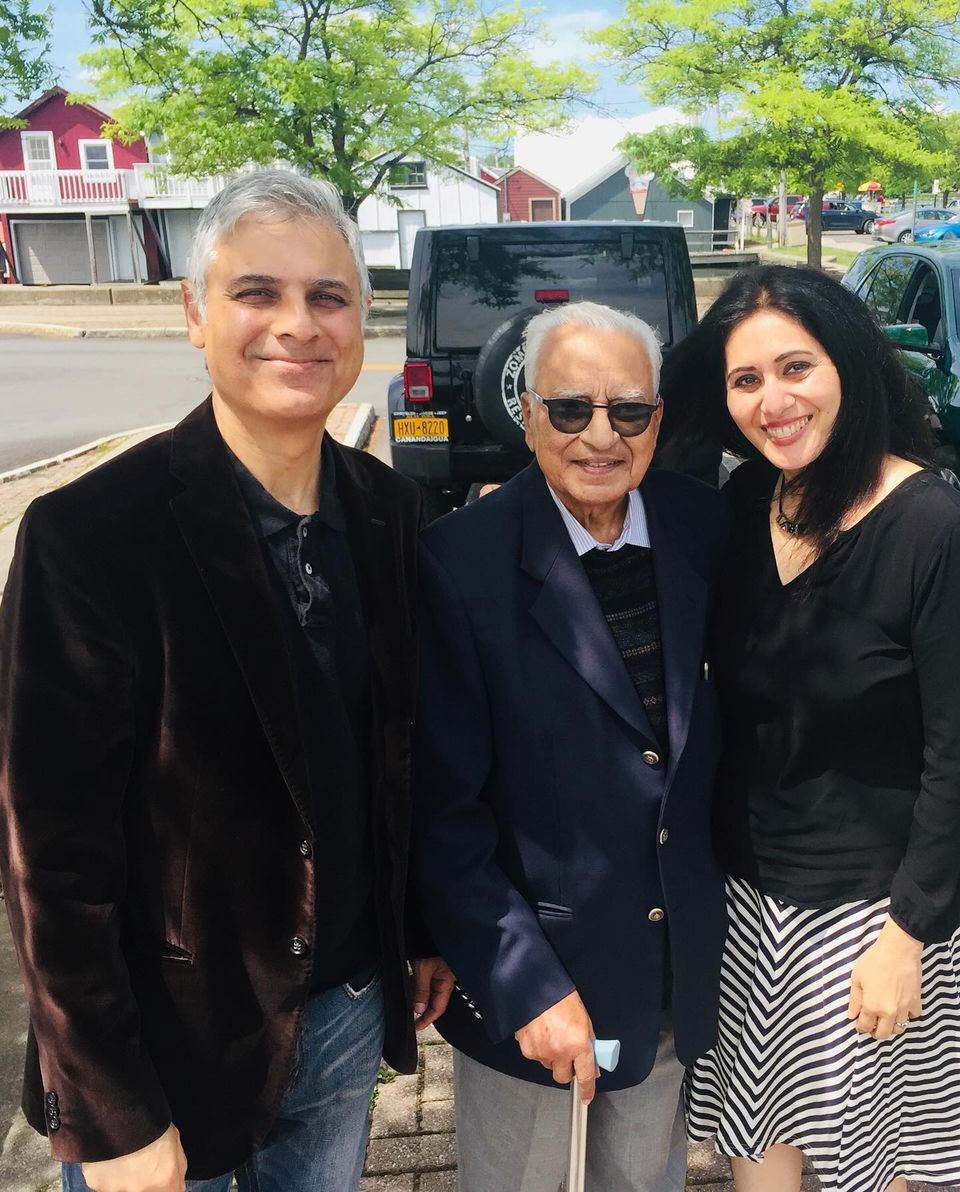
in 2019, he did us the great honor of visiting us in rochester. i got to spend time with him and wrote about the remarkable stories he shared with me.
we ate out, went for a walk on the bridge by high falls, saw a film at the dryden theatre, went to canandaigua lake for a day. it was magical. my favorite part was sitting at the kitchen table and listening to him.
last year, i was able to visit karachi after some 16 years, and i got to see uncle razi again. saba and i had tea at his beautiful house. he received us at the door, smiling as always, impeccably dressed, with all the formalities and lavish treats pakistani tea aspires to. he had created a new group of friends and acquaintances, all over 80, who would meet regularly and enjoy one another’s company. he organized presentations on pressing medical needs, financial management, wills and real estate planning for the elderly. he was a force. unanimously admired and loved. a role model. something rare in this day and age.
u will be sorely missed by many dear uncle razi. still cannot believe u are no longer here. may u continue to excel and bring people together in heaven. inna lillahi wa inna ilayhi raji’un.
Support Broadwood Central School
I have known Ali Sajjad since he was a student in college and am proud of the crucial work he is doing for children’s education. This is the kind of investment in young people that we should all support. Pls consider making a tax deductible donation.
In Faisalabad, the historical city of Lyallpur, a team of socially conscious educators run a school that provides the kind of education we often dream of: meeting local and global needs while being holistic, building critical thinking, teaching science, mathematics, languages and technology, including music and the performing arts in the curriculum, and encouraging extracurricular activities (from sports to debates). It’s a school that focuses on inclusivity, social justice, and democracy as core values both in its student body and its staff.
Broadwood Central School is a testament to what Pakistan’s future can be. On account of its egalitarian/inclusive mission and the scholarships it provides to a large number of students, the school needs support to continue its work in the Faisalabad community. Please invest in the school and its students by making a tax deductible donation here.
More info at www.broadwoodcentral.edu.pk
To maintain our standard of living
In Scorsese’s film ‘Killers of the Flower Moon,’ a strong connection is made between the terror and murder faced by indigenous Osage people (with access to oil money since the early 1900s) and the Tulsa race massacre in 1921 which annihilated Black Wall Street and its wealth.
I want to take these connections further and compare Tulsa to Gaza. Images of the violence enacted on both cities speak for themselves (the first three are from the Tulsa massacre and the last three from the ongoing genocide in Gaza).
There is immense, unbearable loss of life in Gaza right now (more than 5,000 dead, half of them children). There is also an imperial destruction of all fundamental aspects of human life – social, political and cultural structures, housing, commerce, employment, transportation, familial and community networks, etc. This razing of the infrastructure of life, as we understand it, also happened in Tulsa, Oklahoma, and in countless Native villages all across America.
The destruction of human (and non-human) habitats and ecology seems central to capitalism. Large swathes of humanity must be forcefully locked in ghettos of precarity and poverty in order for a small percentage of white elite (and their stooges) to enjoy unseemly wealth and privilege.
Black poet and activist Pat Parker understood this. In ‘Revolution – It’s Not Neat or Pretty or Quick,’ she wrote:
“The rest of the world is being exploited in order to maintain our standard of living. We who are five percent of the world’s population use 40 percent of the world’s oil. As anti-imperialists we must be prepared to destroy all imperialist governments; and we must realize that by doing this we will drastically alter the standard of living that we now enjoy.
…The equation is being laid out in front of us. Good American equals Support Imperialism and war. To this, I must declare—I am not a good American. I do not wish to have the world colonized, bombarded and plundered in order to eat steak.”
When we stand in solidarity with Palestine and other peoples and places being crushed by imperial greed and its technologies of extermination and containment, this is something we must consider.
Thank you Clarissa Brooks for reminding me of these powerful lines during a discussion on ‘Black Feminist Writers and Palestine’ organized by Black Women Radicals.
laurie anderson at mass moca
yesterday we spent the afternoon at mass moca (one of my favorite museums in the world). always so much to enjoy and absorb, but i will never forget TO THE MOON, a virtual reality experience by laurie anderson and hsin-chien huang.
“to the moon uses images and tropes from literature, science, science-fiction space movies, and politics to create an imaginary and dark new version of the moon. during the 15-min experience, the viewer is shot out from earth, walks on the surface of the moon, glides through space debris, flies through DNA skeletons, and is lifted up a lunar mountain.”
after i put on my headset, the walls around me began to fold and the floor started to disintegrate. it was a wtf kinda moment. soon i was in space with stars falling around me. i was able to fly to the moon by extending my arms which i could see in front of me, wearing a spacesuit. the seat i was in could pivot 360 degrees so i could look everywhere around me. my shadow (again clothed in a spacesuit) was below me, replicating all my movements as it would have in real life. on the moon i saw ancient sailing ships, dinosaurs, polar bears, and strands of numbers coming at me. at one point my arms turned into giant floppy plush snakes. later they became crystalline amalgamations of numbers. i decided to fly into a rock formation and liked how it shattered. debris hit my helmet, there was dust and the sound of breakage. towards the end of the 15 min, my body seemed to separate – the astronaut part of me peeled itself off and was now hurtling thru space. then laurie anderson’s voice in my ears:
“you know the reason I love the stars is because we can’t hurt them, we can’t burn them, we can’t melt them, we can’t make them overflow, we can’t flood them—so we keep reaching for them.”
if only that were also true of other human beings.