
all social media platforms are terrible (including FB, IG, whatsapp, etc) but i find twitter particularly unsettling. it’s not just the vicious back-stabbing and habitual fightiness, it’s also the unbearable snobbery. this idea that twitter is better than other social media for its 280-character repartees from the woke literati. some are better than others, but puleeezzz…
Category: self-authored
the attack on salman rushdie
needless to say we all condemn the attack on salman rushdie. i would condemn the knifing of any human being, including clarence thomas and donald trump. i liked rushdie’s work back in the day when he wrote ‘midnight’s children’ and was friends with edward said. but his transformation over the years into an imperial mascot is problematic to say the least. he supported the invasion of iraq, denies the existence of islamophobia (it’s hard to miss in the west but also in his home country of india where violence against muslims is reaching genocidal levels), and wrote unoriginal, bigoted, ignorant opinions like this in the NYT: “yes, this is about islam. if terrorism is to be defeated, the world of islam must take on board the secularist-humanist principles on which the modern is based.” the modern? like school shootings and patriarchal control over women’s bodies in the US? or the ongoing killing of children in gaza by the modern, democratic state of israel? or the humanist invasions and occupations of a series of muslim majority countries? this is basic colonial nonsense, not intellectual or moral courage. at the same time that rushdie was being attacked, this was happening: layan musleh hamdi al-shaer, aged 10, died from injuries she sustained in an israeli strike on gaza on august 5th. she died alone in a hospital because israel wouldn’t allow anyone from her family to be with her. she was a 10-year old child with so much life ahead of her. why are we not all decrying the attacks on her body and publicly mourning her death? many will say it’s different. she wasn’t a writer. she wasn’t famous. she wasn’t a western mascot. but there’s the rub.
My essay for Ready to Wear – an online exhibition
The Ready to Wear online exhibition is now open! You can check out a virtual exhibition space, download the catalog, and read my essay under Explore Exhibiting Artists here.
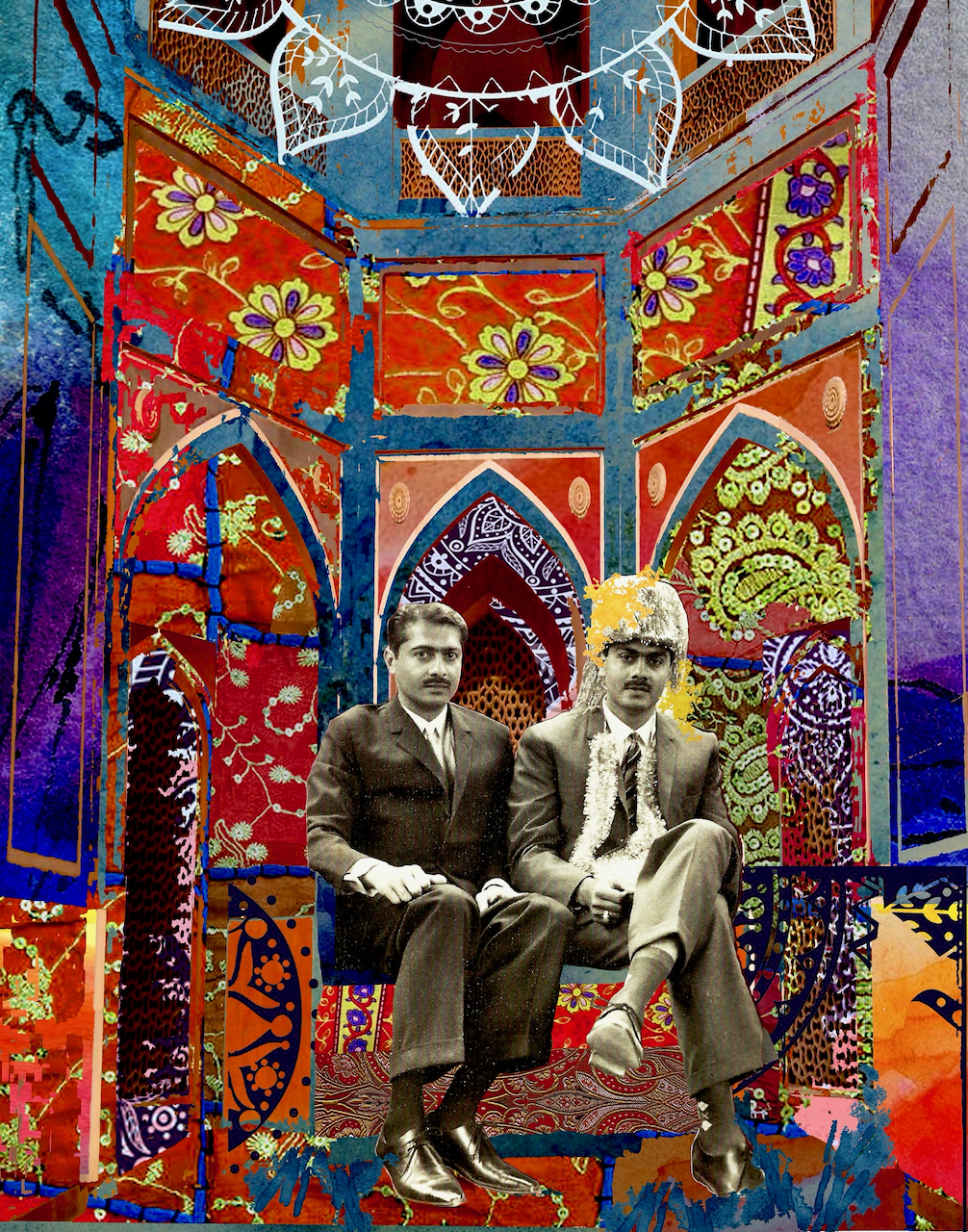
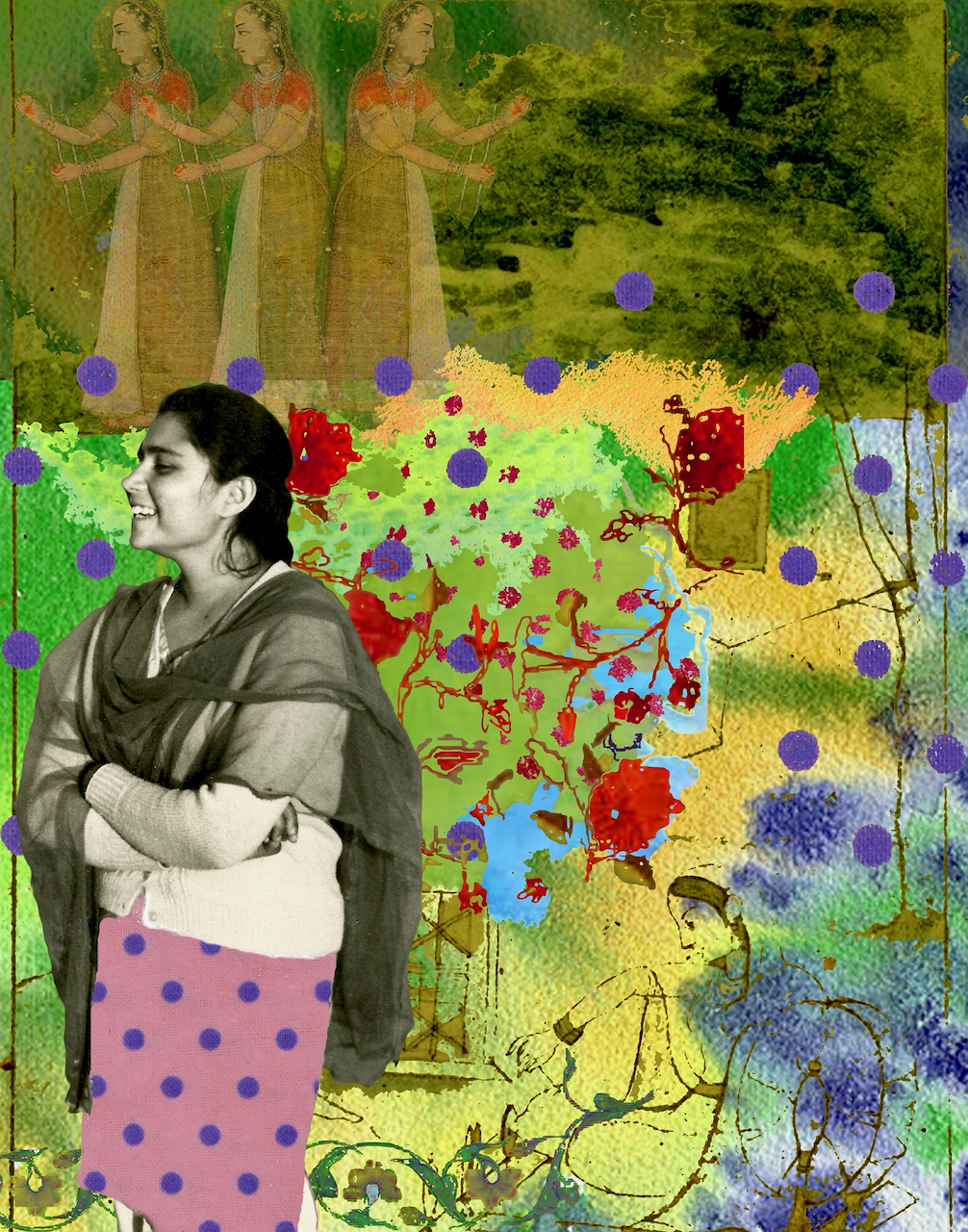
“In the 1960s, when my parents (Nilofar Rashid and Saleem Murtza) met in college, fell in love, and got married, Pakistan was still a relatively new country. My parents’ generation was the first to be solidly grounded in Pakistan. Having been recently introduced to the world at large, those who hailed from the bourgeoisie saw themselves as “progressive” and were influenced by western culture. Fashion became a way to express their newly minted national identity.
Young men adopted the Teddy Boy style of the Beatles, with boxy jackets and fitted trousers. Young women wore the traditional shalwar kameez but switched it up by making the kameez shorter and tighter, aligning it with the shift dresses they saw in fashion magazines. The bottom edge of the shalwar became narrower in keeping with men’s tapered pants. They wore head scarves and oversized shades like Audrey Hepburn and Bollywood’s Saira Banu and Mumtaz.
This hybrid sense of fashion seemed to cross borders and crack open binaries such as east and west. My mother wore a gauze dupatta over her short, dress-like kameez. She refused to give up the dainty sandals that went with her outfits but would wear socks when it got cold in Lahore. For his wedding, my father paired a gaudy sehra (headdress commonly worn by the groom) with a tailored suit. He sits proudly with his elder brother, Eitizaz Hussein.
Borders and partitions are recent aberrations. A broad span of history, that goes beyond the creation of nation states, can give us a better sense of our complex, intertwined realities, and allow us to imagine better futures.”

Ready to Wear online exhibition
More to post about Providence, but wanted to share that my artwork has been selected for an international juried exhibition. Hosted by Arts To Hearts Project and guest curated by artist Celine Gabrielle, this online exhibition will open on August 12th.
The topic, Ready to Wear, was a bit different for me. But it struck me that many of the collages from “This Heirloom” speak to fashion in Pakistan in the 1960s. What an interesting time that was – soon after the heartbreak of the 1947 partition but also in the afterglow of what a break from British colonialism could mean. So I wrote about fashion, national identities, and borders, and submitted three artworks. They were selected and will be part of an online group show.
The opening is on Friday Aug 12, and the show will be online until September 12th. Can’t wait to share my write-up and artwork with you all <3

olivia newton-john (1948-2022)
she was sandy when we were little kids, the girl everyone wanted to be coz she got to dance with john travolta. soon after, she became the beauty in harem pants who sang about xanadu, kublai khan’s “pleasure dome.” never saw the film but loved the joy in that song. later still, as we were growing up, her music video “physical” became ubiquitous – it had a totally different vibe. i wasn’t sure i liked the transformation but it was hard not to watch. in the 90s, she was diagnosed with breast cancer and fought valiantly and openly. everyone rooted for her. she started a wellness and cancer research center and supported this work thru a foundation. she wanted to imagine a world beyond cancer. we will get there one day inshallah. may she rest in peace.
Leaving Kabul by Marzia Rezaee | The Warp & Weft
Today I’d like to share an important addition to the Warp & Weft – a poignant story by Marzia Rezaee. In “Leaving Kabul,” Marzia describes what it’s like to be wrenched away from home and family, to be transported to other worlds, and have no control over such critical, life-changing decisions. I am grateful to Marzia for sharing such a personal story and working closely with me to finalize it when there is so much going on in her life. I am also thankful to Noelle E. C. Evans for introducing us. Pls listen to/read Marzia’s story in Dari and English and leave a comment if you like.
#thewarpweft #thewarpandweft #archive #audioarchive #multilingualarchive #storytelling #oralhistories #yearofthepandemic #maraahmedstudio #maraahmed #kabul #afghanistan #borders #rochesterny #newyork #unitedstates #2020andbeyond #story #dari #immigration #family #war #militaryoccupation

a kind way of speaking
so used to calling my close women friends jaan (urdu/farsi/hindi: my life, darling), habibti (arabic: beloved, my love), and all manner of affectionate words/terms of endearment. also used to saying “love u” frequently. maybe it’s just rochester and the closeness we feel towards one another, that wonderful sense of community and of being accomplices. maybe it’s the people i’m lucky to have in my life. i think others outside of that circle might sometimes do a double take or pause. it’s nothing personal really, just what i’m used to: a kind way of speaking.
Reasons For Being Alive by Afsoon | The Warp & Weft
Friends, as you know, The Warp & Weft archive of multilingual audio stories from across the world is an ongoing project. Today I am honored to share a new story by London-based artist Afsoon, whose work I have seen and enjoyed in NYC. She writes about seclusion, art, dreams within dreams, and the tenuous line between reality and fantasy. It’s a beautifully layered, carefully measured story and includes poetry by Forugh Farrokhzad. Listen to Afsoon talking about the shifts our minds go through in isolation.
#afsoon #afsoonart #thewarpweft #thewarpandweft #archive #audioarchive #multilingualarchive #storytelling #oralhistories #yearofthepandemic #maraahmedstudio #maraahmed #art #dreams #london #2020andbeyond #poetry #farsi #forughfarrokhzad

an evening with south asian women artists
so many thx to the beautiful Safia Fatimi whom i met when we exhibited together at Westbury Arts (a wonderfully organized exhibition in which artists were invited to speak about their work) and to Jaishri Abichandani who introduced us to each other. safia invited us to a lovely evening at her place on friday where her talent for “oasis making” was evident. wish i had taken a picture with her. but here is a picture of us together at westbury arts. such a treat to connect with other south asian women artists <3
#southasianartists #southasianart #southasian #longisland #womensupportingwomen #womanpower #summerevening #oasismaking #hospitality #thankful

change is hard
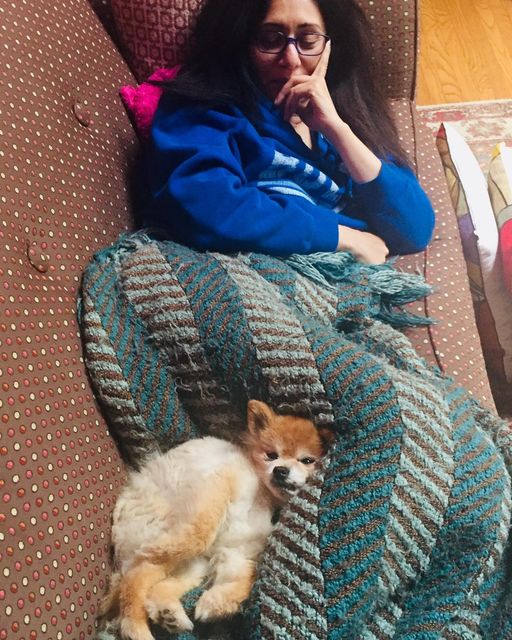
this picture came up on my phone. so much nostalgia… this beautiful, one of a kind couch (i chose the fabric and design) from a store in rochester that no longer exists. i had to get the doorway to our living room widened to get this couch in. this couch where family and friends sat and talked. where i took countless power naps. where the kids would sleep when they were sick so i could tend to them as i cooked and worked around the house. this couch where phoebe, our dearest pom, rested and dozed off almost every day, many times by my side. i gave this couch away when we moved. too large, too heavy. i didn’t want to but had to make many hard, practical decisions. it’s been more than two years now, but i miss my life in rochester. i miss our house. i miss phoebe. change is hard.
Dasht-e-Tanhai – A Desert Soundscape
Dasht-e-Tanhai (The Desert of my Solitude) is one of my favorite poems. It was written by the great Urdu poet Faiz Ahmed Faiz. I translated the poem in English more than a decade ago, in 2009. This year I took a recording of that translation and the original Urdu poem to Darien Lamen, a genius at sound design (and much else), and together we created the soundscape for Dasht-e-Tanhai. I wrote about the poem, my translation, and our collab in this piece. The audio and text were published today in The Markaz Review. This is the kind of work I love. Pls read the piece but most of all, listen to Dasht-e-Tanhai here.
“To me it’s a love poem brimming with scents, sounds, landscapes, and textures. It speaks to movement and physical phenomena, to disconnection and union. Perhaps to the cyclical nature of life itself. Faiz wrote the poem while in prison, from a place of sensory deprivation and seclusion, and therefore all the physical world’s vividness and intensity are contained in his words. The poem demands more coloring in, more relief than words on a page.
[…] For me personally, as someone who is permanently déracinée, who lives in between homes and languages, and feels a particular ache for Pakistan, Faiz’s words of love and wistfulness set off untold emotions. I tried to read Dasht-e-Tanhai in Urdu at the Spirit Room, in Rochester, New York, in 2018. I could see my parents and husband in the audience. The import of releasing Urdu poetry into a wintry space, a world away from the fragrant jasmine Faiz describes, overwhelmed me. This recording is a way to be able to say all the words, finally.”

my review: elvis
went to see ‘elvis’ yesterday with my sister and nephew. first baz luhrmann film i’ve ever liked. it’s obvious that he’s a devoted fan, so he reins in his frenetic (sometimes grotesque) filmmaking. three things: austin butler is electric – he plays elvis with intense physical and emotional energy and heart. i love that elvis’s career and music are situated bang in the middle of black culture and musical brilliance. and finally, the film allows us to connect to elvis as a human being. that might seem superfluous but for someone who was turned into a larger-than-life brand and money-making machine, it’s moving to break through all that dazzle/packaging and come face to face with human vulnerability. the hold his agent, colonel parker, had on elvis feels abusive and suffocating. reminded me of brittney spears and her struggles and how fame in a hyper-capitalist society can trap, oppress and even destroy.
more about elvis in the film vs in real life here.
#elvis #elvismovie #elvispresley #bazluhrmann #austinbutler #filmreview #maraahmed
my review: ms marvel
friends, i’d like to draw ur attention to ‘ms marvel.’ so i’m not a fan of the marvel universe – i find all of it as inspiring as a coke commercial. but i appreciated representation in ‘black panther’ and i am stunned by the unprecedented, unapologetic and bold brownness, easternness, global southness, south asianness, muslimness, and girlness of ms marvel.
based on sana amanat’s pakistani american marvel superhero kamala khan, the series is a coming of age story but in a context we’ve never seen before. there’s talk about the hijab, scenes at the local mosque, plenty of bismillahs and mashallahs, protective south asian parents, etc but none of this is self-conscious or cartoonish or an existential crisis (such as in ‘ramy’). there’s also clear-eyed depictions of islamophobia (police surveillance and bigoted FBI agents) but they’re all part of what our superhero must vanquish and come packaged with wit and humor.
the cultural and linguistic references are vibrant and real (nazia hassan, what???) and the 1947 partition is at the center of the story. love how the lower third in flashback scenes specifies ‘british-occupied india.’
also love how kamala’s family history holds the key to her powers, but only her matrilineal history, going back all the way to her great grandmother aisha. her nani is played by samina ahmed (another wonderful treat) who lives in an old mansion in karachi.
oh, and the graphics and music are brilliant.
the creators of the series are all brown people from south asia and the middle east. i know it’s disney, but this is a strong step forward that should be supported. we can do it thru viewership and by giving it 10 stars on IMDB. believe it or not they are tracking all that stuff and deciding ms marvel has flopped because too ethnic, too unrelatable, too childish (yeah, only white men or skinny white ladies in sexy costumes are universal).
show u want more diversity by watching the series, creating an IMDB account (super easy) and ranking/reviewing. i wish our kids could have plugged into such stories when they were growing up. but it’s not too late for generations to come.
Lorenza Böttner: Requiem for the Norm
When in NYC (even for one or two days), I can’t help but go to at least one art exhibition. This time I went to the Leslie-Lohman Museum (‘a dynamic and safe space where the LGBTQIA+ community and its allies engage in meaningful and authentic art experiences’) to see Lorenza Böttner: Requiem for the Norm. I was captivated by her work, her life, and her energy. It’s a small museum but I spent more than an hour there, visiting and revisiting her work and feeling her beauty and joie de vivre. Her arms were amputated at the shoulders after a horrible accident when she was a child but she refused prosthetics and wanted to be accepted for who she was in her ‘extreme’ form. She moved freely between names, gender expressions and identities. Sometimes she became an armless Venus, other times wings grew out of her shoulders. She painted with her feet and mouth, worked in multiple media, wrote, danced, and was a beguiling performer. A force of nature.
#lorenzaböttner #leslielohmanmuseum #whatisnormalanyway #alternativebeauty #quintessentialartist #forceofnature #nyc
Read The Miraculous True History of Nomi Ali
Still thinking about this wonderful evening and Uzma‘s book. Read ‘The miraculous true history of Nomi Ali’ and learn about “interventions of knowing” that subvert the colonial script. Learn about exile, imprisonment and resistance. From the book:
“She tries to remember colours, sunlight, the breezes that tease the crops of open fields. She tries to catch new rain on her tongue. She tries to remember the song of the koel. She tries to forget what she has left. This effort to remember and to forget comes like the waves she cannot hear but can feel, they are there, under her chains. If she could look outside, just once.”
Photograph by David Maine
#mcnallyjackson #seaportdistrictnyc #themiraculoustruehistoryofnomiali #uzmaaslamkhan #colonialhistory #alternativeknowing #decolonialhistory #exile #imprisonment #penalcolony #beautyofresilience #poweroflanguage
