Listening to Amanda Chestnut talk about ‘The Negro Artist and the Racial Mountain’ by Langston Hughes and what a profound effect it had on her work as a Black artist. The essay provides trenchant clarity to all artists of color by confronting the assimilationist instinct of a colonial mentality.
The obligatory selfie after a satisfying dinner. It was a full house at Hofstra on Nov 9th for a discussion about Shirly Bahar’s book, ‘Documentary Cinema in Israel-Palestine: Performance, the Body, the Home,’ and my film, ‘The Injured Body.’ Here are my questions for Shirly:
1) You say that although oppression and racialization have impacted Palestinians and Mizrahim differently, the documentaries you discuss in the book share a political commitment and performative affinities. They defy the removal of the pain of Israel’s marginalized people from public visibility.
You discuss how documentary performances of pain by Palestinians and Mizrahim, when seen together, invite us to contest the segregation of pain and consider reconnection. Could you elaborate on that?
2) There is one sentence in your book which hit me hard. It is the commonly held notion that ‘the trauma of witnessing destruction directly harms the usage of language.’
Meaning that those who are occupied (on whose minds and bodies violence is constantly enacted) are never seen as credible witnesses of their own pain, of their own lived experiences, based on dominant codes of credibility. It’s like the gaslighting I was talking about in the context of microaggressions. You take issue with this notion. Could you tell us more?
3) Since we are talking about language and violence, I also wanted to bring up the constant threat of violence. You talk about Palestinian children experiencing ‘withheld violence.’
Your words reminded me of Fanon of course, and the muscular contraction of the colonized body. What does this imply in the P/I context?
4) I would like to end with something you say in the book, that ‘it takes perpetual learning and training to try and relate to the pain of others in a politically informed and committed manner.’
You also say: ‘More often than not, those who care for the pain of others are found in relative vulnerability themselves—political, physical, mental—thus chancing their becoming further undone.’
I think of the #BLM movement and its principled support for justice in Palestine. Could you expand on this important point.
wonderful event at hofstra university yesterday with the brilliant shirly bahar and santiago slabodsky. full house and then the evening ended w dinner at akbar in garden city with all of us and sally, julie, aashish and balbinder.
The brilliant Shirly Bahar and I will be talking about documentary film, colonialism, racism, and the body at Hofstra University on Nov 9, 4:30-5:45pm. It’s a free event but you need to register. More info below.
Join us for a conversation between Shirly Bahar and Mara Ahmed about their recent scholarly and creative work related to oppression and the body. Bahar’s recent book, “Documentary Cinema in Israel-Palestine: Performance, the Body, the Home,” and Ahmed’s upcoming film, “The Injured Body,” both explore how colonialism, marginalization, and daily mental and emotional stresses from racism and othering impact the body. The conversation will spotlight documentary language that makes embodied oppression visible in comparative and global perspectives (in the context of settler colonialism and imperialism), touching on the pain of Palestinians, Mizrahi Jews and people of color, especially women, in the United States. The idea is to shift conventional paradigms of war, conflict and segregated geographies by focusing on (and politicizing) lived experiences of pain and understanding their interrelatedness. The evening will also feature film excerpts.
This ‘Issues in Judaism’ lecture is presented by Hofstra Cultural Center and the Dept of Religion and Jewish Studies, in collab with the depts of History, Global Studies & Geography, Comparative Literature, Languages, & Linguistics, and the Women’s Studies and European Studies Programs.
Thank you to the wonderful Santiago Slabodsky for putting this event together. Venue: Leo Guthart Cultural CenterTheater, Joan and Donald Axinn Library, First Floor, South Campus
To register go to: hofstra.edu/culture. Or call 516.463.5669. Or go to this link.
thrilled to share that my short film, the body has memory, has been selected for a juried exhibition at the huntington arts council here on long island.
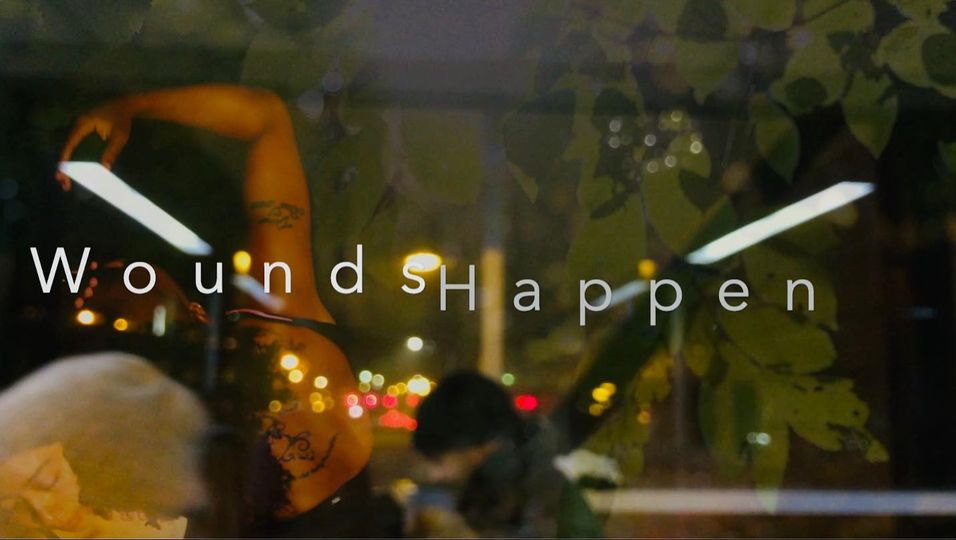
i created what the brilliant rajesh barnabas calls a ‘video poem’ – a blend of images, dance, music, and poetry i wrote, inspired by work on ‘the injured body,’ my upcoming documentary film.
HAC’s exhibition focuses on the exploration of the human form and will run from november 18 – december 17, 2022. more soon.
an interview i did for graphic ear (WAYO 104.3 FM) back in july of this year, is now online. it was so much fun to talk to sabra wood and share some of the music i enjoy. what i love most about interviews is that i get to talk about the people who make my work possible. here i talk about june foster, thom marini, rajesh barnabas, darien lamen, bleu cease and also faiz ahmed faiz.
i got to share music by abida parveen, naseebo lal, arif lohar, meesha shafi, chrisstie hynde, julien clerc, ultravox, mashrou’ leila, and stromae.
Yesterday I was honored to meet Jeremy Dennis at Ma’s House & BIPOC Art Studio, which is a nonprofit he founded. ‘The project began in June 2020 and serves as a communal art space based on the Shinnecock Indian Reservation in Southampton, New York. The family house, built in the 1960s, features a residency program for Black, Indigenous, and People of Color (BIPOC), art studio, library, along with hosting an array of art and history-based programs for tribe members and the broader local community.’ It is inspiring to see the work Ma’s House is doing in creating, nurturing and presenting BIPOC art. It’s a wonderful way to connect and collaborate with local Indigenous communities. I hope to visit often and work together on mutually meaningful projects. Also, google Jeremy’s brilliant work in photography and storytelling. It’s stunning.
Thx to my dear friend Nancy Ghertner for suggesting I connect with Ma’s House.
[It was rainy and windy yesterday, the first picture of Ma’s House was taken from my car through a rainswept windshield]
Excited that my mixed media piece, ‘Memory Grid,’ has been selected for a juried exhibition at Westbury Arts! The theme is ‘Uncovered Treasures,’ a celebration of mixed-media art and assemblage.
Memory Grid is inspired by the idea of caching memories inside a data grid. It’s engineered to replicate computing architecture where vast amounts of data are sorted and stored using grid technology. But instead of binary data, the piece is meant to archive pictures, colors, and textures. Instead of neat partitions, the elements in each compartment overflow and overlap with adjacent cells, creating complex patterns and whimsical moods. The intent is to create an emotional landscape that beckons and moves on account of these transgressions.
Newsprint, fabric and acrylic paint on illustration board fitted inside an upcycled metal grille Dim: 27 ½ in x 22 in
The opening reception will be on Sunday, September 4th, 2022 from 7:00 to 9:00 PM at 255 Schrenck Ave, in Westbury. Tickets are free but pls register.
Dear friends, I am thrilled to share this brilliant dance shot by Jesus Duprey at High Falls (Rochester, NY), choreographed and performed by Andrew Evans, title by Erica Jae, with original music composed by Tom Davis. This is a prelude to The Injured Body: A Film about Racism in America. I am back at work editing this documentary and listening to some pretty badass women of color. I created the trailer for the film back in 2020 but then life happened (we moved thrice in two years during the pandemic). I am excited to come back to this beautiful project. I will be sharing as I edit and hope for your support throughout this delicate process. My goal is to complete the film in 2022. But first, here is Emancipated Breath.
Friends, I’m happy to share a new Warp & Weft story today. It’s a unique retelling of the pandemic from the perspective of a funeral celebrant. Written and read beautifully by Terry Werth, pls listen to ‘The Way Forward’:
“I worked to control my outrage, fear, and ignorance by focusing on the skills I had to help people navigate their loss, grief and trauma in healthy and effective ways. I validated their despair (and my own) by stepping back to try and see the big picture: what can we learn from this experience? How can we heal ourselves and help others heal?”
The Ready to Wear online exhibition is now open! You can check out a virtual exhibition space, download the catalog, and read my essay under Explore Exhibiting Artists here.
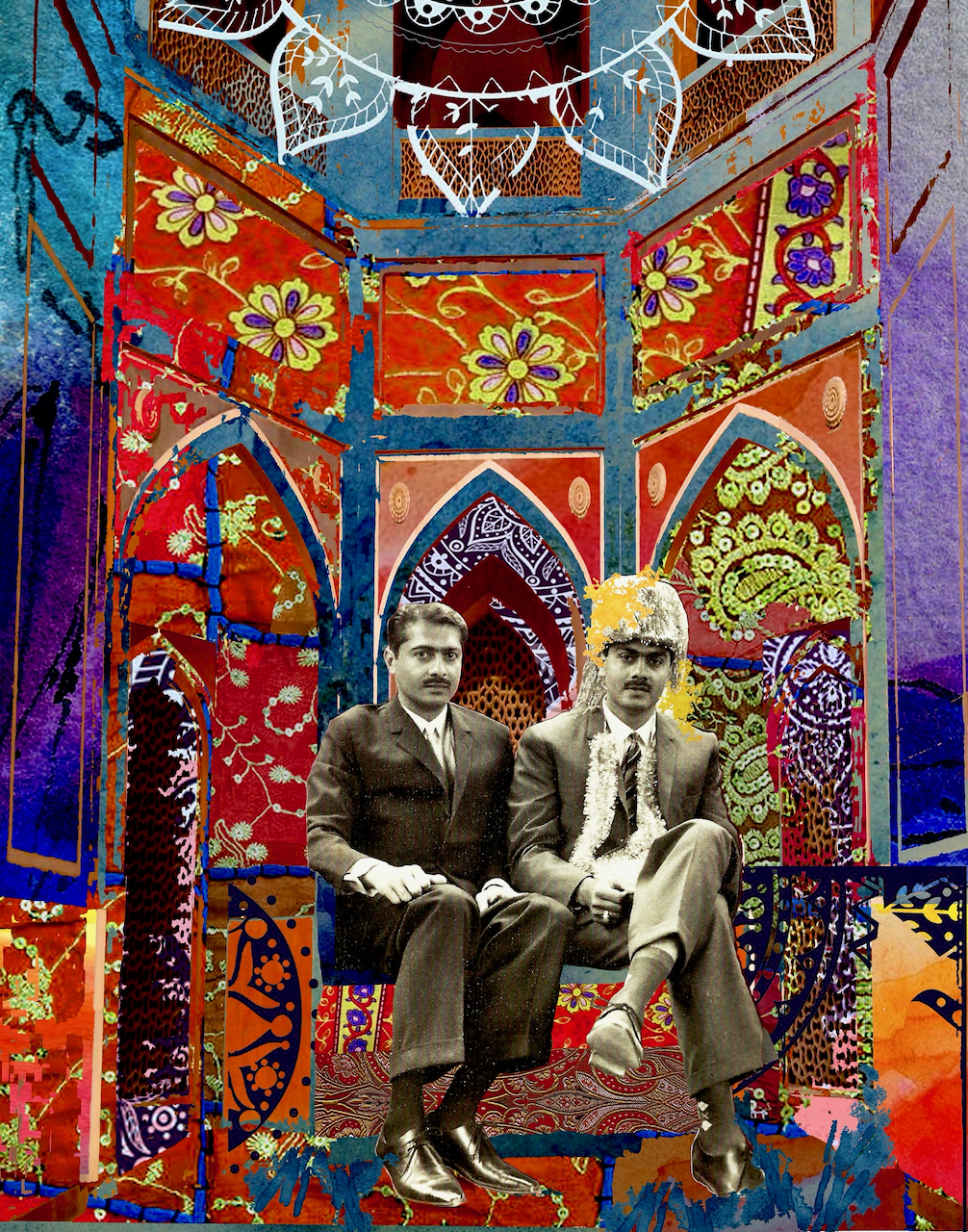
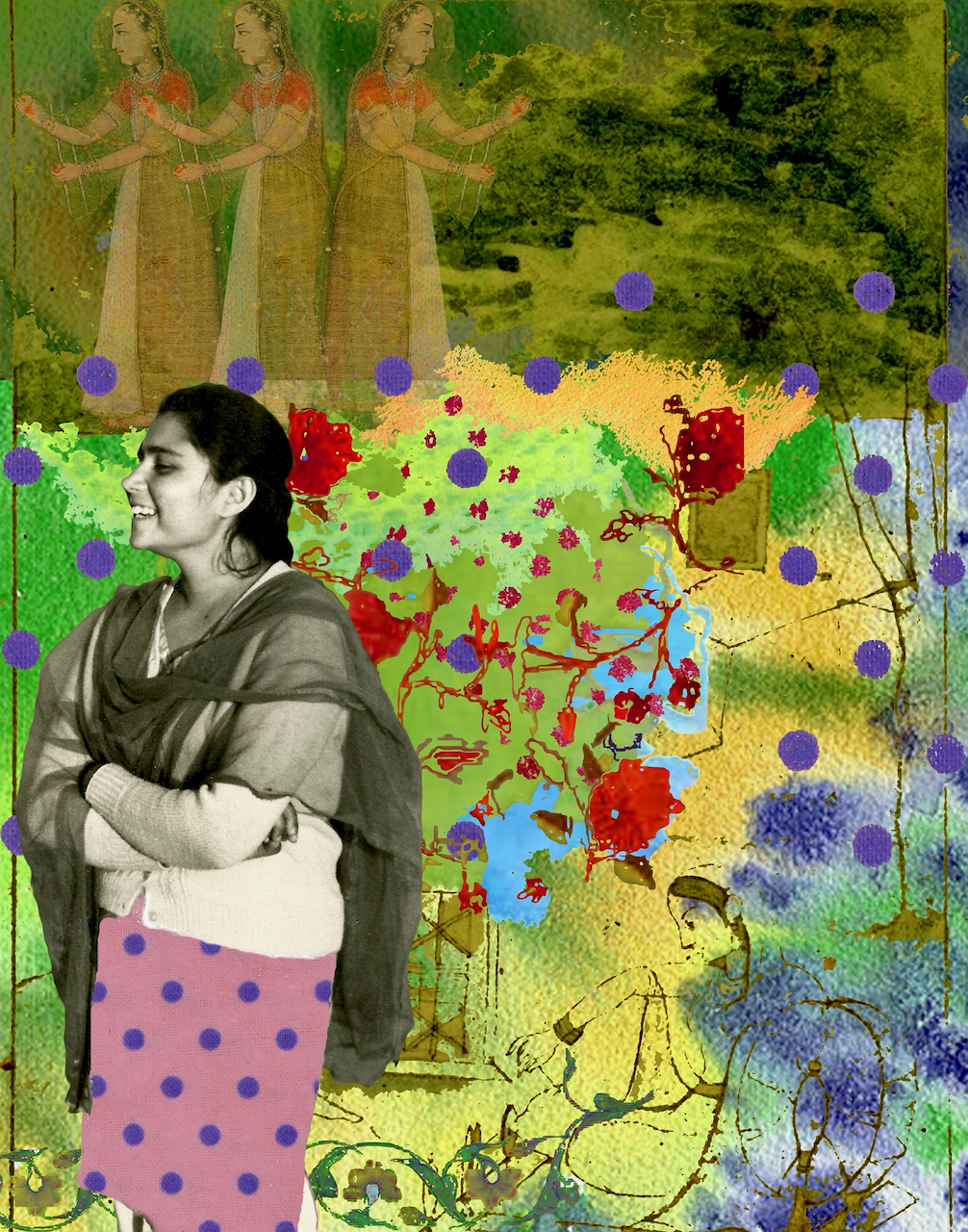
“In the 1960s, when my parents (Nilofar Rashid and Saleem Murtza) met in college, fell in love, and got married, Pakistan was still a relatively new country. My parents’ generation was the first to be solidly grounded in Pakistan. Having been recently introduced to the world at large, those who hailed from the bourgeoisie saw themselves as “progressive” and were influenced by western culture. Fashion became a way to express their newly minted national identity.
Young men adopted the Teddy Boy style of the Beatles, with boxy jackets and fitted trousers. Young women wore the traditional shalwar kameez but switched it up by making the kameez shorter and tighter, aligning it with the shift dresses they saw in fashion magazines. The bottom edge of the shalwar became narrower in keeping with men’s tapered pants. They wore head scarves and oversized shades like Audrey Hepburn and Bollywood’s Saira Banu and Mumtaz.
This hybrid sense of fashion seemed to cross borders and crack open binaries such as east and west. My mother wore a gauze dupatta over her short, dress-like kameez. She refused to give up the dainty sandals that went with her outfits but would wear socks when it got cold in Lahore. For his wedding, my father paired a gaudy sehra (headdress commonly worn by the groom) with a tailored suit. He sits proudly with his elder brother, Eitizaz Hussein.
Borders and partitions are recent aberrations. A broad span of history, that goes beyond the creation of nation states, can give us a better sense of our complex, intertwined realities, and allow us to imagine better futures.”
Eitizaz Hussein and Saleem MurtzaNilofar Rashid – 3Nilofar Rashid and Saleem Murtza – 1
More to post about Providence, but wanted to share that my artwork has been selected for an international juried exhibition. Hosted by Arts To Hearts Project and guest curated by artist Celine Gabrielle, this online exhibition will open on August 12th.
The topic, Ready to Wear, was a bit different for me. But it struck me that many of the collages from “This Heirloom” speak to fashion in Pakistan in the 1960s. What an interesting time that was – soon after the heartbreak of the 1947 partition but also in the afterglow of what a break from British colonialism could mean. So I wrote about fashion, national identities, and borders, and submitted three artworks. They were selected and will be part of an online group show.
The opening is on Friday Aug 12, and the show will be online until September 12th. Can’t wait to share my write-up and artwork with you all <3
Today I’d like to share an important addition to the Warp & Weft – a poignant story by Marzia Rezaee. In “Leaving Kabul,” Marzia describes what it’s like to be wrenched away from home and family, to be transported to other worlds, and have no control over such critical, life-changing decisions. I am grateful to Marzia for sharing such a personal story and working closely with me to finalize it when there is so much going on in her life. I am also thankful to Noelle E. C. Evans for introducing us. Pls listen to/read Marzia’s story in Dari and English and leave a comment if you like.
Friends, as you know, The Warp & Weft archive of multilingual audio stories from across the world is an ongoing project. Today I am honored to share a new story by London-based artist Afsoon, whose work I have seen and enjoyed in NYC. She writes about seclusion, art, dreams within dreams, and the tenuous line between reality and fantasy. It’s a beautifully layered, carefully measured story and includes poetry by Forugh Farrokhzad. Listen to Afsoon talking about the shifts our minds go through in isolation.