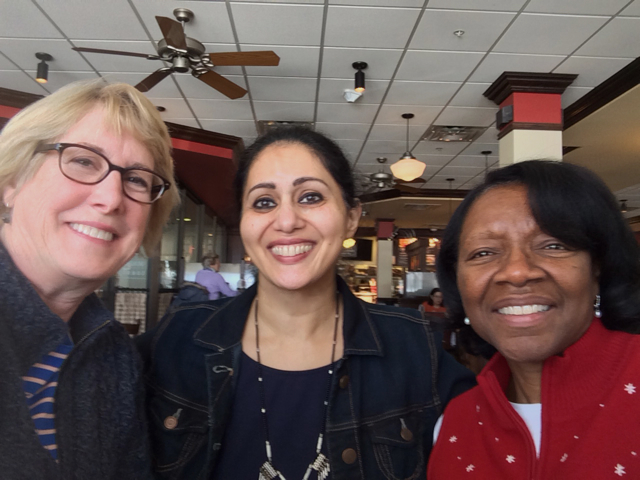
Love the Harlingford Hotel. Stayed here for about 3 weeks a few years ago. It’s in central London, in a lively neighborhood where I feel v much at home – close to St Pancras station, with a small movie theatre that plays independent films, lots of restaurants and shops, fresh fruit and vegetables, an old bookstore, the British Library, and much more. Btw Icelandair is a great way to connect to all major European cities. I didn’t feel too well on the flight from Toronto to Reykjavik but they took such excellent care of everything. People from Iceland are just generically nice it seems 🙂
Category: projects
Catching my flight to London from Toronto
So I arrive at this hotel in Toronto (am parking my car here and leaving for London in an hour) and the woman at the reception is lovely. She has long shiny hair, the kind Bollywood actresses like to flaunt, and while I’m filling out some paperwork she steps aside and starts talking to her colleague in Punjabi. I ask about a good kebab place and she smiles. I end up at Kandahar Kebab. The young woman who takes my order asks me if I’m a student (ok, that pretty much made my day). I tell her I’m a filmmaker. She inquires about my work and ends the conversation with a warm “mashallah”. The kofta kebabs and tandoori naan are to die for. I dispatch them with fervor. I can’t help but think how I could totally live here.
A Thin Wall in London
Next screening of A Thin Wall coming up on April 9th at 3:00 pm in LONDON. see u there!

spring in upstate
my drive from schenectady to rochester today. for real.

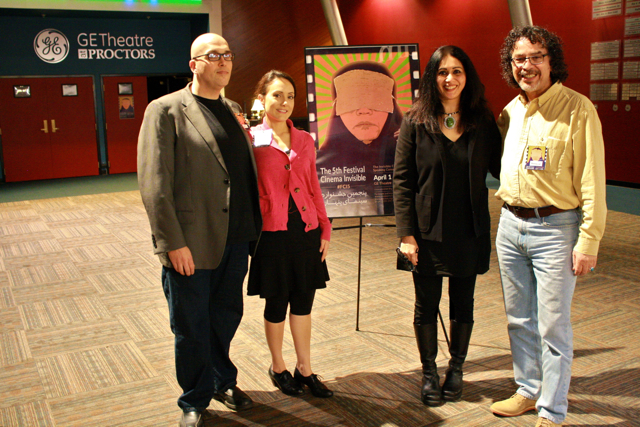
A Thin Wall at Festival Cinema Invisible
Screening of A Thin Wall at Festival Cinema Invisible in Schenectady, New York. Excellent questions from the audience followed by a lovely meeting with Waheed, who is originally from Hyderabad, India. He took me to meet his wife Shammi and have an early dinner at their restaurant. He used to be a journalist back in India and once interviewed the great Satyajit Ray. He didn’t let me pay for dinner and promised to invite me to Schenectady once again to screen the film for the Pakistani/Indian community. Such warmth and grace and generosity. Made my visit super special 🙂
A Thin Wall at the Finger Lakes Environmental Film Festival
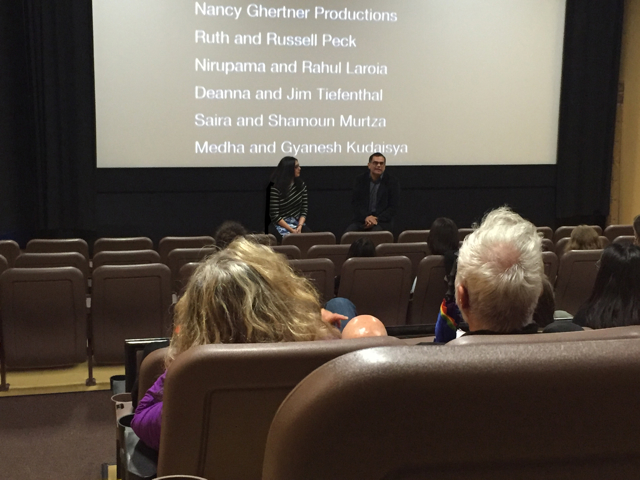
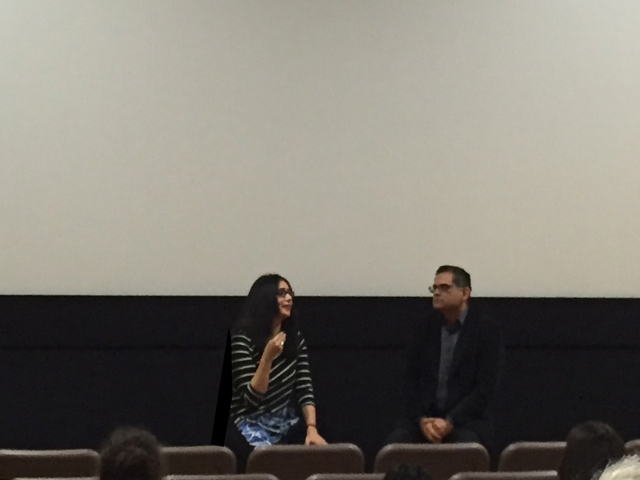
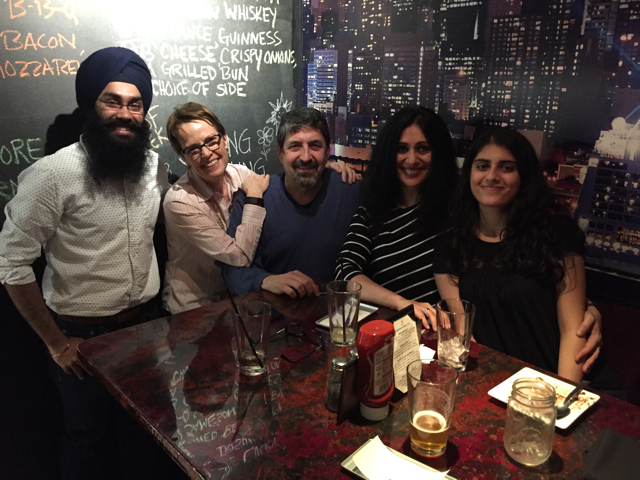
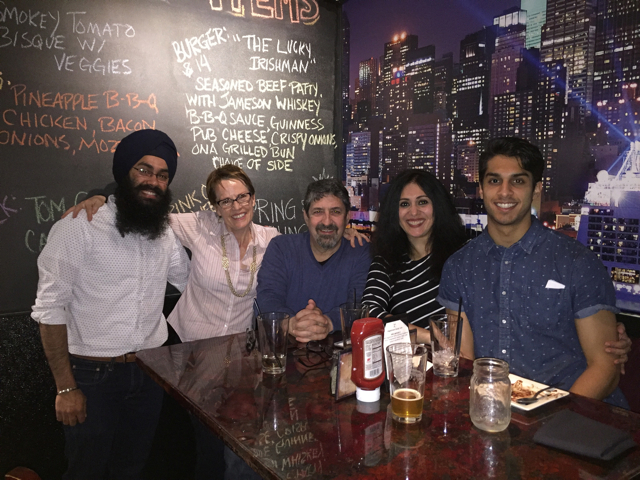
Excellent screening of A Thin Wall at the Finger Lakes Environmental Film Festival in Ithaca last night. The Q&A was moderated by Raza Rumi and it led to a myriad interesting discussions, that continued in the theatre lobby and later at the post screening party at Red’s. Best of all, my two kids were with me.
Feminism in a Multicultural World
Yesterday, the wonderful Tatyana Bakhmetyeva invited me to speak to her “Feminism in a Multicultural World” class at the University of Rochester. We discussed my article “White Feminists/Black Blobs” and Lila Abu-Lughod’s “Do Muslim Women Really Need Saving?” among other texts.
It’s always a pleasure to talk to bright young women but this class was doubly important to me on account of the many points I wanted to raise.
We talked about imperial feminism and its problematic roots in colonial history, the gendered polarity between a masculine West and a feminine East, veiling and unveiling as anchored to the same point of reference i.e. male pleasure, Kristof’s Half the Sky and its cringeworthy white savior approach, the implications of the male gaze as well as the white feminist gaze and how they both objectify the other and police public spaces, the inapplicability of “non-mixité” when it comes to Black women (Audre Lorde), Muslim women (Houria Bouteldja) and Dalit women (Anu Ramdas), the main thesis of J M Blaut’s “1492: The Debate on Colonialism, Eurocentrism, and History,” the military and financial tyrannical structures that continue to maintain world inequities, and much much more. As a way to round off the discussion, I suggested Huma Dar’s “Women and the ‘War on/of Terror’ or “Looking for Osama and Finding Mukhtaran,” a talk about how the West’s desire to save Muslim Women is used as a pretext for the war on terror.
All in all a very productive day until I ran into the following headline: France’s minister for women’s rights has compared Muslim women who wear the veil to American “Negroes” who accepted slavery, in an interview with French media. Seriously? Laurence Rossignol needs to go back to school and get some basic education.
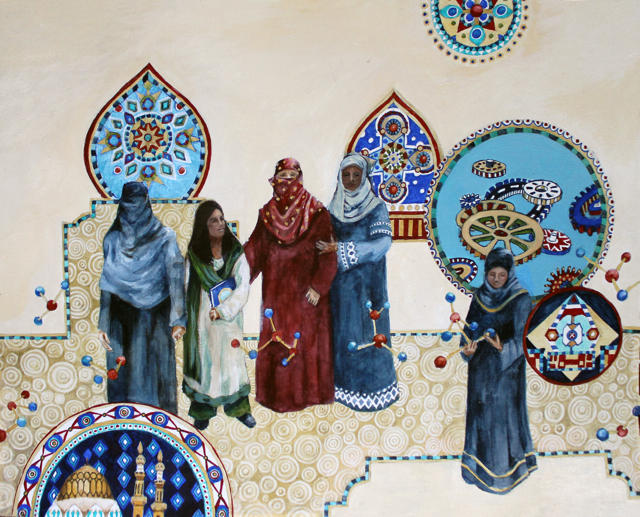
White Feminists/Black Blobs By Mara Ahmed
my new piece published today in countercurrents. thank u heather layton for collaborating with me and creating this beautiful artwork.
…
My friend expressed her strong visceral reaction to the five anonymous blobs. She was referring to a photograph I had posted on social media, in which I stood with five women wearing the niqab, at a conference in Upstate New York. My white feminist friend was convinced we were witnessing oppression. She was particularly galled by the fact that these women were academics. She mentioned how Camille Paglia, Betty Friedan and Hillary Clinton have interesting interactions with strangers because we all know what they look like. How are we supposed to communicate with blobs?
One of the formative words of my childhood is the Urdu word meyana ravi which means the middle path or the way of moderation. My mother invoked it frequently by reminding us that it was a concept loved deeply by the Prophet Muhammad. He lived by it in both small and monumental ways. For example, his advice to eat with temperance, just short of satiating one’s hunger, always struck me as universally profound. Islam’s take on wealth is equally sensible. Although charity is a religious obligation and humility is part of Islam’s DNA, one is urged to live well, meaning no ascetic renunciation of worldly pleasures, no monastic reclusion, no self-imposed austerity. Every society exists along a normative socio-political spectrum, but within the prevalent moral and legal code, we are free to exercise our judgment and express ourselves fully. The golden rule in the midst of such freedom is moderation.
When I walked into a symposium about cultural identity and religious beliefs, organized under the aegis of interfaith dialogue, my thoughts returned to meyana ravi and its centrality in Islam. University professors and educators from Muslim countries had been invited to present their papers. Most of them were from Saudi Arabia and the majority women. I am familiar with the Saudi abaya, a black overcoat worn on top of clothing, not unlike a Moroccan djellaba or a long kaftan, but I was taken aback by the full facial veiling. I couldn’t help but think what a severe take that was on modesty. I felt for the women as the room was uncomfortably warm. One of them looked at me and laughed as she tried to fan herself with the lower section of her veil, a moving part that fell over her nose and mouth. As we went around the room and introduced ourselves, it became clear that many of the men at the symposium were not educators. They were either the husbands or sons of the female professors. In Saudi Arabia, women are not allowed to travel alone. At lunchtime, the women didn’t join the rest of the group. They found a private room where they could take off their veils and eat comfortably.
The papers that were read at the conference were structured around a utopian Islamic paradigm which had very little to do with reality. For this reason, they were almost entirely indistinguishable. They quoted freely from the Quran, stressed the necessity to respect other religions (there is no compulsion in religion), and advocated compassion and tolerance towards religious minorities according to Islamic protocol. The discussions sparked by these papers were more informative. They used culture and religion interchangeably, thus anchoring “Muslim culture” to one specific way of being, which because Islamic, was clearly the best.
An Indonesian professor intervened with a thought-provoking presentation, in which he stressed the idea that culture was human-made and therefore not monolithic. Religion outlines certain basic values which culture subsumes. As an example, he offered the basic tenet of modesty in women’s clothing, which meant that women shouldn’t go around wearing bikinis but, within reasonable parameters, they could decide what modesty meant to them. This argument was followed by a short deliberation on how women should dress and what the Quran and Sunnah reveal on the matter, but some of the women brought the debate to a felicitous close.
As I got to know the women more, the stark visuality of the veil began to wear off. They greeted me with kisses on the cheek, very similar to how the French se font la bise. They took selfies with my Bosnian American friend and I, and were keen to post everything online. I don’t cover my hair and my friend wears a hijab but does not veil fully. They didn’t seem to have a problem with either one of us. I noticed the close relationship between one of the women and her teenage son, who had taken time off from college to accompany her on this trip. They were academics, mothers, opinionated Muslims, women of color, finicky dressers, social media aficionados, and our sisters in the struggle against patriarchy.
The struggle against patriarchy, that’s what I kept coming back to – how it is twofold for women who belong to disenfranchised communities. On the one hand we must contend with white men in suits, with long histories of imperial profiteering, sitting calmly in boardrooms, instituting laws that control the Maghrebian woman’s body. We have white women who in their haste to diagnose oppression, marginalize further by dehumanizing and isolating what is not in line with their ideas of female emancipation. Then we have the struggle within our own communities, where patriarchy, conservative tradition, and autocratic political structures have brewed a lethal mix. These factors are not disconnected from history and global politics of course. Saudi Arabia is a particularly good example of how the West remains complicit in the repression of Arab self-expression. Close military ties between the United States and the Saudi regime ensure just that.
The obvious links between staggering Western wealth and centuries of imperial conquest and plunder are not mentioned in polite society. Yet there they are. Colonialism reinforced and intensified patriarchal structures in colonized lands and present day imperial wars continue to perpetuate that status quo. White feminists tend to overlook these interdependencies, i.e. some of the economic, legal and sexual freedoms enjoyed by Western women are an indirect result of imperial expansion and profit. These disparities are not natural, they have to be maintained by military force and tyrannical financial structures.
How we dress is an important signifier of identity. In her email, my friend kept referring to the veiled women’s fashion choice and how she had more sympathy for the hijab versus the niqab. But attire goes beyond fashion. It is intimately linked to how we want to project ourselves in the world, it can embody religious or cultural affiliations, it can speak of race, gender and economic class, it provides functionality and protection. The depersonalization of the niqab or burka is often pointed out, but perhaps it is no more homogenizing than the cheap, ready-to-wear clothing manufactured in Bangladesh and Vietnam, under precarious conditions, and thrust upon us by fashion retail every single season.
In order to delve more into covering up and how it interacts with identity, I interviewed another white friend of mine, an activist whose politics aim to be trans-inclusive and whiteness-decentralizing. She started wearing the hijab six months ago. She talked about unquestioned whiteness (accompanied by unquestioned privilege) versus contentious whiteness (which includes people of diverse racial backgrounds passing as white). As a trans woman and a white hijabi, she finds herself mostly on the side of contentiousness – whether it be whiteness, Muslimness or femininity. On top of practical benefits such as not having to worry about one’s hair, she feels that the hijab provides her a sense of security. She embraces the scarf as a symbol of femininity, as well as the modesty and humility she has learned to associate with Islam, but she doesn’t have much use for its oppressive connotations. How do strangers react to her? TSA agents are obviously interested in inspecting her headgear but generally speaking, reactions to her scarf have been neutral – some antagonism but also incidents of heightened chivalry from men. In any case, she told me she was so over the “mystical powers” of the hijab, she wears it as a matter of routine, a habit, an extension of who she is.
To assume that a piece of cloth wrapped around one’s head can spell the complexities of subjugation (or liberation) is astonishingly reductive.
In the early 1990s, the New York based Pakistani artist, Shahzia Sikander, donned an elaborate lace veil for a few weeks in order to record people’s reactions. What fascinated her was her own relationship to the veil – the sense of security and control she experienced by being able to test society’s behavior, whilst being protected from its gaze.
The principle of the male gaze is a cornerstone of feminist theory. Mary Wollstonecraft, Simone de Beauvoir and Hélène Cixous have written extensively about the duality patriarchy creates whereby woman is positioned as the opposite of man, as his inferior or the other. Woman becomes the object of the male gaze and therefore begins to exist only as a body, not an autonomous being possessing both mind and soul as well as physicality. This objectification places oppressive limits on a woman’s agency and dictates a divide between the private and public spheres. Women need to be contained in private spaces and are banished from or invisibilized in public arenas.
How ironic then that although Eurocentric feminists understand the meaning of the male gaze, they are much less sensitive to the power of their own gaze and the objectification of women they see primarily as bodies, as the physical representation of the backward exotic.
The split between the private and public is meaningful here. As in France, most Western feminists are keen on ejecting the visually non-Western other (women in burqas or headscarves being its most obvious manifestation) from public spaces. It’s as if the liberal feminist imaginary cannot exist in conjunction with an Oriental manifestation of what it might mean to be a woman, unless it is in opposition to it – it must strive to dominate and efface in order to define itself.
It’s important to remember, however, that it is precisely in shared public locations that diverse cultural encounters happen, where we learn to dialogue and function as a vibrant society of equally empowered citizens. My feminist friend thought the women’s niqabs were inhibiting their ability to communicate, but state policing of communal spaces can isolate and exclude in a way that clothing most certainly cannot.
Excluding and alienating for purposes of integration is a pretty obvious oxymoron, yet this type of faulty logic is embraced happily as a manifestation of solidarity. There is a difference between paternalism and solidarity. In the words of Australian Aboriginal artist and activist Lilla Watson:
If you have come here to help me, you are wasting your time. But if you have come because your liberation is bound up with mine, then let us work together.
Let us strive to learn one another’s histories, cultures, political realities and forms of struggle. Let us have the courage to recognize the racist infrastructure undergirding global power imbalances and our complicity in systems of dominance. Let us forge alliances that are respectful of difference and politically evolved. Gender justice is only one component of the broader struggle for racial and economic justice as well as queer and transgender rights. Let us confront these inequities simultaneously, exhaustively, mindfully. Exclusion is not an option.
More here.
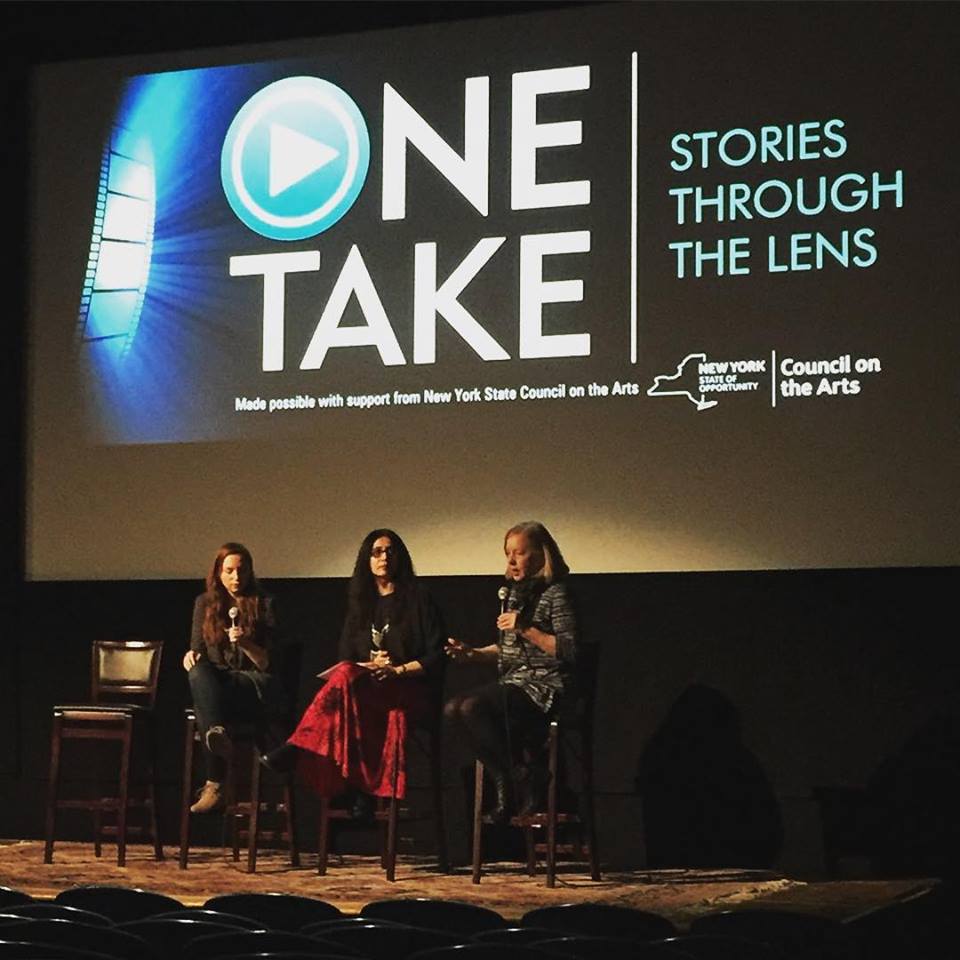
Post Screening Discussion at the Little
Adam Lubitow: Panel with Mara Ahmed, Beccah Pope, and Cat Ashworth following @thelittletheatre’s screening of HEART OF A DOG. #latergram #ROCfilm
global citizenship conference
taught a class on “religion in media and popular culture” at nazareth college this morning. we focused on islam and discussed ideas such as media oligarchy, orientalism, the power of images in a primarily visual culture, the role of filmmaking and activism, the very real effects of rhetoric in public discourse and the culture we consume on how we live as a society, and the dangers of a single story.
this conference is for high school students and it was interesting to see how they were split pretty neatly along color lines – not only in where they chose to sit and with whom, but also in terms of their views on everything. the black kids spoke at length about BLM, the black panthers, american empire, stereotyping and fear-mongering. one of the white kids asked me if i’d risk eating a few poisoned M&Ms as an illustration of why syrian refugees should not be allowed into the country. i didn’t want to be flippant but i told him it was a completely false analogy. refugees are not M&Ms and we have no intentions of eating them. we talked about how very few refugees have been allowed into the US (vs the million or so being hosted by turkey) and how the context of the war in syria (and the role we continue to play there) is an important connection to be made.
wish there had been more time to bring people out of their shells and have a more meaningful and robust interchange. so sorely needed. more about the conference here.
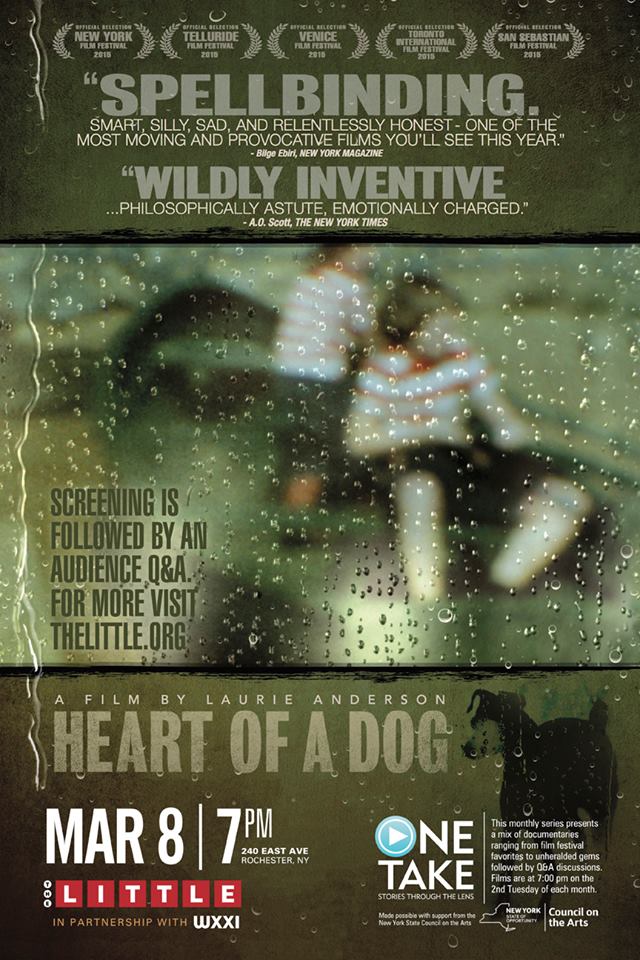
Laurie Anderson’s HEART OF A DOG at the Little Theatre
Laurie Anderson’s HEART OF A DOG will be screened at The Little Theatre, today at 7pm. It will be followed by a panel discussion with Cat Ashworth, Beccah Pope and myself. Hope to see u there.
Screening of The Muslims I Know at Women of Color Conference
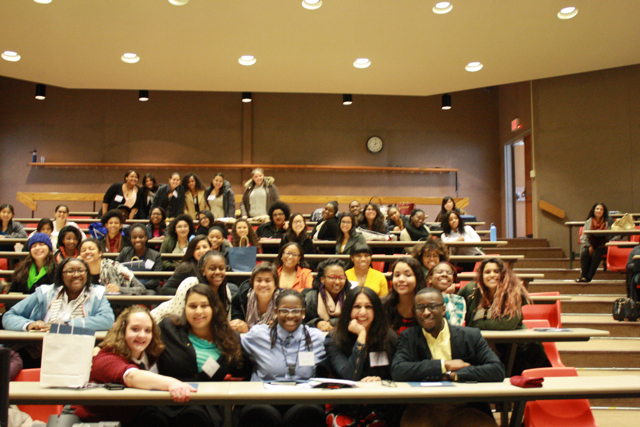
SUNY Geneseo is hosting the third annual Consortium on High Achievement and Success (CHAS) Women of Color Conference and I just presented The Muslims I Know there. What a wonderful idea for a conference and what a lively and sharp bunch of students attending it.
At one point in the film someone says: I’m worried about terrorism these days and most terrorists in the world are Muslim.” I’ve screened this documentary 100s of times and there’s never been much of a reaction to this line. Today the entire auditorium, filled with young people of color, burst into laughter. Wow, they got it. Of course they did. This kind of distortion/reversal of reality is something familiar to all people of color. It’s part of our lived-in experience.
A young woman told me she was Sikh. Her father wears a turban. She was three years old when 9/11 happened and she’s experienced bigotry and fear ever since. Even though she’s not a Muslim, the film spoke to her in a very intimate way. We discussed the overlap between Islamophobia and racism. Another young woman said she was Hindu. She asked me how to parse Western stereotypes about sexism in one’s culture along with the struggles one must initiate and carry on inside one’s own community. We discussed the overlap between feminism and imperialism. A student sitting in the front row, who watched the whole film intently, told me she wanted to be a filmmaker and we discussed the importance of telling our own stories, in our own words, so that we can empower ourselves and our communities.
Loved every minute of it. After the screening, I joined the students in the first row. Here is a picture.
A Thin Wall: Screenings in Europe
A Thin Wall is coming to Europe in April 2016. Screenings in London, Dublin, Brussels and Amsterdam. Hope to see you there! Details about times and venues here.

A Thin Wall: Screening at RIT
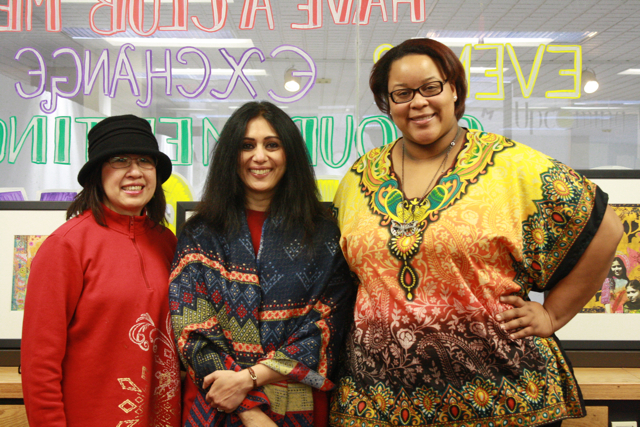
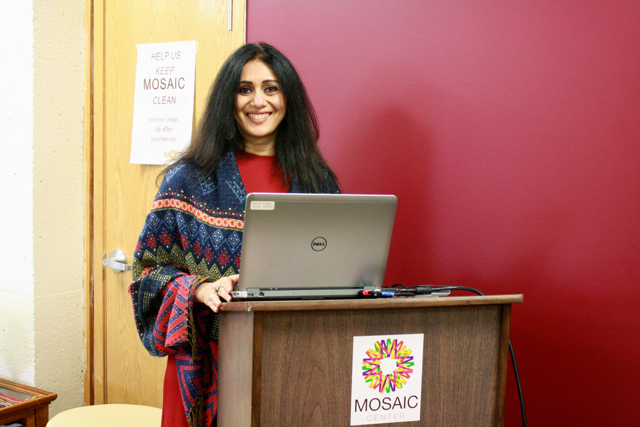
excellent screening of A Thin Wall plus discussion at RIT MOSAIC today – the kind that’s cozy, highly interactive, thought-provoking, beautifully diverse, and followed by delish desserts. there were students present but also members of the community who are involved in activism or work on cultural diversity. hey, i even met my next door neighbor who had turned up for the screening because his wife teaches at RIT. what always blows my mind are the young people though. such intelligence, yes, but also such sensitivity. the young women are particularly able to analyze, encapsulate, parse, connect, and articulate with a brilliance that is deeply satisfying and hopeful. i keep thinking to myself: if only they could lead, transform and shape our world. thank u Mimi Lee (APAA) for being such an accomplished organizer and community leader and thank u Stephanie Paredes for being the best moderator on the planet (and an avid Junot Díaz fan). some of my artwork from the series “this heirloom” will be on exhibit at RIT MOSAIC until the end of march. pls visit and enjoy at your leisure 🙂
getting ready for my next project
brilliant meeting with two brilliant friends today. getting ready to write a film treatment/proposal for my next project: a multi-media, community-based, interactive project on racism.