
Category: projects
The Injured Body: Sady Fischer
Transcribing interviews for my new doc ‘The Injured Body’
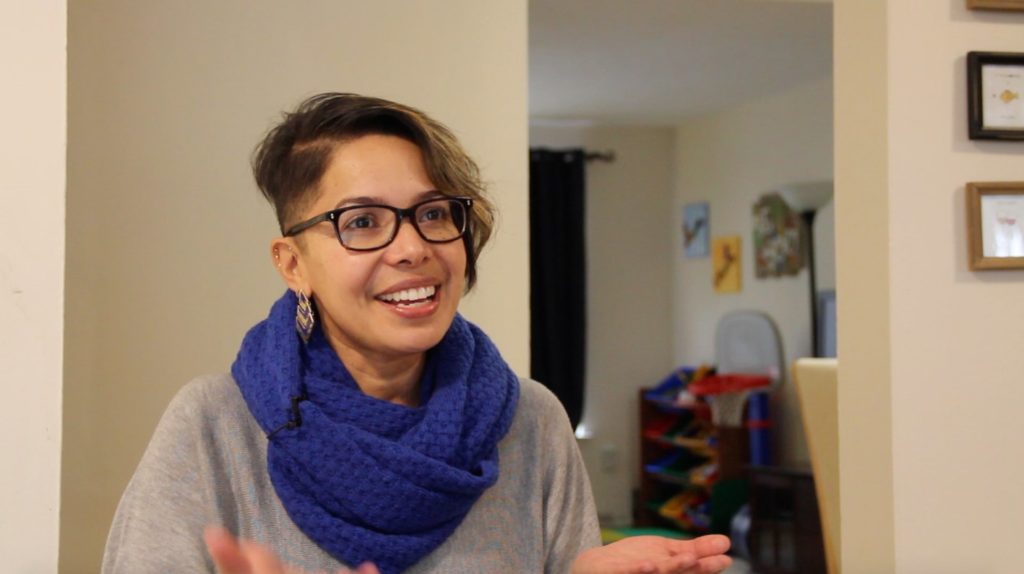
Sady Fischer, Director of Diversity, Equity & Inclusion at Excellus BlueCross BlueShield, describes her vision for a better world:
The first thing I would say is for everyone to get the term colorblind out of their vocabulary. We do see different races, different communities, different looks. There’s this Audre Lorde poem, it is my all-time favorite, and she says: ‘It is not our differences that divide us. It is our inability to recognize, accept, and celebrate those differences.’
[…] I tell people all the time, I want you to see who I am, I don’t want you to pretend that you can’t see that I’m female. I’m proud of being a woman. Don’t pretend that you don’t see that I am a Latina, I’m very proud of my background and my heritage. I don’t want you to pretend that I’m not a queer woman. People say, ‘I don’t even see you as that, I just see you as Sady.’ But I see myself as that. I’m proud of my partner, our household, our family and the community that we belong to. I want you to see all those things. What I don’t want is a value judgment assigned to any of it.
microaggressions #racism #LGBTQrights #womenofcolor #film #documentary #theinjuredbody #neelumfilms #microaggressionsareracism #microaggressionsarereal
Watch A Thin Wall
A Thin Wall is now on MUBI India and also being streamed by @kritifilmclub for one more day of free viewing.
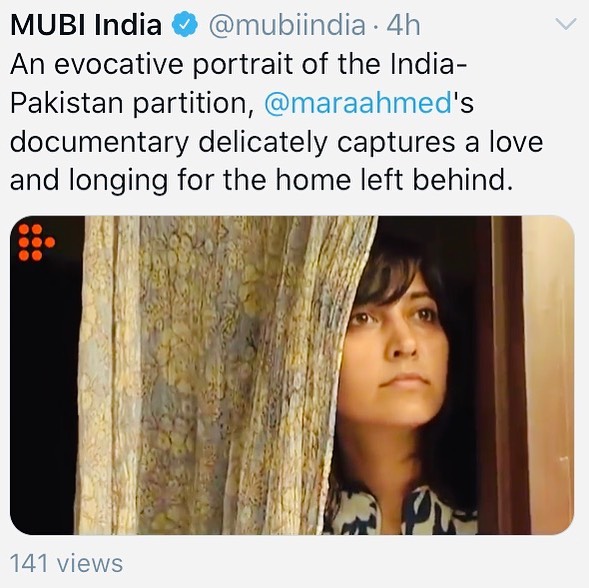
Dividing the Indivisible: Revisiting Partition
THIS review!!! When someone sees, truly sees, your work.
A Thin Wall premiered in 2015, five years ago, but MUBI India just acquired it and made it ‘film of the day’ and Kriti: a development praxis and communication team have been screening it, so entire new audiences are watching it now. It’s more relevant than ever.
What was it like to make A Thin Wall, a film that took seven years to complete?
How does one make a film about ethnic cleansing and violence, yet stitch it together with the movement of delicate saris and dupattas, fabric that hugs and celebrates the bodies of women? How does one tell stories about loss and displacement yet make the language of that telling sing with poignant, thoughtful words articulated by poets, writers, photojournalists, historians and filmmakers? How does one jettison linearity and its oppressive demands for a structure loose enough, capacious enough, to contain multiple layers of pain, memory, politics, history, and emotion? How does one talk about ominous violence, yet intertwine it with hope, with dreams of a better future?
These were some of the contradictions, narratives and sensibilities that were woven together to create A Thin Wall.
Thank you Surbhi Dewan for being my partner in this and for trusting me with the stories of your family. Thank you Mitun Gomes, Zubair Tanoli and Adam Netsky for your lyrical cinematography, Gayane Okhota for breathtaking animation, and Hassan Zaman, Nivedhan Singh and Zeshan M Bagewadi for beautiful original music. Thank you John Siddique, Uzma Aslam Khan, Ajay Bhardwaj, Asim Rafiqui, Jimmy Engineer and Urvashi Butalia for lending your genius to this project.
Thank you to everyone who supported our crowdfunding campaign, worked on post-production, and helped in myriad other ways in Pakistan, India and the United States. Last but not least, thank you to the family and friends we interviewed, some of whom have left us already, and who spoke with such generosity, truth and courage. So grateful for all of you, and for being able to make films.
Read review here.
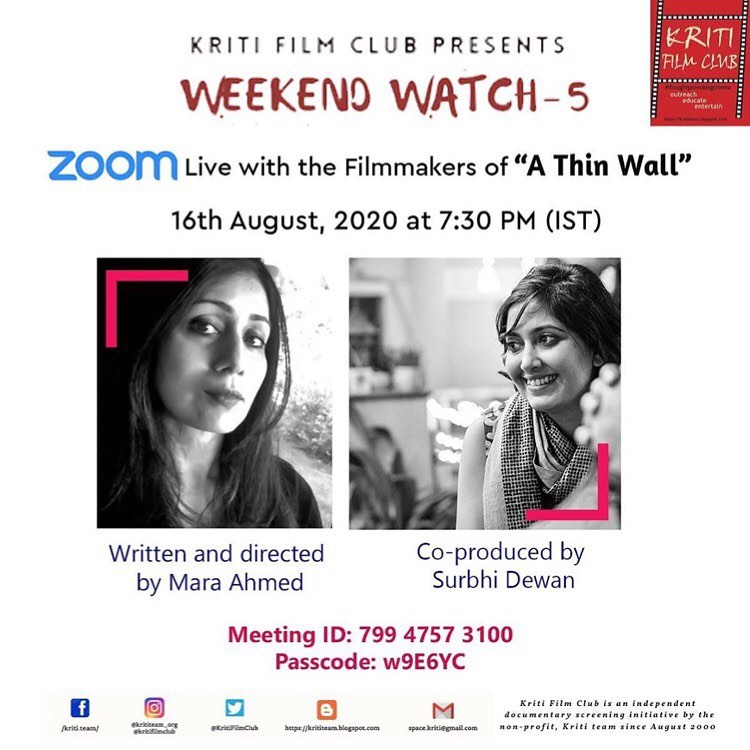
In conversation with the Filmmakers Mara Ahmed and Surbhi Dewan
Kriti Film Club is inviting you to a scheduled Zoom meeting as part of its Weekend Watch of the documentary, A THIN WALL
Topic: In conversation with the Filmmakers, Mara Ahmed and Surbhi Dewan
Date/ Time: Sunday, Aug 16, 2020 07:15 PM, India
Join our Zoom Meeting
Coming Back to Rochester
rochester fam, i am coming back to roc for a week! from sept 25 – oct 2. will be shooting b roll with the great Rajesh Barnabas, but let me know if u want to go for a walk or something and we will work around our filming schedule, inshallah. will be staying near park ave. can’t wait:)

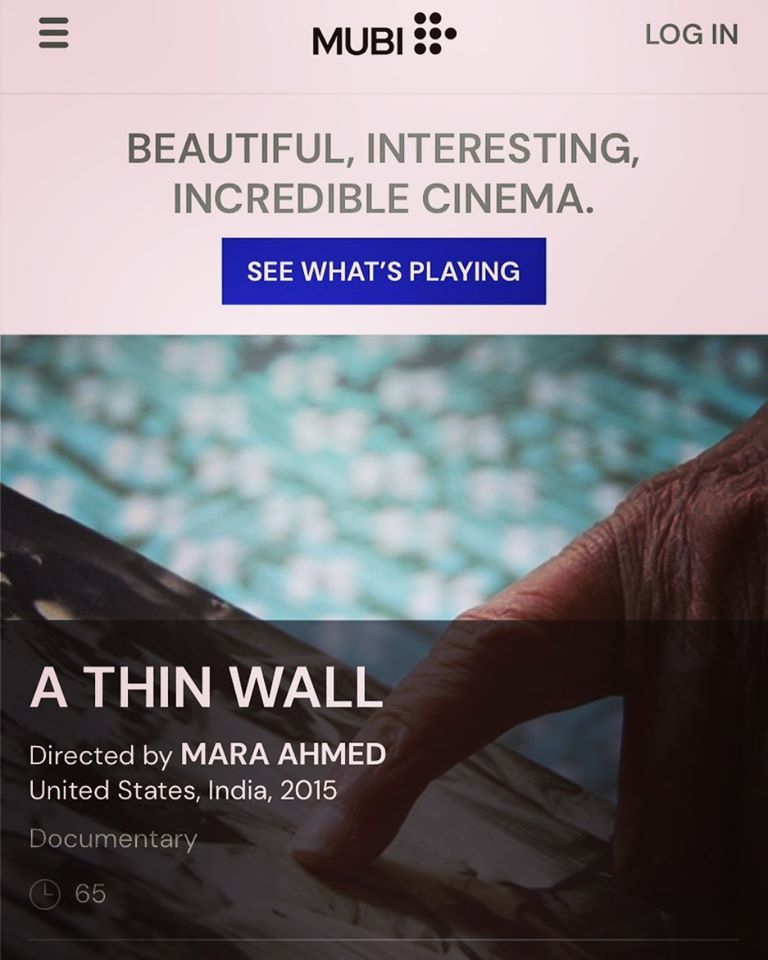
A THIN WALL on MUBI
My film ‘A Thin Wall,’ co-produced by Surbhi Dewan, a documentary that highlights personal stories about the partition of India in 1947, will be streaming on MUBI India starting today! MUBI is a global film platform that provides a hand-curated selection of films on demand, in over 190 countries. Psyched:)
.
MUBI #athinwall #documentary #neelumfilms #partitionofindia #pakistan #india #southasia #subcontinent #oralhistory #personalstories #womenempowerment #bordersseparatepeople
The Injured Body: Amanda Chestnut
Transcribing interviews for my new doc ‘The Injured Body’
Amanda Chestnut, an artist, curator and educator based in Rochester, NY, talks about her work:
‘The Negro Artist and the Racial Mountain’ by Langston Hughes was so important for me to read. I’ve read a lot of his poetry. A lot of archival work I’ve done has been related to Hughes’s experience of being Black in America. His poetry has overlapped with my archival work in many ways. But this essay in particular was really important for me because he speaks to actively choosing to be Black and actively choosing to glorify that Blackness, instead of being a creator and having aspirations toward a normative white standard. He emphasizes that it’s ok to be Black and that Blackness is glorious, is the word that he uses. And that was really important for me to read as I was coming into being an artist. It was important for me to be able to actively choose to talk about race and to make work about race. Because when you’re a person of color your work is always about race, whether you want to admit it or not. Everything you make is influenced by race and everything you make will be read through that lens.
.
microaggressions #racism #womenofcolor #film #documentary #theinjuredbody #neelumfilms #microaggressionsareracism #microaggressionsarereal
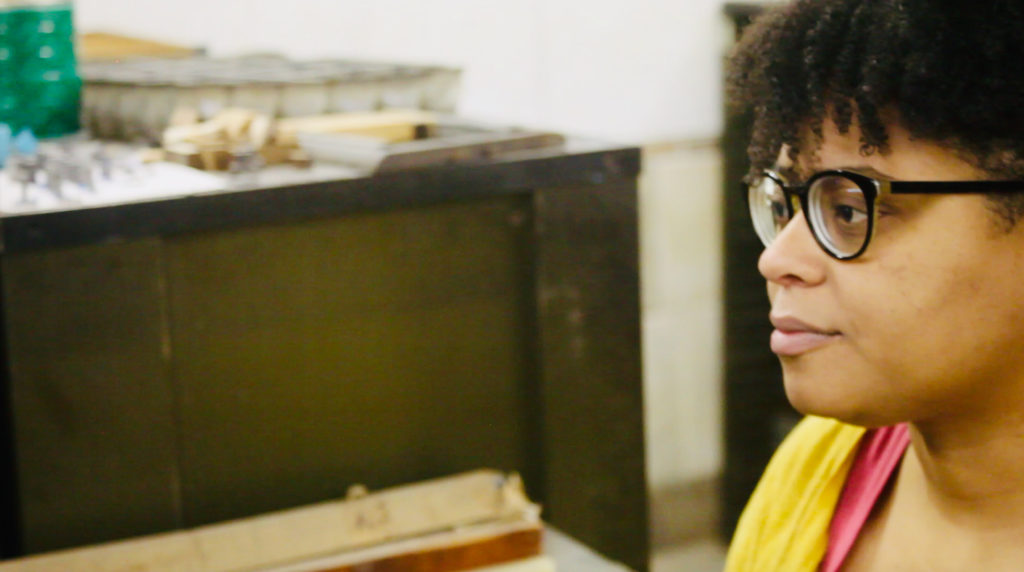
Neelum Films – Films by Mara Ahmed
Dear friends, after a huge amount of work by Mike Boas and myself, I would like to introduce the updated website for Neelum Films. It includes information about ‘The Injured Body: A Film about Racism in America’ and gorgeous photographs taken by Erica Jae of the powerful women we interviewed. I will continue to transcribe those conversations, share quotes, and keep you posted on the film’s editing and post production. Pls visit us here and support our projects. Check out our new website here.
The Injured Body: Greta Niu
Transcribing interviews for my new doc ‘The Injured Body’
Greta Aiyu Niu, came to Rochester as an academic, now Director of Grants at Planned Parenthood of Central and Western New York, lifelong teacher, reflects on micro-aggressions:
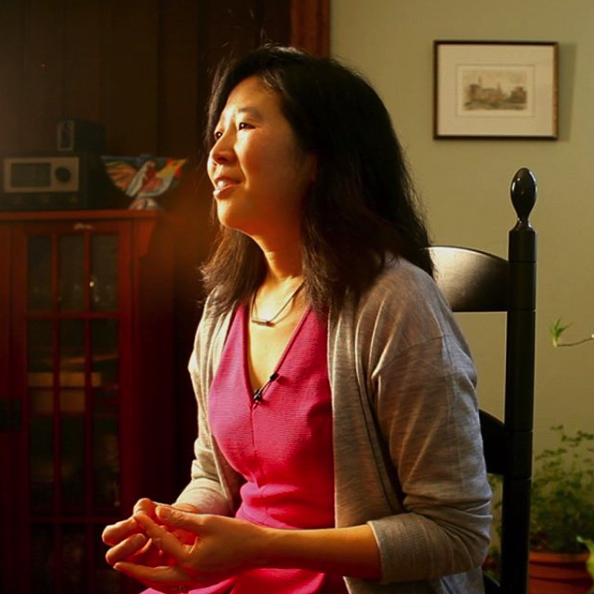
‘I just don’t want to lose sight of what makes up the micro-aggressions. So it is implicit biases around race or ethnicity or gender or gender expression or class or size or disability, those are the pieces that we’ve been fighting. And we’ve always been fighting against them. I don’t want people to think we’re done with that. Now all we have to deal with are these micro-aggressions. It’s a whole continuum of behaviors that are harmful, from a little poke to physical violence.’
.
#microaggressions #racism #womenofcolor #film #documentary#theinjuredbody #neelumfilms #microaggressionsareracism #microaggressionsarereal
The Injured Body: Lu Highsmith
Transcribing interviews for my new doc ‘The Injured Body’
Lu LutonyaRachel Highsmith is a poet, writer, and community activist. She is the founder and director of Roc Bottom Slam Team.
On how she processed racist micro aggressions she experienced in college:
‘As an 18 year old, my initial reaction was anger. I was really ticked off that they would say these things or even think these things. This was the late 80s, so it’s not like it was back in the 50s or 60s. I was very upset. I don’t know if it caused me to try to prove myself. I was on a mission to excel academically, culturally, creatively. It probably took a good 20 years for me to change my mindset. By my mid-30s, I was like, I’m just who I am.’
.
#microaggressions #racism #womenofcolor #film #documentary#microaggressionsareracism #theinjuredbody #neelumfilms

The Injured Body: Ayni Ali
As I transcribe interviews for my new documentary, The Injured Body, I will be posting short excerpts from the conversations we filmed (cinematography by Rajesh Barnabas).
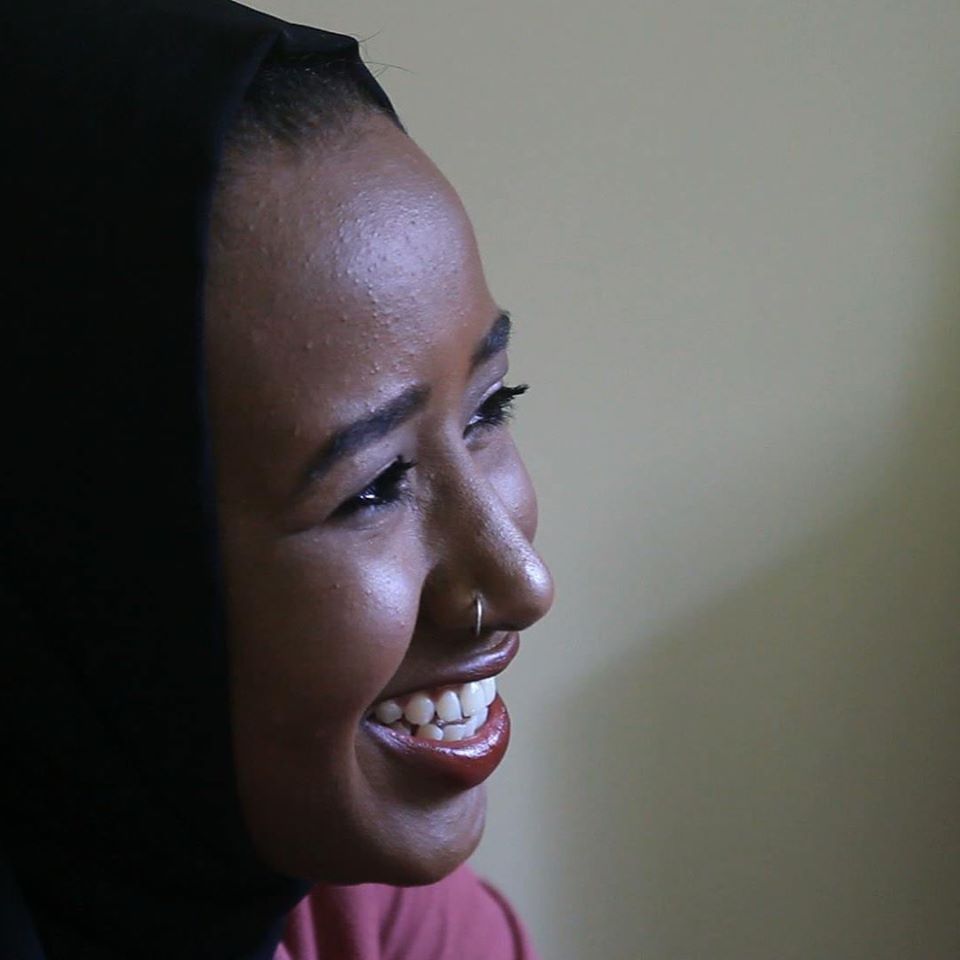
Here is Ayni Ali: 24 at the time of filming, a student at RIT, and a volunteer for Refugees Helping Refugees.
Her answer to where her drive (the fire that seems to animate her actions and words) comes from:
‘I think from being raised by a woman (laughs). I was raised by my grandmother. I’ve had strong women around me all this time.
[…] Because I was raised by a woman, I know what a woman can do.’
.
#theinjuredbody #muslimwomen #woc #womenofcolor #somalia #refugee#film #documentary #neelumfilms #microaggressions #racism
two part interview with instruments of memory
Repost from Instruments of Memory
•
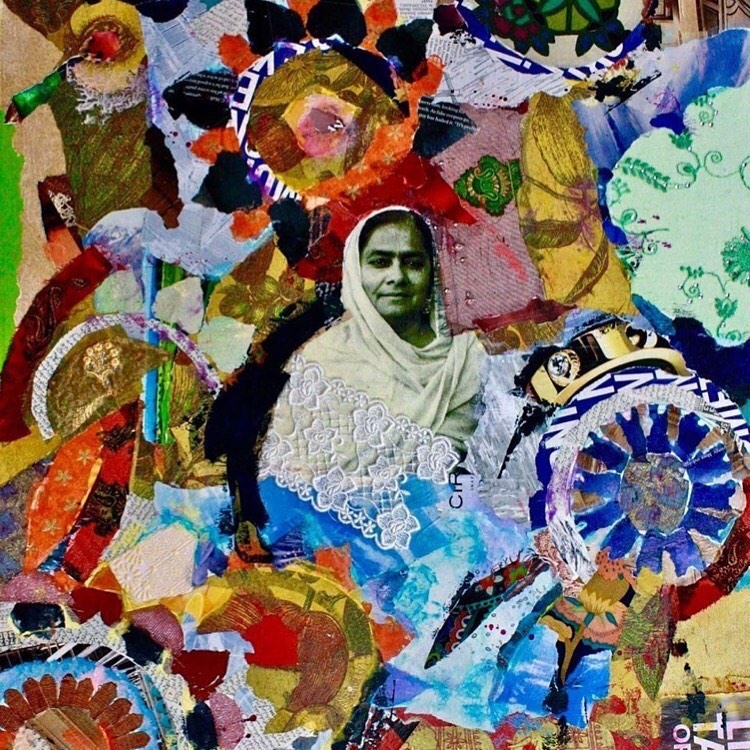
“Inspired by the words in ‘Snowmen’, a poem by Agha Shahid Ali, This Heirloom explores notions of identity by recreating Mara Ahmed’s family history using photographs of her ancestors and juxtaposing them against South Asian architectural details. The vivid and colorful montages contrast with black and white images of Ahmed’s parents, Nilofar Rashid and Saleem Murtza, her maternal grandfather, Rashid Ahmad Qureshi, her maternal great grandfather, Adbul Majeed Qureshi, and her paternal grandmother, Niaz Fatima. By placing her subjects on the wrong side of the India-Pakistan border, Ahmed defies the dividing lines that separated territories more than seventy years ago.”
.
.
Learn more in @mara__ahmed Mara Ahmed’s two-part interview (see comments)
.
The Injured Body gets a grant
Friends, I am excited to share that The Injured Body: A Film about Racism in America is now fiscally sponsored by New York Women in Film & Television (see below) and that we recently got a grant from First Unitarian Church of Rochester for post-production. We are also updating our website (will share soon). There is still a lot of work to do, but we are moving forward. More here.
Borderless: A conversation with Mara Ahmed, Part 2
We did this interview in early May, before George Floyd’s murder and the uprising that followed. But I’m glad Claudia asked me about the pandemic and its impact on immigrants and communities of color. Here is the second part of my interview with Instruments of Memory:
It is uncertain how we are going to overcome the recent health and economic crisis that has hit immigrant communities and people of color the hardest.
When I asked Ahmed what would be a way to engage and support these communities at this time, she admits: “This is a big question. Many have said how the pandemic is a great equalizer. Sadly, it’s quite the opposite. The pandemic throws into sharp relief the gross inequities and cruelties of a maniacally greedy, profit-oriented, dehumanizing capitalist system. Income and wealth inequalities in the US are obscene. The global distribution of wealth is even more distorted and disturbing. It’s a suicidal system.
At this time of crisis, we need to provide resources to the most vulnerable: large public projects that provide employment and housing, healthcare, testing and personal protective equipment for all, and equal access to technology, which is essential for remote learning, online work, and social distancing. People’s lives depend on this.
We should also keep in mind that pre-corona life is NOT what we want to return to. This is the time to imagine and organize a just, kind, and decolonial world. We must be wary of disaster capitalism and remain committed to our vision, even in the midst of a disorienting crisis. It can’t be said often enough that we are all in this together.” More here.