Buffalo: Protest demands closure of camps on Southern border

part of buffalo is shut down by protests and consequent arrests. we need more of this. #closethecamps

‘The coalition behind the protest includes members of the Buffalo chapter of Jewish Voice for Peace, Justice for Migrant Families WNY, and the New York Immigration Coalition. Families, including children, attended the event, which is linked to protests going on across the country. Organizers were also in touch and coordinating with Never Again Action, a Jewish organization responsible for carrying out protests and direct action in multiple states. More here.

Is the US Border Patrol Committing Crimes Against Humanity?

John Washington: The risk isn’t happenstance: US Border Patrol policy intentionally pushes migrants into crossing in regions where they are more likely to suffer and die. An analogous policy in the interior of the country would be rerouting a sidewalk to force pedestrians to hazard straight across a busy highway, and chasing them with armed helicopters as they do so.

The agent, after scanning the hills, looking up and back down the trail, squatted to inspect the cache. The water bottles had hearts drawn on them, as well as uplifting messages written in Spanish: Agua Pura, ¡Ánimo! ¡Que Vayan con Suerte! He shifted his rifle and awkwardly readjusted his squat. Then he took out his knife and began lining up the water bottles. One by one, he stabbed them, sticking in his knife and then pulling it back out along with a little gulp of water. He stabbed all eight bottles. The water bled out, soaking the dirt.

When you die of dehydration or heat stroke—the most common causes of death among border crossers in southern Arizona—you go insane. Lack of water in your body leads to hypovolemia, insufficient blood in your circulatory system, which dries out your brain. Your skin begins to shrivel, and your body redirects blood away from non-vital organs. Then—without your kidneys working as a filter—your own blood begins to poison you. Without enough water to sweat, your entire body becomes feverish; by then your brain is not only drying out, it is cooking. Severe exertional heat illness—because, somehow, you’re still walking north—leads to vomiting, dizziness, disorientation, and the breakdown of the heart muscle. The pain is slow, complete. Your tongue begins to whiten and swell, and you strip off your clothes, stumble through the thorns and shin daggers, until, finally, you prostrate yourself to the blaze of the sun. In the desert, the chain of causation is short—a day without water, then your corpse is torn apart by animal scavengers. The bottles of water that agent was stabbing may just as well have been the border crossers’ necks. More here.

Not backing down (on Palestine)

earlier in may, the dream panel on palestine spoke at umass: Dave ZirinRoger WatersLinda Sarsour, and Marc Lamont Hill. moderated by Vijay Prashad. excellent throughout but some of the things that struck me: 

–linda’s comment about how jewish white privilege is tenuous, ephemeral, and at risk of being revoked. therefore the radical left is where the jewish community has a permanent home, rather than white nationalism, christian evangelicalism or even imperial liberalism of the sort embraced by hillary clinton and her ilk. 

–linda pointing out how out of all the speakers on that stage, it was marc lamont hill who was heckled constantly, the only black man to speak. she didn’t belabor the point but it illustrates, oh so beautifully, how zionism is racism. 

–marc lamont hill urging people to use the words ‘settler colonialism’ to describe zionism and the ethnic cleansing and occupation of palestine. i’ve always used those words because they clarify. ‘conflict’ is an obscene obfuscation.

–dave zirin unpacking the idea of ‘self-hating jew’ by defining it as becoming ‘what we once opposed and mimicking our oppressors from decades past.’ he chooses to walk with ilhan omar rather than benjamin netanyahu.

my jewish compadres from jewish voice for peace, see all of this – the overlap between anti-semitism, islamophobia and anti-black racism – and how we cannot survive unless we band together. 

i recently helped organize such a community discussion at the islamic center and got emails from liberal jews engaged in anti-racism work as well as the jewish federation, calling me to task for allowing two activists from JVP to participate because they are a small minority and do not represent the broader jewish community. i disagree. the impulse to censor and shut down is proof that this is exactly where the jewish community is headed and so those are the voices we need to hear most.

pls watch,

Warren vs Sanders

@TheHipsterRebbe: If you support Warren over Sanders, that’s fine. 
If you are also an advocate of a reduced military (demilitarization/anti imperialism/etc) in some form and also pro-Palestinian rights, you’re going to have to square that circle in some way.

From ‘The Best Argument for Bernie Sanders Is His Democratic Globalism’ by Eric Levitz:

Warren’s background as a Republican-voting technocrat hasn’t stopped her from mobilizing populist anger at creeping plutocracy. But it did prevent her from assembling a decades-long record of decrying American imperialism, and defending left-wing governments the world over. Sanders’s socialist background, on the other hand, led him to do precisely this. And while that record of international leftist solidarity could be a liability with the American electorate, it’s a singular asset within the global left — and in an era when the survival of decent civilization likely depends on building a powerful, transnational left-wing movement, that is no small asset.

Sanders does not owe this international reverence solely to his advocacy for the global left as a young (or, more precisely, less old) activist. The Vermonter may have been conspicuously reluctant to discuss foreign policy in 2016. But this time around, he’s offered a clearer vision for what a progressive geopolitical agenda should look like than any of his competitors. With the help of his foreign-policy adviser, the one-time left-wing foreign affairs blogger Matt Duss, Sanders has woven the Trump-Russia scandal — and the president’s broader affinity for foreign dictators — into a tale about the global struggle between the forces of democracy and the “authoritarian axis.” Plutocrats the world over are using their wealth — and the retrograde politics of right-wing nationalism — to insulate their privilege from the threat of genuine democracy, no matter the dire consequences for the poor, vulnerable minority groups, or even the planet’s survival. Elizabeth Warren has struck similar notes in her public remarks on foreign policy. But Sanders has matched his lofty rhetoric with boldly progressive stances on concrete geopolitical issues to a degree that Warren has not. Sanders has established himself as the Senate’s most passionate defender of Palestinian rights (admittedly, a title somewhat akin to “the world’s largest chihuahua”), led the opposition to U.S. support for the Saudi war in Yemen (and has called for a broader rethinking of the U.S.-Saudi alliance), voted against increasing the Pentagon’s budget (Warren voted for it), and announced the formation of a “Progressive International” with radical Greek economist Yanis Varoufakis.

To be sure, Sanders’s foreign policy vision is still inchoate. On the critical questions of how the U.S. should navigate its relationship with a rising China, how it should seek to reorganize global trade and investment in a progressive direction, how it should balance its domestic interests with its obligations to developing countries — and, above all, how it should deploy its economic and diplomatic power to combat climate change — the senator has offered few details. And the utter lack of a left-wing foreign-policy infrastructure in the U.S. could make ironing out such details a difficult (and potentially, ideologically compromising) process.

Nevertheless, through his actions in the Senate and his alliance-building abroad, Sanders has established his commitment to viewing progressive change through an international lens, and his interest in using the powers of the presidency to advance such change on the global level. For the moment, Warren has not. And considering that the next Democratic president will have far more unilateral authority over foreign affairs than domestic policy, this is no minor distinction.

Ultimately, Sanders’s substantive advantage on foreign policy may be less important than his decisive edge in the crasser matter of fundraising. Right now, there is one populist Democratic candidate who has the financial means to sustain an extended campaign, and it is not the senator from Massachusetts. But when and if Warren grows the ranks of her small-dollar army (and/or beats back the “electability” concerns that are suppressing her support), her next priority should be to direct her technocratic talents to the global sphere. It’s fine and good to amass a large pile of bold, imaginative legislative proposals that the next Democratic president will never be able to pass. But it would also be productive for Warren to put together a foreign-policy agenda that her administration wouldn’t need Joe Manchin’s permission to pursue. Bernie Sanders may be the race’s only democratic socialist — but he doesn’t have to be its only democratic globalist.

Policing the Borders of Suffering by Zoé Samudzi

LIKE MANY AMERICANS, my first exposure to the idea of concentration camps came from public school lessons about World War II. But a later, formative influence on my understanding was the stories my mother told me about the Zimbabwean liberation struggle and the rural internment space in which she lived as a teenager, a space she has described to me as a “concentration camp.” As is often the case with structures of human containment, these camps’ architects described them euphemistically: the colonial Rhodesian government called them “protected villages.” The intention behind these village spaces, which held a number of rural families in a given area, was to cut indigenous civilians off from any contact with guerrillas fighting for independence; hers was one of several internment camps in Chiweshe, in northwestern Zimbabwe, not far from Mozambique, where there were guerrilla camps across the border.

My mother told me how people were woken by soldiers in the middle of the night, gathered into lorries with whatever belongings they could quickly pack, and brought to a completely undeveloped piece of land, where they had to erect their own shelters. There were no stores to buy food and only a handful of inconveniently-located water taps, so residents initially had to collectively struggle to subsist in the absence of more stable infrastructure. She recalled that the perimeter was surrounded by a wire mesh fence topped with razor wire, and encircled by a ditch. Armed guards—she recalled that they were conscripted indigenous soldiers, rather than white Rhodesian colonial forces—patrolled her camp. Passage into and out of the camp was carefully controlled by means of a single gate and a strict curfew. Residents were forced to carry metal identification cards that permitted exit and entrance; if there was a breach—if the liberation fighters cut a hole in the fence overnight—residents were not allowed to leave. This is how my mother lived from 1976 to 1978, from the age of 15 to the age of 17.

As my mother’s experience shows, concentration camps are not always created with explicitly articulated genocidal intent. Yet a particular understanding of the term “concentration camp,” taken to refer exclusively to camps of the kind that Nazis used in their attempt to eradicate European Jewry, has been put to use to critique Rep. Alexandria Ocasio-Cortez’s deployment of the term to refer to migrant detention centers on the southern border. Undoubtedly, Ocasio-Cortez intended the connection. Holocaust analogies are rhetorically and politically useful because they evoke a particular affective politic: when a marginalized group’s suffering can be successfully compared to the atrocities inflicted by Nazis, that suffering is legitimized, and afforded a specific kind of gravity.

Both mainstream Jewish institutions and non-Jewish liberal and conservative commentators took it upon themselves to censure Ocasio-Cortez’s use of “concentration camps,” with Rep. Liz Cheney accusing the freshman representative of “demean[ing]” the memory of those who died in the Holocaust. Jewish Currents’ Noah Kulwin writes that “in these cases the Jewish establishment steps in as umpire” to judge the validity of references to the Holocaust, taking on the task of conferring or withholding the legitimacy of the analogy. Such establishment figures often, Kulwin writes, offer “readings of the Holocaust [that] suggest that there are no broader lessons to be drawn from it, other than the unique persecution faced by Jews.” Holocaust Studies scholar and Editor-in-Chief of PROTOCOLS Ben Ratskoff described this phenomenon to me as a “possessive investment in Holocaust memory,” or the operating “assumption that Jews alone have authority over terms that ‘evoke’ the Holocaust—terms such as ‘concentration camp.’” In this way, the analogy functions less as a tool for mobilizing empathy and more as a means of emotional-historical gatekeeping.

It also functions to segregate memory of the Holocaust from a more dynamic interaction with German colonialism and European imperial history. Germany was party to two genocides before the commencement of the Holocaust. It carried out the genocide of Herero and Nama peoples in its colony in South West Africa from 1904-1908 and then supported the Ottoman Empire’s genocide of Christian Armenians, Greeks, and Assyrians as its ally during World War I—the latter was the case study for Raphael Lemkin’s coining of the word “genocide.” But the history of this genocidal trajectory has been eclipsed by the positioning of Nazi violence as singular.

The specific execution of the Nazi genocide was and remains unprecedented. What came to be described as “death camps” were spaces of industrialized genocide, in which Fordisttechnologies were applied to yield the deaths of hundreds in gas chambers and crematoria in just a few minutes. But while the specific brutality of the Nazi genocide was exceptional, the ideology and architecture of the Nazi camp apparatus was neither unique nor original. In the Herero and Nama genocide, concentration camps were used for the extraction of slave labor and as containment structures for indigenous people removed from their land through settler colonial depopulation. In the Ottoman context, camps were used to brutally dispose of remaining Armenians who had survived deportations. Both networks, described as “concentration camps,” were marked by sadistic physical and gendered sexual violence, summary executions, medical experimentation by physicians, and mass death by preventable disease and starvation, all in service of empire.

Given this, rather than center the Nazi Holocaust in our attempts to understand and describe modern-day American atrocities, we ought to broaden our historical analysis with more robust understandings of racialized space, carcerality, and colonialism as they extend beyond the European context—including in the United States itself. Scholars have offered various definitions of concentration, but as Kulwin points out, Andrea Pitzer, author of One Long Night: A Global History of Concentration Camps, defines the camps’ most critical characteristic as the “mass detention of civilians without trial.” The purpose of the concentration camp, as with any racialized or othering carceral space, is to suspend the humanity of the incarcerated people in the liminal space between the human and non-human. This suspension of humanity often involves the creation of material conditions that tend to lead to premature death: a lack of sufficient or nutritious food rations, as well as systemic overwork, abuse, and physical violence. The internment or concentration camp, though it lacks the breakneck speed and clear genocidal intention that made the Nazi extermination apparatus unique, is thus not so clearly categorically distinguished from the death camp. During the Second Anglo-Boer War in South Africa, the British Army used concentration camps to intern the Dutch and Huguenot-descended Boer population as it sought to assert imperial control over South African land and interrupt the Boer guerrilla campaign. Despite being created with the explicit intention to contain (rather than execute) the civilian population, more than 26,000 civilians—the majority of them women and children—died in the camps from a combination of poor shelter and diet and endemic disease such as measles, typhoid, and dysentery, which spread quickly through overcrowded conditions. Over 20,000 indigenous Africans died in separate concentration camp facilities, as well.

In the American context, we might also consider the muddied distinction between the concentration camp and the death camp by looking at domestic racial geographies—i.e., the way that white supremacy’s racial order structures the creation, governance, and use of space—particularly given that Hitler was inspired by Jim Crow segregation and by the United States’ settler colonial depopulation and theft of indigenous land using the reserve system. The modern American prison system evolved out of the system of enslavement, with “punishment for a crime” as the sole exception to the slavery-abolishing 13th Amendment. The prison functions as a labor camp, where incarcerated people—most of whom are black or otherwise nonwhite—receive what amount to slave wages for the labor-intensive agricultural and manufacturing work that organizers and participants in the 2018 prison strike describe as “prison slavery.” People regularly die preventable deaths in prisons, whether through neglectful policy, resource deprivation, or murder by correctional officer. In a letter to Angela Davis in November 1970, shortly after her arrest the previous month, James Baldwin described the fate that would befall her, George Jackson, and the “numberless prisoners in our concentration camps.” Baldwin recognized the structural systems of violence that placed the injustice of the prison-industrial complex into analogy with the concentration camp.

We can readily identify other racially restrictive carceral spaces that operate by the same logic as the concentration camp and ultimately produce the same result: the dehumanization of a population, broadly justified by social consensus. What, then, is the purpose of creating a strict demarcation between these spaces and concentration camps? Or, further, between concentration camps and death camps, especially when the length of detention is often unknown or indefinite? Is Guantanamo Bay still simply a prison when the United States government is now arranging plans for hospice care because the “terror suspects” are fated to age and die there? How do we describe Gaza, the open-air prison marked by movement-limiting checkpoints, subjected to airstrikes, and fixed within the broader eliminatory structure of Israeli settler colonialism?

This debate over vocabulary lays bare the inconsistencies in our fights for justice, reminding us that under white supremacy, some lives are more valuable than others. As we argue over terminology, we ought to ask ourselves: Is the typology affixed to a structure more important than the material conditions produced? Is the semantic distinction more critical than the urgency of our collective solidarity and intervention? Regardless of whether we describe federal detention centers as “concentration camps” or not, migrants will continue to be held and die there. More here.

Countering white supremacy: panel on Evan Dawson’s show

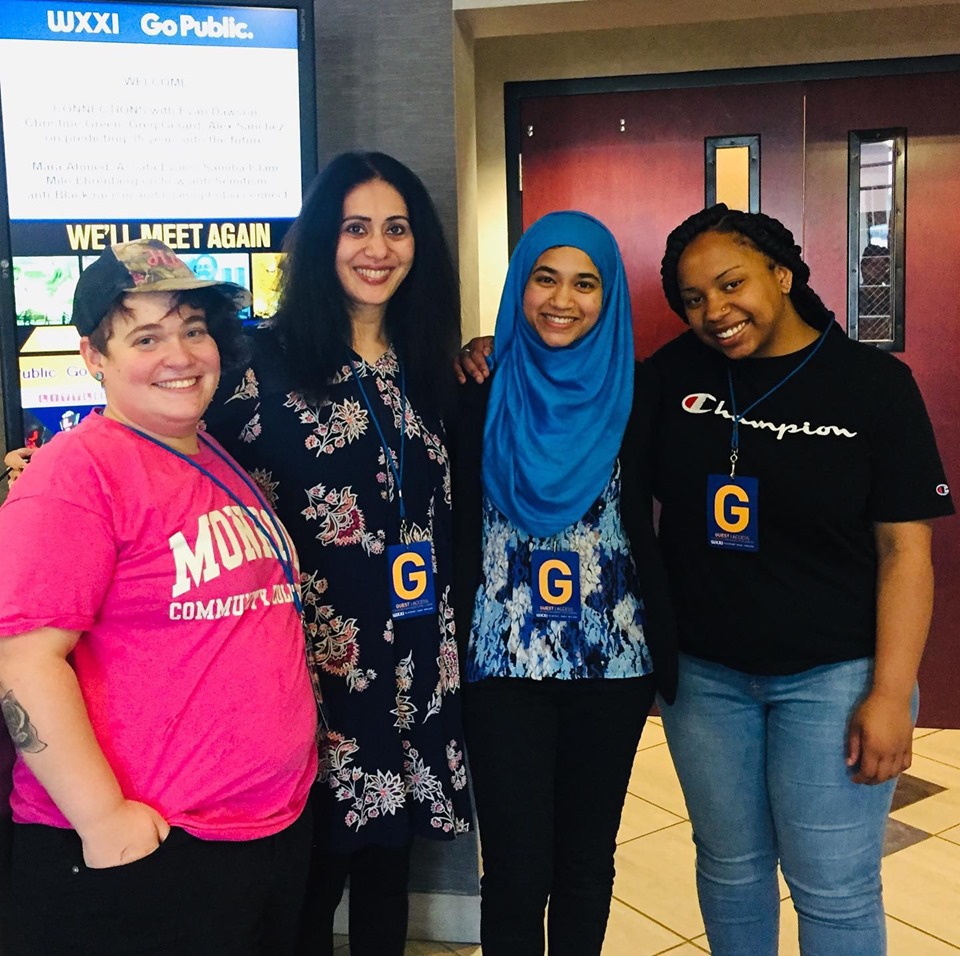
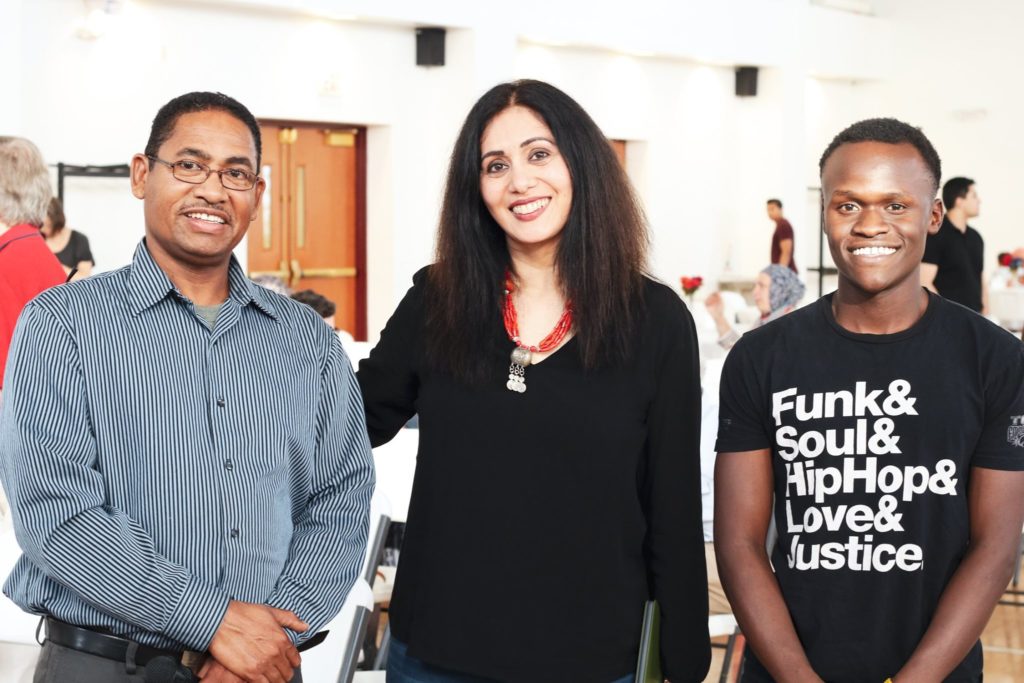
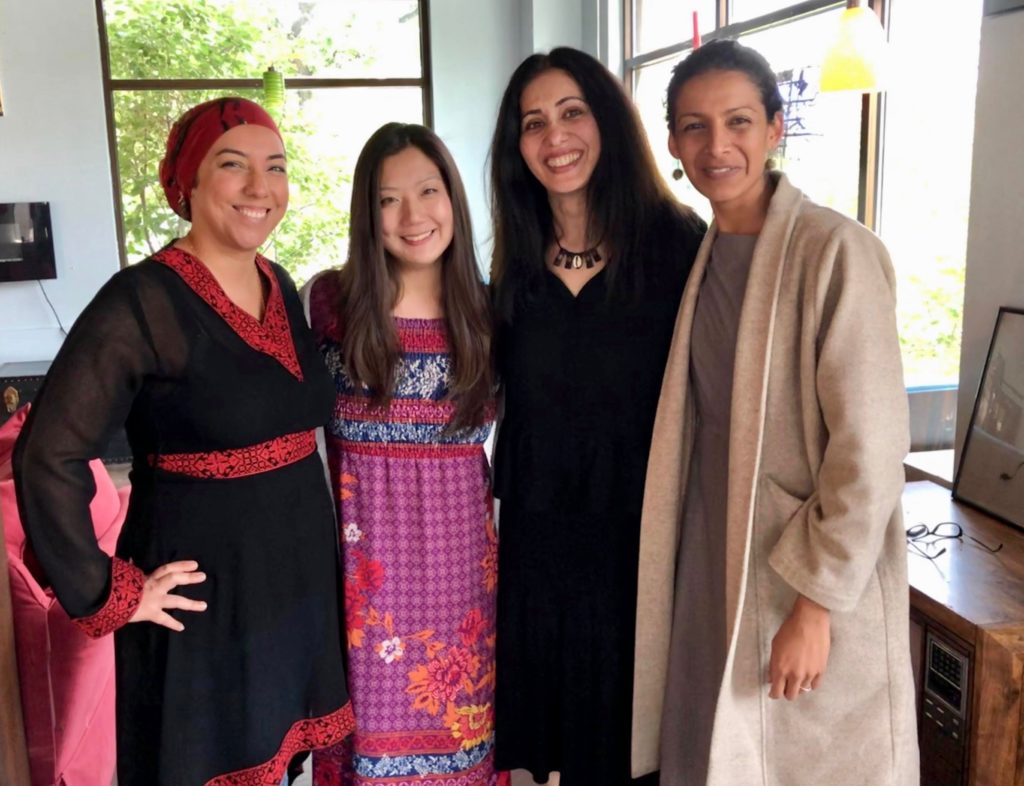
For those who missed yesterday’s event at the Islamic Center of Rochester on ‘Countering white supremacy: connecting the dots between anti-Semitism, anti-Black racism and Islamophobia,’ pls tune in to WXXI‘s Connections. Samiha IslamMilo Ehrenberg, Assata Evans and myself talked about that community discussion with Evan Dawson. You can listen here.

end to a rousing program

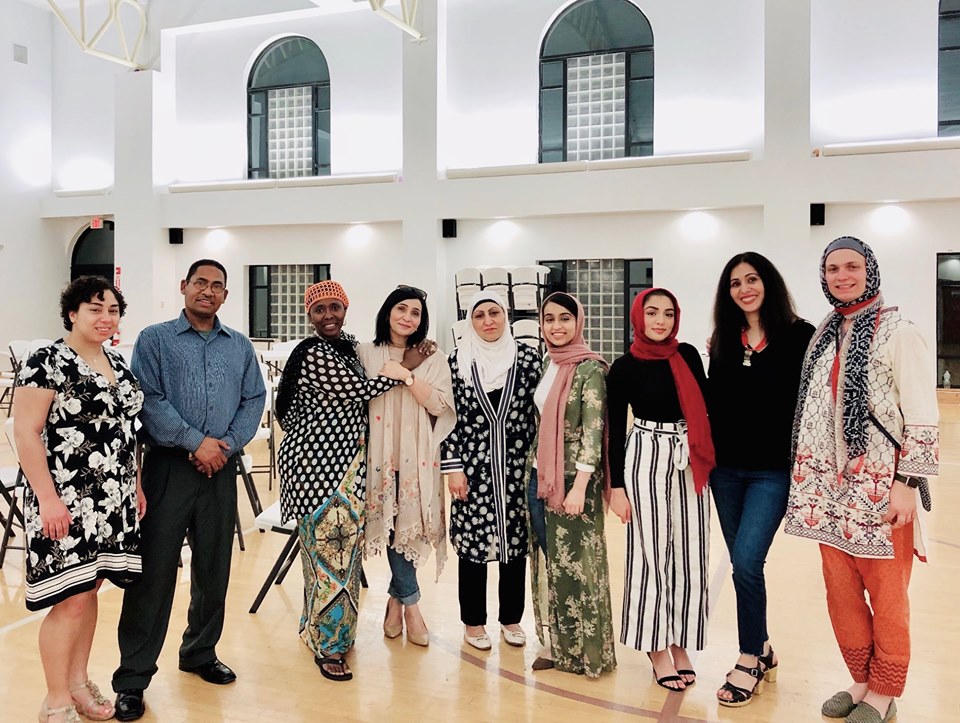
the last ones to leave 🙂

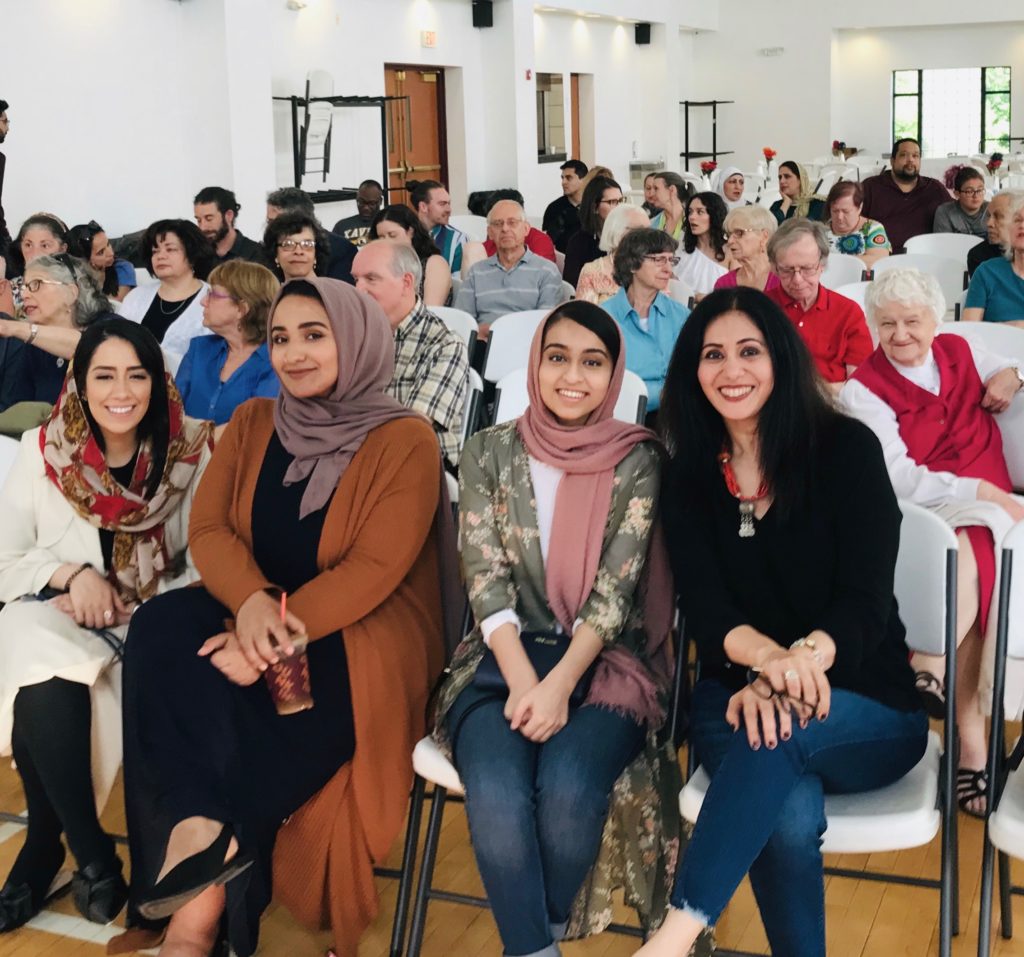
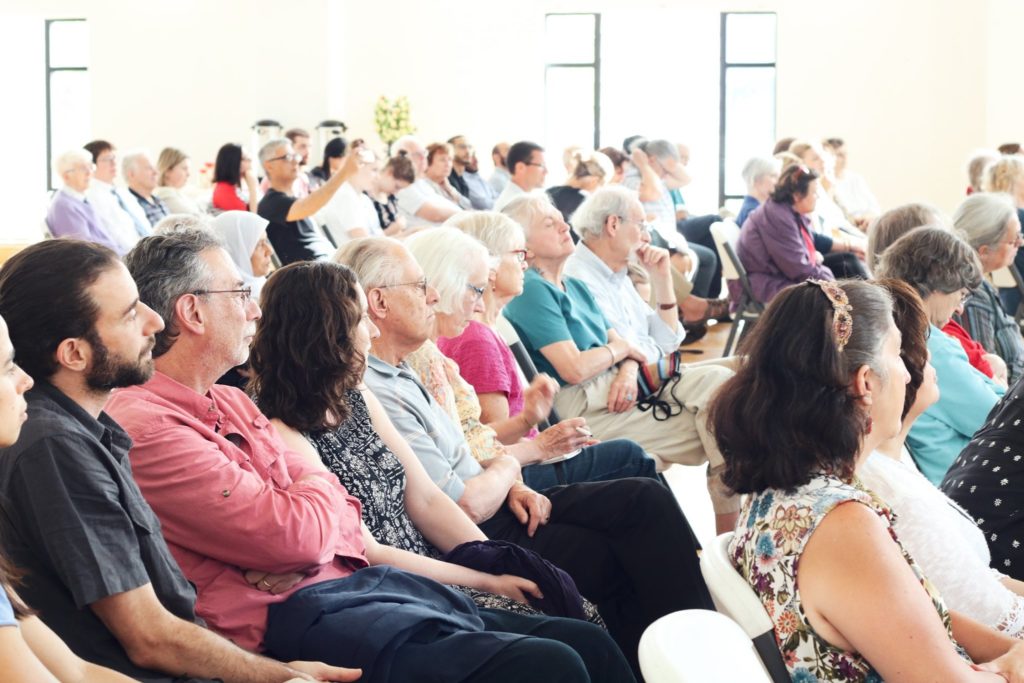
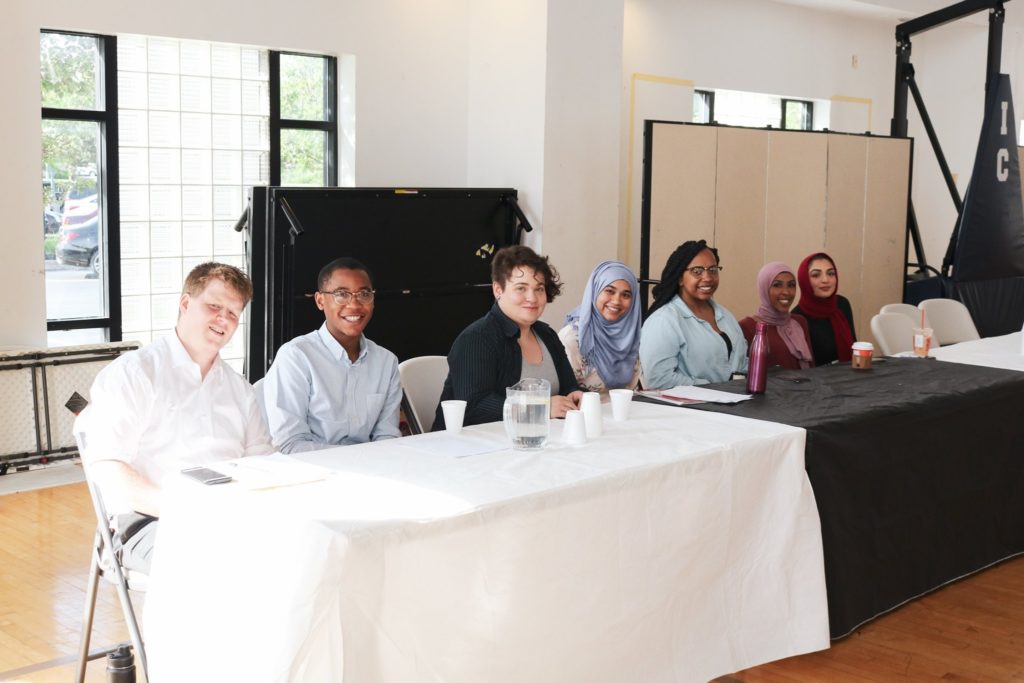
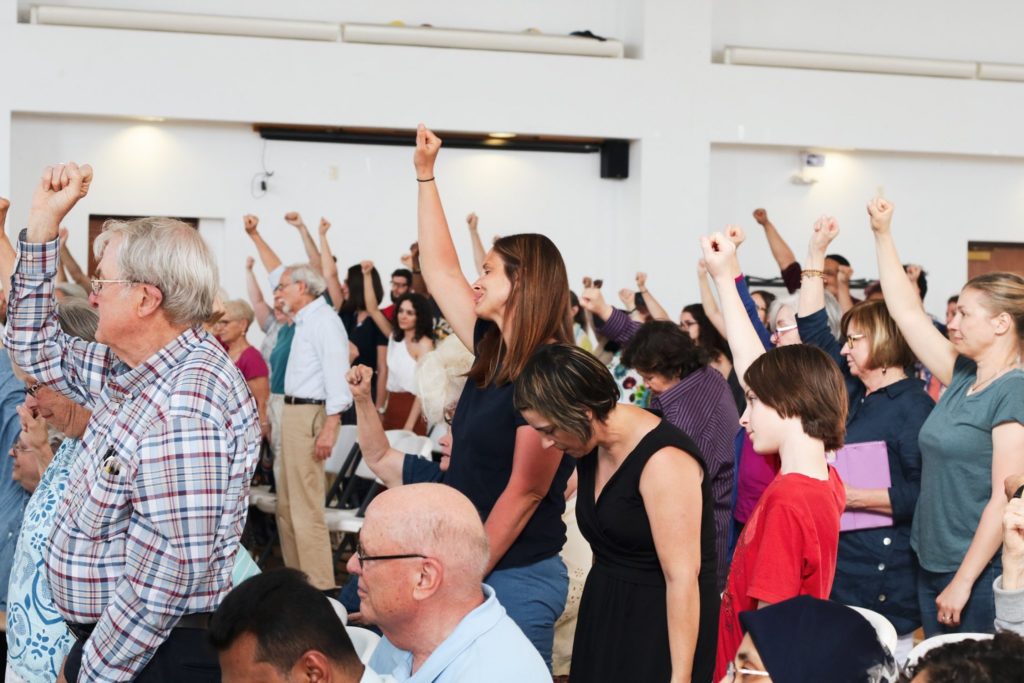
after a rousing program led by muslim, jewish and black youth and a discussion on ‘countering white supremacy: connecting the dots between anti-semitism, anti-black racism and islamophobia,’ at the islamic center this evening. it was attended by 150 people who listened to youth activists and poets, engaged in a group discussion, and then had dinner together. how i love my rochester community.

photograph by nate baldo

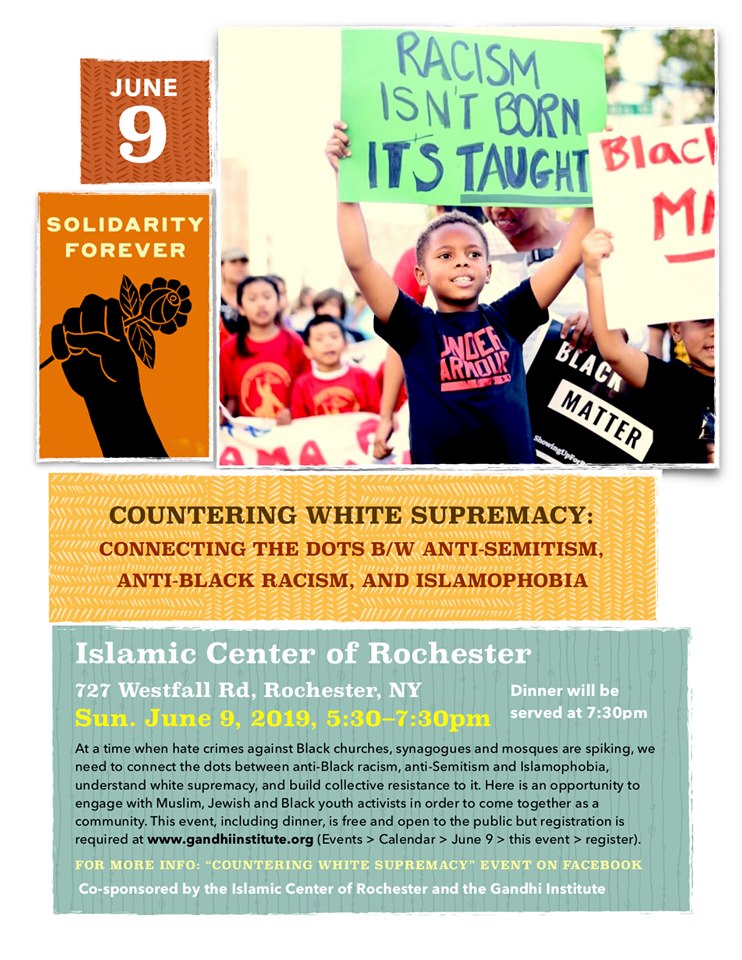
countering white supremacy

so this is happening on sunday. still finalizing some of the speeches by working with young activists. there will be spoken word performances and fun audience engagement conducted by former teen empowerment youth, middle eastern food, and lots of convo and solidarity between targeted communities. muslim, jewish, black and all our other communities, all ages and in all their beautiful diversity, are invited.