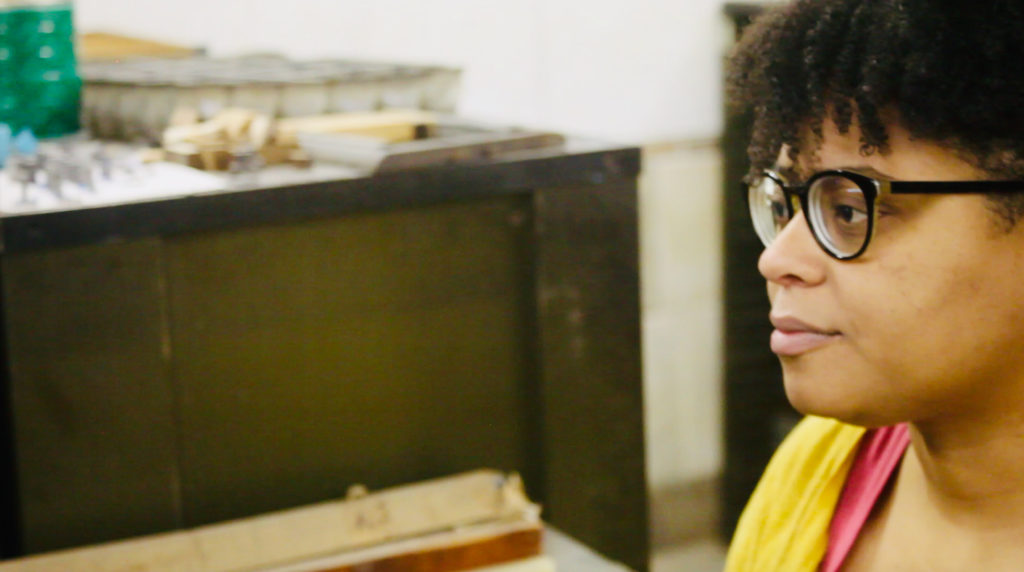
In conversation with the Filmmakers Mara Ahmed and Surbhi Dewan

Kriti Film Club is inviting you to a scheduled Zoom meeting as part of its Weekend Watch of the documentary, A THIN WALL
Topic: In conversation with the Filmmakers, Mara Ahmed and Surbhi Dewan
Date/ Time: Sunday, Aug 16, 2020 07:15 PM, India
Join our Zoom Meeting

A THIN WALL on MUBI

My film ‘A Thin Wall,’ co-produced by Surbhi Dewan, a documentary that highlights personal stories about the partition of India in 1947, will be streaming on MUBI India starting today! MUBI is a global film platform that provides a hand-curated selection of films on demand, in over 190 countries. Psyched:)
.
MUBI #athinwall #documentary #neelumfilms #partitionofindia #pakistan #india #southasia #subcontinent #oralhistory #personalstories #womenempowerment #bordersseparatepeople

On the Biden/Harris Ticket

I don’t want to just focus on Kamala Harris, when Joe Biden (the man who selected her as his VP) is so deeply flawed.

‘Joe Biden once called state-mandated school integration “the most racist concept you can come up with,” and Barack Obama “the first sort of mainstream African American who is articulate and bright and clean.”

He was a staunch opponent of “forced busing” in the 1970s, and leading crusader for mass incarceration throughout the ‘80s and ‘90s. He has described African-American felons as “predators” too sociopathic to rehabilitate — and white supremacist senators as his friends.’

Biden has been trying to cut social security for 40 years and doesn’t mince his words about opposing Medicare for All, at a time when the country is reeling from deeply entrenched inequities, police violence and a pandemic that is further unraveling people’s lives.

Biden is a racist segregationist, an assaulter of women who doesn’t know where he is half the time and loses his s— publicly quite often.

Out of the millions of things she could have done as San Francisco DA, to make life better for the people of her city, top cop Kamala Harris decided to get tough on school truancy. One of her regular shticks at speaking events was to tell the story of ‘how she’d brought charges against a single homeless mother of 3 who was working 2 jobs because her children were truant…and this was a success story.’

Obviously such ‘crackdowns unfairly target poor parents and children without actually helping students.’

‘Harris doesn’t say it clearly, but her career indicates a belief in Broken Windows-style retributive justice. Outside her involvement in a national foreclosure settlement, her office mostly targeted low level offenses—truancy, minor drug sales, graffiti, vandalism, auto burglary.’

In a 2013 talk, she makes fun of criminal justice reformers, mimicking them on stage. In another talk she guffaws at the fear she instilled in poor mothers with truant children, based on her letterhead (with an artistic rendering of her badge). It’s painful to watch – her flippancy, arrogance and cluelessness.

Both Biden and Harris are shills for empire. They support Israel (not Palestinian human rights) and will continue a genocidal ‘War on Terror’ foreign policy.

It is also of note that ‘Harris, who was born to an Indian mother, is the top recipient of donations from Indian-Americans in the current election cycle, receiving more funds than even Tulsi Gabbard, a Hindu American senator who closely coordinates with advocacy groups in Washington tied to Hindu nationalist groups in India.’ A major portion of the Indian diaspora here in the US has funded Modi’s re-election, so the affair with Modi (and fascism in India) will probably accelerate.

In the end, it is clear that change cannot be found in the corridors of power in Washington DC. We will have to organize change together. We must focus on/develop ideas such as ‘mutual aid’. Those are the networks and relationships we can rely on.

As for Harris being a woman and a WOC, I will end with
Keeanga-Yamahtta Taylor’s words:

‘Symbolic firsts are no substitute for substantive gains. We have been celebrating firsts for fifty years but the gains for the few almost never translate into a better life for the many. These celebrations are old and our people are dying. Enough.’

Revolution and American Indians: “Marxism is as Alien to My Culture as Capitalism”

i read this a while back and was reminded of Ariella Azoulay’s work which urges us to unlearn imperialism. all these strains of thought/methodologies/frameworks (including marxism) originated in the west and must share some basic dna. it’s not surprising that they don’t align with alternative ways of comprehending the world.

something else i learned here: according to russell means, american ‘indian’ has nothing to do with india, the country (or older british colonial nomenclature). back in 1492, that part of the world was known to europeans as ‘hindustan’ or the land of ‘hindus.’
indian is a corruption of the spanish word indios based on what columbus and his retinue liked to call native people, ‘una gente in dios’ or ‘a people in god’ which was eventually shortened to ‘indios.’

more here.

From ‘That Home in Our Heart: An Allegory of a Struggle Against Forgetting in Kashmir’

By Muzamil Jaleel

[…] He couldn’t find solace in anything, so he tried to refresh his own memory, remembering home while at home. He wished they had a word like hiraeth. In Wales, hiraeth is a longing for home, though its real meaning is much more about missing home. They say it can even be a yearning for something that we know may not exist anymore. It’s perhaps about a time, an idea, a people whose past, present and future are conjoined. After all, home isn’t just the space within the four walls of a house.

In his diary, he had written all such words that described this emotion, this anguish. In Portuguese, saudade captures this yearning, and toska in Russian. Nabokov couldn’t translate toska into English. He couldn’t find a word that “renders all the shades of toska.” He explained it as “a sensation of great spiritual anguish, a dull ache of the soul, a longing.” In German, it is Sehnsucht, morriña in Spanish and perhaps tizita in Amharic.

He has been looking for an exact word to describe this acute homesickness, which happens while you are home and aware that the home may not exist anymore. He knew there isn’t any such word that embodies Kashmir’s collective feeling about home. He didn’t know if his mother tongue had such a word. He hasn’t been able to find one. For centuries, his sweet lyrical mother tongue, Koshur, had been kept out of schools, blocked out of trade and taken out of government and private transactions. He knew that it has survived only on the tongue since time immemorial: most Kashmiris don’t know how to read and write Koshur.

[…] We need to picture the shapes of our faces, our mannerisms, our idiosyncrasies and our attire. We need to preserve the oral cookbooks of our mothers. We need to profile our shrines, keep record of the wee-hour chants of Awrad, the ritual of prayer rhymed aloud. We need to map our villages, our cities, our landscape, our rivers, our meadows and valleys. We need to document our streets, our markets, our bakeries and our perfume shops. We need to remember the kalaams of Sufis, sung with the comforting melody of the saz-e-Kashmir, our own version of the santoor, the sitar and the dhukra. Our ancient text refers to its 180 melodies; 130 are already lost. Our saz-e-Kashmir is going silent, too.

[…] We will write our tales, the tales of our forefathers. We will preserve all our ‘Suffering Moses’. If we are prevented from writing, we won’t let our nimble fingers forget how to tie the knots of the silken threads to weave our memory into our beautiful carpets. Our memory will be stored in the talim of our weavers. We will memorise our home, hide it in our hearts, and pass it on. It will survive even if we don’t.

After Beirut blast, Rochester-based Lebanese filmmaker calls for change

My dear friend Sonia Hadchiti talks to us from Beirut about what’s happening there. Thank u Noelle for always going the extra mile and centering authentic voices in your reports, rather than cut and paste, generic commentary. Lebanon was already reeling from an economic crisis. If u would like to donate here is a link to a trusted fundraiser recommended by Sonia. More here.

The Injured Body: Amanda Chestnut

Transcribing interviews for my new doc ‘The Injured Body’
Amanda Chestnut, an artist, curator and educator based in Rochester, NY, talks about her work:

‘The Negro Artist and the Racial Mountain’ by Langston Hughes was so important for me to read. I’ve read a lot of his poetry. A lot of archival work I’ve done has been related to Hughes’s experience of being Black in America. His poetry has overlapped with my archival work in many ways. But this essay in particular was really important for me because he speaks to actively choosing to be Black and actively choosing to glorify that Blackness, instead of being a creator and having aspirations toward a normative white standard. He emphasizes that it’s ok to be Black and that Blackness is glorious, is the word that he uses. And that was really important for me to read as I was coming into being an artist. It was important for me to be able to actively choose to talk about race and to make work about race. Because when you’re a person of color your work is always about race, whether you want to admit it or not. Everything you make is influenced by race and everything you make will be read through that lens.
.
microaggressions #racism #womenofcolor #film #documentary #theinjuredbody #neelumfilms #microaggressionsareracism #microaggressionsarereal

India accelerates its nationalist transformation of Kashmir as the world remains silent

Hafsa Kanjwal: One year later, the fears that the Hindu-nationalist government of Prime Minister Narendra Modi will accelerate an existing settler-colonial project that aims to alter the demographics of the Muslim-majority disputed region have materialized.

India’s long-standing war crimes in Kashmir— ranging from extrajudicial killings, home demolitions, rapes, use of human shields, arbitrary detentions, enforced disappearances, mass blindings and torture, to name a few — have been well documented, and endured by a population that has been denied its right to self-determination for more than 72 years.

But today, Kashmiris are in the midst of a dystopian nightmare, one in which each day brings a new government order, policy or law that seeks to further dispossess them of their basic rights, land, resources, identity, and ultimately, lives. More in Washington Post.

My review: divorce italian style

watched ‘divorce italian style’ (1961) which is supposed to be a dark comedy. was completely turned off by the overwhelming misogyny and mean-spiritedness of the film. yes, i know it’s supposed to be ‘satire’ but, once again, punching down against women in a dangerously patriarchal society/world is hardly funny. 

so much is cringeworthy in the film: the mustache and unibrow added to mastroianni’s perfectly good-looking wife in order to dehumanize her, the fact that the hero is a 37-year old lech lusting after his 16-year old cousin (they end up together), how the teenager’s uncle (her mother’s brother) is also stalking her, the lech’s recurring day dreams of his wife falling into a vat of boiling chemicals or being sucked into quicksand, the constant sexual harassment of the impoverished, dishevelled maid (who doesn’t seem to mind so much), the off-screen/cold-blooded/inconsequential murder of the wife, and on and on. 

i get that it’s an attempt to lay bare the ridiculousness of a conservative, catholic, macho society but is there no way to unpack cruelty, oppression, violence, and sexism, then by reproducing/laughing at cruelty and misogyny? 

there’s also an undercurrent of racism against southern italians throughout the film.

i had the same issue when re-reading gabriel garcía márquez’s ‘love in the time of cholera.’ rather than being impressed by the hero’s persistence in pursuing ‘true love,’ i was unsettled by his compulsive consumption of women, how rape is presented (or invisibilized) in the book, and how black women are outrageously sexualized. (what i wrote is in comments)

it’s not just sexism, it’s also racism. for example, when i think of ‘breakfast at tiffany’s,’ the image that comes to mind is the ‘yellowface minstrelsy caricature’ served up by mickey rooney as mr yunioshi. 

many times, partaking of mainstream culture feels like negotiating a minefield.

A Hindu rioter speaks: Delhi violence was “revenge” against Muslims, police gave free reign

this is one of the most chilling things i’ve ever heard. how genocide becomes possible.


Over two interviews with The Caravan, the 22-year old described how during the violence in February 2020, he and other Hindu men targeted shops and vehicles belonging to Muslims [in Delhi], destroying these or setting them on fire. He admitted to beating up Muslim men for refusing to say “Jai Shri Ram.” The 22-year-old told The Caravan that the Delhi Police gave Hindu rioters free reign to target Muslims. “They told us to go and attack inside, in the Muslim areas, that they won’t come there … They said, ‘Show us that you’re Hindu,’” he said.

The 22-year-old further said that he witnessed a mob of Hindus killing three Muslim men. One among these, he said, was thrown onto a vehicle for refusing to say “Jai Shri Ram.” The mob then set the vehicle on fire, killing the man:

“He was a Muslim. Hindu brothers were passing by, told him to say, ‘Jai Shri Ram.’ He refused. … Public gathered there. While thrashing him, they put him inside.”

“Inside what?”

“Inside the car. Then burnt it.”

“And after that?”

“After that, what? Nothing. He burned.”

More here.

Stop Celebration of Hatred in New York Times Square!

I wasn’t even aware of the American Indian Public Affairs Committee (AIPAC) and their problematic big-money politics here in the US. Pls sign this petition by the Alliance for a Secular and Democratic South Asia, which ‘denounces the impending display of economic and political power designed to belittle the people of Kashmir and India’s religious minorities by the Hindutva forces in the US’:

While the world grapples with the COVID-19 pandemic, the BJP-led government is forging ahead with its dangerous agenda of destroying the syncretic culture of India and compromising the Indian Constitution itself.

An outlandish celebration of the groundbreaking ceremony for the construction of Ram Janmabhoomi temple will be on display all day on August 5th in Times Square, NYC, with much extravagance and pomp and show. This temple was built on top of the Babri Mosque, destroyed by Hindutva-nationalist mobs in 1992. Thousands, mostly Muslims, were killed in consequent riots.

A section of the Indian diaspora who are transfixed by the BJP-led government have paid huge amounts of money to project the phrase “Jai Shri Ram” in both Hindi and English, portraits and videos of the Hindu deity Ram, 3D portraits of the temple’s design and architecture as well as pictures of Modi laying the foundation stone on several of the iconic Times Square LED screens. This exhortation of a mythical past is a diversion from the real economic and social marginalization of the vast majority of Indian people. The crass spectacle of Hindutva ideology also coincides – deliberately, no doubt – with the first anniversary of the abrogation of the constitutional guarantees of Kashmir’s special status.

More here.

Hate crime in Rochester

Pls help in any way u can. A brutal hate crime was committed in Rochester yesterday. From Halima Aweis:

Yesterday my dear friend, and fellow organizer Samson Tequir was physically assaulted while traveling with my other dear friend Jahnisse Santiago on the streets of our very city in what was without QUESTION a hate crime. He’s been hospitalized, is scheduled for surgery and has the following injuries:

Concussion, corneal abrasion, partial vision loss, broken tooth, 4 facial fractures

He needs a lot of support right now and what we need is funds to keep him afloat. Please please please donate here:
Venmo @samsontequir
Cash app $samsontequir

Sizani Ngubane

Thank you dear Khairunnissa for asking me to participate in the B & W photo challenge, which started in Turkey as a campaign against femicide and violence against women. Without using the hashtag, I would love to celebrate kick-ass women of color from the global south.

This is Sizani Ngubane, a South African woman.

‘Sizani Ngubane is a veteran South African activist, who has dedicated her life to promoting gender equality and fought for women’s and indigenous rights.

She was once stabbed, slapped with a gun, and hit by a speeding car, but all these threats on her life did not deter her from working for women’s land rights.

Growing up during the 1950s, during the apartheid era, her father worked in Joburg as a migrant worker while her mother worked as a domestic worker.

She started helping her mother cater to her siblings at age six. At 10, her family was forcibly evicted and her father committed suicide three years later.

Ngubane recalls the painful memory of her mother losing her land ownership because she was a woman and had no son to hand it down to.

Her mother was earning little so Ngubane dropped out of school so she could get a job to ease their financial burdens. As a result, she never received any proper or formal education.

She commenced her human rights career as an activist with the ANC before becoming the Provincial Coordinator of the SA Women’s National Coalition in 1991. She steered research on rural women and contributed to the formulation of the Women’s Charter for Effective Equality in South Africa.

Her contribution was instrumental to build the section on rural and indigenous women of the Bill of Rights within the South African Constitution, adopted in 1996.

Along with three other women in 1990, Ngubane started an organization called the “Rural Women’s Movement” to help women who battled with land issues, women’s rights violations and more.

According to reports, Rural Women’s Movement is now a coalition of some 501 Community Based Organizations with a membership of approximately 50,000 women, working both at a grassroots, national and international level.’