My questions for Shirly Bahar

The obligatory selfie after a satisfying dinner. It was a full house at Hofstra on Nov 9th for a discussion about Shirly Bahar’s book, ‘Documentary Cinema in Israel-Palestine: Performance, the Body, the Home,’ and my film, ‘The Injured Body.’ Here are my questions for Shirly:

1) You say that although oppression and racialization have impacted Palestinians and Mizrahim differently, the documentaries you discuss in the book share a political commitment and performative affinities. They defy the removal of the pain of Israel’s marginalized people from public visibility.

You discuss how documentary performances of pain by Palestinians and Mizrahim, when seen together, invite us to contest the segregation of pain and consider reconnection. Could you elaborate on that?

2) There is one sentence in your book which hit me hard. It is the commonly held notion that ‘the trauma of witnessing destruction directly harms the usage of language.’

Meaning that those who are occupied (on whose minds and bodies violence is constantly enacted) are never seen as credible witnesses of their own pain, of their own lived experiences, based on dominant codes of credibility. It’s like the gaslighting I was talking about in the context of microaggressions. You take issue with this notion. Could you tell us more?

3) Since we are talking about language and violence, I also wanted to bring up the constant threat of violence. You talk about Palestinian children experiencing ‘withheld violence.’

Your words reminded me of Fanon of course, and the muscular contraction of the colonized body. What does this imply in the P/I context?

4) I would like to end with something you say in the book, that ‘it takes perpetual learning and training to try and relate to the pain of others in a politically informed and committed manner.’

You also say: ‘More often than not, those who care for the pain of others are found in relative vulnerability themselves—political, physical, mental—thus chancing their becoming further undone.’

I think of the #BLM movement and its principled support for justice in Palestine. Could you expand on this important point.

To become undone is the greatest gift

From Shirly Bahar’s Documentary Cinema in Israel-Palestine: Performance, the Body, the Home:

More often than not, those who care for the pain of others are found in relative vulnerability themselves—political, physical, mental—thus chancing their becoming further undone. But as Tourmaline inspires us to believe, “if we are to ever make it to the next revolution, it will be through becoming undone, an undoing that touches ourselves and touches each other and all the brokenness we are … to become undone is the greatest gift to ourselves.”

The Injured Body: Palestine, Mizrahi Jews, and the Imperial Politics of Color

The brilliant Shirly Bahar and I will be talking about documentary film, colonialism, racism, and the body at Hofstra University on Nov 9, 4:30-5:45pm. It’s a free event but you need to register. More info below.

Join us for a conversation between Shirly Bahar and Mara Ahmed about their recent scholarly and creative work related to oppression and the body. Bahar’s recent book, “Documentary Cinema in Israel-Palestine: Performance, the Body, the Home,” and Ahmed’s upcoming film, “The Injured Body,” both explore how colonialism, marginalization, and daily mental and emotional stresses from racism and othering impact the body. The conversation will spotlight documentary language that makes embodied oppression visible in comparative and global perspectives (in the context of settler colonialism and imperialism), touching on the pain of Palestinians, Mizrahi Jews and people of color, especially women, in the United States. The idea is to shift conventional paradigms of war, conflict and segregated geographies by focusing on (and politicizing) lived experiences of pain and understanding their interrelatedness. The evening will also feature film excerpts.

This ‘Issues in Judaism’ lecture is presented by Hofstra Cultural Center and the Dept of Religion and Jewish Studies, in collab with the depts of History, Global Studies & Geography, Comparative Literature, Languages, & Linguistics, and the Women’s Studies and European Studies Programs.

Thank you to the wonderful Santiago Slabodsky for putting this event together.
Venue: Leo Guthart Cultural CenterTheater, Joan and Donald Axinn Library, First Floor, South Campus

To register go to: hofstra.edu/culture. Or call 516.463.5669. Or go to this link.

from the metamorphosis by franz kafka

it’s incredible that this book (written in 1912) continues to be a propos, fascinating, a literary feat today, in 2022, exactly 110 years later. it provokes disbelief and uproarious laughter, remains steadfast as a masterpiece, and ends with heartbreaking pathos.

there are as many interpretations of ‘the metamorphosis’ as there are readers (and that means a lot). some believe that gregor samsa “like other of kafka’s doomed protagonists, errs by failing to act, instead allowing himself to be acted upon.” others draw comparisons to willy loman from ‘death of a salesman’ and write about the degradation of modern capitalist work. there are those who see a freudian twist to the story and focus on gregor’s overbearing father. still others think the metamorphosis relates to gregor’s sister, grete, and her evolution over the course of the novella.

my take is sobering. to me the metamorphosis is about othering. the idea of otherness has been addressed elsewhere but mostly in terms of gregor’s own alienation, loss of identity, and lack of agency.

i see othering that can make someone seem ugly, disgusting, and less than human. without being threatening, difference can be turned into something dangerous and attacked with impunity. and this change can happen overnight, so that the other can now be crushed underfoot, starved to death, and left to die.

in the same way, children can be arrested, villages bombed, people tortured with the benediction of the law, and those committing the violence whine about being the victims. it’s always the monster who forces their hand.

#themetamorphosis#franzkafka#othering#difference#violence#selfvictimization#theotherisamonster

From Exit West by Mohsin Hamid

Saeed’s father then summoned Nadia into his room and spoke to her without Saeed and said that he was entrusting her with his son’s life, and she, whom he called daughter, must, like a daughter, not fail him, whom she called father, and she must see Saeed through to safety, and he hoped she would one day marry his son and be called mother by his grandchildren, but this was up to them to decide, and all he asked was that she remain by Saeed’s side until Saeed was out of danger, and he asked her to promise this to him, and she said she would promise only if Saeed’s father came with them, and he said again that he could not, but that they must go, he said it softly, like a prayer, and she sat there with him in silence and the minutes passed, and in the end she promised, and it was an easy promise to make because she had at that time no thoughts of leaving Saeed, but it was also a difficult one because in making it she felt she was abandoning the old man, and even if he did have his siblings and his cousins, and might now go live with them or have them come live with him, they could not protect him as Saeed and Nadia could, and so by making the promise he demanded she make she was in a sense killing him, but that is the way of things, for when we migrate, we murder from our lives those we leave behind.

—Mohsin Hamid in Exit West

#migration #migrant #tomigrate #immigrate #immigrant #thoseweleavebehind #mohsinhamid #exitwest

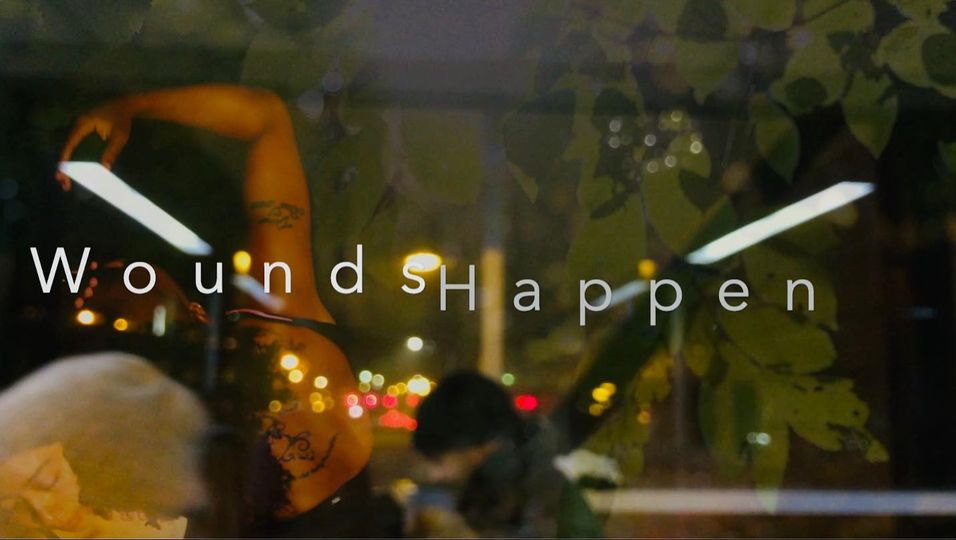
the body has memory – a short film

thrilled to share that my short film, the body has memory, has been selected for a juried exhibition at the huntington arts council here on long island.

i created what the brilliant rajesh barnabas calls a ‘video poem’ – a blend of images, dance, music, and poetry i wrote, inspired by work on ‘the injured body,’ my upcoming documentary film.

HAC’s exhibition focuses on the exploration of the human form and will run from november 18 – december 17, 2022. more soon.

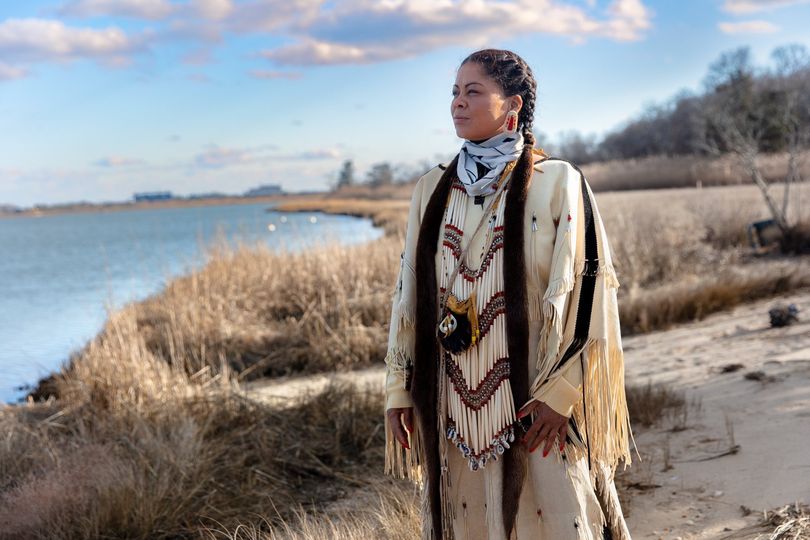
Indigenous People’s Day 2022

On Indigenous People’s Day from contemporary fine art photographer and tribal member of the Shinnecock Indian Nation, Jeremy Dennis:

‘The inhabitants of Long Island shared a desire for peace. They became expert whalers and deep sea fishermen. They worshiped the same gods and placated the same evil spirits. They talked the same language and followed the same customs… Their thirteen so-called tribes were united in an island-wide confederation. Each tribe had its own territory whose unmarked bounds were recognized and respected by the others. Each had its own chief but all acknowledged the authority of one inter-tribal grand sachem.

…Despite the endless oppression visited upon Long Island Natives, they have endured in force at Shinnecock, at Poosepatuck, in small communities at Eastville (Sag Harbor), Freetown (East Hampton), and Lakeville (Lake Success), and scattered throughout Long Island’s population.

Historians and local journalists in the nineteenth and twentieth centuries left their readers with the false perception that because the Natives had intermarried with other ethnic groups, they had lost their tribal identity and have “deteriorated” into “mixed racial remnant” communities. These racist attitudes prevalent among early local historians continue to capture the public imagination and place an unpleasant burden on the indigenous people of Long Island to defend the integrity of their identity and tribal heritage.’

Right now the Montaukett Indian Nation needs your support in getting New York State Governor Kathy Hochul to sign the Montaukett Recognition Bill S6889/A4069 into Law. Pls sign here.

[Photograph by Jeremy Dennis from his series Shinnecock Portrait Project]

Ma’s House & BIPOC Art Studio

Yesterday I was honored to meet Jeremy Dennis at Ma’s House & BIPOC Art Studio, which is a nonprofit he founded. ‘The project began in June 2020 and serves as a communal art space based on the Shinnecock Indian Reservation in Southampton, New York. The family house, built in the 1960s, features a residency program for Black, Indigenous, and People of Color (BIPOC), art studio, library, along with hosting an array of art and history-based programs for tribe members and the broader local community.’ It is inspiring to see the work Ma’s House is doing in creating, nurturing and presenting BIPOC art. It’s a wonderful way to connect and collaborate with local Indigenous communities. I hope to visit often and work together on mutually meaningful projects. Also, google Jeremy’s brilliant work in photography and storytelling. It’s stunning.

Thx to my dear friend Nancy Ghertner for suggesting I connect with Ma’s House.

[It was rainy and windy yesterday, the first picture of Ma’s House was taken from my car through a rainswept windshield]

Adnan Syed faced racial stereotypes in court that weren’t scrutinized, experts say

‘Following Adnan Syed’s release from prison Monday, after more than two decades fighting his conviction for the murder of his ex-girlfriend Hae Min Lee, experts and advocates are calling into question the way his race and religion were framed in court during his trial.

Syed’s background as a Muslim from a Pakistani immigrant family not only shaped the trial, they say, but were tools the state used to help convict him.

“It seemed like what the prosecution did is it made an intentional choice to substitute Islamophobia and racial bias for proof,” Mano Raju, San Francisco public defender and a member of the South Asian Bar Association of North America, told NBC News. “The conviction was based in large part on references to race and plays to racism.”’ More here.

my review: blonde

i have not watched (neither do i plan to watch) ‘blonde,’ a fictional biographical film written and directed by andrew dominik and loosely based on a novel about marilyn monroe’s life, as imagined by joyce carol oates – yes, the number of ‘removes’ from the actual woman at the center of this ceaseless capitalist production is astonishing.

the reviews, especially by women, stating how the film ends up being soft porn with expensively produced cinematography would have kept me away, but the film is so much more problematic. it turns marilyn into a victim (something she resisted throughout her life), it is crassly graphic in how it shows affairs, abortions, and miscellaneous sexual assaults that never happened, not only does it objectify and diminish marilyn monroe (all over again) but it also exploits ana de armas, the young actress playing her (the director seems to have a fetish for some of her body parts).

many of these borderline art/adult films are written, directed and produced by men. remember ‘blue is the warmest color,’ a french film by abdellatif kechiche? it became famous for its graphic lesbian sex, but it was pretty obvious that the sex scenes were written and choreographed by a man. later on there were accusations of sexual assault, bullying and aggressive behavior on set. it seemed to fit.

as a woman i find it unbearable that our usefulness/import is still so intimately tied to our bodies. whether to cover us or disrobe us, whether to allow us to use contraception or not, give birth to a child or not. some of us are forcibly sterilized while others are not allowed to end unwanted pregnancies. some of us can be killed for not covering our hair while others are utilized to fulfill gross male fantasies and compromise our body sovereignty.

it has always enraged me that 99.9% of victims portrayed in western detective novels and crime thrillers are women and the methods used to torture, kill and mutilate them ever so creatively are invented by men. it normalizes violence against women. even as we cringe, there is something lurid about it that teases, tempts, raises the stakes. we are told the movie is make-belief, controlled, safe. but real life is not, and this is where we continue to struggle.

as fascism takes over the world, one election or coup as a time (look at italy’s giorgia meloni), all i know is that it will get tougher for all of us out here who are not straight, white, able-bodied, european men. this is the time to understand true intersectional feminism and fight together as equals.

thoughts on the berlin wall

a few more posts about berlin.

checkpoint charlie (or checkpoint C) was “the best-known berlin wall crossing point between east and west berlin during the cold war (1947–1991).” it’s famous for its death strip, bordered by mines and channels of ploughed earth to stop people from escaping to the west. now it’s a tourist trap. our guide suggested we skip the fake museum and enormous gift shop and just look at remnants of the wall. i found some old b&w pictures of the area, the way it used to be before the wall came down. it’s the human suffering that sticks in one’s mind, families separated forcibly as they have been (and still are) by colonial borders across the world. there was a sign (in many different languages) saying: “in this very place just 30 years ago u might have been shot at…” and “can u imagine what life must have been like with a wall on ur doorstep…”

all i could think was: this is not history. these crimes against humanity are ongoing. what u are asking us to imagine is every day life for the people of palestine. my only hope is that one day soon, their apartheid wall will also become a tourist trap where people will congregate, reflect, and say to one another: “can u imagine what life must have been like to live with a racist, separation wall on ur doorstep and checkpoints every few steps that encroach on ur human right to move freely?” this is my hope.