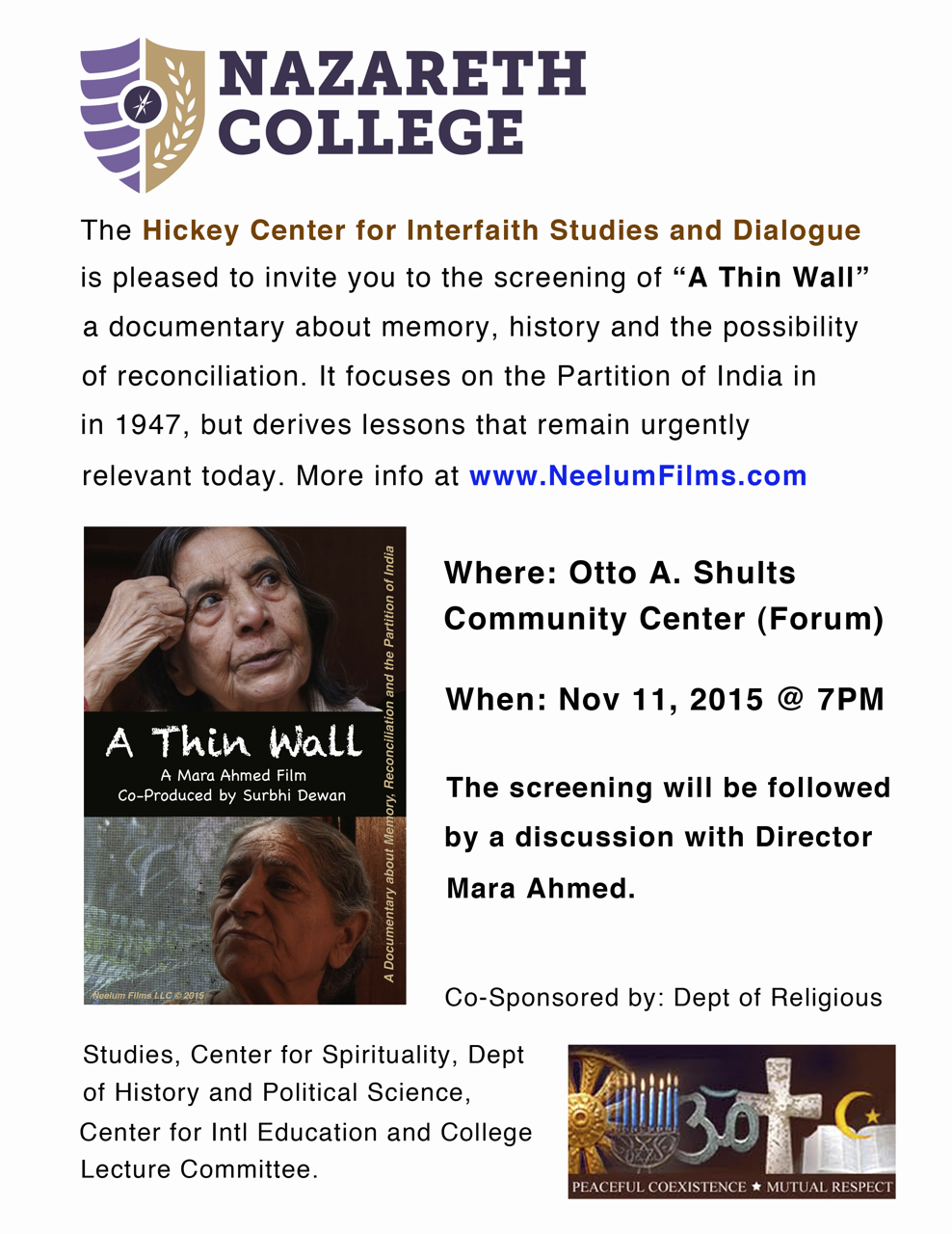
wonderful screening of A Thin Wall at nazareth college yesterday, under the auspices of the hickey center for interfaith studies and dialogue. a lot of dear friends and supporters, a large number of students, and new audience members who were introduced to the film.
during Q&A, a friend, who along with his family has made the journey from iraq to jordan to the US, asked about home, what is the meaning of home for immigrants and refugees? it’s such a broad, such a poetic question. i came across this today – it could be one answer:
My house says to me, “do not leave me, for here dwells your past.” And the road says to me, “Come and follow me, for I am your future.” And I say to both my house and the road, “I have no past, nor have I a future. If I stay here, there is a going in my staying; and if I go there is a staying in my going. Only love and death change all things.” (Khalil Gibran)
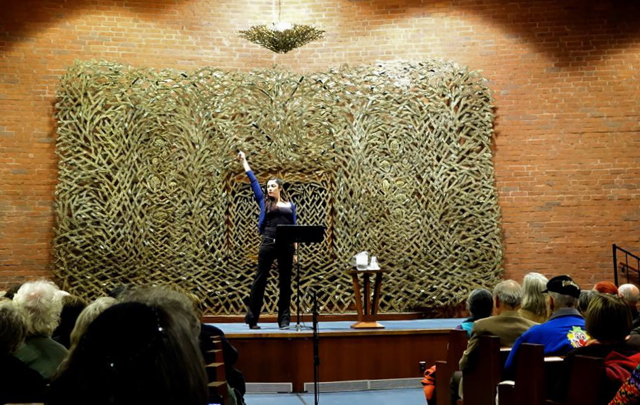
Oct 19, 2015: Saw Najla Said perform her one-woman show “Palestine” yesterday at Temple B’rith Kodesh in Rochester, NY. I was familiar with her play based on interviews and clips I had seen online. I was particularly taken by a short sequence I had found on YouTube in which she talks about Arab culture and how the language itself embodies this marvelous warmth and hospitality, this yearning to connect with immediacy. It’s a lovely piece that debunks stereotypes with immense passion and poetry. She sets it up with the caveat of not wanting to be an Orientalist. Obviously 🙂
We showed that clip at Celebrate Palestine last year, an event that launched the Witness Palestine Film Series 2014, where we celebrated Palestinian food, music and literature as a form of resistance to erasure. Najla’s dynamic description of the beautiful intricacies of Arab culture was a perfect fit for that evening.
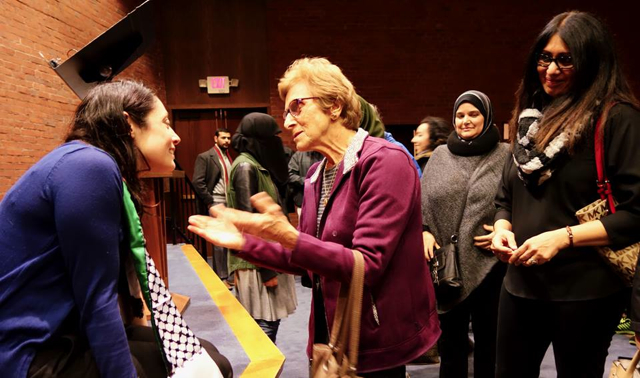
As I settled down in the front row yesterday, I didn’t know what to expect from the entire play. I was instantly moved by how she greeted us and introduced herself in Arabic, rather than English, before she proceeded with the show. She was animated, poignant, funny, courageous, transparent. Her story is personal but because of the family she grew up in and the rich mix of geographic, cultural, linguistic, ethnic and political contradictions she had to navigate from a very young age, there is much that resonates with many. The show progresses with immense energy, energy that is translated into impressive physicality. There are ups and downs and some wonderfully reflective moments as well. The end is breathtaking. It has a quiet elegance, an emotive power that’s almost surprising. We learned later, during Q&A, that it was the first thing she ever wrote, when she began to write the show. And Edward Said endorsed it enthusiastically 🙂
najla said performing “palestine”Q&A with najla said after the show
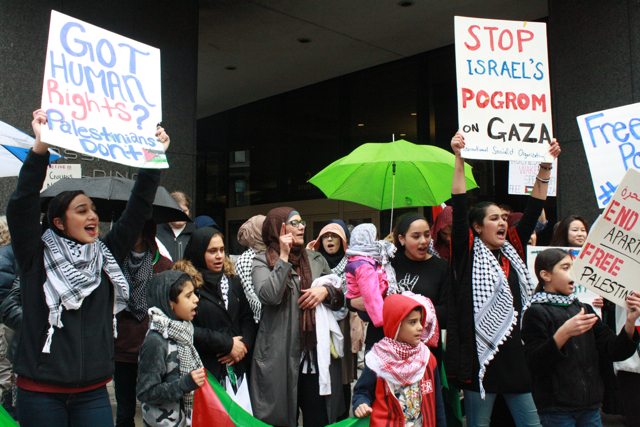
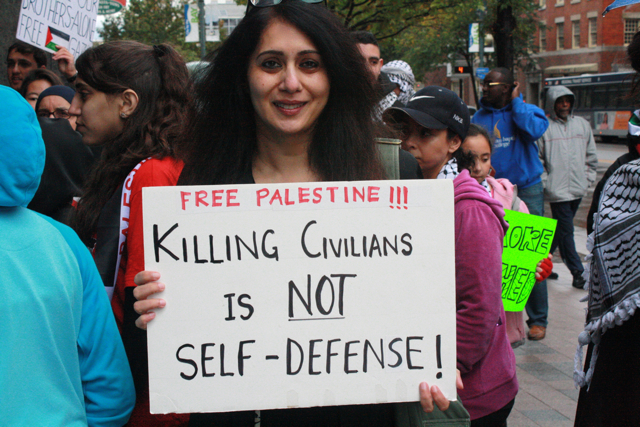
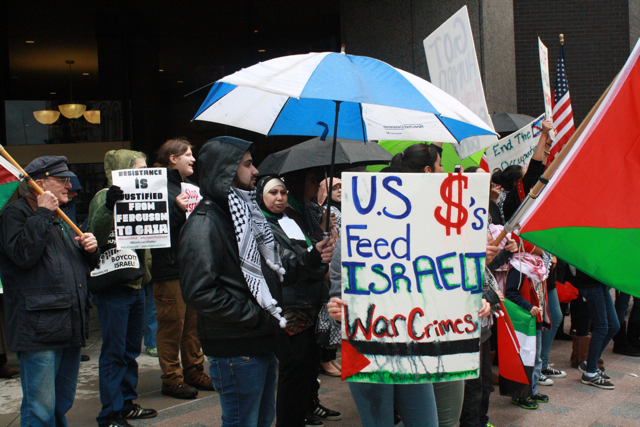
october 16, 2015: it was raining, yet an incredibly large number of people showed up. a lively rally where everyone got a chance to speak. what we were saying is totally connected to international news but, of course, no mainstream media presence. indymedia was there and we got an article in socialist worker, but msm just don’t give a hoot about what people in rochester think or do.
Many things have happened over the last few weeks and I haven’t had time to articulate them, organize them, record them – basically write about them.
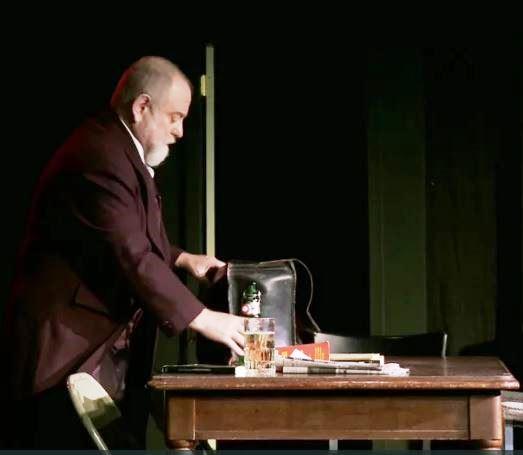
During the Fringe Festival, I saw “Marx in Soho” a play written by one of my heroes, historian Howard Zinn. It shows “Marx as few people knew him, as a family man, struggling to support his wife and children.” The idea of the play is that Marx comes back to life to defend the ideals of communism (and separate them from the dehumanized version practiced in the former Soviet Union) and to expose the cruel inequities of capitalism. I was particularly moved by Marx’s description of the Paris commune of 1871, a successful worker’s revolution that established progressive laws and inspired lofty political dreams. It reminded me of the model community that was built in Zuccotti Park. “The people of Paris formed not a government, but something more glorious, something governments everywhere fear, a commune, the collective energy of the people.” Zinn’s one-man play ends with these wonderful lines: “Do you resent my coming back and irritating you? Look at it this way. It is the second coming. Christ couldn’t make it, so Marx came…”
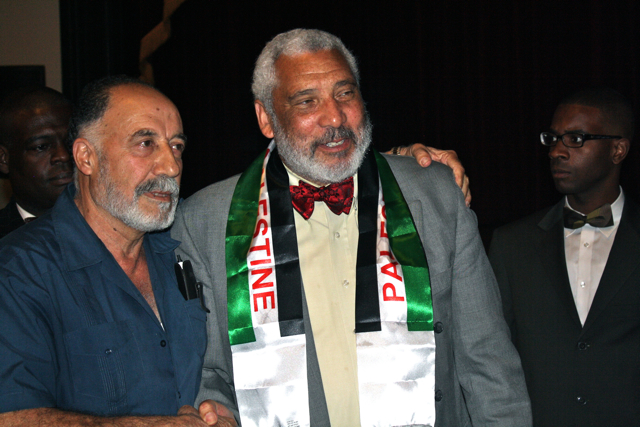
Two days earlier, on September 24th, I attended “Connecting the Dots: Ferguson to Palestine” a lecture by Rev Graylan Hagler, a veteran social and economic justice activist and outspoken supporter of Palestinian human rights, whose credentials include the fight against South African apartheid and now, deep involvement in the Black Lives Matter movement. After a mendacious campaign directed at Rev Hagler’s character and work, and topped off by death threats, he was disinvited from the venue where he was slated to speak. However, Christians Witnessing for Palestine and the local chapter of the Jewish Voice for Peace joined forces to make sure that the event was a huge success in Rochester. Not only did Rev Hagler speak at an alternative venue where activists of every stripe attended en masse, but he also spoke to students at the U of R. This was a heartening experience for me. Not only did it confirm that free speech (free political speech) actually means something in America, it also highlighted how the exercise of this constitutional right is not enforced by politicians (making grandiose statements or marching for the press in Paris) but by grassroots activist organizations that can come together with incredible power. It was one of the most diverse and vibrant events I’ve ever been to in Rochester and I was honored to partake of such inspiring solidarity.
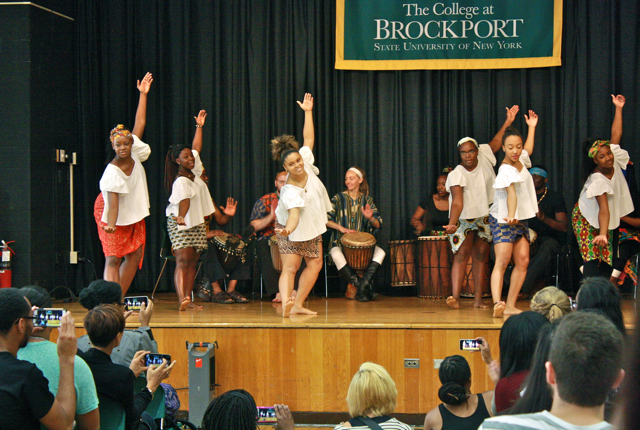
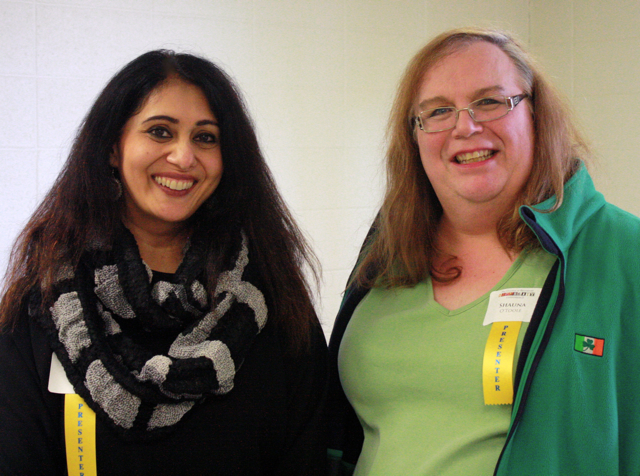
On October 8th I was invited to speak about cultural competence at the Diversity Conference at SUNY Brockport. This was my third year as a presenter and once again I loved the brilliant energy at this lively conference. The international food tasting was great as usual: my favorites were Kenyan matoke (a delicious plantain stew), Namibian kapana (beef grilled on an open fire) and Spanish orange-flavored flan. The food tasting was accompanied by terrific dance and music, all performed by students. The panel discussion was extremely well-attended. When one of my co-panelists, Shauna O’Toole, found out that I am Muslim, her immediate reaction was to apologize for everything that’s said about Islam and is done to Muslims in America and in the world. I was taken aback. We had just met. I thanked her profusely. This is the kind of astonishing and heartwarming support I have always received from LGBTQ compadres. It means the world to me. It gives me hope.
This last weekend, I attended a beautiful memorial service for my friend’s husband. It was filled with music (Scottish bagpipes but also gospel and blues music by the Campbell Brothers) as well as reminiscences and endless love and admiration. It wasn’t just how many people came to the service but also their wonderful diversity. There was something solemn and deeply moving about the impact that one person can have on so many. It reminded me of Steinbeck’s East of Eden. I read it when I was quite young and one of the things that stayed with me was how he assessed the measure of a person’s life:
Humans are caught in a “net of good and evil.” There is no other real story in the entire world, and there never will be. It is how we live our simple lives while caught in that trap of good and evil that determines our success as individuals and our impact on the world. A person’s life can be measured by the feelings of those left behind.
marx in sohorev hagler on ferguson to palestinediversity conference at SUNY brockportmara ahmed and shauna o’toole
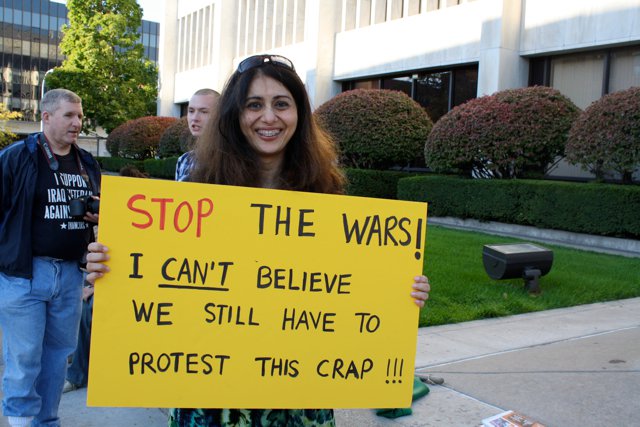
rally on friday oct 16 at 4 pm at the federal building (rochester) to protest the willful killing of civilians in palestine. the palestinian community is taking the lead on this protest. pls be there to show your suppport.
cornell vs army on oct 3, 2015: we didn’t win but it was a good game. it was cold and rainy so hot soup with bread was most welcome during halftime – thx to the football parents’ tailgate party. first loss for cornell this season but we’re expecting great things for their upcoming games.
so powerful to come across this piece in post magazine when i just saw mahler’s “kindertotenlieder” at the eastman school of music last night. mahler’s song cycle is based on poems by friedrich rückert. rückert wrote the 428 poems known collectively as “kindertotenlieder” in 1833-34 as an outpouring of grief following the death of two of his children. in this sobering audio-visual presentation, directed by dr emil homerin, mahler’s music and rückert’s hearbreaking words are interspersed with facts about child mortality in rochester both in the 1900s and now. it’s shocking (and shameful) that 50% of rochester’s children live below the poverty line. only three other american cities have higher child poverty rates than rochester: detroit, cleveland and dayton, ohio. of course, the affluent live as well as in any other wealthy city of the world. such inequity and injustice. we are all responsible. more about the fringe festival’s presentation of kindertotenlieder here.
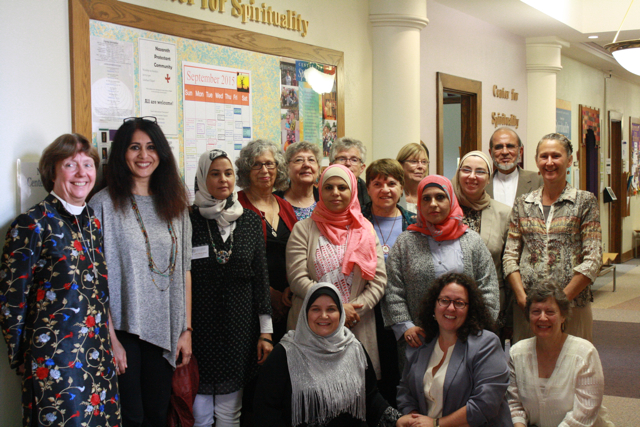
met women activists from jordan, iraq, egypt, saudi arabia and palestine to talk about “how dialogue, education and community building contribute to harmonious living in a pluralistic world and the role of faith based organizations in responding to social change.” altho these topics are interesting, i felt that we were not able to mesh them with the realities lived by these incredible women, in the short time that we had. i would have liked to hear from them and then perhaps tried to explore some overlaps or some opportunities for partnering. but explaining to them how interfaith dialogue works in the US, when we are not at war, or under occupation, or oppressed by a military or dictatorial regime, seemed out of touch. yes, education is important and so is interfaith work, but what about the ongoing wars which are ravaging the countries these women call home? as americans, we have something to do with that. if interfaith dialogue is about respecting the other, if it’s about listening and then talking things thru, if it’s about negotiation and transformation rather than confrontation and attack, then why can we not apply these princliples to macro-level decisions that would transform both domestic and foreign politics? it’s an astounding disconnect. one of the women, a project manager from ramallah, called us out by pointing to the politics of zionism and how interfaith coexistence was disrupted in palestine after 1948. she asked: “how can we have interfaith dialogue when our holiest religious sites are being attacked and we are not allowed to pray there?” legitimate questions which were addressed by how, as interfaith practioners in america, the word zionism was painful for us to hear because it didn’t account for the pain of israeli jews and arabs. unfortunately, it’s this complete unplugging from reality which comes across as overly arrogant and hopeless. the women activists were amazing though – wish i could have had hours and hours of honest, one on one conversations with each and everyone of them.
Sept 20, 2015: just saw this at the eastman house. good performance by marcy savastano, whom i had seen in “edge” some 6 years ago, a play about sylvia plath’s last day on earth. she has mastered the art of the one woman show: so much energy, emotion and dialogue compressed into time and space, with the eyes of the audience fixed on her intently throughout the performance. probably what vivien leigh herself must have felt like many times during her life. more here.
had a lovely lunch with friends today and got to taste some delicious, homemade iraqi food: a yummy mushroom soup with just a tiny touch of tartness, kubba (a dish made of bulgur, minced onions, ground beef and raisins), dolmas as well as stuffed onions (which had a slight sweetness to them on account of the onion rolls), sambusaks (pastries filled with cheese or ground chicken), an iraqi version of spanakopita, ayran which is a cold yogurt drink mixed with salt and tastes a lot like salty lassi and finally some lovely iraqi tea with cardamom served in a beautiful tea set (a wedding present brought over from iraq). so happy for my friend, our wonderful chef and hostess, who has survived the war in iraq, three years in jordan, another fresh start here in the US which included going back to medical exams and doing a 3 year long, grueling medical residency, after having worked as a doctor in both iraq and jordan. she did all of this with grace and good humor and two small kids. that’s an arab woman for u. that’s a muslim woman for u – a hijabi, no less. that’s the kind of womanism i believe in.
A v small portion of our interview with StoryCorps. Later we delved into racism, privilege, and the similarities between Pakistan and the US. Much more thought-provoking stuff. Anyway, even though my picture is atrocious, here it is.
a couple of days ago, i presented two awards at the rochester teen film festival. one for “best social justice message” – it was awarded to east high school kids who made a film about volunteering by focusing on the homeless in rochester. they interviewed sister grace and shot the homeless tent city which was later bulldozed by the city of rochester, in the middle of a harsh winter (in dec last year). it’s always riveting to see young people take ownership of their community. i was truly moved by these kids, many of whom come from tough neighborhoods, and their desire to improve the world around them.
i also presented the award for “best animation”. i talked about how my first reaction to the piece was that it looked more like video art produced by an artist rather than straightforward animation. set to verdi’s requiem, it’s full of symbolism, movement, panache, and color – color which like the music that accompanies it, swells into a stunningly grand and expressive register. verdi’s requiem is often called an opera in disguise or a requiem on steroids. to be able to visually conceptualize verdi’s larger-than-life, dynamic music, what better medium than animation and what better language than the abstract language of dreams and symbolic imagery. river melcher’s “a dream of evolution” brought all these elements together with incredible artistry. check it out.
July 30-31, 2015: attended a symposium at nazareth college. it was about the interaction between cultural identity and religious belief. papers were presented by academics from saudi arabia, many of them women. the discussion was harmless enough as it supported dialogue and co-existence, all theoretically though, with very little analysis of the political realities on the ground. what was not said, not critiqued, not challenged was, in a way, more telling.