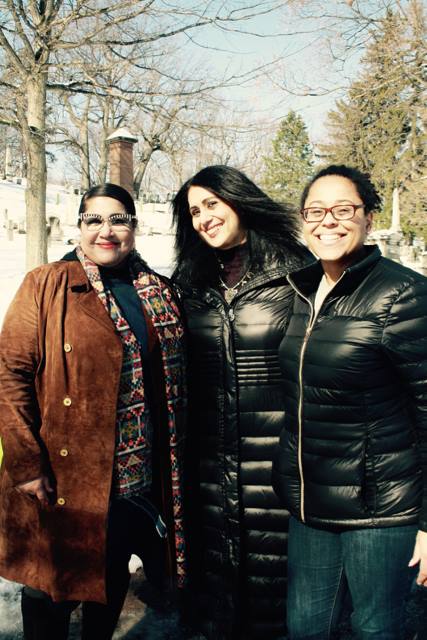
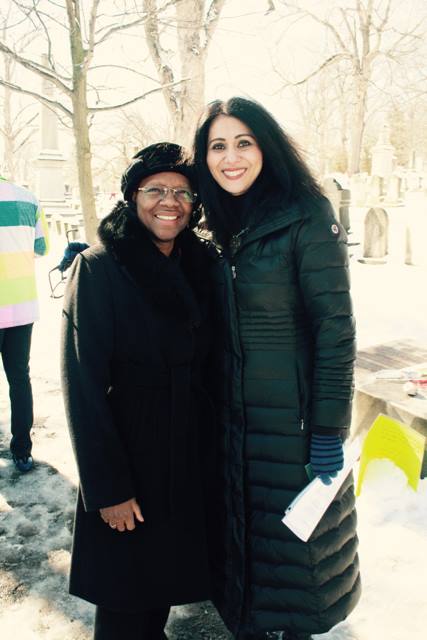
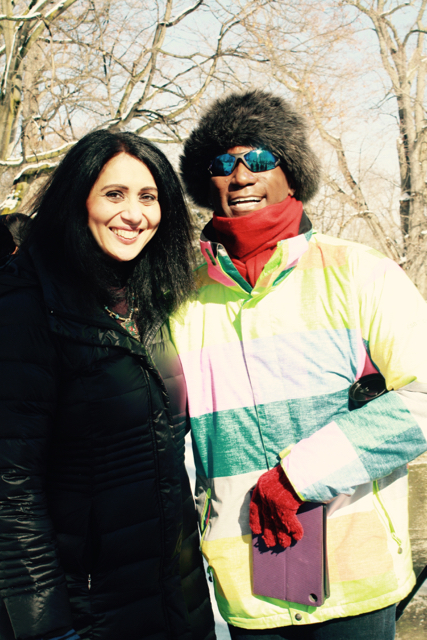
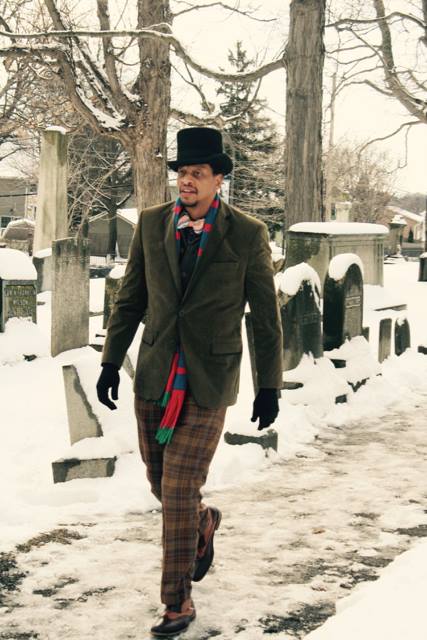
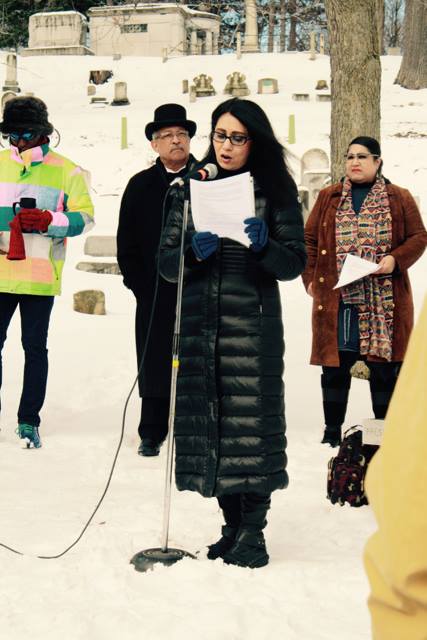
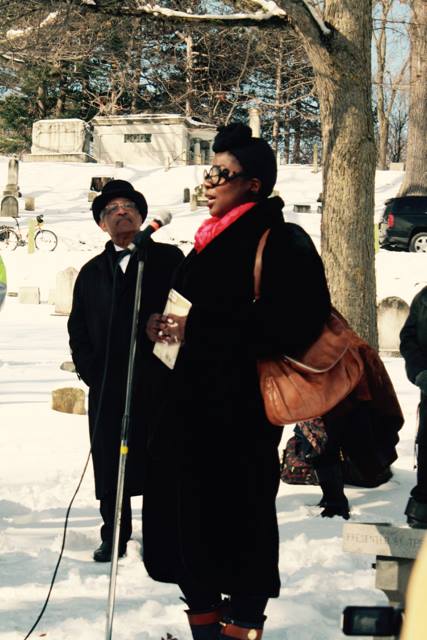
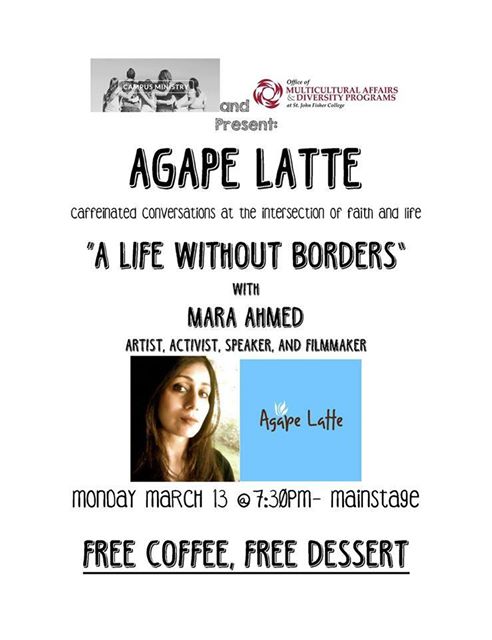
at agape latte yesterday where i spoke about “a life without borders.” wonderful support from some wonderful friends.
Category: local
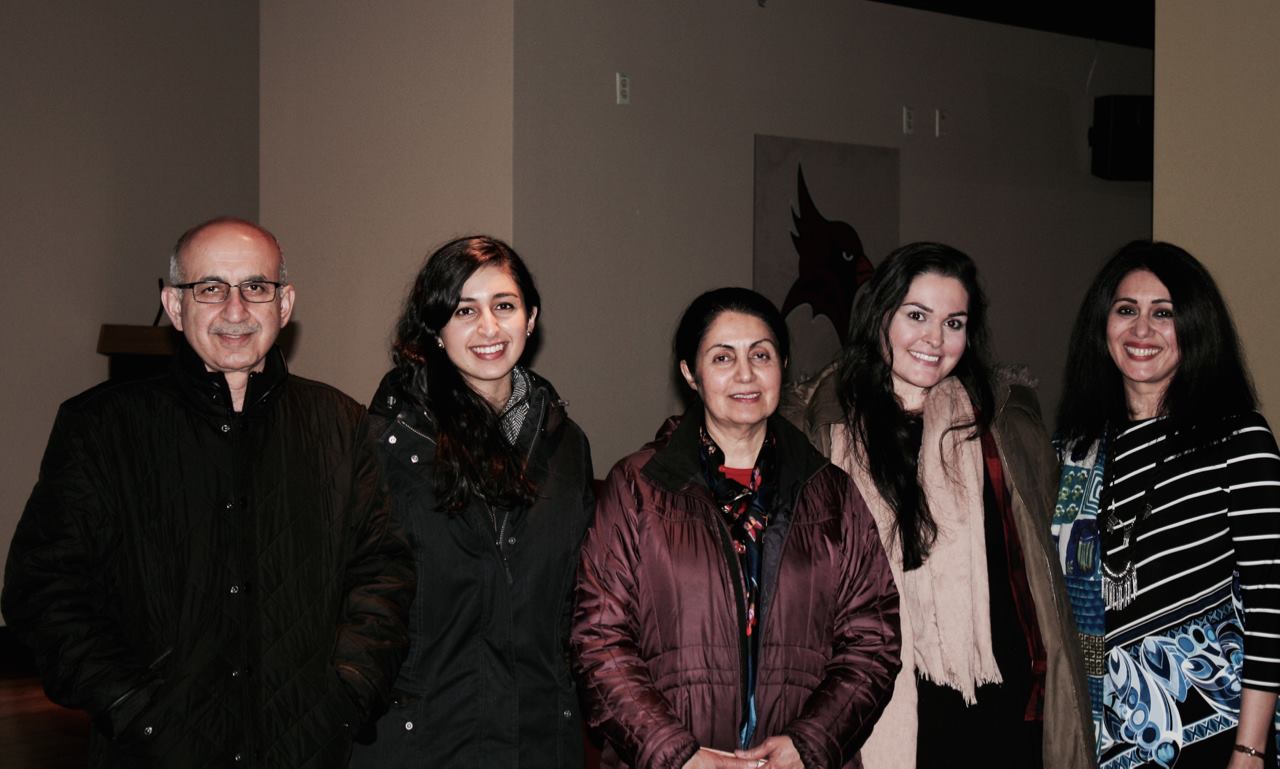
feminism and intersectionality: my talk at SJFC
wonderful discussion about feminism and intersectionality at St. John Fisher College this morning. such a pleasure to talk about the work of lila abu lughod, saba mahmoud, houria boutelja, audre lorde, nadine naber and anu ramdas.
excellent questions from students – one about the contradiction between the west’s concern for women’s rights in muslim-majority countries and their sabotage/disruption of political movements for democracy and self-determination.
nadine naber has written extensively about the egyptian revolution – how women were “active participants in a grassroots people-based struggle against poverty and state corruption, rigged elections, repression, torture, and police brutality,” yet much of US public discourse framed the revolution through “islamophobia logics” and was driven by the question: what if islamic fundamentalists take over egypt? she locates this discourse “in the historical trajectory of the post-cold war era in which particular strands of US liberal feminism and US imperialism have worked in tandem. both rely upon a humanitarian logic that justifies military intervention, occupation, and bloodshed as strategies for promoting democracy and women’s rights. this humanitarian logic disavows US-state violence against people of the arab and muslim regions rendering it acceptable and even, liberatory, particularly for women.”
another question was about the need for muslims to condemn every act of terrorism when no such demand is made of the white christian majority. of course, we talked about mahmood mamdani’s “good muslim, bad muslim: america, the cold war and the roots of terror.”
we explored postcolonial feminism and muslim feminism and discussed saba mahmood’s work on the piety/mosque movement in many muslim-majority countries of the world.
finally, we examined the politics of “non mixite.” houria boutelja explains how colonialism and racism have already divided muslim men and women and therefore the idea of building feminine power by excluding muslim men might not be effective in this context. audre lorde too talks about racist oppression being shared by black women and men, because of which they develop joint defences and joint vulnerabilities. similarly, anu ramdas has written about how “the reformative agenda of taming dalit masculinity ignores the reality of inter-operating oppressive cultures in a caste society.”
so satisfying for me to mention these incredible women and analyze their incredible work, on this cold snowy morning, all thx to Roja Singh, who organized this event and drove me back and forth in this bad weather. a true sister in the stuggle for justice and equality. what feminism should be all about!
feminism and intersectionality from a muslim perspective
tomorrow, if the weather doesn’t interfere.

correct film titles: The Muslims I Know and A Thin Wall.
rally against anti-semitism today
rally against anti-semitism today at 12 corners, rochester, ny: we are united in our fight against hate and bigotry.
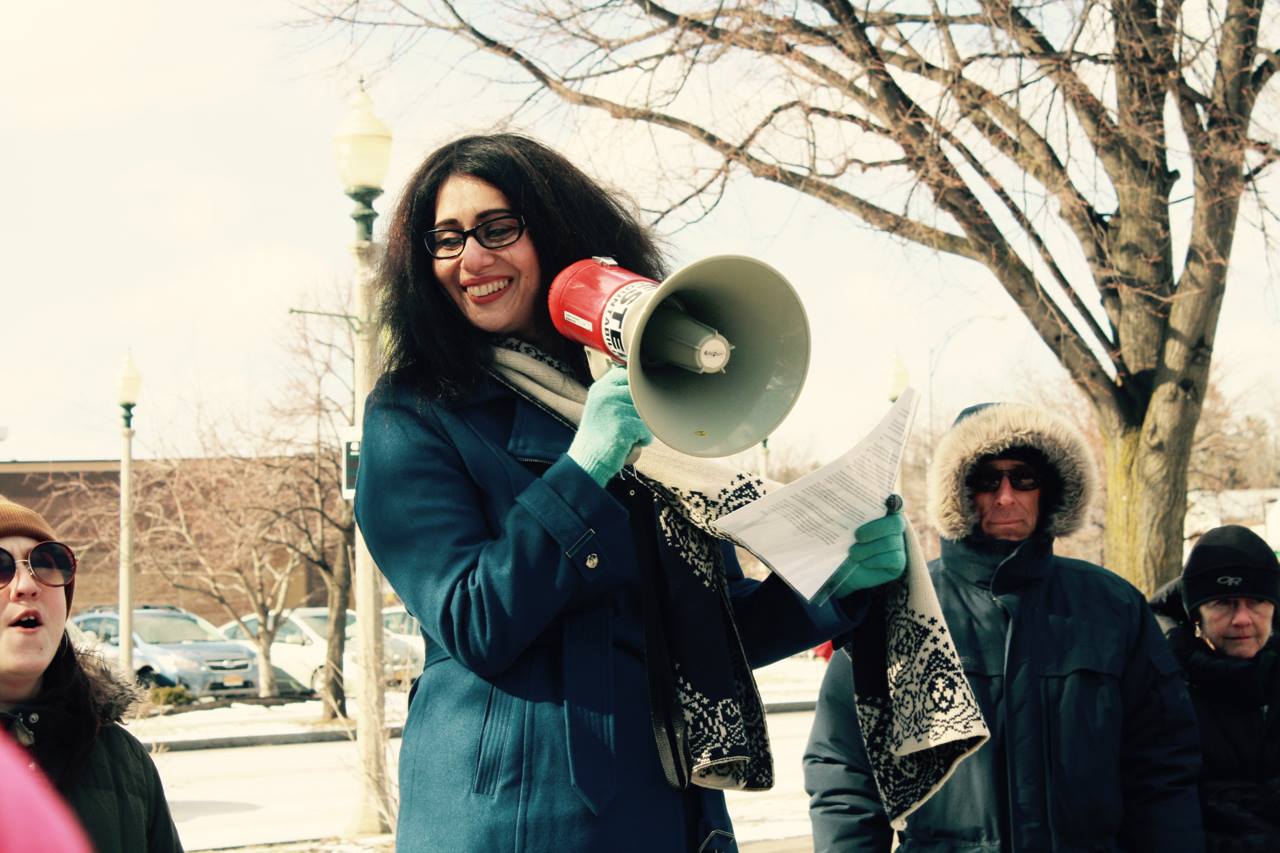
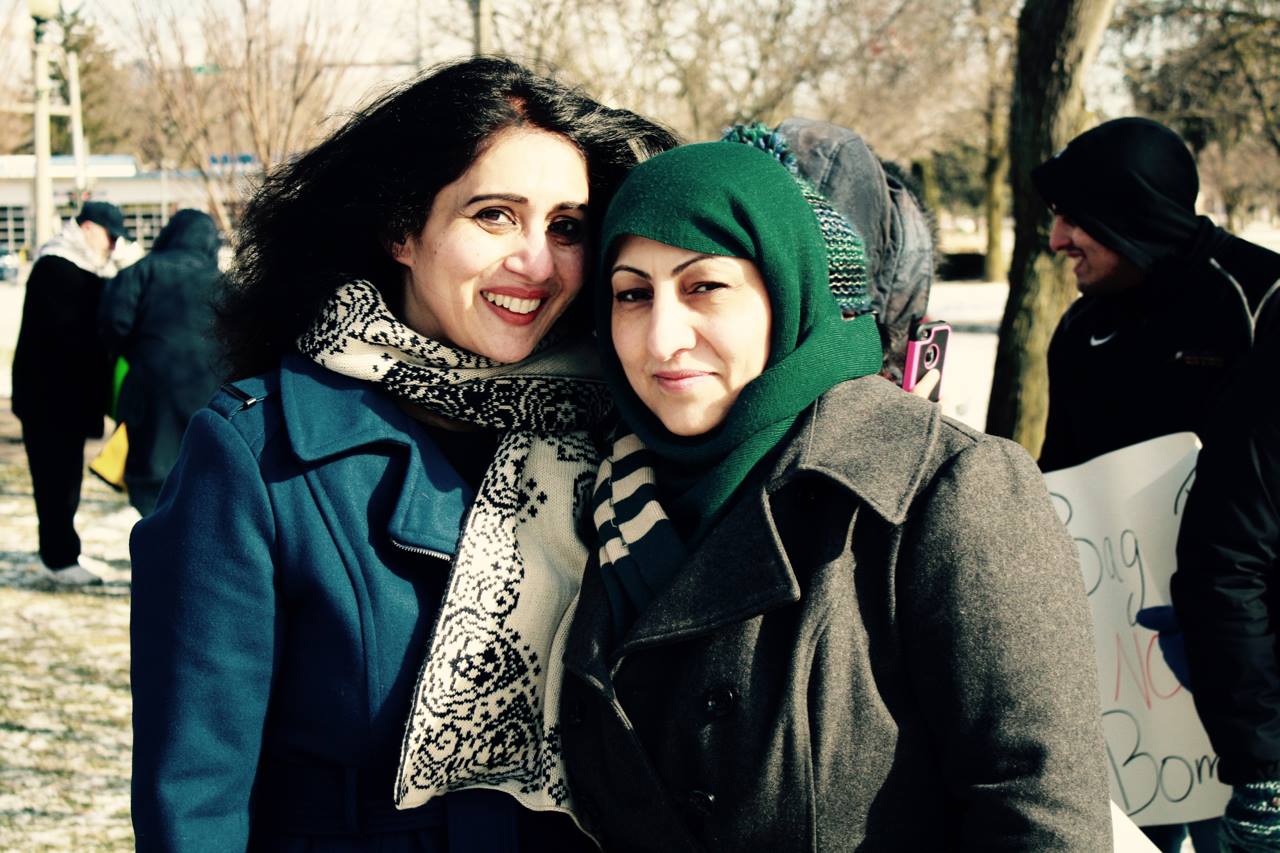
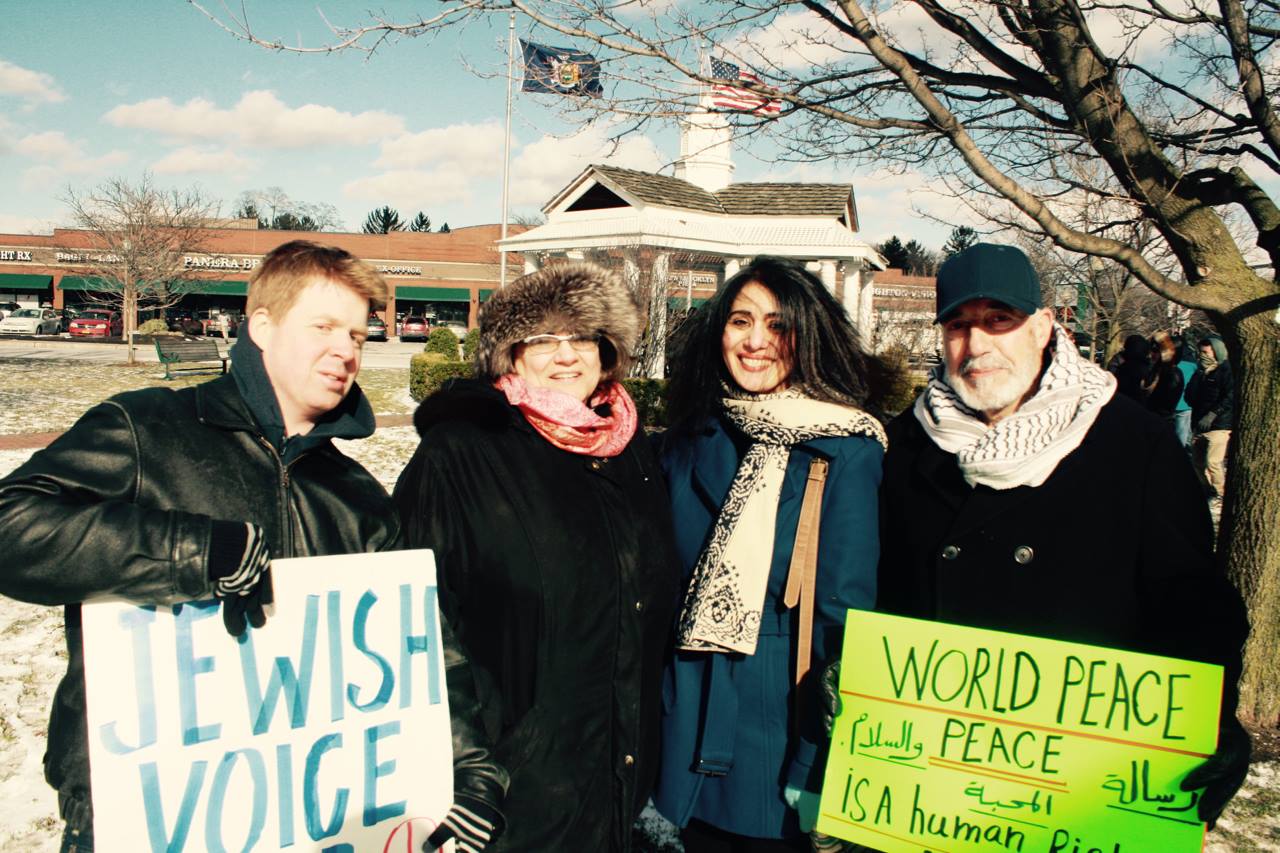
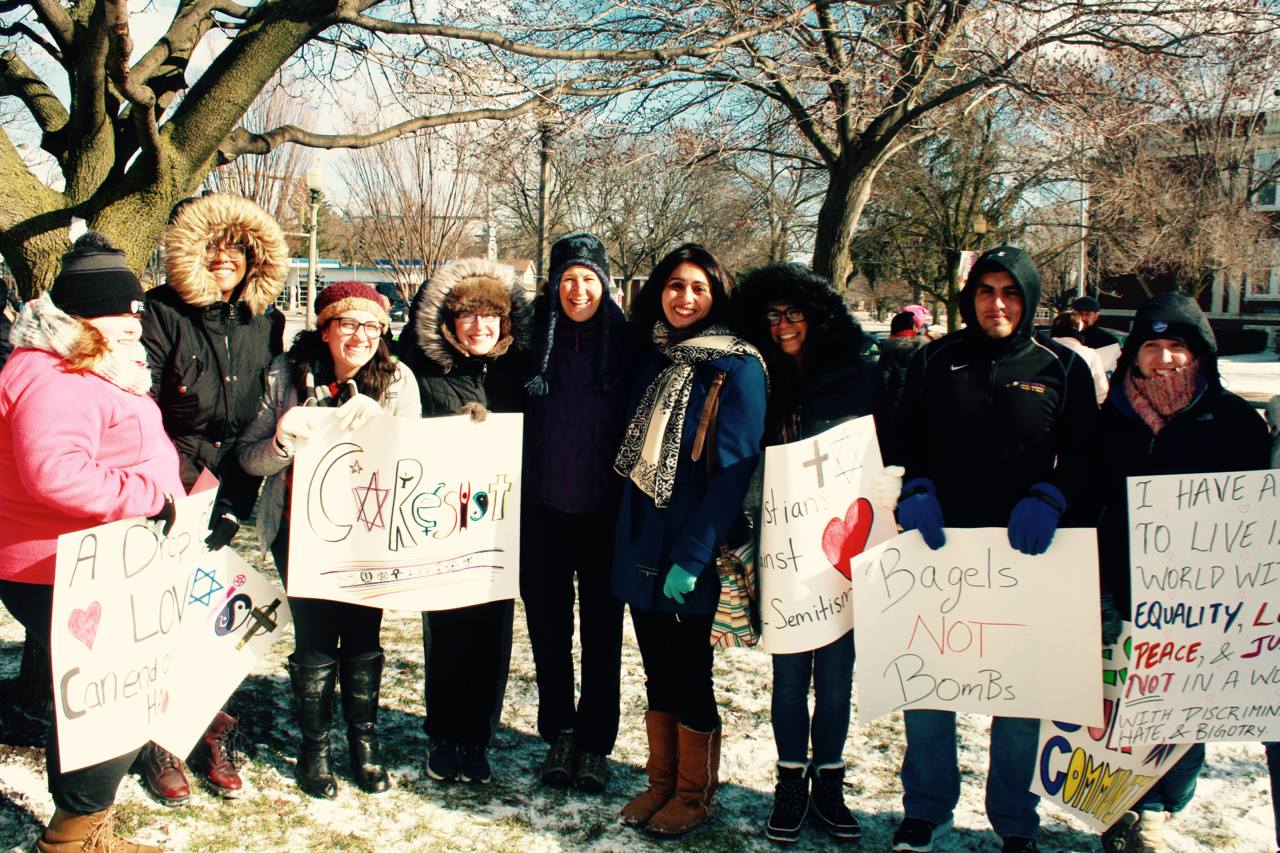
David Kramer: While the event organizers, Hannah Brown and Milo Lomi, are Jewish, the rally was designed to bring together a diversity of groups and social justice activists. As members of the Anti-Fascist League, Hannah and Milo are especially concerned about the upsurge of white supremacist activity in our area. Brighton has both thriving Jewish and Muslim communities, and it was inspirational to see so many members of the Muslim community at the Twelve Corners in solidarity. Brighton Town Supervisor William Moehle had that morning been at the JCC lending support. Bill said that when the JCC was threatened, members of the Islamic Center in Brighton immediately called him, asking what they could do to help. On Sunday we see what can happen when people of good will gather to condemn hate. More here.
international women’s day
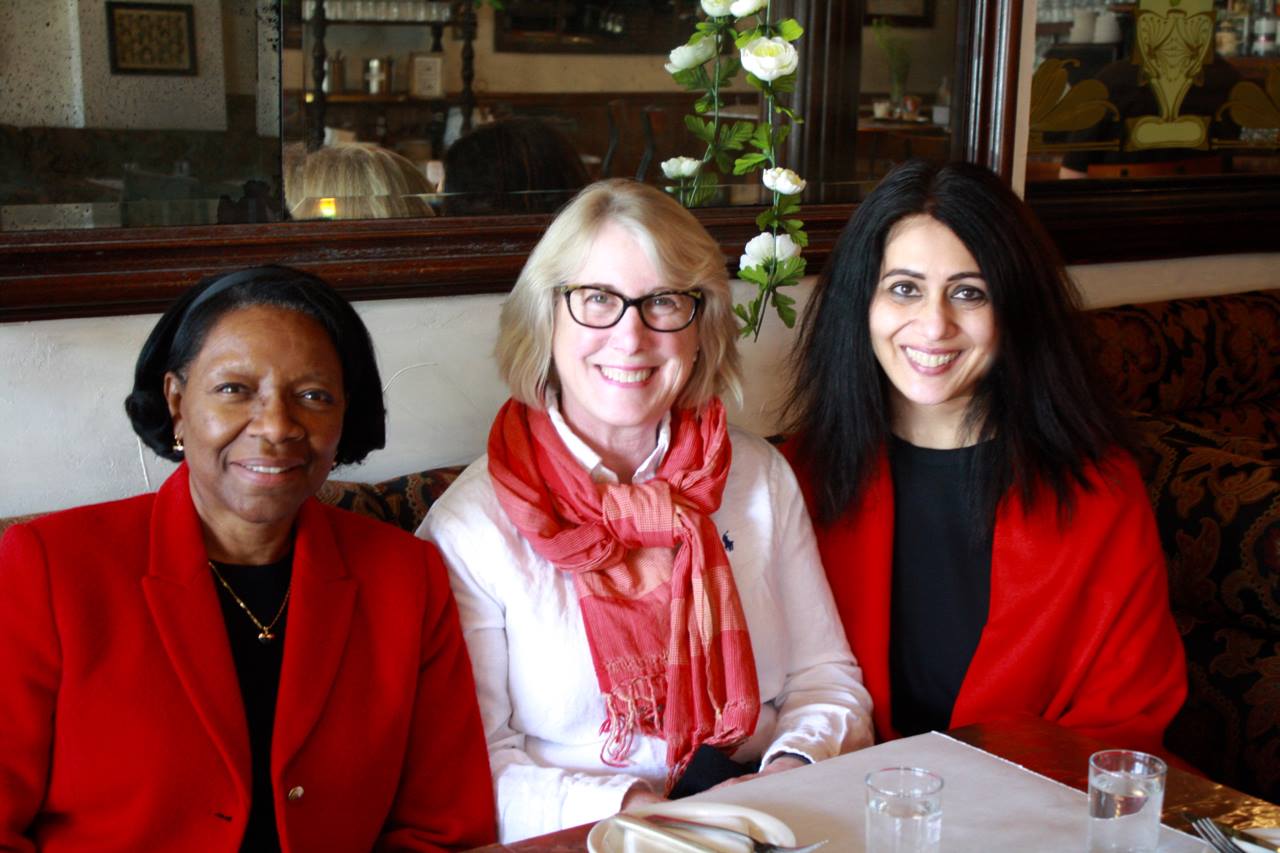
yesterday, on international women’s day, i spoke at the pittsford rotary about my work and started by explaining the history and importance of women’s day. wasn’t sure how a group of white businessmen in suits was going to respond to my presentation but they were not afraid to engage and asked excellent questions. the talk was organized by my dear friend, and person-2-person partner, jeanne strazzabosco. later i met with two close friends, judy toyer (an attorney who grew up in alabama during jim crow and is committed to anti-racism work) and sarita arden (an artist who came to social justice very early on as a school girl), to talk about revolution. and of course, we all wore red.
lovely weekend
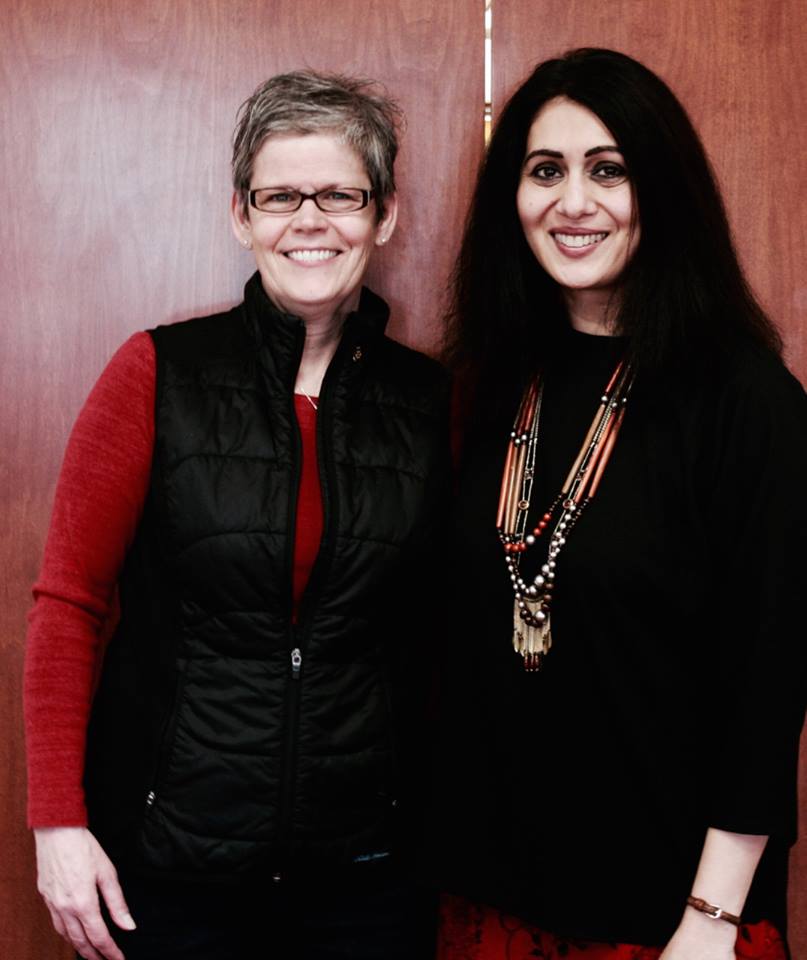
wonderful weekend. trip to ithaca on saturday morning to visit our son and have lunch with him, then off to the little theatre to see “i am not your negro,” followed by ethiopian food at zemeta with a couple we love. on sunday, dinner at our iraqi american friends’ house – delicious home cooked iraqi food, comforting tea in beautiful teacups and then a game of table tennis to wrap things up. couldn’t have cared less about the glacial weather.
agape latte: a life without borders with mara ahmed
i will be speaking about my art and film work at St. John Fisher College on march 13th. they have free coffee/free dessert and it’ll be a very informal conversation. hope u can join us.
tedx talk today
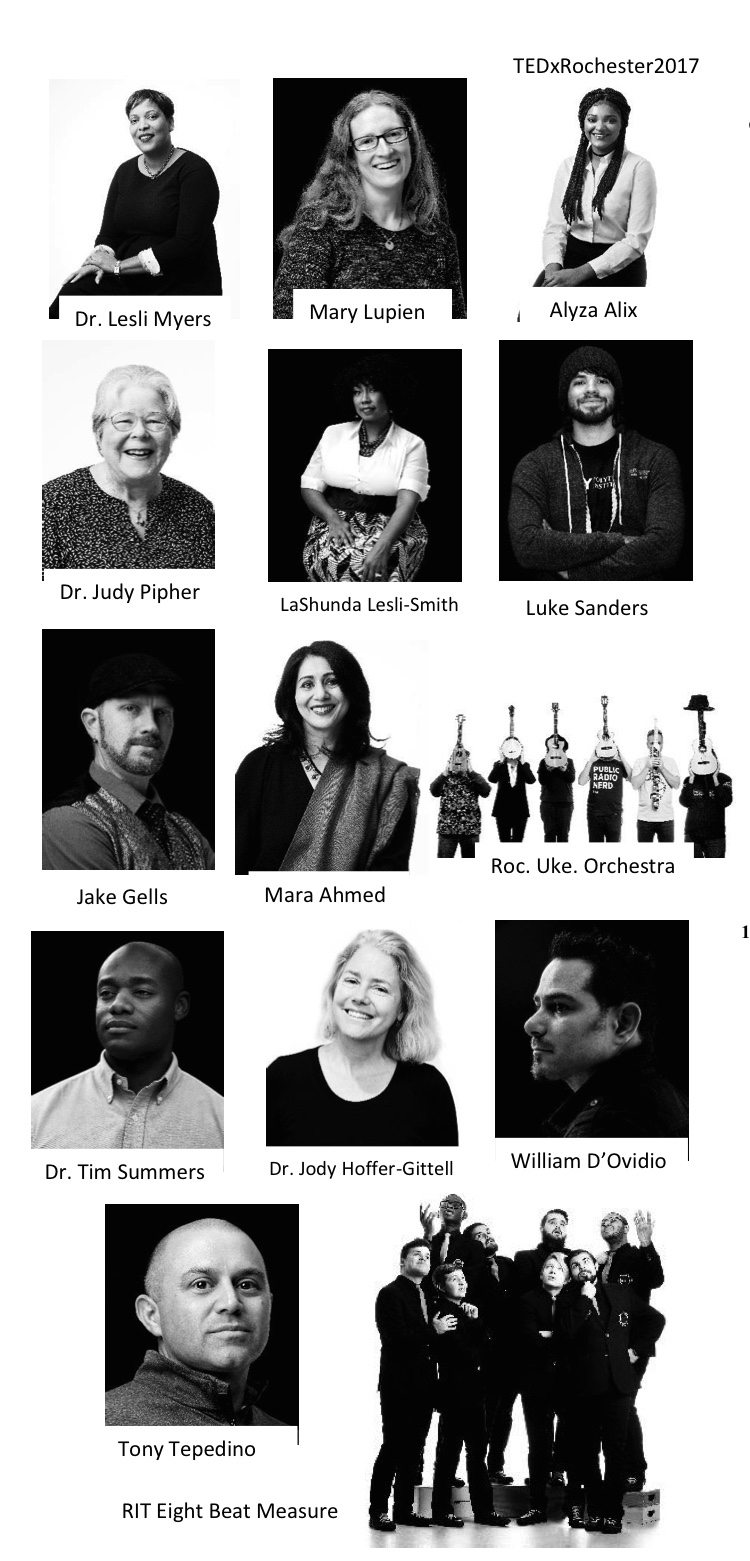
tedx talk: done. i did not blank out, i remembered all the sections of my presentation and i was able to navigate all my slides. can’t know for sure how i did until i see the video, but phew. i know many of u, my dear friends, were thinking of me/sending me good vibes. i owe u big time. here’s a lovely endorsement by one of my fellow speakers, the beautiful lesli myers, superintendent of schools in brockport, who spoke powerfully about hate and ignorance and shared the traumatic story of how her grandfather was lynched when her mother was 3 years old. an extremely diverse line-up of speakers and some thought-provoking, honest truth-telling. well done rochester!
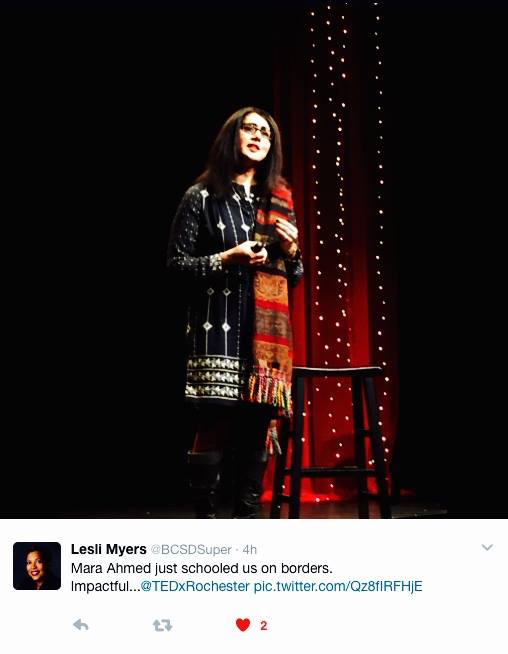
tedx rochester 2017
kinda looking forward to this tomorrow 🙂
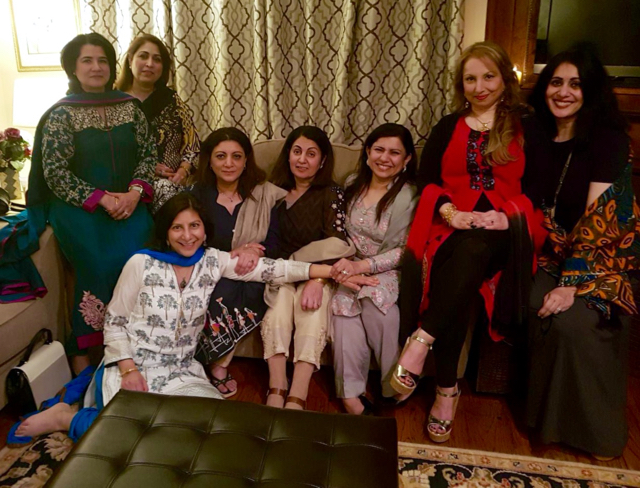
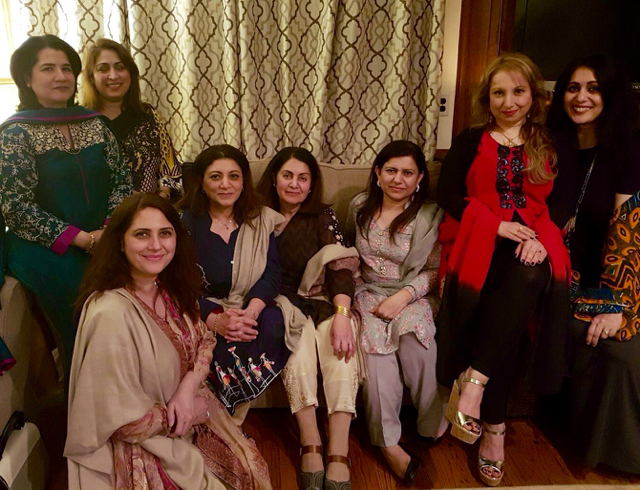
lovely dinner with friends last night
My TEDx Talk on March 3, 2017
As much as I agree with Aamer Rahman’s critique of Ted Talks (“pacing around on stage with a headset recycling some basic ideas dressed up as apolitical new-age empowerment rhetoric while an audience of middle-class white ppl claps for itself”), I am preparing to speak about “borders” and what they mean to my film/art work as well as my journey as a human being and activist. It’ll be at Geva Theatre Center on March 3rd. As with everything else I do, this TEDxRochester talk will be infused with politics. And I will try not to pace around too much 🙂
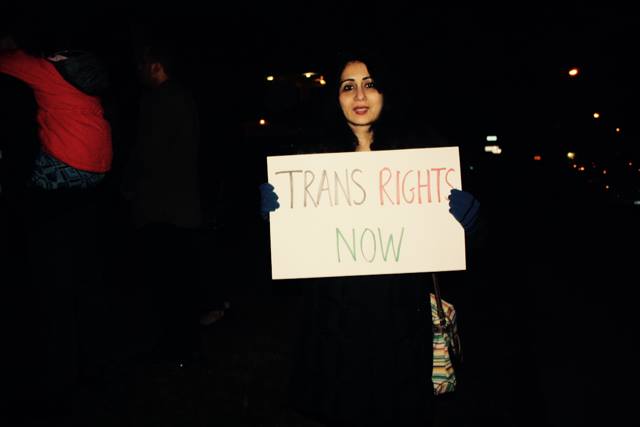
Stand with Trans Students Rally
pls be there and show ur support today: FEB 24, 2017 at 5:30 PM, School of the Arts, Rochester, NY.
Meleko Mokgosi’s Pax Kaffraria in Rochester
Saw Meleko Mokgosi’s stunning Pax Kaffraria (2010 – 2014) at the Memorial Art Gallery today. It is “an eight-chapter project that takes Botswana, South Africa, Zambia, and Zimbabwe as case studies, and articulates questions around issues of national identification, colonial history, globalization, trans-nationality, whiteness, African-ness, and post-colonial aesthetics.” Had the opportunity to listen to Mokgosi, who was born in Francistown, Botswana, talk about his work.
He explained how the project is a response to rising nationalism and xenophobia. Although we understand the fluidity of borders and identity more than ever before, the world is becoming increasingly nationalistic and shutting down. People invest emotions in objects such as flags and in privileges that they can access as citizens of nation-states. Is it because jouissance is limited and therefore any curtailment of enjoyment is blamed on the other, the outsider?
Mokgosi construes nationalism as highly masculine and is interested in the role of women in African liberation movements. Not only are they missing from such histories, but they continue to exist without existing – a condition that he represents through visual redaction. He wants to impress upon us that subjectivity is real, not just a theoretical exercise. It’s something that’s felt in the body.
Mokgosi’s work dealts with problems of representation i.e. painting Africans without essentializing them. He wants to background blackness and use black bodies allegorically. He finds semiotic representations to be more open-ended, whereas linguistics are finite. He is aware of the need to unlearn Eurocentric history, which is written, sequential and based on contextual analysis. History can also be oral and non-linear, as it in Africa and other parts of the world.
Art itself is strongly Eurocentric: “we all learn to paint by painting white people.” The techniques and primary colors used to paint skin are all meant to recreate white skin. Mokgosi refuses to use those techniques. He doesn’t use white Gesso as a base and rather than treat painting as an additive process, he removes layers of color. He has developed his own artistic process and language.
He also prefers more nuanced emotional registers. Obviously, he avoids the stereotypical angry black man or the sad black woman, in fact, he avoids any over-performance by his Africans subjects. He loves representations of middle-class African lives, where nothing much is happening.
He uses negative space to engage with the viewer, without overwhelming her. Inspired by Max Beckmann, a German painter and sculptor, Mokgosi is not limited by realism in dealing with space, which he sees as having a pedagogical, political function. Many of his large scale compositions are informed by the 19th century French artist William-Adolphe Bouguereau, who painted classical mythology.
Although Mokgosi is in constant dialogue with how cultures/people change as a result of contact with colonizers, he’s also aware of the fact that postcolonialism itself is an American academy object.
I spoke to him afterwards and shared how the idea of unlearning history and developing one’s own language to articulate one’s identity resonated deeply with me. I come from another ex-colony, the subcontinent. He was elated and told me that’s where many of these ideas come from, ideas such as subalternity. “There are many wise people in that part of the world,” he said. I found out later that he’s using Gayatri Spivak’s work in his new project “Democratic Intuition” in which he aims to unpack love and understand democracy.
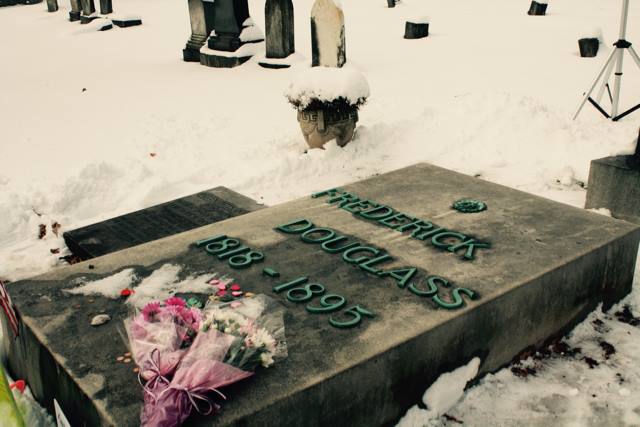
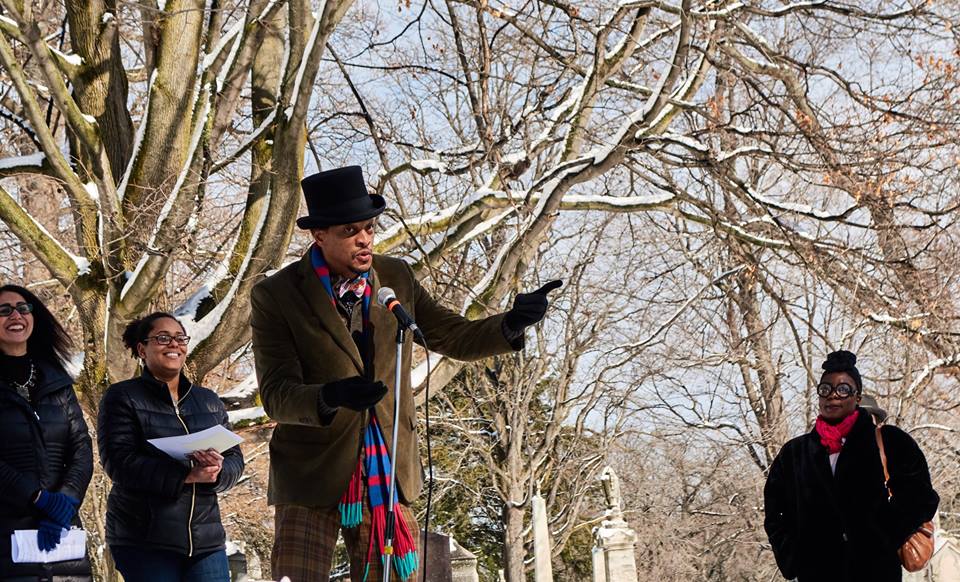
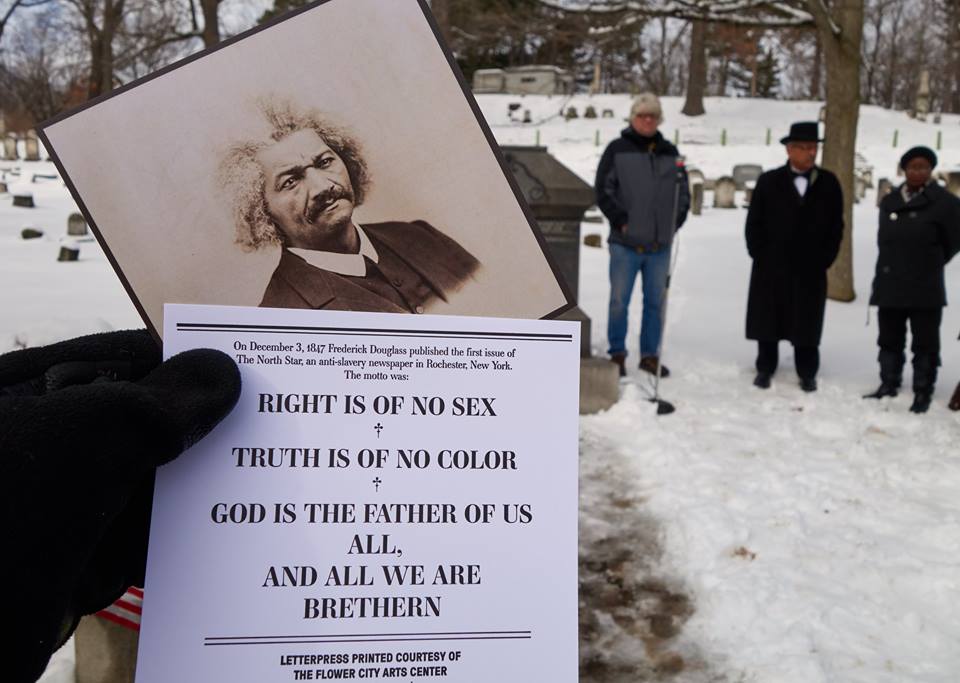
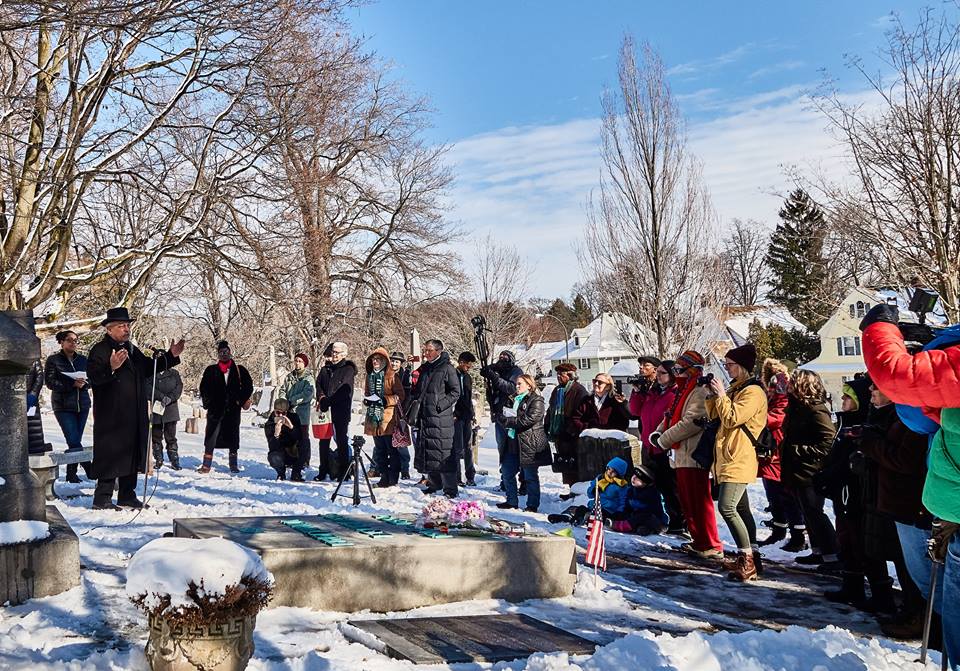
Frederick Douglass’s 199th Birthday
Photographs by Linc Spaulding.
Press coverage:
Frederick Douglass’s 199th birthday anniversary honored at gravesite
Douglass honored on 199th birthday
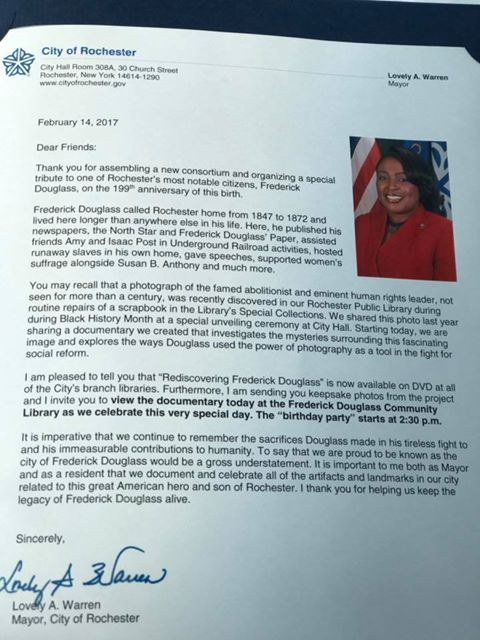
Celebration of Frederick Douglass’s 199th Birthday at Mt Hope Cemetery
I cannot believe that an idea I had barely a week ago coalesced into this beautiful event, thx to the help and support of so many. Photographs by Sarita Arden.