
watched ‘the prime of miss jean brodie’ again last night, with the magnificent maggie smith. this film, made in 1969, always shocks me on account of its boldness and contemporary relevance. the characters, including the titular jean brodie, are deeply flawed, their trespasses unsettling, the emotional tenor of the film (novel by muriel spark) is ambiguous, everything painted in grey, without the comfort and predictability of black and white. in short, it’s a fearless portrayal of life with all its contradictions and unsavory realities (including the allure of fascism). i remember a teacher somewhat like that in high school, back in islamabad. it was an all girls school. i was never in her orbit but she created some commotion in our midst, before being let go.
Category: art
career panel at pronto
wonderful journalism and documentary career panel discussion yesterday, organized by pronto in bay shore. pronto is a nonprofit doing amazing work on long island, from being a food pantry, to helping with govt paperwork and providing after school programs to students, it’s a one-stop support system that people can rely on. thank u ginger for inviting me to the panel <3

From Rabindranath Tagore’s autobiography ‘My Life In My Words’
Letter to June Jordan in September
By Lena Khalaf Tuffaha
I cannot pass the anniversary of that first news event of childhood without returning to your poem. How from my house I watched. And watching, watched my grief-stricken parents unable to speak. How I leaned into the screen, the chords of the cries, searching for what was recognizable of fingers and thighs, of bracelets and moustaches. Macabre arrangement of bodies with names like our own. I cannot pass without your words. Something about witnessing twice removed. About distances magnified by the shift into language. Of dailyness and my own children’s vernacular and the machine. Grinding us all in its jaws. I met a girl from the camp at a reading in Beirut. She asked if we could talk about the life of poetry. Our families are hauled off to the world of the dead and every day it is on screen. In Gaza we’re watching Ferguson and in Atlanta we’re watching Jerusalem watching Minneapolis watching. Their weapons and their training programs indistinguishable. The word almost flickers for a nanosecond. Here I note the shelf-life of self-censorship, legacy of our era. Some days poems are scrawled on pieces of cardboard and carried on our shoulders at the protest like martyrs. Here I should say something about hope. Here I should say something about living.
Editing The Injured Body: Ayni
Love how Ayni Ali’s eyes light up when she talks about Somalia and Nairobi – how the kids would spend time outdoors, pocket money in hand, snacking on corn, sweets, and mabuyu (red candy made from the seeds of Baobab fruit in East Africa). “Growing up in a different country is so beautiful,” she says.

Editing The Injured Body: Amanda
Listening to Amanda Chestnut talk about ‘The Negro Artist and the Racial Mountain’ by Langston Hughes and what a profound effect it had on her work as a Black artist. The essay provides trenchant clarity to all artists of color by confronting the assimilationist instinct of a colonial mentality.

My questions for Shirly Bahar
The obligatory selfie after a satisfying dinner. It was a full house at Hofstra on Nov 9th for a discussion about Shirly Bahar’s book, ‘Documentary Cinema in Israel-Palestine: Performance, the Body, the Home,’ and my film, ‘The Injured Body.’ Here are my questions for Shirly:
1) You say that although oppression and racialization have impacted Palestinians and Mizrahim differently, the documentaries you discuss in the book share a political commitment and performative affinities. They defy the removal of the pain of Israel’s marginalized people from public visibility.
You discuss how documentary performances of pain by Palestinians and Mizrahim, when seen together, invite us to contest the segregation of pain and consider reconnection. Could you elaborate on that?
2) There is one sentence in your book which hit me hard. It is the commonly held notion that ‘the trauma of witnessing destruction directly harms the usage of language.’
Meaning that those who are occupied (on whose minds and bodies violence is constantly enacted) are never seen as credible witnesses of their own pain, of their own lived experiences, based on dominant codes of credibility. It’s like the gaslighting I was talking about in the context of microaggressions. You take issue with this notion. Could you tell us more?
3) Since we are talking about language and violence, I also wanted to bring up the constant threat of violence. You talk about Palestinian children experiencing ‘withheld violence.’
Your words reminded me of Fanon of course, and the muscular contraction of the colonized body. What does this imply in the P/I context?
4) I would like to end with something you say in the book, that ‘it takes perpetual learning and training to try and relate to the pain of others in a politically informed and committed manner.’
You also say: ‘More often than not, those who care for the pain of others are found in relative vulnerability themselves—political, physical, mental—thus chancing their becoming further undone.’
I think of the #BLM movement and its principled support for justice in Palestine. Could you expand on this important point.

hofstra lecture <3
wonderful event at hofstra university yesterday with the brilliant shirly bahar and santiago slabodsky. full house and then the evening ended w dinner at akbar in garden city with all of us and sally, julie, aashish and balbinder.


The Injured Body at Hofstra
this is happening tomorrow!

To become undone is the greatest gift
From Shirly Bahar’s Documentary Cinema in Israel-Palestine: Performance, the Body, the Home:
More often than not, those who care for the pain of others are found in relative vulnerability themselves—political, physical, mental—thus chancing their becoming further undone. But as Tourmaline inspires us to believe, “if we are to ever make it to the next revolution, it will be through becoming undone, an undoing that touches ourselves and touches each other and all the brokenness we are … to become undone is the greatest gift to ourselves.”

The Injured Body: Palestine, Mizrahi Jews, and the Imperial Politics of Color
The brilliant Shirly Bahar and I will be talking about documentary film, colonialism, racism, and the body at Hofstra University on Nov 9, 4:30-5:45pm. It’s a free event but you need to register. More info below.
Join us for a conversation between Shirly Bahar and Mara Ahmed about their recent scholarly and creative work related to oppression and the body. Bahar’s recent book, “Documentary Cinema in Israel-Palestine: Performance, the Body, the Home,” and Ahmed’s upcoming film, “The Injured Body,” both explore how colonialism, marginalization, and daily mental and emotional stresses from racism and othering impact the body. The conversation will spotlight documentary language that makes embodied oppression visible in comparative and global perspectives (in the context of settler colonialism and imperialism), touching on the pain of Palestinians, Mizrahi Jews and people of color, especially women, in the United States. The idea is to shift conventional paradigms of war, conflict and segregated geographies by focusing on (and politicizing) lived experiences of pain and understanding their interrelatedness. The evening will also feature film excerpts.
This ‘Issues in Judaism’ lecture is presented by Hofstra Cultural Center and the Dept of Religion and Jewish Studies, in collab with the depts of History, Global Studies & Geography, Comparative Literature, Languages, & Linguistics, and the Women’s Studies and European Studies Programs.
Thank you to the wonderful Santiago Slabodsky for putting this event together.
Venue: Leo Guthart Cultural CenterTheater, Joan and Donald Axinn Library, First Floor, South Campus
To register go to: hofstra.edu/culture. Or call 516.463.5669. Or go to this link.

from the metamorphosis by franz kafka
it’s incredible that this book (written in 1912) continues to be a propos, fascinating, a literary feat today, in 2022, exactly 110 years later. it provokes disbelief and uproarious laughter, remains steadfast as a masterpiece, and ends with heartbreaking pathos.
there are as many interpretations of ‘the metamorphosis’ as there are readers (and that means a lot). some believe that gregor samsa “like other of kafka’s doomed protagonists, errs by failing to act, instead allowing himself to be acted upon.” others draw comparisons to willy loman from ‘death of a salesman’ and write about the degradation of modern capitalist work. there are those who see a freudian twist to the story and focus on gregor’s overbearing father. still others think the metamorphosis relates to gregor’s sister, grete, and her evolution over the course of the novella.
my take is sobering. to me the metamorphosis is about othering. the idea of otherness has been addressed elsewhere but mostly in terms of gregor’s own alienation, loss of identity, and lack of agency.
i see othering that can make someone seem ugly, disgusting, and less than human. without being threatening, difference can be turned into something dangerous and attacked with impunity. and this change can happen overnight, so that the other can now be crushed underfoot, starved to death, and left to die.
in the same way, children can be arrested, villages bombed, people tortured with the benediction of the law, and those committing the violence whine about being the victims. it’s always the monster who forces their hand.
#themetamorphosis#franzkafka#othering#difference#violence#selfvictimization#theotherisamonster

tomm el-saieh’s work at the clark art institute
i went to the clark institute to see tomm el-saieh’s work.
his paintings are kaleidoscopic, pulsating, shimmering. they push and pull. they embody languages, sounds, hieroglyphics. they feel like sacred scrolls, like maps with districts, neighborhoods, borders and connecting grids, like cities or skin cells that grow, evolve and transform organically, much like his paintings.
he uses patterns, abrasions and erasures. they are disorienting. one must focus and refocus one’s eyes. parts emerge, recede, resurface. they throb, balloon, shift. like a shallow depth of field where the foreground and background keep switching.
the paintings have texture, like quilted fabric. i’ve never wanted to touch a canvas so much.
my favorite is kafou (below) from carrefour, a commune in haiti – i couldn’t stop looking at it. then there was canape vert, vilaj imajine and wanga neges.
tomm el-saieh was born in haiti, where his family has had roots in port-au-prince for 5 generations. his father is palestinian-haitian and his mom israeli. he lives and works in miami.

the berkshires
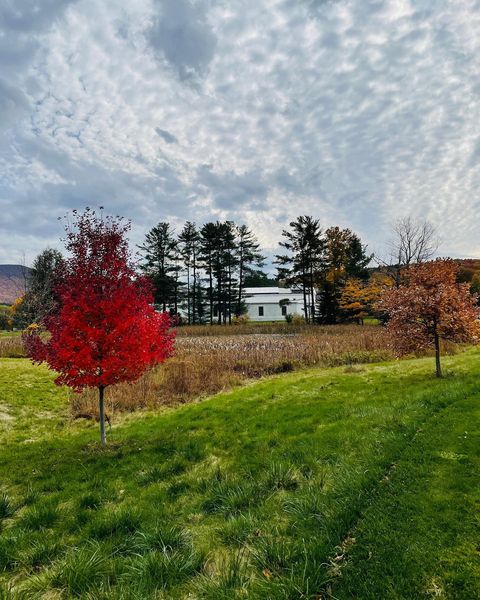
today we went to the berkshires, a place that’s been close to my heart for almost three decades. from staying at the cranwell and cross country skiing (while my mom and sister kindly babysat our toddler), to enjoying fall with a cousin and her fam, to taking the kids skiing there almost every winter, and to my husband bringing me back (and giving me all the time i needed at mass moca) after my daughter left for college and we became empty nesters, the berkshires have always been a part of our lives. we started going there when we lived in CT, and kept it up from long island and then from rochester.
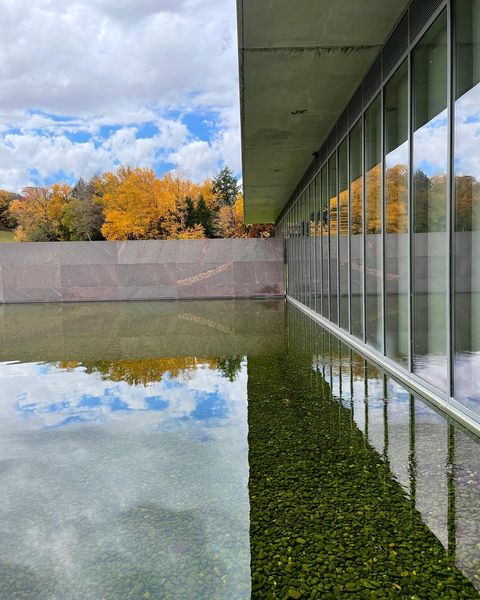
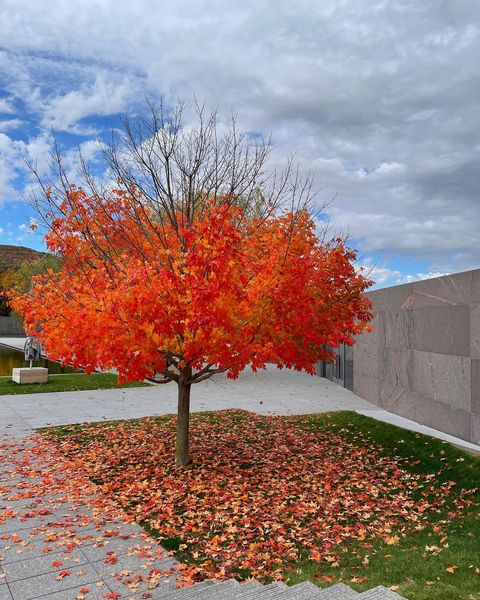
saw so much beauty today, my eyes couldn’t hold on to all of it. so i took countless pictures because i wanted to remember everything.
we started with the clark art institute in williamstown with its white marble museum building designed by architect daniel perry and its breathtaking reflecting pool (part of a complex hydrological system that reduces water consumption by 50 percent). more about the art i saw later.
#clarkartinstitute #williamstown #massachusetts #berkshires #partofourlives #fallbeauty #fallphotography #fallinstagram #autumnphotography #autumninstagram #marblebuildings #architecture #reflectingpools
From Exit West by Mohsin Hamid
Saeed’s father then summoned Nadia into his room and spoke to her without Saeed and said that he was entrusting her with his son’s life, and she, whom he called daughter, must, like a daughter, not fail him, whom she called father, and she must see Saeed through to safety, and he hoped she would one day marry his son and be called mother by his grandchildren, but this was up to them to decide, and all he asked was that she remain by Saeed’s side until Saeed was out of danger, and he asked her to promise this to him, and she said she would promise only if Saeed’s father came with them, and he said again that he could not, but that they must go, he said it softly, like a prayer, and she sat there with him in silence and the minutes passed, and in the end she promised, and it was an easy promise to make because she had at that time no thoughts of leaving Saeed, but it was also a difficult one because in making it she felt she was abandoning the old man, and even if he did have his siblings and his cousins, and might now go live with them or have them come live with him, they could not protect him as Saeed and Nadia could, and so by making the promise he demanded she make she was in a sense killing him, but that is the way of things, for when we migrate, we murder from our lives those we leave behind.
—Mohsin Hamid in Exit West
#migration #migrant #tomigrate #immigrate #immigrant #thoseweleavebehind #mohsinhamid #exitwest
