what obama should do in pakistan

from “what obama should do in pakistan” by malou innocent, huffington post, jan 23, 2009:

…U.S. missile strikes prove tactically problematic for three reasons.

First, missile strikes undermine the authority of sitting Pakistani leaders. The August 19th resignation of former army general Pervez Musharraf demonstrated how the burden of assuming a pro-American stance can prove a political liability for “war on terror” allies. Aligning with pro-U.S. policies is one reason why Asif Ali Zardari, Pakistan’s new president, is reviled by many of his countrymen, while opposition leader Nawaz Sharif, who has been openly critical of U.S. actions across the border in Afghanistan, has seen his popularity soar.

A second reason to be skeptical of relying almost exclusively on missile strikes is that they encourage Federally Administered Tribal Areas (FATA) militants to lash out against their closer enemy, Pakistan, causing disastrous ripple effects that further damage the already weakened country. Suicide bombers are striking Pakistan’s large urban centers with increasing frequency and are signals of the spreading insurgency engulfing the Islamic Republic.

The final, and most important, reason to be circumspect about escalating military force in the tribal areas is that it will almost certainly fail. The clans, subclans, and extended families that weave the complex fabric of Pashtun tribal society have endured hundreds of years of foreign invasions. Time and again, Persian, Greek, Turk, Mughal, British and Soviet invaders have discovered these peoples to be virtually unconquerable. Pashtun social values include loyalty (wafa), honor (nang), and badal, the Pashto word for taking revenge. Vendettas, personal and collective, have been known to last for generations. While U.S. missile strikes can certainly extinguish high-value targets, they also trigger collective armed action throughout the tribal agencies.

The dilemma for President Obama is that as long as militants continue to infiltrate the hundreds of unguarded checkpoints along the Afghan-Pakistan border, the security environment in Afghanistan will continue to decline. While Obama is correct to argue that we have no choice but to attack militants inside FATA as long as we remain in Afghanistan…

(here on i stopped agreeing with ms innocent – she doesn’t realize that she just stated the problem – “as long as we remain in afghanistan” – exactly, we need to get out!)

u.s. drone attacks kill 17 in waziristan: first obama-era strikes

the latest u.s. attacks inside pakistan are deeply disturbing.

they are a continuation of the same lazy, ineffective and arrogant warfare ushered in by the bushies. however targeted these air strikes might be, based on whatever “actionable intelligence” might be available to americans living on the other side of the globe, they overwhelmingly result in the killing of poor villagers. and i am sick of hearing about “collateral damage” so let’s not even go there – it’s just convenient linguistic whitewash.

i read this analogy somewhere and it really struck home. if we had actionable intelligence that a serial killer was hiding in an apartment in manhattan, would it be ok to bomb that entire block? is that how we go after criminals? no, of course not, this would be unthinkable. civilian life is too precious. collateral damage would be too high. how can collateral damage be then justified in waziristan? we are not at war with pakistan.

on to more practical considerations. will killing a few militants (if that can ever be achieved and properly confirmed) mean an end to terrorism? for every militant who’s killed, for every villager in a wedding party who’s bombed to shreds, there will be ten more people who will become radicalized and will want to strike back.

there is direct correlation between u.s. bombings in pakistan’s northern areas and suicide attacks all over pakistan. suicide bombings are completely new to pakistan and they too have been v “targeted”. hafiz gul bahadur, a militant leader in north waziristan, warned that his men would launch suicide attacks on foreigners and government targets across the country unless the raids stop. and so it has been – police stations, army depots, the islamabad marriott where many government dignitaries and foreigners can be found, the list goes on. the pakistan army and government are thought to be complicit in america’s war on the people of pakistan and they have therefore sustained historic numbers of casualties.

on the one hand obama wants to stabilize and engage that region but on the other hand his military strategy will only create more hatred, violence and chaos in south asia. pakistan is already feeling the strain. there are power outages in islamabad and major cities like lahore and karachi, every other hour. food is so expensive that it’s becoming increasingly hard for people not to starve. as the pakistani people are pitted against their own government and army, many see civil war around the corner.

things are so bad right now that the only intelligent thing for us to do is to GET OUT. nothing even remotely good has ever come out of u.s. presence and aggression in that region.

ten things you can do about the war in congo

the war in congo is horrific. for some historical perspective watch “king leopold’s ghost” by pippa scott (on netflix). for the devastating effects of the war on women watch “the greatest silence: rape in the congo” by lisa f. jackson (an HBO doc).

we should educate ourselves about what’s going on in the congo. here is a good way to start.

professor avi shlaim puts the situation in gaza in perspective

insightful interview with professor avi shlaim on democracy now! interesting fact: looks like israel supported “islamist” hamas to be able to fight arafat’s secular party, just like the usa supported “islamist” mujahideen to fight the russians in afghanistan. does this policy ever work in the long run???

from the ashes of gaza

from the ashes of Gaza, by Tariq Ali, guardian.co.uk, December 30, 2009

In the face of Israel’s latest onslaught, the only option for Palestinian nationalism is to embrace a one-state solution

The assault on Gaza, planned over six months and executed with perfect timing, was designed largely, as Neve Gordon has rightly observed, to help the incumbent parties triumph in the forthcoming Israeli elections. The dead Palestinians are little more than election fodder in a cynical contest between the right and the far right in Israel. Washington and its EU allies, perfectly aware that Gaza was about to be assaulted, as in the case of Lebanon in 2006, sit back and watch.

Washington, as is its wont, blames the pro-Hamas Palestinians, with Obama and Bush singing from the same AIPAC hymn sheet. The EU politicians, having observed the build-up, the siege, the collective punishment inflicted on Gaza, the targeting of civilians etc (for all the gory detail, see Harvard scholar Sara Roy’s chilling essay in the London Review of Books) were convinced that it was the rocket attacks that had “provoked” Israel but called on both sides to end the violence, with nil effect. The moth-eaten Mubarak dictatorship in Egypt and Nato’s favourite Islamists in Ankara failed to register even a symbolic protest by recalling their ambassadors from Israel. China and Russia did not convene a meeting of the UN security council to discuss the crisis.

As result of official apathy, one outcome of this latest attack will be to inflame Muslim communities throughout the world and swell the ranks of those very organisations that the west claims it is combating in the “war against terror”.

The bloodshed in Gaza raises broader strategic questions for both sides, issues related to recent history. One fact that needs to be recognised is that there is no Palestinian Authority. There never was one. The Oslo Accords were an unmitigated disaster for the Palestinians, creating a set of disconnected and shrivelled Palestinian ghettoes under the permanent watch of a brutal enforcer. The PLO, once the repository of Palestinian hope, became little more than a supplicant for EU money.

Western enthusiasm for democracy stops when those opposed to its policies are elected to office. The west and Israel tried everything to secure a Fatah victory: Palestinian voters rebuffed the concerted threats and bribes of the “international community” in a campaign that saw Hamas members and other oppositionists routinely detained or assaulted by the IDF, their posters confiscated or destroyed, US and EU funds channelled into the Fatah campaign, and US congressmen announcing that Hamas should not be allowed to run.

Even the timing of the election was set by the determination to rig the outcome. Scheduled for the summer of 2005, it was delayed till January 2006 to give Abbas time to distribute assets in Gaza – in the words of an Egyptian intelligence officer, “the public will then support the Authority against Hamas.”

Popular desire for a clean broom after ten years of corruption, bullying and bluster under Fatah proved stronger than all of this. Hamas’s electoral triumph was treated as an ominous sign of rising fundamentalism, and a fearsome blow to the prospects of peace with Israel, by rulers and journalists across the Atlantic world. Immediate financial and diplomatic pressures were applied to force Hamas to adopt the same policies as those of the party it had defeated at the polls. Uncompromised by the Palestinian Authority’s combination of greed and dependency, the self-enrichment of its servile spokesmen and policemen, and their acquiescence in a “peace process” that has brought only further expropriation and misery to the population under them, Hamas offered the alternative of a simple example. Without any of the resources of its rival, it set up clinics, schools, hospitals, vocational training and welfare programmes for the poor. Its leaders and cadres lived frugally, within reach of ordinary people.

It is this response to everyday needs that has won Hamas the broad base of its support, not daily recitation of verses from the Koran. How far its conduct in the second Intifada has given it an additional degree of credibility is less clear. Its armed attacks on Israel, like those of Fatah’s Al-Aqsa Martyrs Brigade or Islamic Jihad, have been retaliations against an occupation far more deadly than any actions it has ever undertaken. Measured on the scale of IDF killings, Palestinian strikes have been few and far between. The asymmetry was starkly exposed during Hamas’s unilateral ceasefire, begun in June 2003, and maintained throughout the summer, despite the Israeli campaign of raids and mass arrests that followed, in which some 300 Hamas cadres were seized from the West Bank.

On August 19 2003, a self-proclaimed “Hamas” cell from Hebron, disowned and denounced by the official leadership, blew up a bus in west Jerusalem, upon which Israel promptly assassinated the Hamas ceasefire’s negotiator, Ismail Abu Shanab. Hamas, in turn, responded. In return, the Palestinian Authority and Arab states cut funding to its charities and, in September 2003, the EU declared the whole Hamas movement to be a terrorist organization – a longstanding demand of Tel Aviv.

What has actually distinguished Hamas in a hopelessly unequal combat is not dispatch of suicide bombers, to which a range of competing groups resorted, but its superior discipline – demonstrated by its ability to enforce a self-declared ceasefire against Israel over the past year. All civilian deaths are to be condemned, but since Israel is their principal practitioner, Euro-American cant serves only to expose those who utter it. Overwhelmingly, the boot of murder is on the other foot, ruthlessly stamped into Palestine by a modern army equipped with jets, tanks and missiles in the longest-armed oppression of modern history.

“Nobody can reject or condemn the revolt of a people that has been suffering under military occupation for 45 years against occupation force,” said General Shlomo Gazit, former chief of Israeli military intelligence, in 1993. The real grievance of the EU and US against Hamas is that it refused to accept the capitulation of the Oslo Accords, and has rejected every subsequent effort, from Taba to Geneva, to pass off their calamities on the Palestinians. The west’s priority ever since was to break this resistance. Cutting off funding to the Palestinian Authority is an obvious weapon with which to bludgeon Hamas into submission. Boosting the presidential powers of Abbas – as publicly picked for his post by Washington, as was Karzai in Kabul – at the expense of the legislative council is another.

No serious efforts were made to negotiate with the elected Palestinian leadership. I doubt if Hamas could have been rapidly suborned to western and Israeli interests, but it would not have been unprecedented. Hamas’ programmatic heritage remains mortgaged to the most fatal weakness of Palestinian nationalism: the belief that the political choices before it are either rejection of the existence of Israel altogether or acceptance of the dismembered remnants of a fifth of the country. From the fantasy maximalism of the first to the pathetic minimalism of the second, the path is all too short, as the history of Fatah has shown.

The test for Hamas is not whether it can be house-trained to the satisfaction of western opinion, but whether it can break with this crippling tradition. Soon after the Hamas election victory in Gaza, I was asked in public by a Palestinian what I would do in their place. “Dissolve the Palestinian Authority” was my response and end the make-believe. To do so would situate the Palestinian national cause on its proper basis, with the demand that the country and its resources be divided equitably, in proportion to two populations that are equal in size – not 80% to one and 20% to the other, a dispossession of such iniquity that no self-respecting people will ever submit to it in the long run. The only acceptable alternative is a single state for Jews and Palestinians alike, in which the exactions of Zionism are repaired. There is no other way.

And Israeli citizens might ponder the following words from Shakespeare (in The Merchant of Venice), which I have slightly altered:

“I am a Palestinian. Hath not a Palestinian eyes? Hath not a Palestinian hands, organs, dimensions, senses, affections, passions? Fed with the same food, hurt with the same weapons, subject to the same diseases, healed by the same means, warmed and cooled by the same winter and summer, as a Jew is? If you prick us, do we not bleed? If you tickle us, do we not laugh? If you poison us do we not die? And if you wrong us, shall we not revenge? If we are like you in the rest, we will resemble you in that … the villainy you teach me, I will execute; and it shall go hard but I will better the instruction.”


gaza: hospitals struggling to cope as fighting intensifies

from the canadian red cross website:

Amid fierce fighting the International Committee of the Red Cross (ICRC) is moving swiftly to assist Gaza’s hospitals, which were overburdened even before the sudden influx of casualties. The priority is to get more medical supplies to the hospitals immediately. The first ICRC truckloads of supplies entered the Gaza Strip this week.

According to the ICRC office in the Gaza Strip, the humanitarian situation remains alarming. The streets of Gaza are mostly empty with the exception of long queues forming in front of bakeries. Meanwhile, prices for basic commodities are reportedly rising quickly.

The situation in hospitals is described as chaotic. Palestinian sources indicate that over 350 people had been killed and more than 1,200 injured. Medical teams have been dealing with a constant influx of wounded since December 27th and are stretched to the limit. “We are completely overwhelmed by the number of people coming in with very serious injuries. I have never seen anything like this,” said the head of the surgical ward of Shifa Hospital, in Gaza City. In addition, further medical supplies are urgently needed.

Some neighbourhoods are reported to be running short of water, either because the water network was damaged in the attacks or because of power shortages.

ICRC staff have been mostly unable to move inside the Gaza Strip due to the continuing attacks. However, the organization is in regular contact with both conflict parties and with hospitals and other public services. The ICRC currently has eight international staff and about 65 local employees working in the Gaza Strip.

In Israel, a third person was reported killed and several more injured by rockets fired from inside the Gaza Strip.

The ICRC’s main priority is to assist hospitals in Gaza. The organization has so far provided kits sufficient to cover the needs of 200 wounded persons as well as intravenous fluids. The ICRC also succeeded in bringing five additional ambulances into Gaza for use by the Palestine Red Crescent Society.

The ICRC has brought six trucks into Gaza carrying drugs and disposable materials provided by the Palestine Red Crescent Society, spare parts for ambulances and for medical equipment such as blood-pressure machines, heart-rate monitors and patient ventilators, plastic sheeting, food parcels and hygiene parcels.

The ICRC is preparing for the possible deployment of additional staff, including a surgical team.

An ICRC-chartered aircraft carrying enough items to cover the needs of 500 war-wounded people has arrived in Tel Aviv from Geneva. As soon as possible, these items will be forwarded to Gaza.

The ICRC continues to cooperate closely with the Palestine Red Crescent Society.

The ICRC reminds the parties to the hostilities that international humanitarian law requires that a clear distinction be drawn between military objectives and the civilian population and civilian objects. In particular, the ICRC underlines the obligation of the parties to take all feasible precautions to spare the civilian population the effects of hostilities. Medical facilities and personnel must also be protected.

Canadians wishing to help support ICRC Gaza response efforts are encouraged to contribute by donating online, calling 1-800-418-1111 or contacting their local Red Cross office. Cheques should be made payable to the Canadian Red Cross, earmarked “ICRC Gaza Response” and mailed to the Canadian Red Cross National Office, 170 Metcalfe Street, Suite 300, Ottawa, Ontario, K2P 2P2.

Donate Now!
In-kind donations of food, clothing and other items, while well intentioned, are not the best way to help those in need. There are tremendous processing and transportation costs involved in shipping these items to beneficiaries. Local purchases of food and clothing are more culturally appropriate and effective. Red Cross supplies can be purchased in the immediate area, thereby reducing transportation costs. Cash transfers to the affected region provide the optimum flexibility to our Red Cross colleagues so they can meet the most urgent needs.

9 is not 11: (and november isn’t september)

amy goodman interviews arundhati roy on democracy now.

many of the things arundhati says make a lot of sense to me. the idea of expanded terrorism (especially in south asia) is not in spite of but because of the “war on terror”. violence and chaos have spilled into pakistan and india, from an increasingly volatile afghanistan. india’s alignment with america and its aggressive super-power policies with only create a world of hopelessness and therefore more terrorism. terrorism results from the elimination of all prospects for non-violent change, it is a sign that recourse to justice is a sad illusion.

i also agree with her assessment of the situation in pakistan. the 180 degree turn in american policy in the region has taken a toll on pakistan. pakistan is the crucible in which dangerous experiments have been conducted with american and saudi money -indocrinating and recruiting jihadists from all over the world in the 1980s, then hunting down and exterminating those same jihadists in the 2000s. pakistan’s army and its intelligence agency, the isi, have acquired so much power in pakistan that elected governments hold little sway over them. the country is on the verge of civil collapse. do we want to stabilize pakistan by strengthening its elected government and pushing for human development or do we want to go it alone in “capturing and killing” the terrorists? bombing pakistan will only destabilize a country of 170 million people (the world’s 6th largest population). we have already destabilized iraq. afghanistan has ceased to exist as a viable state. do we want to expand this area of lawless, militant anarchy? and do we even care about the human cost?

you can read arundhati roy’s complete essay, “9 is not 11: (and november isn’t september)” here.

arundhati roy

60 years of universal human rights

today’s my birthday but also the 60th birthday of the universal declaration of human rights. i would like to celebrate by joining amnesty international in their campaign to protect the human.

i would also like to join amnesty international in urging u.s. president-elect barack obama to make human rights central to his new administration by taking certain concrete steps in his first 100 days in office that would demonstrate a genuine commitment to bringing the united states in line with its international obligations.

COUNTER TERROR WITH JUSTICE: A HUMAN RIGHTS CHALLENGE

in the first 100 days, amnesty international is calling on the new administration to:

1) announce a plan and date to close guantanamo;

2) issue an executive order to ban torture and other ill-treatment, as defined under international law;

3) ensure that an independent commission to investigate abuses committed by the u.s. government in its “war on terror” is set up.

howard zinn on “american empire”

as i screen my film “the muslims i know” on more and more campuses, and engage with students on how to solve the problems of the world, my mantra has become more and more clear-cut. we must aspire to try something new in the face of fear and hostility, use human development to connect with people rather than bomb those we suspect of being different, fall back on our common humanity when in doubt and not give in to indiscriminate violence. that same message is echoed beautifully by the end of this video – “a people’s history of american empire by howard zinn”:

attacks in mumbai, on thanksgiving…

thanksgiving is one of my favorite holidays. the idea of getting together with family and being thankful for all that we have is apt and beautiful. but this thanksgiving has been marred by the horrible terrorist attacks in mumbai.

this violence is the latest in a series of terrorist attacks in both pakistan and india and deserves the condemnation and opprobrium of all. the perpetrators are not yet known, but they have been described as islamic militants. by donning the mantle of islam to cover their political, ideological and territorial objectives, these people have sullied the name of islam and muslims. the killing of innocent men, women and children cannot be justified by any ideology, and especially by islam, which is a religion of peace and compassion.

violence this random is too surreal to comprehend. the world is complex and scary but one thing i know: the more violence we put into the system, the more violence will come out. murder and mayhem are not the answer. could it be something totally different?

Reading Naomi Shihab Nye’s “Kindness” – A Practice for the Anniversary of 9/11, by Roger Housden

“Poetry humanizes us in a way that news, or even religion, has a harder time doing,” Naomi Shihab Nye wrote in her email response to the 9/11 tragedy. With its unique ability to capture the significance of what the ordinary imagination cannot grasp, poetry took on a heightened value for the culture during those dark weeks. Poems circulated all over the Internet. Nye’s poem “Kindness” was sent to me soon after September 11. Reading poetry like this is a spiritual practice.

In this rending yet redemptive poem, Nye reaches down to the roots of our humanity, which lie in the great heart where we all cry together. Nye, an Arab American, has been writing poetry since she was five. She has published six books of poetry and several chilren’s books. Born of a Palestinian father and an American mother, she has lived her life between those two cultures.”

KINDNESS
by Naomi Shihab Nye

Before you know what kindness really is
you must lose things,
feel the future dissolve in a moment
like salt in a weakened broth.
What you held in your hand,
what you counted and carefully saved,
all this must go so you know
how desolate the landscape can be
between the regions of kindness.
How you ride and ride
thinking the bus will never stop,
the passengers eating maize and chicken
will stare out the window forever.

Before you learn the tender gravity of kindness,
you must travel where the Indian in a white poncho
lies dead by the side of the road.
You must see how this could be you,
how he too was someone
who journeyed through the night with plans
and the simple breath that kept him alive.

Before you know kindness as the deepest thing inside,
you must know sorrow as the other deepest thing.
You must wake up with sorrow.
You must speak to it till your voice
catches the thread of all sorrows
and you see the size of the cloth.

Then it is only kindness that makes any sense anymore,
only kindness that ties your shoes
and sends you out into the day to mail letters and purchase bread,
only kindness that raises its head
from the crowd of the world to say
It is I you have been looking for,
and then goes with you everywhere
like a shadow or a friend.

proud to be american!

november 4th 2008 will go down in history as the day when america reasserted its leadership role in the world, by living up to its promise and showcasing the full force of democracy. a door was opened and we leapt into the future – a future unencumbered by skin color and genealogy and energized by youth and diversity. the differences between what had been and what could be were clear. you just had to look at the crowd that booed mccain’s concession speech and that which was assembled at grant park – we were saying no to racism and small-minded, parochial nationalism by making it irrelevant.

but this is no time to rest on our laurels. harry belafonte said it best on tavis smiley and i quote:

“well, i think of all the people in this country who have earned the right to celebrate, none have earned that right more than the african american community. however, it is not a standalone community, and i think that we have been here before. when slavery was overthrown in the great civil war and we went into the post-civil war period and elected black officials to our congress and our senate, it was not too long after that that we introduced 100 years of apartheid – the cruelest and the most oppressive segregation system known to the world was introduced, and lingered.

we’ve had other occasions when at the end of the second world war, when we all came back with a great sense of hope for america’s future and the fact that we’d defeated fascism and that white supremacy should have no place in the mix of civil society, we went into this period of mccarthyism and emmett till and all the violence and all of the pain and oppression that evoked the need and the hope for a dr king, who came to service.

so i think that although we’ve earned the right to celebrate and we should celebrate, i think we must also understand that we’ve been here before, and now is the time when we are most required to be vigilant and most required to stay the course, because this thing that we have just achieved could be easily taken away from us.

[…] america has always been in a place of great dichotomy. the very inception of this nation, founded by the founding fathers – what a magnificent document they wrote in the creating of the constitution. how ironic that the very same men who wrote that constitution and spoke so passionately about democracy and governance should have been the very same men who were the holders of slaves and who supported the slave tradition.

it was a split in our character, in our personality, in our morality. and all through the years, america’s shown this duplicity, has shown this double standard. i think we’re still the same america with the potential to go wrong very much in our midst. it is up to us to learn from that history and to know that we have another opportunity knocking at our door to turn this country around and to make the world the place the world very much wants to be.”

let’s stay the course this time and live up to our full potential!

tom morello

just discovered tom morello on the tavis smiley show. i had obviously heard of “rage against the machine” from the dude, my brother who plays the guitar, works in nyc and worships all things rock.

however, i had no idea morello was such an electrifying political activist. he’s articulate, passionate and insanely talented. interestingly enough his mother is white, his father’s kenyan, he was born in harlem, raised in chicago’s suburbs and graduated from harvard. sounds familiar?

but morello is the real deal. after working briefly for senator alan cranston he decided to pursue music rather than politics. he felt that music would allow him to be himself, to say what he means and not have to compromise.

uncompromising he is and therefore absolutely magnetic. it is so rare to hear people speak the truth, fearlessly – going all the way, instead of slipping into platitudes and neutering the very essence of their principles. i was instantly hooked. yahooed him (btw i prefer yahoo to google – check out the difference one of these days) and saw him on youtube.

morello of “rage against the machine” and “audioslave”, records solo under the name “the nightwatchman” – his political folk alter ego. i immediately ordered his two solo albums “one man revolution” and “the fabled city”. can’t wait to listen to both and write about them.

tom morello

anti-muslim bias post 9/11 – bayoumi on npr

my friend ruth peck urged me to listen to moustafa bayoumi’s interview on npr today.

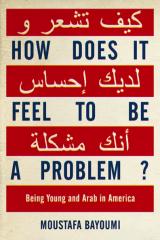
bayoumi, who is professor of english at brooklyn college, the city university of new york and co-editor of “the edward said reader”, has written a book called “how does it feel to be a problem? being young and arab in america”. in mostly bayoumi’s own words, the book is a collection of stories about the lives of young arab and muslim americans post 9/11, about how they are forging lives for themselves in a country that often mistakes them for the enemy. arab and muslim americans are the new, largely undiscussed “problem” of american society, their lives no better understood than those of african americans a century ago. under the cover of the terrorist attacks, the wars in afghanistan and iraq, and the explosion of political violence around the world, the vilification of islam and muslims has become socially acceptable in america. no other group can be as easily maligned, with absolutely no protection from hate-speech or blatant racial profiling.

much of what bayoumi said in his interview is similar to the issues i discuss in my film “the muslims i know”. what surprised me were the questions that were directed at him. it still shocks me to find out what people really think about muslims – much of it is small-minded and ignorant, so generalized that it is quite meaningless, and so opposed to basic common sense that i do begin to feel “politically fatigued”. how many times can you answer the same vapid, stereotypical questions that are being constantly bounced around and kept alive by the media without despairing of ever being actually heard? for how long can you defend your humanity when the very language you are asked to use is slanted in favor of your interrogator? is it possible to make any kind of headway?

maybe the very fact that bayoumi was on npr is a step forward. it is good that we are airing our dirty laundry and that one in every four americans is admitting to anti-muslim bigotry. maybe confessing is a necessary prelude to change. maybe tolerance is the norm in america, we’ve just strayed too far away from the mean.

bayoumi’s book

anti war rally in rochester

saritajudy

like someone said at the rally, if 70% of americans oppose the war in iraq then where were they today, the 5th anniversary of the war in iraq! organized by rochester against war and supported by numerous organizations, the rally at liberty pole in downtown rochester included some speeches, many slogans, a diversity of signs and banners and a few arrests. sarita and i weathered the rain and cold and showed up with our signs. sarita was interviewed by the democrat and chronicle. she mentioned the billions of dollars that we have paid to support this atrocious war. we marched to the little theater and back.

here are some pictures:

crowd at rallyspeechessarita with reporter

trash edenslogansmara

1984, the patriot act and eliot spitzer

few know that george orwell’s “1984” is in part a depiction of england circa 1948, when the economy was weak and the british empire was faltering yet newspapers carried upbeat stories of triumph and success. orwell had worked for the bbc and was well-acquainted with censorship. he despised totalitarianism and knew that propaganda forms its very core. “1984” was a warning, a possible metamorphosis of the anglo-saxon state (including both england and the united states). in his book orwell presents some of the ideas embedded in a totalitarian state:

1) war is essential for sustained consumption and the survival of a hierarchical society (check out my post titled “consumption – the path to happiness?”)

2) when war becomes continuous it ceases to exist – it becomes so much background noise (how many times a day do we american taxpayers think about our trillion dollar wars in iraq and afghanistan and a possible upcoming one in iran? how can a war on terror – which is an emotion, not a tangible enemy – ever be concluded?)

3) there is an emotional need to believe that big brother will succeed in the end – generally speaking, dogmatic belief eclipses rational thought

4) the separation between different economic and social classes is maintained: the system of ownership and control of the means of production and distribution by the people collectively, under the supervision of a government, doesn’t ensure equality – it only keeps wealth restricted to the upper class

5) whereas the ruling elite or party members are not allowed a single independent thought and are mentally trained to toe the line through doublethink, the common people or proles are free to think because the system guarantees that they do not have the ability to think!

an important part of living in a state where big brother is watching you, is to lose your individual rights and freedoms and be happy to part with them out of fear or ignorance. the right to privacy is one such individual right and the patriot act has gone a long way to whittle it down.

the spitzer scandal, instead of becoming another prime example of a society that “anxiously hopes for just two things: bread and circuses”, should have elicited questions about privacy and the unsettling reach of the long arm of the law. how many of us are talking about how the patriot act was used to get spitzer? do we even know that banks are spying on their own clients by using computer programs to generate “suspicious activity reports”? can we parse the conflict between the right to privacy (a necessity for free, empowered citizens) and the hope, on paper, of possibly catching terrorist money laundering? let’s focus less on the myspace.com profile of spitzer’s paramour and more on how we got here…

for more details on how the patriot act caught spitzer, check out this newsweek story.