a rough cut for ‘return to sender’

my short film, return to sender (about colonial postcards and orientalist representations of women from the colonies), is coming along well! i have a rough cut and have received feedback from women friends/filmmakers i’ve trusted for decades. thank u cat ashworth, surbhi dewan, nancy ghertner, kate kressmann-kehoe, and linda moroney. i also got permissions from publishing houses and insightful scholars to quote their work. most of all, i’m blown away, once again, by the sharp analysis and complete honesty of the three women who are at the center of the film. thank u Fatimah Arshad, Urvashi Bhattacharya and Sumayia Islam for ur brilliance and beauty <3

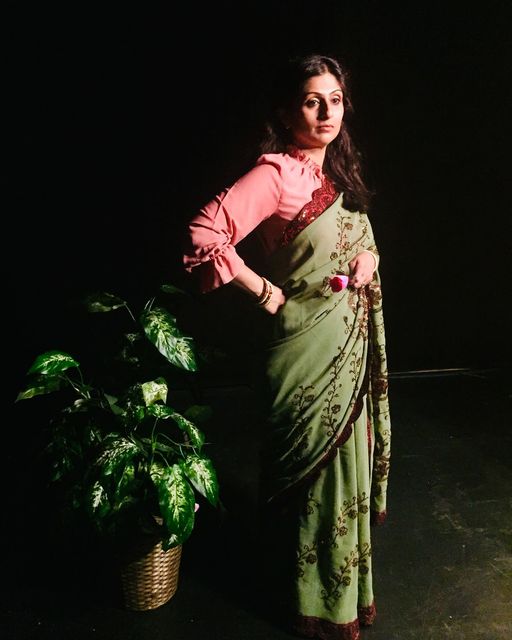
[photo: urvashi bhattacharya in ‘return to sender,’ photographed by mara ahmed]

This project is made possible with funds from the Statewide Community Regrant Program, a regrant program of the New York State Council on the Arts with the support of the Office of the Governor and the New York State Legislature and administered by The Huntington Arts Council, Inc.
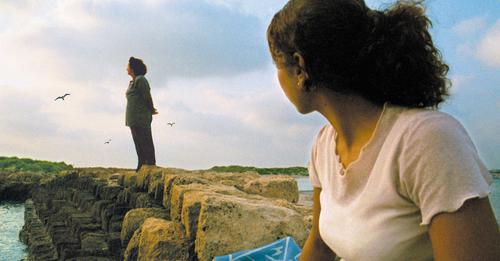
The Body Has Memory

This short video was part of the Huntington Arts Council’s juried exhibition about the exploration of the human body. It won best in show. It’s finally public. Pls watch.

In her book, Citizen: An American Lyric, Claudia Rankine says: “Yes, and the body has memory. The physical carriage hauls more than its weight.”

Biological memory can be understood as a cellular response to a transient stimulus, a response that becomes lasting if chemical changes ensue. Body memory can be transmitted genetically via DNA and helps explain generational trauma.

This poem is about the multiformity of the human body and its many contexts. Some of the visual language in the text is inspired by a viewing of “52 Artists: A Feminist Milestone” at The Aldrich Contemporary Art Museum, in Connecticut. Hence the reference to detached limbs and strewn body parts, but also the need to reconstitute the female body, a powerful site for resistance and healing.

This video is closed captioned. Thank you Rajesh Barnabas, Mariko Yamada, Cloria Sutton, and Rochester City School District students <3

our piece in contending modernities

we have been working on this piece off and on since the beginning of 2023. so proud of this conversation with dr shirly bahar about performativity, solidarity across activist spaces, the relationship between trauma and language, and the importance of reconceptualizing feelings of powerlessness as public and political so as to pursue change. thank u shirly for ur brilliance and vision, thank u Santiago Slabodsky for bringing our work together at hofstra university and activating this piece, thank u josh lupo and atalia omer at Contending Modernities, university of notre dame, for ur editorial support and for publishing our work. to radical politics and solidarity.

adania shibli in lahore

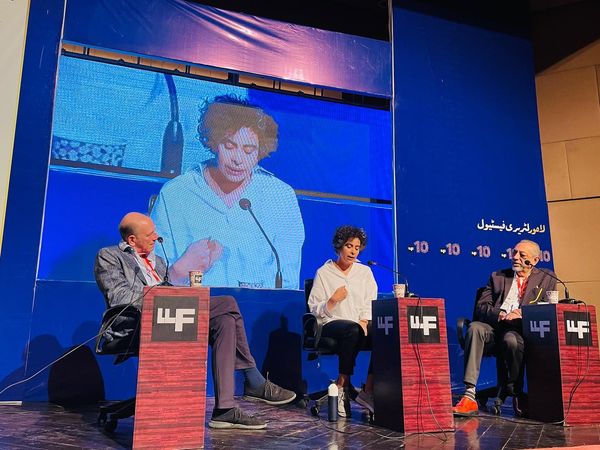
back at the lahore literary festival. wonderful to hear palestinian writer adania shibli talk about her stunning book, minor detail. not sure about the panel – she was paired with william sieghart, a british entrepreneur, publisher and philanthropist, who kept talking about the ‘conflict’ and how dialogue can solve all problems.

so glad adania addressed the use of language and her issues with the word conflict. it’s colonialism, she said. she explained how language can become complicit in a crime, how it can disappear it, and that there is no dearth of dialogue between palestinians and israelis – there is constant contact but it’s a certain kind of interaction, based on power differentials, where palestinians are forced to confront and challenge power structures day in, day out.

adania spoke about her love for the arabic language, how playful, free, and open it is. how important it is to palestinians. ‘adab’ in arabic means both literature and ethics. she also spoke about translation and how it’s essential, even in english, to create a scarred language with a memory of arabic.

finally, she talked a lot about narration and silences. the impossibility of narrating. the linear structure (beginning, middle, end) is not accessible to palestinians, therefore she can only imitate coherence. it’s better to accept silence rather than put words in someone’s mouth. we come to language from two sides of silence – both the reader and writer engage with language in silence.

my favorite session so far.

lahore literary festival

landed at the lahore literary festival today (thx for letting me know saira). went to alhamra to listen to daisy rockwell whose translation of “tomb of sand” by geetanjali shree won the booker prize, historian corinne lefèvre whose book “consolidating empire: power and elites in jahangir’s india (1605–1627)” resets the history of jahangir’s rule, mohsin hamid who talked about “the last white man” (a book i have read), and finally nobel laureate abdulrazak gurnah who discussed his work in: across centuries and continents, colonialism and the fate of the refugee in the gulf between cultures and continents.

obviously, i was thrilled by a discussion on decolonizing literature and history, and so i wanted to ask mr gurnah about writing in english and the complications of producing decolonial literature in an imperial language. i referenced ngugi wa thiong’o’s “decolonizing the mind” and how he describes the disconnect between a colonized person’s mind and body – the mind functions in the colonial language while the body remains stuck in its native tongue. as colonized people ourselves, here in south asia, i was hoping to engage in an interesting discussion, but mr gurnah became defensive. perhaps he thought this was a personal attack on his work. he didn’t really address my question, saying simply that he didn’t agree with me or with ngugi who was welcome to do his own thing. i was hoping for more nuance and engagement.

anyway, later in the day i was approached by a woman who didn’t seem to be pakistani. she recognized me and said my question truly spoke to her and her husband, esp the idea of the mind-body split. they are french-speaking algerians and understand what it means to think and write in the language of the colonizer. there was an immediate connection between us. we talked about the algerian war of independence and frantz fanon. finally.

mohsin hamid being interviewed

alserkal avenue in dubai

i found my groove in dubai today. it’s called alserkal avenue. located in al quoz, halfway between old and new dubai, this contemporary art hub was created in 2008 by housing art spaces, galleries, internet cafes, and artist studios in existing warehouses and factory buildings. incidentally, i started with an exhibition that purports to lift the voices of kashmiri women thru photography and testimonies. it was awful. from the get-go. more about that later.

i want to share what i loved first: ‘for you mother’ by palestinian artist rula halawani. based on conversations with her mother about palestine and her words, “even when we die and leave this world, our spirits remain, floating in the skies of our country,” halawani has produced these beautifully haunted and haunting, large-scale photomontages, a “marriage between archival images of palestinian families before the 1948 mass diaspora and palestinian landscapes captured thru her lens.”
halawani is also interested in examining how palestinian landscapes have changed — the people and natural environment that disappeared and are still disappearing.

A grant for my project

I am beyond thrilled to share that I have been awarded a NYSCA (New York State Council on the Arts) grant for my project “Return to Sender: Women of Color in Colonial Postcards and the Politics of Representation.” This project will involve a short film, an art exhibition, artist talks, and a community discussion led by three women of color. The film premiere will be at Cinema Arts Centre in Huntington, NY, on Oct 1st this year.

There are so many amazing people to thank: first of all, Patty Eljaiek at Huntington Arts Council, Inc. without whose encouragement I wouldn’t have applied for this grant and whose consistent support was invaluable; Emily Dowd, Kieran Johnson and everyone at @huntingtonarts; Stephanie Gotard at @huntingtonhistoricalsociety who is my community partner (and my biggest cheerleader); Dylan Toombs who shot the footage for the film with dazzling artistry; Boris Sapozhnikov for additional cinematography; the beautiful and talented Fatimah Arshad, Urvashi Bhattacharya, and Sumayia Islam who are the stars of the film; Rajesh Barnabas and Darien Lamen who will be helping with postproduction; Nia Adams, Madeline Churney, and Farhana Islam for agreeing to lead a post-screening discussion; Jeremy Dennis for being open to a screening at Ma’s House & BIPOC Art Studio; and finally, Dylan Skolnik and René Bouchard for a film premiere and discussion at Cinema Arts Centre in spite of many complications.

Also trying to get a student intern from Stony Brook’s Women’s and Gender Studies dept to curate the art exhibition — thank you to the faculty there.

I will write more about the film, but for now I want to thank all my people — everyone who has worked with me, believed in me, and inspired me. Love you all!

This project is made possible with funds from the Statewide Community Regrant Program, a regrant program of the New York State Council on the Arts with the support of the Office of the Governor and the New York State Legislature and administered by The Huntington Arts Council, Inc.
Editing The Injured Body: Greta Niu

Greta Niu: I just don’t want to lose sight of what makes up the microaggressions. It is implicit biases around race or ethnicity or gender or gender expression or class or size or disability. Those are the pieces that we’ve been fighting and we have always been fighting against. I don’t want people to think we are done with that. Now all we have to deal with are these microaggressions. The fact is, it’s a whole continuum of behaviors that are harmful, from a little poke to physical violence.

Photograph by Rajesh Barnabas

Editing The Injured Body: Lauren Jimerson

Lauren Jimerson: On the reservation, I didn’t think about my life past 18 or 20. It was hard to imagine being an adult. When I was 12, I saw the first young person pass away. Someone I grew up with, my cousin and neighbor. He was 19 or 20 and died in a car accident. I saw all these young people passing away. I didn’t know what the future looked like. Then I had Angel and it changed the course of my life.

Photograph by Erica Jae