
‘In the Still of the Night’ by Dara Wier. Read, oh so exquisitely, by LaTanya Richardson Jackson. The compactness and startling clarity of this poem took my breath away. Tears…
Watch here.
Author: mara.ahmed
dinner at abeela’s
with these gorgeous ladies. thank u Abeela for a perfect evening of delicious food, warm hospitality and non-stop laughter 🙂

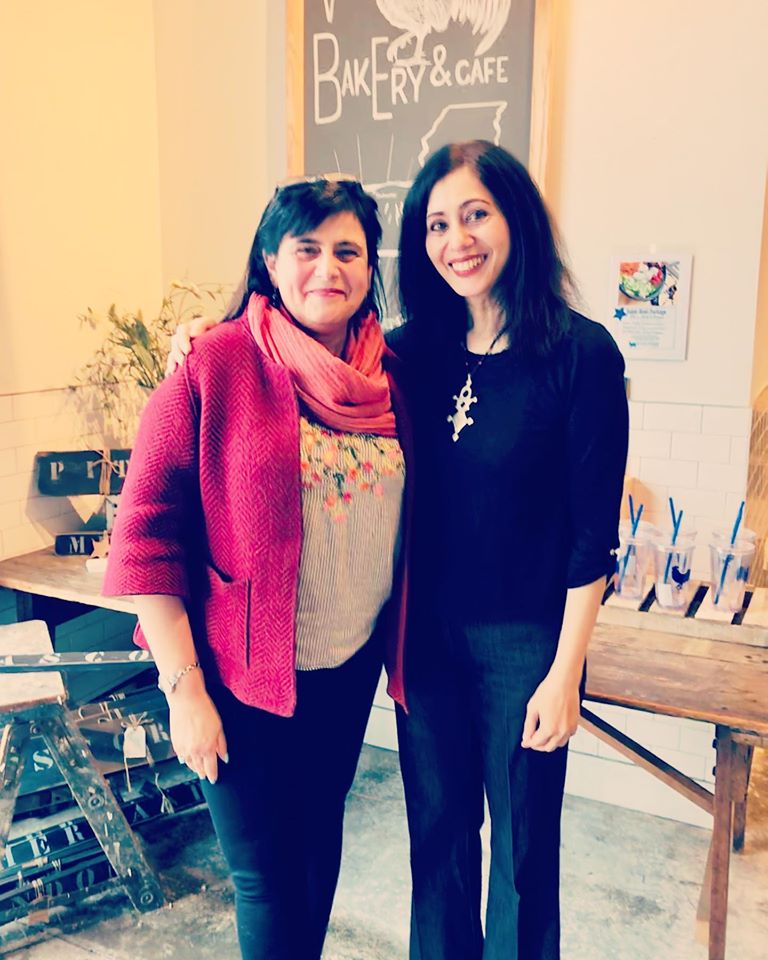
coffee with elisabetta
with the beautiful Elisabetta Sanino D’Amanda at Village Bakery & Cafe today – we talked about assimilation into whiteness and the loss of radical left politics, language as a political construction that buttresses ideas of a strong unified nation and subjects languages/dialects from economically marginalized regions to a linguistic/cultural hegemony, and how homes can be living, breathing, organic repositories of memories and histories and dismantling them involves a kind of grieving… such deep rich conversations elisabetta – will miss u amica.
‘Islamophobia is Racism’ at First Unitarian Church of Rochester
I will be presenting at First Unitarian Church of Rochester on Thursday Feb 6, 7-9 pm. The topic will be ‘Islamophobia is Racism’ (part of the ‘Race, Racism and Relationship’ series at First Unitarian Church).
As white supremacy becomes emboldened in America, overt racism has re-entered civil discourse and there has been a corresponding surge in Islamophobia. The word Islamophobia is used frequently by mainstream media, yet few understand its social construction, historical context, or operation in everyday life.
This interactive, multimedia workshop will help explicate the term, locate it in history, and clarify its overlap with racism. The presentation will be followed by group activities and an open discussion. Thank you Barbara De Leeuw for organizing this before our move. Looking forward.
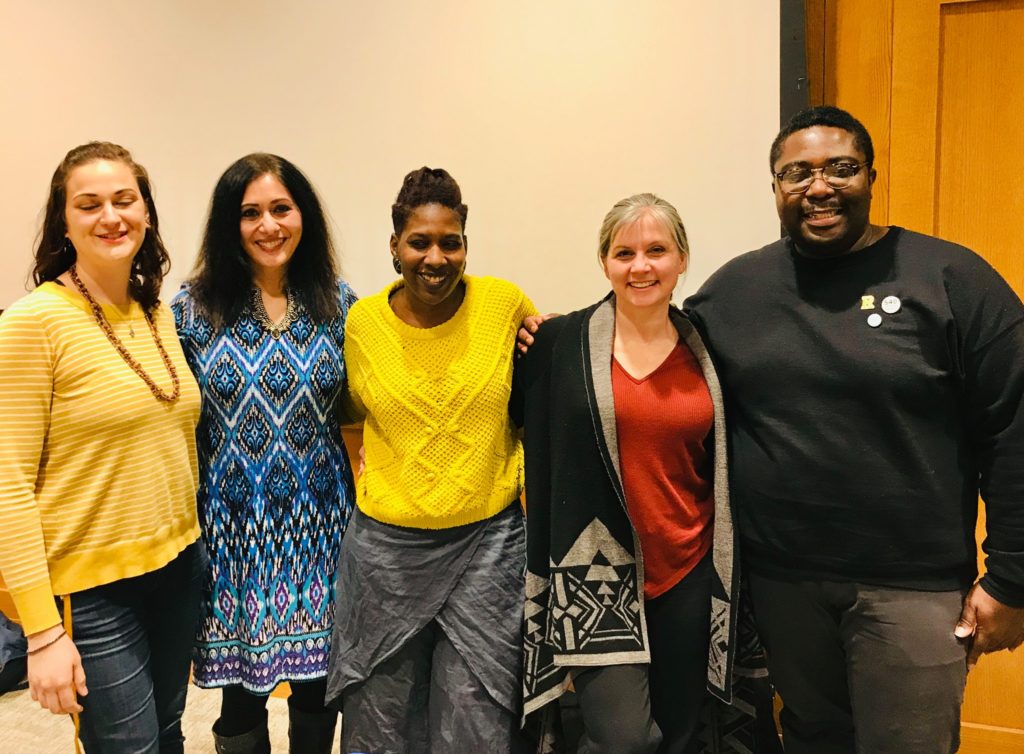
activism and the arts panel
on a panel with these brilliant friends to talk about art and activism <3
The Last Black Man in San Francisco
loved!
Nathan Heller: The Last Black Man in San Francisco was funded in part by Kickstarter and was drawn from Jimmie Fails’s own experience: he did grow up poor in the city, and his family did once live in such a house. In that sense, it’s a report on an African-American presence that truly is fading—the percentage of black residents in San Francisco is less than half what it was in 1970, and sits today around a measly six per cent—and it captures the experience of displacement, of travelling among spheres in which you have increasingly little say or stake and trying to blend in. At Sundance, the film won a directing award and a special-jury prize, and it captured viewers’ imaginations as a human window onto the city’s rocky transformation. Fails and Talbot have been friends since late childhood, when Fails was in a housing project and Talbot was living nearby, and they made the movie while living in Talbot’s parents’ home. Their film is frank not only in its portrait of the real-estate pressures that make San Francisco a shorthand for self-stifling unaffordability but in its reports on the habits and moods of the place. From the platinum-hued outdoor light to the rollicking skateboard rides across town, “The Last Black Man in San Francisco” feels of San Francisco, and its characters are vivid with the offbeat pursuits that give the city’s residents their bizarre glow. In the world of the film, as in real life, everyone is bound by a common anxiety, and the movie gently suggests that many middle-class San Franciscans can see aspects of their own displacement panic in the black experience of Jimmie Fails. The fear is not just that you’ll lose your place in town but that the place will lose all memory of you.
coffee with muna
with the fabulous Muna Najib today – we talked about the western binary of emotion vs rationality and whether women could be empowered by means other than sex (made me think of saba mahmood’s work on the women’s mosque movement in cairo) – fascinating stuff 🙂 will miss u habibti.

citizen kane is boring
so coming back to an earlier discussion about why i don’t think ‘citizen kane’ is the best film ever made. first of all, i have an issue with top 10 (or even top 100) lists. they’re mostly created by self-righteous critics/arbiters of taste who think they’re better than everyone else and since their opinions are sold as such (expert, valuable, sacrosanct), the film/artwork’s rating becomes a self-fulfilling prophesy. if such lists were compiled more organically, bottom-up, they wouldn’t be static or anachronistic. also, films/art wouldn’t be assessed eternally through the lens of white heteropatriarchy, which is so very tired.
as a friend pointed out, citizen kane’s cinematography, camera angles, structure and writing might have been inventive for its time, but our response to art is visceral – it’s not some kind of intellectual calculus, rather an emotional response. i’ve never been able to watch the entire film, all the way to the end. it doesn’t engage me.
if u think about it, why should an american film made by a white man in 1941 be universally accepted as the best film ever? my repository of favorite movies doesn’t have room for ‘citizen kane.’ here are a few films (in no particular order) that work much better for me. pls check them out if u haven’t already.
Garam Hava by M.S. Sathyu
This 1973 Indian feature by first-time director M.S. Sathyu takes place in the days immediately following the Indo-Pakistani partition, as a Muslim shoemaker (Balraj Sahni) in Agra, India, tries to resist the prejudice and economic pressure that tempt him to abandon his family business and emigrate to Pakistan. Sathyu brings a naturalist touch to this detailed family drama, shooting in color and on the streets, often with a handheld camera.
Charulata by Satyajit Ray
Satyajit Ray’s exquisite story of a woman’s artistic and romantic yearning takes place in late nineteenth-century, pre-independence India, in the gracious home of a liberal-minded, workaholic newspaper editor and his lonely wife, Charulata (Madhabi Mukherjee). When her husband’s poet cousin (Soumitra Chatterjee) comes to stay with them, Charulata finds herself both creatively inspired and dangerously drawn to him. Based on a novella by the great Rabindranath Tagore, Charulata is a work of subtle textures, a delicate tale of a marriage in jeopardy and a woman taking the first steps toward establishing her own voice.
Close-up by Abbas Kiarostami
This fiction-documentary hybrid uses a sensational real-life event — the arrest of a young man on charges that he fraudulently impersonated the well-known filmmaker Mohsen Makhmalbaf — as the basis for a stunning, multilayered investigation into movies, identity, artistic creation, and existence, in which the real people from the case play themselves. With its universal themes and fascinating narrative knots, CLOSE-UP — one of Kiarostami’s most radical, brilliant works — has resonated with viewers around the world.
In The Mood For Love by Wong Kar-wai
The Battle of Algiers by Gillo Pontecorvo
Ikiru by Akira Kurosawa
Scenes From A Marriage by Ingmar Bergman
Miss Julie by Alf Sjöberg
Titus by Julie Taymor
Away From Her by Sarah Polley
The Sea Inside by Alejandro Amenábar
Moonlight by Barry Jenkins
Una mujer fantástica by Sebastián Lelio
Bab’Aziz by Nacer Khemir
Korkoro by Tony Gatlif
The Double Life of Veronique by Krzysztof Kie?lowski
Forever by Heddy Honigmann
i could go on:)
activism and the arts at UR
excited to be on this panel and talk about art and activism, at the University of Rochester on jan 30th. the discussion will be moderated by Missy Pfohl Smith.

NYT’s attacks on Bernie
Tithi Bhattacharya: The NY Times attacks on Bernie are really nothing compared to what they will pull if he gets the nomination.
It is crucial that the Sanders campaign tack radically left right now and not try to prove his “electability” –(whatever the hell that is).
This means to emphasise, not downplay, the anti-racist, feminist and anti-imperialist aspects of our vision–rather than push/occlude them under banal universalities–like “we are for everyone”.
We are not for everyone–we are for the working class and the oppressed of this world.
coffee with darien
with the brilliant Darien Lamen. more farewells, more goodbyes…

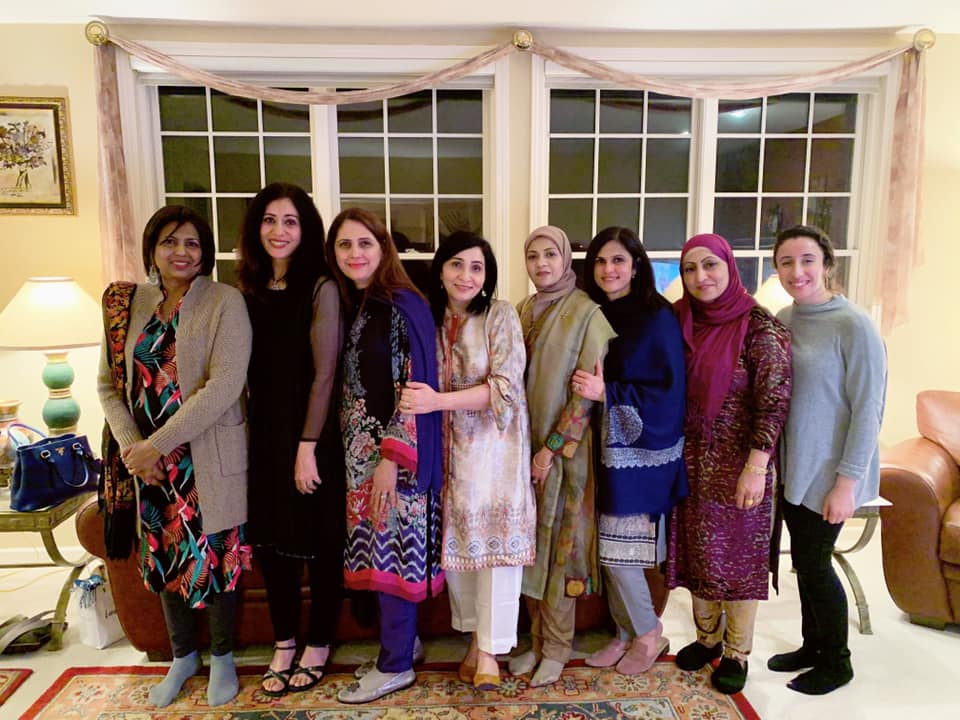
dinner at fabeha’s
thank u Fabeha for ur beautiful hospitality and for inviting so many friends i love – my rochester community <3
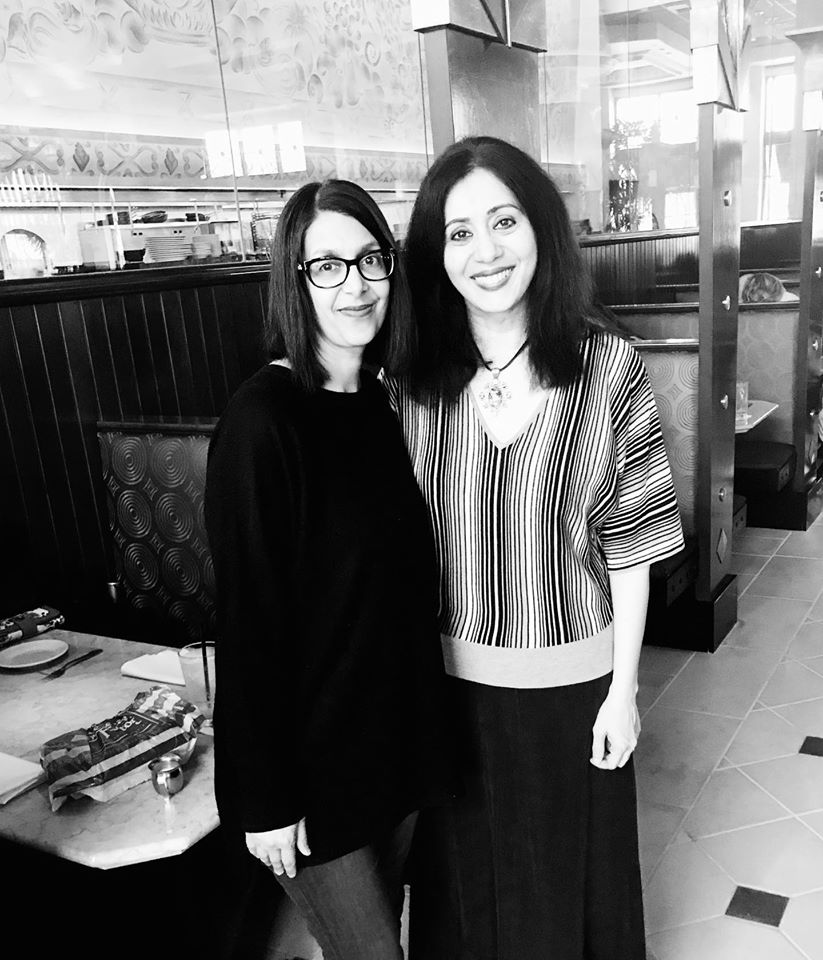
lunch with fazeelah
with the beautiful Fazeelah Chappell one of my first close friends here in #rochesterny
Bernie Sanders Believes in Mass Politics – Something the NYT Can’t Wrap Their Minds Around
if u want to go beyond the facile man vs woman binary, u might want to read this. also, capitalism is killing us.
Meagan Day: By all accounts, Warren wants to take measures to subordinate economic power to state power somewhat, while leaving the overall capitalist structure of the economy intact. To that end, she’s keen to implement and enforce strict regulations that will rein in some of the worst excesses of capitalism.
Sanders agrees with Warren on the need for rules and regulations in bringing economic power to heel. But there are some major differences between the two candidates. One is that, unlike Warren, Sanders doesn’t limit his goals to creating “markets with rules”: he’s more interested in taking the things people need out of capitalist markets altogether.
The other major difference is how they propose to curb economic power. Warren speaks mainly of harnessing state power through the use of expert planning and savvy negotiating. But Sanders, appearing to view this theory of change as implausible or naive, adds something else into the mix.
It’s clear from his rhetoric that Bernie believes the existing state is subservient to capital, that this is a problem, and that it will be difficult to make it behave otherwise. That’s why he insists on trying to tap into a powerful force outside the state that can bend it in the right direction, against its nature. To put it in Wright’s terms, Bernie proposes to use social power to compel state power to discipline economic power. That’s what all the rallies are intended to accomplish.
The recent questioning of Bernie Sanders by the New York Times editorial board revealed that they see no difference between right-wing populism and democratic socialism. But Bernie wants to mobilize people to discipline the power of big business, not scapegoat the oppressed. More here.
we have to do better
someone i care about broke my heart this morning. she’s a young woman in her mid thirties, divorced, with young kids. she lives with a boyfriend who seems to be abusive. she works at two jobs to make ends meet. she told me she makes $20,000 a year. she cannot afford to leave her boyfriend. her family doesn’t help. the tears began to flow as she shared all of this with me. how is one supposed to survive on $20,000? what kind of society would think that it’s ok to pay someone such a pittance? the inequality in our country, in our world, is nothing less than gross. those who have, are told they are entitled to it because they are better than others (smarter, more hardworking, more entrepreneurial) but in truth, they were just lucky at some point in their lives (mostly at birth) and might not have been able to hack it under different circumstances. everyone’s work is valuable. it’s what makes our community strong, stimulating, and simply functional. there is no justification for such disparities. this is just one story. there are many worse. we have to do better.