
First, if patriarchy within caste is understood as arising from institutionalised endogamy and if it is contingent on the desire to protect private property and the hegemony of the upper-castes, then we also know that there existed no material conditions for Dalit patriarchy to emerge. If you do argue that Dalit patriarchy exists, then what are the material or other conditions that existed among the Dalits (and the Bahujan at large) that gives rise to these kinds of specific patriarchies like Dalit patriarchy? They did not have power, nor land, or property. There were of course some individuals as exceptions who might have had access to property. However, on a larger societal scale, material conditions for emergence of Dalit patriarchy did not exist. More here.
Author: mara.ahmed
Where is the Art World Left?
During the Artists Space controversy (1979), they seem to have felt that white artists have a first amendment right to express their racism. They saw protest as an act of censorship of the artist’s right to express him- or herself. It did not matter to them that artist of color were “censored” out of the system altogether and could not express themselves on the same platform on the same issues as the white artists. Nor were they bothered that artists of color were excluded from defining themselves in the same arena although white artists could “define” them as subject matter in their work. The white feminists, on the other hand, seem to feel that their concerns are being sidetracked by too much concern for issues such as racism in the artworld. As one woman artist of color said to me, “they [the feminists] have engaged the artworld’s attention, and they fear that to divert to what they feel are not relevant issues would distract from their cause. They do not see it all coming from a common source.” More here.
Neelum Films – Films by Mara Ahmed
Dear friends, after a huge amount of work by Mike Boas and myself, I would like to introduce the updated website for Neelum Films. It includes information about ‘The Injured Body: A Film about Racism in America’ and gorgeous photographs taken by Erica Jae of the powerful women we interviewed. I will continue to transcribe those conversations, share quotes, and keep you posted on the film’s editing and post production. Pls visit us here and support our projects. Check out our new website here.
Solidarity Is Not a Market Exchange: An Interview with Robin D. G. Kelley
Robin D. G. Kelley: And my sister, Makani Themba—who’s an activist, longtime, she’s my older sister—she trained me and raised me. And she’s always looking for opportunities for dialogue, always looking for a way to wage critique that is open and loving, but still critique. Because the ?ip side of this story is what annoys me the most, and that is, whenever I’m giving a talk and people start snapping their ?ngers, you know, they do this thing now [snaps fast], I feel I must have said something wrong!
Because it’s not my job to con?rm what you already know. And that to me is the ?ip side of it. The idea that people want speakers or want to read things that con?rm what they know rather than challenge what they know. That’s where I think, if I have edges that show up, that’s what I’m most critical of. Because it’s tied to the opposite. The culture of ad hominem and the culture of hating: the ?ip side of that is con?rmation. Neither of them is dialectical. Hating is banishment. Con?rmation is nothing changes. They’re two sides of the same coin. We’re raised politically to think dialectically. Which is that we need to have that thesis/antithesis constantly. And you cannot separate them; they have to be together, because those contradictions are drivers, they’re not something to be afraid of.
[…] empathy also requires identifying with the person you’re empathizing with. And sometimes you only identify with those whom you recognize. That’s a problem because part of solidarity is the people you don’t recognize. The people who you don’t see yourself in. And we’re raised in this particular era of liberal multiculturalism to see ourselves in others. When in fact I tell my students, “Look, not only do you not see yourself in others, but if we’re talking about enslaved people in the eighteenth century, I’m sorry, none of y’all can know what that means.” We can begin to understand not by simply imposing our own selves but by stepping outside of ourselves and moving into different periods of history. Understanding the constraints and limitations of people’s lives that are not us, as opposed to those who are like us. The fallback is always, “Well, if it were me,” or, “I can see how other people feel,” as opposed to, “Let me step outside myself.”
[…] I’m much closer I think to Dr. King in this when he talks about what agape actually means. The constant struggle to create community. Constant struggle! You can’t stop ?ghting. And creating community means creating community with those you don’t like. And people who don’t like you. And trying to ?gure how to move forward to something better. Not to the point of, as King would put it, sentimental love. But a hard love, a hard love that’s in struggle. I can’t think of another path to go; it’s inconceivable to me. More here.
‘Many Indian trolls wrote me hate mails defending white supremacy
Priyamvada Gopal: What is interesting is that many Indian trolls and abusers wrote to me defending white supremacists, calling me a ‘shame’ on India and using not just misogynist slurs but deeply casteist ones. It confirmed my view that Hindu rightwingers and white supremacists have a lot in common: both, of course, fancy themselves Aryans. More here.
An open letter from Guantanamo Bay
one of obama’s campaign promises was that he would close guantanamo, america’s detention camp/torture center. more than a decade later, it’s still open. and there are still people there.
‘Three years ago, I was unanimously cleared for release by the six federal intelligence agencies charged with keeping the USA safe. They concluded I was “no threat to the U.S. or its coalition allies”—as I have said all along. But then, before I could be sent home to Morocco, Donald Trump was elected with a promise that there would be “no further releases from Gitmo”. The time since I was cleared has been the hardest. Before, I experienced the profound isolation of being held in solitary confinement for years, the fear of dying on hunger strike and the helplessness of being force-fed. But there is something uniquely painful about knowing your freedom lies in the hands of one man who will not let you go.’ More here.
The Left Remakes the World: Amna Akbar on Canceling Rent, Defunding Police & Where We Go from Here
Amna Akbar: I want to take a moment to unpack “cancel rent” and “defund the police,” which are two really important demands that organizers and social movements are making across the country. Police and private property are central, defining institutions of life in the United States. We know the centrality of police to local budgets now, and the immense power that they have and their sprawling scale, because it has been on spectacular display for the last two months, since Minneapolis police killed George Floyd.
But it might be worth taking a moment to talk about private property, which is also everywhere and structures our everyday lives, but is arguably a bit more subterranean in how it does. Private property is the basis of our legal regime. It’s a settler regime, a capitalist regime, a racial regime. It creates these relationships where some people own property and most people don’t. And if you don’t own property, you have to pay for it. This is pretty weird, if you think about it. We are human. We have physical bodies. We need space to exist, to sleep, to eat, to take care of one another. But we live in a society where you need to pay for space to live. The private property regime then creates a direct contradiction with meeting people’s needs.
And so, both police and private property are rooted in the histories of enslavement and conquest. They are not systems rooted in collective care and social provision. And it’s not as if we have the police over here and private property over there. These are fundamentally interconnected institutions that prop one another up. They are central to the stories, the structures and the relationships that sustain things as they are. And so it might be helpful to think for a moment about the connection between these institutions, because part of what I argued in the piece is kind of this radical imagination coming out of today’s social movements that’s telling interwoven stories about the world that we live in and the world that we must build. More here.
India’s settler colonialism in Kashmir is not starting now, eliminating the natives is a process long underway
‘Perhaps the most significant of all aspects of social, economic, and political life that settler colonialism attacks is memory. The project of memoricide seeks to erase any traces of heritage and culture of the natives to appropriate the history, belongingness, and lineages of resistance. In Palestine, this was sought to be achieved by changing the names of places and sites resulting in a struggle with regard to social memory and rootedness in the land. Koshur words have long been pronounced (and these pronunciations sought to be made default) in faux Hindi and English. Calling Islamb?d (the district south of Srinagar) by its name instead of “Anantnag,” as the Indian state would have you call it, has subjected people to beatings and abuse. Post de-operationalisation of Article 370, where Urdu used to be the official language there were suddenly concerns that it might not remain so. This belief was strengthened when the advisor to the governor said, “All special provisions have been thrown into the dustbin of history where they always belonged.”‘ More here.
On impasse and hypocrisy
Nazia Kazi: Houria Bouteldja’s book is a takedown of white supremacy in its cultural, economic, and political forms. Yet the white supremacy that Bouteldja demystifies is not an objective category but a relational one.
She herself is delicately positioned not as part of the global south, but above it. “To the third world,” she writes, “we are white.” Her “crime,” as she calls it, is buffered by “the IMF, NATO, multinationals, the banking system . . . Between me and my crime, there is my father’s sweat and salary, social welfare, paid leave, labor laws . . . my passport.” She, too, is complicit, then, “in the exploitation of the South.”
As such, her work serves as a challenge to the very conception of white supremacy, a rebuke to those who sloppily invoke the term “person of color” without attending to the nuances of global geopolitics or regional inequality. Whiteness and blackness only exist in their relation to one another and to processes of capitalist exploitation and imperialist violence.
[…] Bouteldja’s book caused a maelstrom because it was unapologetic, marked with none of the lilting softness demanded of us when we speak about race, marked with no quarter for white fragility nor concern for whom it might offend. She claims this crudeness as a very marker of her social position: “The dispossessed indigenous person is vulgar. The white dispossessor is refined.” What are civility, vulgarity, and manners in a world shaped enduringly by the brutality of empire? “Many genocides have been glorified around dinner tables adorned with forks and knives made from actual silver,” writes Steven Salaita, “without a single inappropriate speech act having occurred.”
Indeed, in an uneasy twist, Bouteldja’s decolonial stance means she will not even bother to salvage feminism. (Decolonial feminism, perhaps, but that too with reservations.) “Reproaching us for not being feminist is like reproaching the poor person for not eating caviar,” she says, for feminism “would always be contained within the framework of liberal democracies, founded on the idea of the quality of citizens, and in which white women obtained rights because of their own struggles but also thanks to the Imperial domination.” More here.
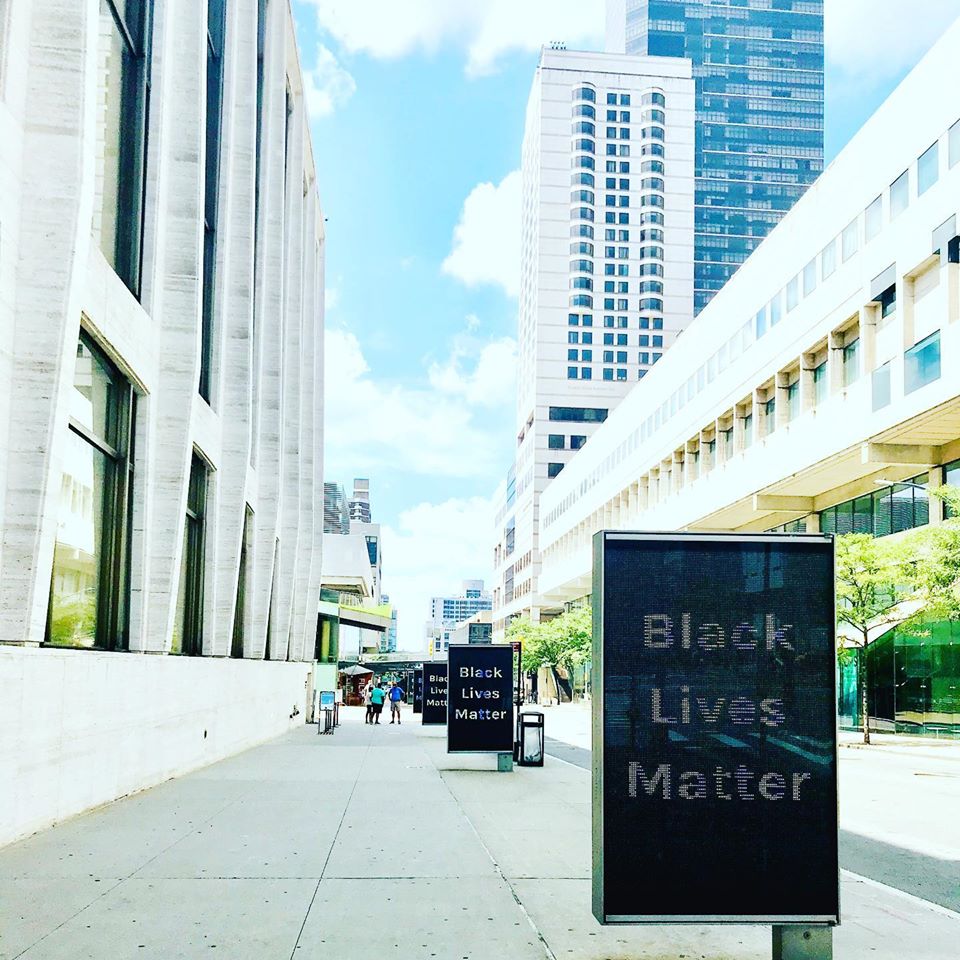
BLM in NYC
in new york looking for an apartment for my daughter and her friend. love this.
Polynesians steering by the stars met Native Americans long before Europeans arrived
‘By about 1200 C.E., Polynesians were masters of oceanic exploration, roaming 7000 kilometers across the Pacific Ocean in outrigger canoes. Guided by subtle changes of wind and waves, the paths of migrating birds, bursts of light from bioluminescent plankton, and the position of the stars, they reached and settled islands from New Zealand to Rapa Nui, or Easter Island, the closest Polynesian island to South America. So it’s natural to wonder: Did these world-class explorers make it the last 3800 kilometers to South America? A genomic study of more than 800 modern Polynesians and Native Americans suggests they did.‘ More here.
Not Every Radical Philosophy is Decolonial | Contending Modernities
Santiago Slabodsky: I invite my reader, therefore, to think of the revolutionary representation of radical continental philosophy as a colonially sanctioned dissent that universalizes a provincial difference while invisibilizing the underside of modernity. Coloniality not only monopolizes the only sanctioned path to universal redemption—in what Anibal Quijano calls evolutionism—but also selects its legitimate form of dissent. This is perhaps one of the most perdurable modern strategies of coloniality. In the now famous debate of Valladolid (1550–1551), conceived by critics as one of the most influential legitimizations of early modern racism, the imperial state appointed Euro-Christian theologian-philosophers to discuss “the nature” of Natives. In this discussion, Juan Ginés de Sepúlveda, retrieving Aristotle, offers one of the first modern formulations of biological racism and proposes to forcefully convert Natives into subservient Christians. Bartolomé de las Casas, enthroned as the radical and later liberationist alternative, develops one of the first formulations of cultural racism, insisting on Natives’ adaptability through conversion without physical force. If for the continental philosopher there is no possibility of thinking outside Europe, for the colonially appointed philosopher of religion there is no possibility of existence outside a totalizing Christian framework. More here.
The Injured Body: Greta Niu
Transcribing interviews for my new doc ‘The Injured Body’
Greta Aiyu Niu, came to Rochester as an academic, now Director of Grants at Planned Parenthood of Central and Western New York, lifelong teacher, reflects on micro-aggressions:
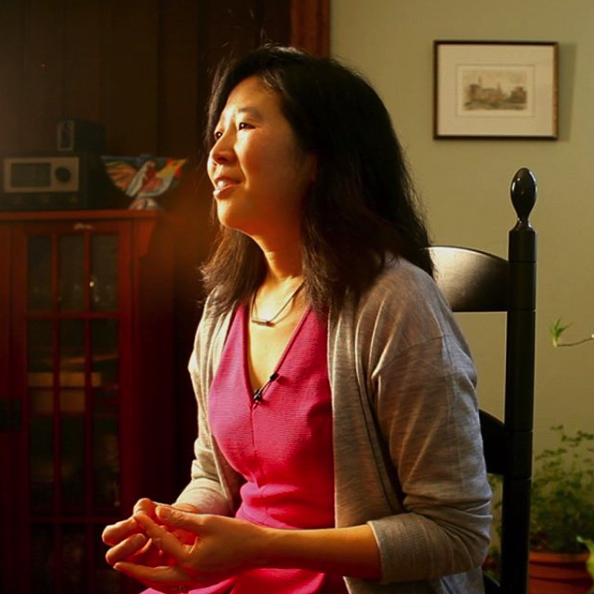
‘I just don’t want to lose sight of what makes up the micro-aggressions. So it is implicit biases around race or ethnicity or gender or gender expression or class or size or disability, those are the pieces that we’ve been fighting. And we’ve always been fighting against them. I don’t want people to think we’re done with that. Now all we have to deal with are these micro-aggressions. It’s a whole continuum of behaviors that are harmful, from a little poke to physical violence.’
.
#microaggressions #racism #womenofcolor #film #documentary#theinjuredbody #neelumfilms #microaggressionsareracism #microaggressionsarereal
eggplant bhajji
i don’t pretend to be a master chef (like Abeela Vaseem or Debora McDell Hernandez) but i have to say – i know how to cook eggplant. to any eggplant haters out there: i challenge u, try my eggplant bhajji and radically alter ur relationship with said vegetable forever!
The Injured Body: Lu Highsmith
Transcribing interviews for my new doc ‘The Injured Body’
Lu LutonyaRachel Highsmith is a poet, writer, and community activist. She is the founder and director of Roc Bottom Slam Team.
On how she processed racist micro aggressions she experienced in college:
‘As an 18 year old, my initial reaction was anger. I was really ticked off that they would say these things or even think these things. This was the late 80s, so it’s not like it was back in the 50s or 60s. I was very upset. I don’t know if it caused me to try to prove myself. I was on a mission to excel academically, culturally, creatively. It probably took a good 20 years for me to change my mindset. By my mid-30s, I was like, I’m just who I am.’
.
#microaggressions #racism #womenofcolor #film #documentary#microaggressionsareracism #theinjuredbody #neelumfilms
