
I wasn’t even aware of the American Indian Public Affairs Committee (AIPAC) and their problematic big-money politics here in the US. Pls sign this petition by the Alliance for a Secular and Democratic South Asia, which ‘denounces the impending display of economic and political power designed to belittle the people of Kashmir and India’s religious minorities by the Hindutva forces in the US’:
While the world grapples with the COVID-19 pandemic, the BJP-led government is forging ahead with its dangerous agenda of destroying the syncretic culture of India and compromising the Indian Constitution itself.
An outlandish celebration of the groundbreaking ceremony for the construction of Ram Janmabhoomi temple will be on display all day on August 5th in Times Square, NYC, with much extravagance and pomp and show. This temple was built on top of the Babri Mosque, destroyed by Hindutva-nationalist mobs in 1992. Thousands, mostly Muslims, were killed in consequent riots.
A section of the Indian diaspora who are transfixed by the BJP-led government have paid huge amounts of money to project the phrase “Jai Shri Ram” in both Hindi and English, portraits and videos of the Hindu deity Ram, 3D portraits of the temple’s design and architecture as well as pictures of Modi laying the foundation stone on several of the iconic Times Square LED screens. This exhortation of a mythical past is a diversion from the real economic and social marginalization of the vast majority of Indian people. The crass spectacle of Hindutva ideology also coincides – deliberately, no doubt – with the first anniversary of the abrogation of the constitutional guarantees of Kashmir’s special status.
More here.
Author: mara.ahmed
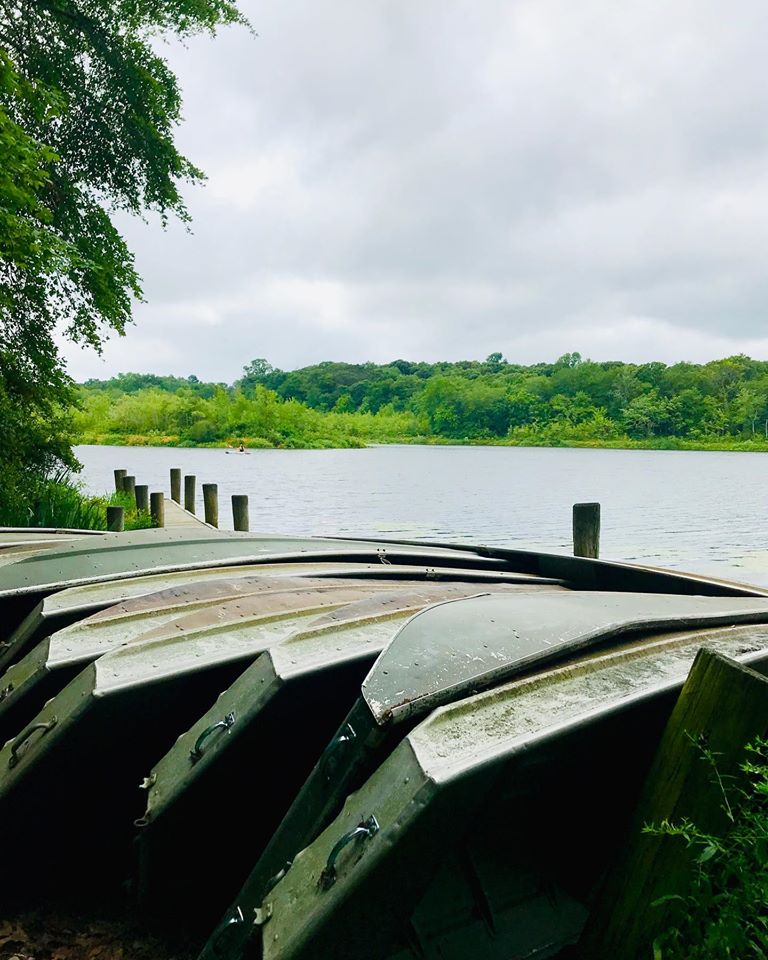
blydenburgh county park
it’s cloudy today with brief, super light showers. still hot and humid. we decided to explore blydenburgh county park where there is water, trails, and also camp grounds
#blydenburghcountypark #longisland #newyork #hotsummer #walkinthewoods

Hate crime in Rochester
Pls help in any way u can. A brutal hate crime was committed in Rochester yesterday. From Halima Aweis:
Yesterday my dear friend, and fellow organizer Samson Tequir was physically assaulted while traveling with my other dear friend Jahnisse Santiago on the streets of our very city in what was without QUESTION a hate crime. He’s been hospitalized, is scheduled for surgery and has the following injuries:
Concussion, corneal abrasion, partial vision loss, broken tooth, 4 facial fractures
He needs a lot of support right now and what we need is funds to keep him afloat. Please please please donate here:
Venmo @samsontequir
Cash app $samsontequir
Sizani Ngubane
Thank you dear Khairunnissa for asking me to participate in the B & W photo challenge, which started in Turkey as a campaign against femicide and violence against women. Without using the hashtag, I would love to celebrate kick-ass women of color from the global south.
This is Sizani Ngubane, a South African woman.
‘Sizani Ngubane is a veteran South African activist, who has dedicated her life to promoting gender equality and fought for women’s and indigenous rights.
She was once stabbed, slapped with a gun, and hit by a speeding car, but all these threats on her life did not deter her from working for women’s land rights.
Growing up during the 1950s, during the apartheid era, her father worked in Joburg as a migrant worker while her mother worked as a domestic worker.
She started helping her mother cater to her siblings at age six. At 10, her family was forcibly evicted and her father committed suicide three years later.
Ngubane recalls the painful memory of her mother losing her land ownership because she was a woman and had no son to hand it down to.
Her mother was earning little so Ngubane dropped out of school so she could get a job to ease their financial burdens. As a result, she never received any proper or formal education.
She commenced her human rights career as an activist with the ANC before becoming the Provincial Coordinator of the SA Women’s National Coalition in 1991. She steered research on rural women and contributed to the formulation of the Women’s Charter for Effective Equality in South Africa.
Her contribution was instrumental to build the section on rural and indigenous women of the Bill of Rights within the South African Constitution, adopted in 1996.
Along with three other women in 1990, Ngubane started an organization called the “Rural Women’s Movement” to help women who battled with land issues, women’s rights violations and more.
According to reports, Rural Women’s Movement is now a coalition of some 501 Community Based Organizations with a membership of approximately 50,000 women, working both at a grassroots, national and international level.’
Bushra al-Maqtari
Thank you dear Anjum for asking me to participate in the B & W photo challenge, which started in Turkey as a campaign against femicide and violence against women. Without using the hashtag, I would love to celebrate kick-ass women of color from the global south.
This is Bushra al-Maqtari, a Yemeni woman.
‘When the war broke out in Yemen five years ago bringing death, destruction and devastation in its wake, Bushra al-Maqtari refused to desert her beleaguered homeland.
An activist-writer and novelist from Taiz, al-Maqtari opted to stay back and travel across the length and breadth of Yemen to capture the trials and tribulations of her fellow countrymen, caught up in a war inflicted on them by two competing regional powers, hell bent on punching a hole in each other?s sphere of influence. She visited the families of war victims and chronicled the tragic stories of their nearest and dearest, who were either killed or maimed in brutal bombing, indiscriminate shelling and missile attacks.
In her book “What you left behind? Voices from a forgotten war-torn country”, published in Arabic by Beirut-based Riad El-Rayyes, al-Maqtari is less concerned with narrating the chronological facts and figures or the political undercurrents of the war; what bothers her instead are the civilian casualties. She makes the victims of the war, those who are bearing the brunt of it, the focus of the book.’
Masrat Zahra
Thank you dear Huma for asking me to participate in the B & W photo challenge, which started in Turkey as a campaign against femicide, violence against women, and the brutal murder of 27-year-old Pinar Gültekin. Without using the hashtag, I would love to celebrate kick-ass women of color from the global south.
This is Masrat Zahra, a Kashmiri woman.
‘Masrat Zahra is a freelance Kashmiri photojournalist. She focuses on stories about local communities and women. She won the 2020 Anja Niedringhaus Courage in Photojournalism award from International Women’s Media Foundation.
She was born in Hawal, Srinagar, and studied journalism at Central University of Kashmir. She photographs the Kashmir conflict and her work has appeared in The Washington Post, The New Humanitarian, TRT World, Al Jazeera, The Caravan, The Sun, News Arab and The World Weekly.
On 3 August 2019, before the clampdown in Jammu and Kashmir, she was asked to submit work for Journalists Under Fire, an exhibition in New York city. Due to a communications blackout that started on 5 August 2019 (imposed by the Indian government), this offer could not be fulfilled.
Zahra was booked under the Unlawful Activities (Prevention) Act by Jammu and Kashmir Police in April 2020 for Facebook posts that were deemed antinational.’
Khalida Jarrar
Thank you dear Fabeha for asking me to participate in the B & W photo challenge, which started in Turkey as a campaign against femicide, violence against women, and the brutal murder of 27-year-old Pinar Gültekin. Without using the hashtag, I would love to celebrate kick-ass women of color from the global south.
This is Khalida Jarrar, a Palestinian woman.
‘She is a member of the Popular Front for the Liberation of Palestine and the Palestinian Legislative Council. She is also the Palestinian representative on the Council of Europe and is currently head of the Prisoners Committee. She played a major role in Palestine’s application to join the International Criminal Court.
She has been arrested multiple times by Israeli authorities. Several of these arrests resulted in administrative detention without any charges being brought. She has also been charged and convicted of “incitement and involvement in terror” by an Israeli military court, and sentenced to 15 months in prison, of which she served 6, before being released after an international campaign on her behalf.
She is presently again being held in administrative detention, after being arrested at her home in Ramallah, in late October, 2019.’
it’s my brother’s birthday
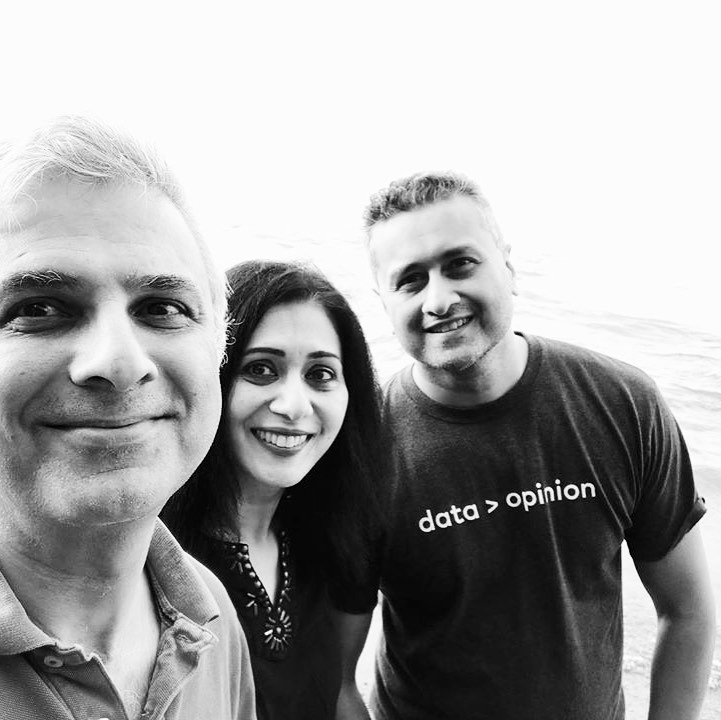
it’s my brother’s birthday today – one of my top humans in this world. happy birthday shamoun. love u!
Unlearning the Origins of Photography
Ariella Azoulay: Imagine that the origins of photography go back to 1492.
What could this mean? First and foremost, that we should unlearn the origins of photography as framed by those who were crowned its inventors and other private and state entrepreneurs, as well as its association with a technology that can be reduced to discrete devices held by individual operators. In The Civil Contract of Photography, I proposed to displace photography’s origins from the realms of technology to the body politic of users and reconstruct from its practices a potential history of photography. My attempt to reconfigure photography was still defined by the assumption that it can be accounted for as a domain apart, and hence situated in the early nineteenth century. In what I’m going to post here in the coming weeks, based on my forthcoming book Potential History: Unlearning Imperialism, I also question imperial temporality and spatiality and attempt to account for the world in which photography could emerge. It is not about questioning the exact moment of the inception of photography and proposing that it was this optical device or that chemical substance that made it possible. It is about questioning the political formations that made it possible to proclaim — and institutionalize the idea — that certain sets of practices used as part of large-scale campaigns of imperial violence are separate from this violence and unrelated to it, to an extent that they can even account for it from the outside. Let me frame the question directly: How do those who wrote different histories and theories of photography know that it was invented sometime in the early nineteenth century? They — we — received this knowledge from those invested in its promotion. Accounting for photography based on its promoters’ narratives is like accounting for imperial violence on the terms of those who exercised it, claiming that they had discovered a “new world.”
The invention of the New World and the invention of photography are not unrelated.
Suggesting that the origins of photography go back to 1492 is an attempt to undermine the imperial temporality that was imposed at that time, enabling people to believe, experience, and describe interconnected things as if they were separate, each defined by newness. To put it another way, for photography to emerge as a new technology in the late 1830s, the centrality of the imperial rights on which photography was predicated had to be ignored, denied, or sublimated, or in any case pushed into the background and not perceived as constitutive of its operation as a technology.
Foregrounding these rights requires a simultaneous exercise — unlearning the accepted origins of photography and those of the “new world,” their familiar spatial and temporal connotations, which even today are still closely associated with modernity and “the era of discoveries,” and attending instead to the configuration of imperial violence and its manifestation in rights. By imperial violence I refer to the entire enterprise of destroying the existing worlds of signs, activities, and social fabrics and replacing them with a “new world” of objects, classification, laws, technologies, and meanings. In this so-called “new world,” local populations and resources are perceived as problems or solutions, opportunities or obstacles, and are assigned specific roles, places, and functions. Through these processes, existing sets of rights that were integral to each world and inscribed in its material organization are destroyed to allow imperial rights to be imposed.
Among these rights are the right to destroy existing worlds, the right to manufacture a new world in their place, the rights over others whose worlds are destroyed together with the rights they enjoyed in their communities and the right to declare what is new and consequently what is obsolete. The attachment of the meaning “new” to whatever imperialism imposes is constitutive of imperial violence: it turns opposition to its actions, inventions, and the distribution of rights into a conservative, primitive, or hopeless “race against time” — i.e., progress — rather than as a race against imperialism.
The murder of five thousand Egyptians who struggled against Napoleon’s invasion of their sacred places and the looting of old treasures, which were to be “salvaged” and displayed in Napoleon’s new museum in Paris, is just one example of this. In the imperial histories of new technologies of visualization, both the resistance and the murder of these people are nonexistent, while the depictions of Egypt’s looted treasures, which were rendered in almost photographic detail, establish a benchmark, indicating what photography came to improve.
I’ll come back to this point in my fourth statement, when I’ll discuss the Great March of Return, the march against imperialism and the apparatuses that sought to render obsolete and bury the just claims of the marchers under the “statute of limitations,” negating their attempt to rewind the declaration of a “new” state in their homeland. More here.
Potential History: Unlearning Imperialism
Azoulay can be a challenging photographic theorist, largely because photographs for her are not strictly essential to the study of photography. This decoupling, which she outlined in her last book Civil Imagination, allows for photography to occasion political theory.2 Azoulay builds on this work here, particularly as she develops the camera’s shutter as an imperial operation that instantly “draws three dividing lines: in time (between a before and an after), in space (between who/what is in front of the camera and who/what is behind it), and in the body politic (between those who possess and operate such devices and appropriate and accumulate their product and those whose countenance, resources, or labor are extracted)” (5). To unlearn the operation of the imperial shutter is to insist on seeing past violences resound in the present, the distant “there” in the immediate “here,” and categories of “slave” or “refugee” as necropolitical corollaries of the “citizen.” Azoulay continues to be a provocative media theorist, suggesting that photography has its origins in 1492, the year of Columbus’s arrival in the Caribbean. In Potential History, however, the author considerably broadens her scope beyond photography to consider and critique art and its institutions: the work of art becomes “a synecdoche of imperial power”, the museum is founded upon looting, and the knowledge it generates is the basis of sustained violence. More here.
‘Free speech has never been freer’: Pankaj Mishra and Viet Thanh Nguyen in conversation
Pankaj Mishra: Black Lives Matter has forced a long overdue re-examination, from the perspectives of history’s long-term losers, of everything, not only entrenched political and economic inequities but also the imbalances of intellectual and artistic life. But there is a very long way to go. Your recent article on Spike Lee’s new film about African-American soldiers in Vietnam [Da 5 Bloods] was instructive in this regard. Here is a celebrated African American film-maker, the cinematic biographer of Malcolm X, succumbing to American cliches about the Vietnamese, and non-white foreigners in general.
I am reminded, too, of a prize-winning writer who recently claimed in a tweet that African Americans were “fighting for democracy abroad”. Contrast this casual euphemising of American violence in multiple countries to Muhammad Ali’s principled refusal to join the assault on Vietnam. Such naive Americanism is striking. In the past African American leaders and artists, from WEB Du Bois to Nina Simone, simply assumed solidarity with peoples elsewhere; they could see that the plights of the long-term victims of slave society and the societies despoiled by racial-ethnic supremacism were inseparably linked. What do you think happened to sunder that connection?
[…] I see the opposition to BLM’s demand for root-and-branch change as deeply entrenched, among liberals as well as white supremacists. Take, for instance, the insidious Harper’s letter, which complains about something usually called “cancel culture” in the midst of the most devastating global crisis since the second world war and massive protests against racism that you rightly call transformative.
You’ll remember that King identified the peddler of “moderation” as the bigger obstacle to social justice than white supremacists. The letter is an example of how elites rush to occupy the moral high ground when their authority as arbiters of intellectual and political life is challenged from both the left and the right. The letter was organised by Thomas Chatterton Williams, a writer much liked by self-proclaimed centrists and moderates as well as rightwingers for his belief that the “root problem in black life” in America is an “intangible smallness of mind” and “moral childishness and sheepish conformity”.
Shouting that “free speech” is in danger has become one way to promote yourself as a custodian of “classical liberalism”, and to accrue some moral and intellectual glamour. The problem for this rich, powerful, but deeply insecure minority is that free speech has never been freer for most people on this planet. More here.
Colonialism Made the Modern World. Let’s Remake It.
Adom Getachew: Colonialism, the protesters insist, did not just shape the global south. It made Europe and the modern world. Profits from the slave trade fueled the rise of port cities like Bristol, Liverpool and London while the Atlantic economy that slavery created helped to fuel the Industrial Revolution. King Leopold amassed a fortune of well over $1.1 billion in today’s dollars from Congo. His vision of the Royal Museum for Central Africa, which opened in 1910 soon after his death, reproduced a narrative of African backwardness while obscuring the violent exploitation of the Congolese.
By tearing down or defacing these statues, protesters burst open the national narrative and force a confrontation with the history of empire. This is a decolonization of the sensory world, the illusion that empire was somewhere else.
[…] Repair and redress is owed as much to Black Europeans as it is to former colonial states. It would mean treating Black Europeans, and all migrants from the colonized world, as equal participants in European society. And this form of reparation cannot be perceived as one-off transactions. Instead, it must be the basis of building an inclusive and egalitarian Europe.
This is no easy task and will not happen overnight. But we should remember that just 80 years ago, colonial rule appeared to be a stable and almost permanent feature of international politics. In just three decades, anticolonial nationalists had transformed the world’s map.
The struggle for racial equality in Europe is a fight for a truly postcolonial condition, and its creation is implied by each dethroned statue. If colonialism made the modern world, decolonization cannot be complete until the world — including Europe — is remade.
This is what real “decolonization” should look like. More here.
On dissent, building transversal solidarity and nurturing the will of the people: A conversation with Ammar Ali Jan
Ammar Ali Jan is an academic and political activist who was recently charged with sedition by the Pakistani state and fired from his job at FC College in Lahore. We seem to be experiencing a moment worldwide where people’s movements are coming together to challenge the nation state and develop a new language capable of articulating a future of their own choosing. It’s also a time of terrible state violence. So grateful for this voice from Pakistan.
Ammar Ali Jan: The sedition law was a very strange law brought by the British when this foreign entity that was ruling over India was deciding who, among Indians, was loyal or disloyal to India. This meant that anybody who was challenging the Raj, challenging the White Man’s rule, challenging the British, was deemed to be a seditious figure.
Interestingly, all major nationalist figures in colonial India at some point had a sedition charge against them. So Tilak had it, Gandhi had it, Abul Kalam Azad, Bhagat Singh and then Jinnah was a lawyer in sedition cases. This is something that went beyond the communal and regional divide. Anybody who opposed the system was declared seditious; by the 1930s-40s it became clear that the vast majority of India was seditious and the British had to leave.
It is absolutely horrifying that both India and Pakistan have maintained this colonial law. It is meant to suppress the people. During the colonial era it was viewed as the most odious of all the laws that the British had made and its continuations means that there is a continuation in terms of the logic of governance between the colonial and the postcolonial State.
The postcolonial elites deemed it necessary to maintain some of the weapons that the British had. They wanted to inherit these weapons in order to ensure that the mass movements or the popular demands from below could be disciplined and its increasing use over the last few years, both in India and Pakistan, shows that there is a very real crisis emerging for both these states.
They are unable to respond to the needs of the public – the economic needs, the needs for security, for housing, for health. Much of the infrastructure has collapsed. Much of the ideological basis for both India and Pakistan has collapsed. New movements are emerging and today both Indian and Pakistan do not have a language to understand what these new movements mean. The sedition law is not only a symptom of the weakness of these states. It is also a symptom of their inability to even comprehend the crises that they are confronted by. They simply call opponents seditious, RAW agents [in Pakistan], in India it is ISI [Inter-Services Intelligence] agents or NGOs [Non-Governmental Organizations]. This entire vocabulary is made by these states against their opponents and none of these words are adequate in explaining what exactly is happening. That is where the paranoia of the State stems from. More here.
Homeland Security Was Destined to Become a Secret Police Force
Sana Saeed:
‘Muslims are still rotting in jails for being a part of charities the government didn’t like. Muslims are rotting in jails after being entrapped. Muslims are rotting in jails for having the wrong beliefs and searching the wrong things online. Who did that?
The national security apparatus being used against white civilians is the same one that’s been used against black and brown civilians for decades. Ignorance isn’t an excuse when this is our history. Our recent history.‘
This is a government agency built on fear and intended to engender fear. More here.
AOC’s speech on misogyny and feminist solidarity
AOC’s speech on widespread, normalized misogyny is masterful. I’m not surprised. She’s one of the smartest people in American politics. The fact that she’s a Brown woman, a Latina, deepens the dehumanization and othering that men like Ted Yoho feel entitled to articulate and enact. The fact that she had been lifting the voices of the poor and unemployed in her district also comes into play. As Ilhan Omar pointed out, when you challenge power, it will inevitably strike back.
Without taking anything away from AOC’s eloquence, it strikes me how the Left’s support for another congresswoman of color was less united or clear-cut. When Ilhan Omar spoke up about money in politics and Palestinian human rights, she was attacked with extraordinary violence. Republican George Buck accused her of working for Qatar and recommended that “we should hang these traitors where they stand.” The president didn’t just tell her to go home, he made up stories about her partying on 9/11. There were calls to expel her from Congress and even “put a bullet in her skull.”
Yet so many on the Left felt divided/confused/reticent about taking a stand against misogyny. It seems like advocating broadly for women is justifiable but advocating for Palestinians (including Palestinian women) is controversial, vulgar. It reminds me of Houria Boutelja’s book “Whites, Jews, and Us” which so offended white sensibilities. Nazia Kazi explicates how Boutelja ‘claims this crudeness as a very marker of her social position: “The dispossessed indigenous person is vulgar. The white dispossessor is refined.” What are civility, vulgarity, and manners in a world shaped enduringly by the brutality of empire?,’ she asks.
Ilhan Omar seems to occupy a similar position. She’s a Black, hijab-wearing Muslim woman, a refugee, a self-assured voice in Congress. She provokes powerful structures on many levels: racism, Islamophobia, misogyny, anti-immigration xenophobia and white nationalism. Zack Beauchamp wrote pointedly on Twitter that dismissing a minority community’s concerns as a ‘smear’ was not ‘a great look.’ Yet here we were on much of the Left, happy to throw her to the wolves.
When I spoke at the Rochester rally in support of the Women’s March in Washington, DC, in 2017, I tried to expand the definition of feminism. I reminded all my sisters that we must continue to support one another, march together shoulder to shoulder, but that we must also be cognizant of and respect our differences. Rather than be maternal towards Black and Brown women, we must fight imperial wars and racist machinations here at home, and meet them where they want to meet, on their own terms. Robin D. G. Kelley explains how solidarity is being able to extend the ‘hard love’ MLK spoke of, across differences, to people we don’t recognize ourselves in.
That is true solidarity, or true sisterhood if you will. It’s hard work.