“The Man-Moth” by Elizabeth Bishop

Here, above,
cracks in the buildings are filled with battered moonlight.
The whole shadow of Man is only as big as his hat.
It lies at his feet like a circle for a doll to stand on,
and he makes an inverted pin, the point magnetized to the moon.
He does not see the moon; he observes only her vast properties,
feeling the queer light on his hands, neither warm nor cold,
of a temperature impossible to record in thermometers.

But when the Man-Moth
pays his rare, although occasional, visits to the surface,
the moon looks rather different to him. He emerges
from an opening under the edge of one of the sidewalks
and nervously begins to scale the faces of the buildings.
He thinks the moon is a small hole at the top of the sky,
proving the sky quite useless for protection.
He trembles, but must investigate as high as he can climb.

Up the façades,
his shadow dragging like a photographer’s cloth behind him
he climbs fearfully, thinking that this time he will manage
to push his small head through that round clean opening
and be forced through, as from a tube, in black scrolls on the light.
(Man, standing below him, has no such illusions.)
But what the Man-Moth fears most he must do, although
he fails, of course, and falls back scared but quite unhurt.

Then he returns
to the pale subways of cement he calls his home. He flits,
he flutters, and cannot get aboard the silent trains
fast enough to suit him. The doors close swiftly.
The Man-Moth always seats himself facing the wrong way
and the train starts at once at its full, terrible speed,
without a shift in gears or a gradation of any sort.
He cannot tell the rate at which he travels backwards.

Each night he must
be carried through artificial tunnels and dream recurrent dreams.
Just as the ties recur beneath his train, these underlie
his rushing brain. He does not dare look out the window,
for the third rail, the unbroken draught of poison,
runs there beside him. He regards it as a disease
he has inherited the susceptibility to. He has to keep
his hands in his pockets, as others must wear mufflers.

If you catch him,
hold up a flashlight to his eye. It’s all dark pupil,
an entire night itself, whose haired horizon tightens
as he stares back, and closes up the eye. Then from the lids
one tear, his only possession, like the bee’s sting, slips.
Slyly he palms it, and if you’re not paying attention
he’ll swallow it. However, if you watch, he’ll hand it over,
cool as from underground springs and pure enough to drink.
“Nothing but Death” by Pablo Neruda

There are cemeteries that are lonely,
graves full of bones that do not make a sound,
the heart moving through a tunnel,
in it darkness, darkness, darkness,
like a shipwreck we die going into ourselves,
as though we were drowning inside our hearts,
as though we lived falling out of the skin into the soul.

And there are corpses,
feet made of cold and sticky clay,
death is inside the bones,
like a barking where there are no dogs,
coming out from bells somewhere, from graves somewhere,
growing in the damp air like tears of rain.

Sometimes I see alone
coffins under sail,
embarking with the pale dead, with women that have dead hair,
with bakers who are as white as angels,
and pensive young girls married to notary publics,
caskets sailing up the vertical river of the dead,
the river of dark purple,
moving upstream with sails filled out by the sound of death,
filled by the sound of death which is silence.

Death arrives among all that sound
like a shoe with no foot in it, like a suit with no man in it,
comes and knocks, using a ring with no stone in it, with no
finger in it,
comes and shouts with no mouth, with no tongue, with no
throat.
Nevertheless its steps can be heard
and its clothing makes a hushed sound, like a tree.

I’m not sure, I understand only a little, I can hardly see,
but it seems to me that its singing has the color of damp violets,
of violets that are at home in the earth,
because the face of death is green,
and the look death gives is green,
with the penetrating dampness of a violet leaf
and the somber color of embittered winter.

But death also goes through the world dressed as a broom,
lapping the floor, looking for dead bodies,
death is inside the broom,
the broom is the tongue of death looking for corpses,
it is the needle of death looking for thread.

Death is inside the folding cots:
it spends its life sleeping on the slow mattresses,
in the black blankets, and suddenly breathes out:
it blows out a mournful sound that swells the sheets,
and the beds go sailing toward a port
where death is waiting, dressed like an admiral.

Translated by Robert Bly

Wangechi Mutu’s Backlash Blues

Backlash Blues: Painted on mylar, Wangechi Mutu’s Backlash Blues conveys an otherworldly quality: the paint and ink suspends on the plasticy vellum-like surface with an unnatural luminosity. Using a variety of techniques from airbrush to stencilling, controlled spills, and detailed brushwork, Mutu’s image poses as a composite of gesture; collaged photographic elements merge seamlessly into the painterly aesthetic.

jeremy scahill on bill moyers journal

“If the United States, as President Obama says, doesn’t want a permanent presence in Afghanistan, why allocate a billion dollars to build this fortress like embassy, similar to the one in Baghdad, in Islamabad, Pakistan? Another one in Peshawar. Having an increase in mercenary forces. Expanding the US military presence there.” JEREMY SCAHILL

this interview provides amazing insight into what is going on right now.

for example, did the bombing in peshawar have anything to do with the fact that the u.s. govt was in negotiations with the hotel’s owners to either purchase or sign a long-term lease to the facility to house a new american consulate in peshawar?

watch this must-see interview!

“Don’t Ask Me for That Love Again” by Faiz Ahmed Faiz

About Faiz Ahmed Faiz (by Simon Korner)

Just as the poetry of Pablo Neruda is massively popular with ordinary Chileans – who regard him as their national poet – so Faiz Ahmed Faiz is loved by millions of Pakistanis, who know his poems by heart. His funeral in 1984 was a day of mourning for the whole country. Many Faiz poems have been set to music and are still widely sung.

Faiz, a Communist like Neruda, was born in British India in 1911, the son of a lawyer. He joined the newly formed Progressive Writers’ Movement in the 1930s, served in the Indian Army during the Second World War and became a Lieutenant Colonel. After Partition he moved to Pakistan, where he became editor of the Pakistan Times, an English-language daily. He also worked as managing editor of the Urdu daily Imroz, and was actively involved in organising trade unions.

In 1951 Faiz was accused of plotting a coup with a group of Pakistani army officers and, after four years on death row, was released in 1955 after worldwide pressure from such stars as Paul Robeson. In 1962 he was awarded the Lenin Peace Prize by the Soviet Union. He went into exile in Moscow, London and Beirut, eventually returning to Pakistan.

Much of his poetry follows the conventions of ghazal, the classical form of traditional Urdu poetry, which has been influenced by Persian literature. But Faiz’s work revolutionises the conventions, extending the meanings of many traditional terms. For instance, Faiz often addresses poems to his “beloved”, a central word in the ghazal vocabulary. In his hands, it refers to both a person and also to the people as a whole, even to revolution. He sees the individual as existing within a wider context: “The self of a human being, despite all its loves, troubles, joys and pains, is a tiny, limited and humble thing.”

His most famous poem Don’t Ask Me for That Love Again, which is not in the strict ghazal form, explains why he can no longer cocoon himself inside romantic love.

DON’T ASK ME FOR THAT LOVE AGAIN

That which then was ours, my love,

don’t ask me for that love again.

The world then was gold, burnished with light –

and only because of you. That’s what I had believed.

How could one weep for sorrows other than yours?

How could one have any sorrow but the one you gave?

So what were these protests, these rumours of injustice?

A glimpse of your face was evidence of springtime.

The sky, whenever I looked, was nothing but your eyes.

If you’d fall into my arms, Fate would be helpless.

All this I’d thought, all this I’d believed.

But there were other sorrows, comforts other than love.

The rich had cast their spell on history:

dark centuries had been embroidered on brocades and silks.

Bitter threads began to unravel before me

as I went into alleys and in open markets

saw bodies plastered with ash, bathed in blood.

I saw them sold and bought, again and again.

This too deserves attention. I can’t help but look back

when I return from those alleys – what should one do?

And you are still so ravishing – what should I do?

There are other sorrows in this world,

comforts other than love.

Don’t ask me, my love, for that love again.

(Translated from Urdu by Agha Shahid Ali)

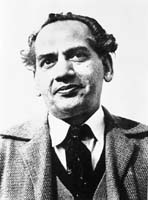
Faiz Ahmed Faiz

“Point by Point” by Qurratul-Ayn Tahirih

If I met you face to face, I
would retrace—erase!—my heartbreak,
pain by pain,
ache by ache,
word by word,
point by point.

In search of you—just your face!—I
roam through the streets lost in disgrace,
house to house,
lane to lane,
place to place,
door to door.

My heart hopeless—broken, crushed!—I
heard it pound, till blood gushed from me,
fountain by fountain,
stream by stream,
river by river,
sea by sea.

The garden of your lips—your cheeks!—
your perfumed hair, I wander there,
bloom to bloom,
rose to rose,
petal to petal,
scent to scent.

Your eyebrow—your eye!—and the mole
on your face, somehow they tie me,
trait to trait,
kindness to kindness,
passion to passion,
love to love.

While I grieve, with love—your love!—I
will reweave the fabric of my soul,
stitch by stitch,
thread by thread,
warp by warp,
woof by woof.

Last, I—Táhirih—searched my heart, I
looked line by line. What did I find?
You and you,
you and you,
you and you.

persian miniature - seated princess

what i would have obama do

I. DOMESTIC POLICY:

1. habeas corpus which protects against unlawful and indefinite imprisonment must be reinstituted. this is not debatable. no groundwork is necessary to prepare the american public ever so gently to dump the military commissions act. if we don’t act urgently to protect our constitutional rights we might lose them forever. the stripping away of habeas corpus is unconstitutional, against the rule of law and opposed to american values.

to illustrate the concept of indefinite detention as it exists today (and we are not just talking about detainees held in guantanamo, we are also talking about americans being held on american soil, for years, sometimes in solitary confinement, without the hope of a trial), i am attaching a video. it contrasts obama’s speech in cairo with real life here in the u.s. i hope u will watch it.

so far obama’s reaction has been to change the term “indefinite detention” to “prolonged detention” which means nothing. for a straightforward understanding of what obama has proposed on the subject of habeas corpus, i am attaching another video.

u know, pakistani lawyers, with the support of the pakistani public, were able to stand up to a u.s. backed military dictator and demand the restoration of the constitution. inspite of imprisonment and torture, they were successful. they even got the chief justice reinstated. as an american citizen, is it too much to ask that we demand the same from the man we elected president, without any further delays or new legal “regimes”?

2. dealing with the patriot act and its vile effects on american civil liberties must be a priority. as a candidate obama emphasized government transparency and accountability. however, as president he dismissed an investigation into the national security agency’s wiretapping of american citizens. the reason was “harm to national security” (same argument as bush) but obama went further and made the u.s. govt immune from suit under ANY federal statute in cases of illegal spying. this sharp curtailment of our civil liberties needs to be reversed. it does not require a slow and gradual shift in paradigm to give people back rights which are provided by the constitution.

3. healthcare reform was based on two important premises: (1) a mandate for all americans to obtain health insurance (that’s the only way to lower cost, just like we do with auto insurance) and (2) a public health insurance option. people r not even talking about the mandate anymore – i guess we’ve already lost on that. if we give up on the govt healthcare option, we will have achieved absolutely nothing!

4. torture: i am tired of talking about this one. all i can say to those who say we must move on, look to the future, forgive and forget – without some accounting of what happened we will not be able to move forward. without truth, there can be no reconciliation.

there is obviously much more on the domestic front – the economy, the environment, our energy policy, education, etc. i elaborate on the first 3 because w/o those rights we will be too scared, too sick or too detained to fight for anything else.

II. FOREIGN POLICY:

1. my first concern is obama’s escalation of the war in afghanistan. as a strong proponent of satyagrhaha u will share my deep concern for the use of violence to try and contain violence. it is a ridiculous idea and i expect a man of obama’s intelligence to understand that. if we had a longer collective memory, we would recognize the repetition of the exact same cycle over and over again. for example, if we go back to the vietnam war we will see that the same failed strategies used to fight a counterinsurgency there are now at work in pakistan:

(1) military war combined with a war to “win the hearts and minds” of the people,
(2) use of air raids to force villagers to move away from guerilla areas into america-friendly south vietnamese cities (in pakistan, up to 3 million villagers have been displaced from taliban-controlled swat, many of them have moved in urban slums),
(3) using the vietnamese refugee generation to destroy villages and cut down the vietcong recruiting base, thereby creating enormous resentment (in pakistan, the army has been put in the impossible position of fighting its own civilians, with the result that retributive terrorist attacks have intensified in urban areas),
(4) relying on intelligence provided by american political scientists who have absolutely no understanding of the people, history and culture of countries very different from their own. (graham greene’s “the quiet american” says everything there is to be said on this subject).

covert military support of the mujahideen came back to haunt us on 9/11. using the invasion of kuwait as an excuse to install our military in saudi arabia, after the first gulf war, didn’t help either. the more violence we put into the system, the more violence we will reap. extremism doesn’t exist in a vacuum. it is not incomprehensible evil. there is always some context.

the american occupation of afghanistan should end as soon as possible. it is a joke to call it a “legit” war. american presence is only wreaking more havoc and it will come to haunt us at some point. there is no intelligent or humane reason to invest in war. we need to get out now.

2. stopping further israeli settlements cannot achieve a two-state solution in the middle east. the palestinians live on tiny bits and pieces of land in gaza and the west bank. those areas are not large or contiguous enough to form a state. but the most urgent need is for food and medicine, something that obama does not even mention. the blockades must be lifted at once to allow humanitarian aid to enter gaza. this is not a complex, long standing, intractable political dispute – we are talking about food, medicine and housing which is being wilfully blocked.

there is a lot more but i think i will end here.

Enduring Jailings and Attacks, Dissident Ayman Nour’s Ordeal Exemplifies US-Ignored Egyptian Repress

President Obama came to Cairo amidst a massive security crackdown and heaping praise on Egyptian President Hosni Mubarak, whom he called “a stalwart ally” and a “force for stability and good in the region.” We hear from former presidential candidate Ayman Nour, one of Egypt’s best-known dissidents and the chairman of the Al-Ghad Party. Nour was sentenced to five years in prison in December 2005 and recently injured in an attack he says is linked to elements of Mubarak’s ruling party. Democracy Now! producer Anjali Kamat spoke to Nour in Cairo earlier this year. Watch video.