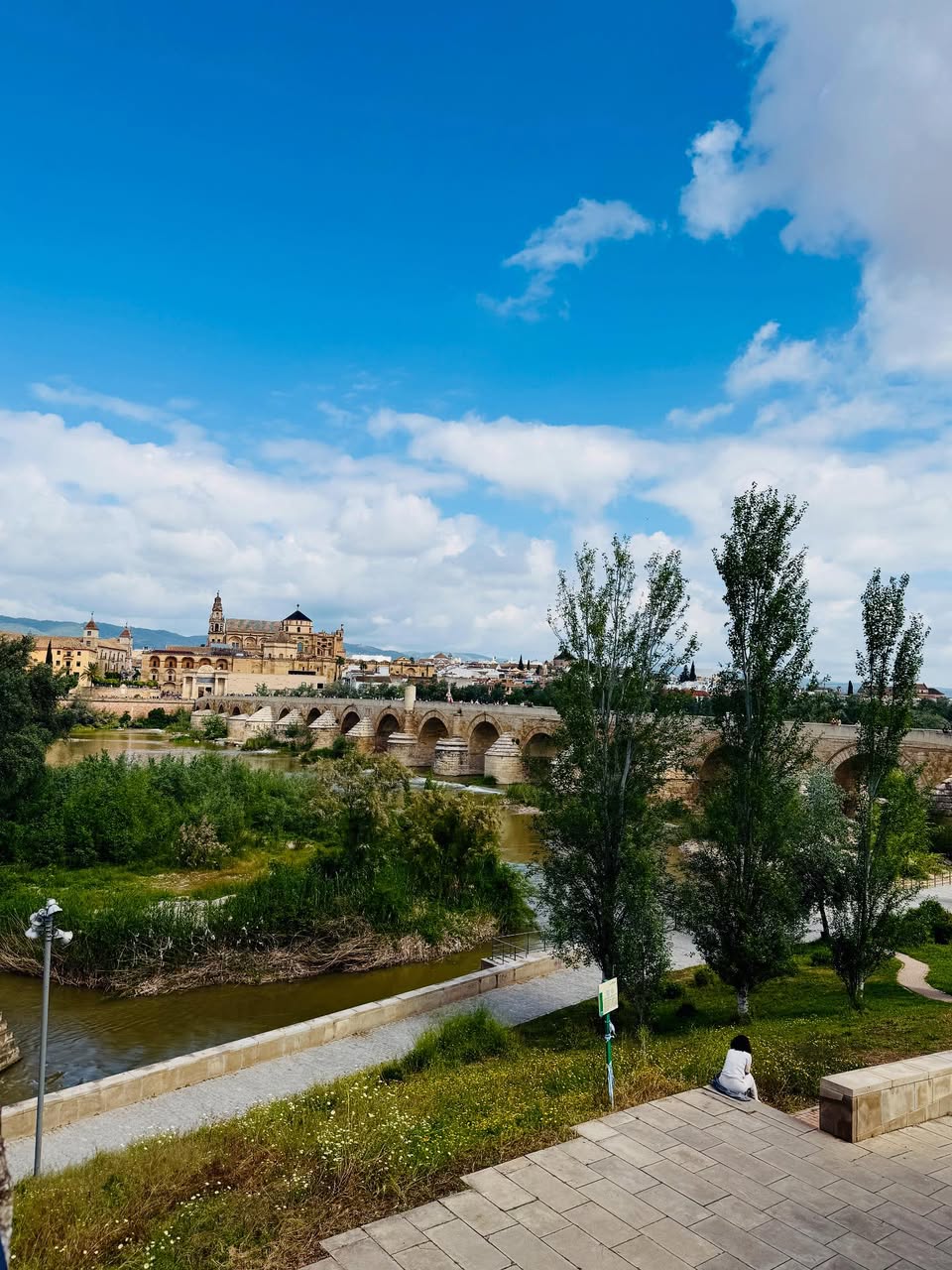
may 6th: as we approached cordoba and i caught sight of it in the distance, across the roman bridge, i felt immense emotion. if i could have chosen a time to have lived on this planet, it would have been during the convivencia in al-andalus (islamic spain) sometime between the 8th and 15th centuries. if u want to learn more, i strongly recommend ‘culture in the time of tolerance: al-andalus as a model for our time’ by the brilliant scholar maria rosa menocal. i loved her work so much that i invited her to come to rochester and speak but she was already ill by then and couldn’t travel anymore
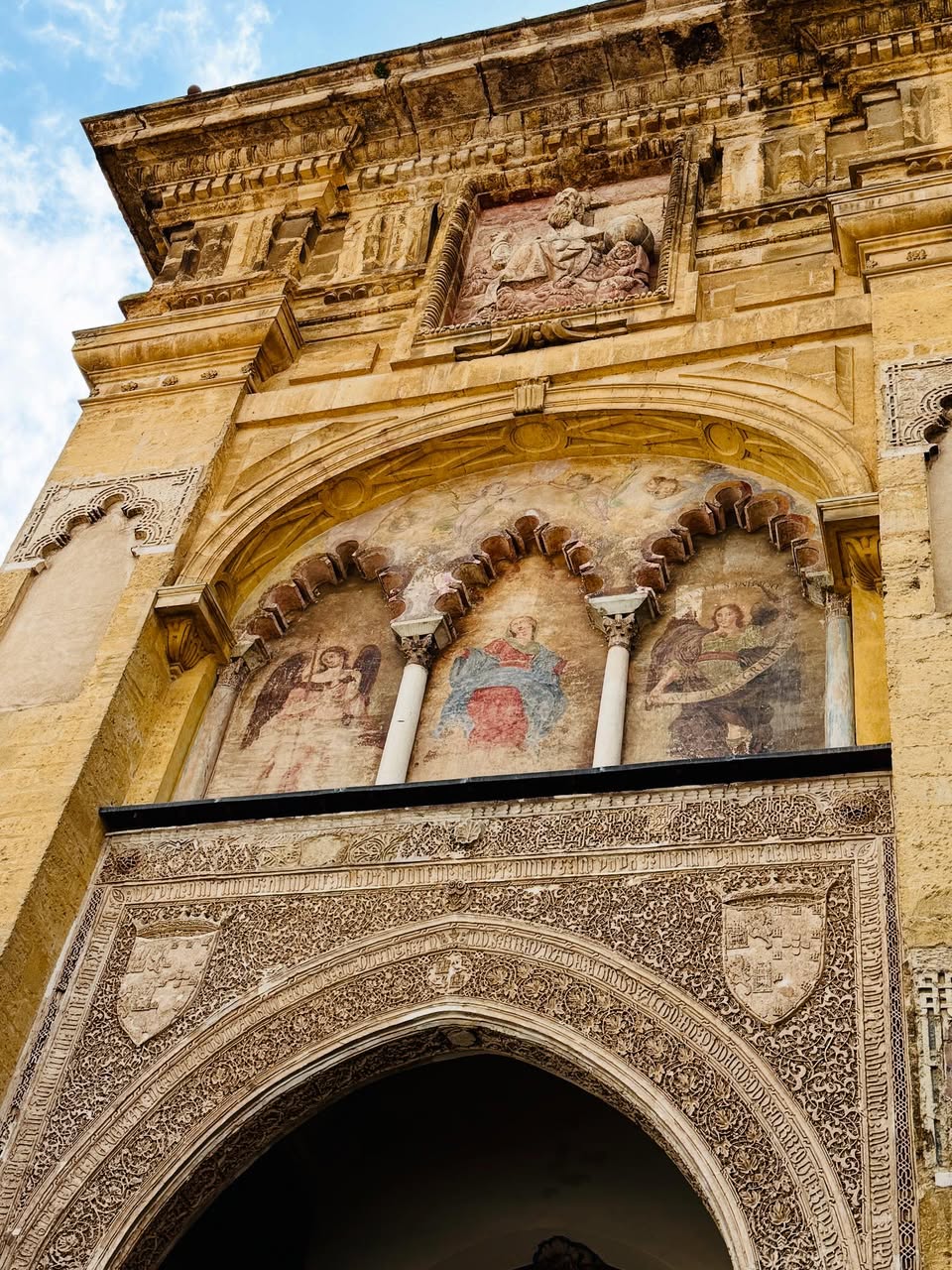
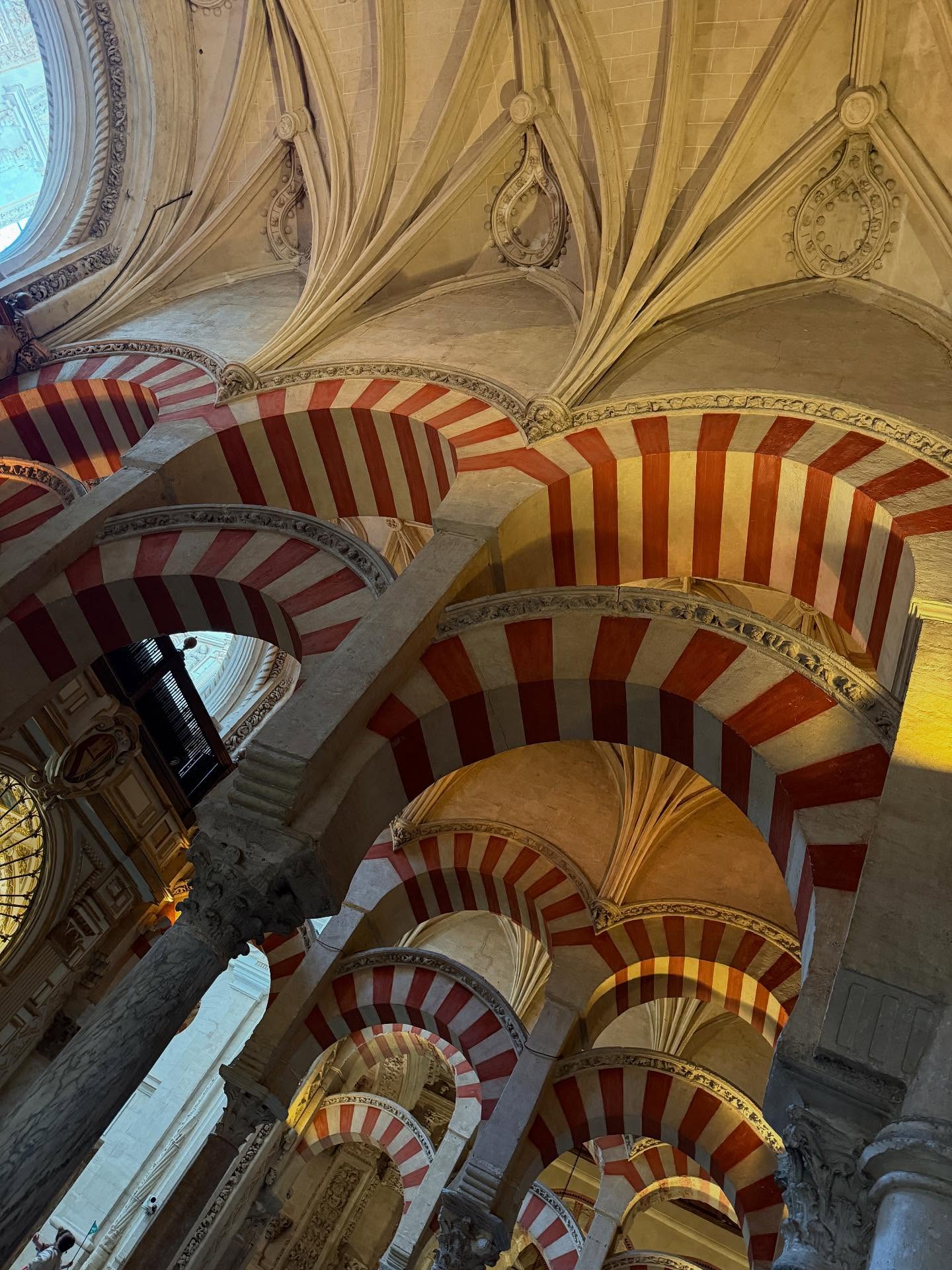
from mohamed al-gafequi (trained in cordoba and baghdad who performed the first cataract surgery in the 12th century), to the incomparable moses maimonides (jewish philosopher, jurist and physician), to the cordoba mosque (which could accommodate 30,000 people) with its double arches, alternating brick and limestone (for added stability), unique columns made of recycled materials, and beautiful mihrab (the mezquita was converted into a cathedral after the reconquista), cordoba is mesmerizing
ok, so one of my pet peeves about how white people talk about al-andalus (and a great example of deleting context in order to create a bit of propaganda) is the reservation about religious coexistence when religious minorities (jews and christians) had to pay a tax known as the jizya. what is never mentioned is that muslims had to pay zakat (a heavier tax it seems). since zakat is an islamic tax, it could not be levied on non-muslims. hence the jizya, which also exempted non-muslim citizens from serving in the military. so yes, religious minorities had to pay some kind of tax as citizens of the state. as non-christian minorities of the US we are also required to pay federal, state and local taxes and no one uses that to disparage ‘religious coexistence’