
celebrating eid with wonderful friends and family in toronto. with my daughter near artisan market on queen street.
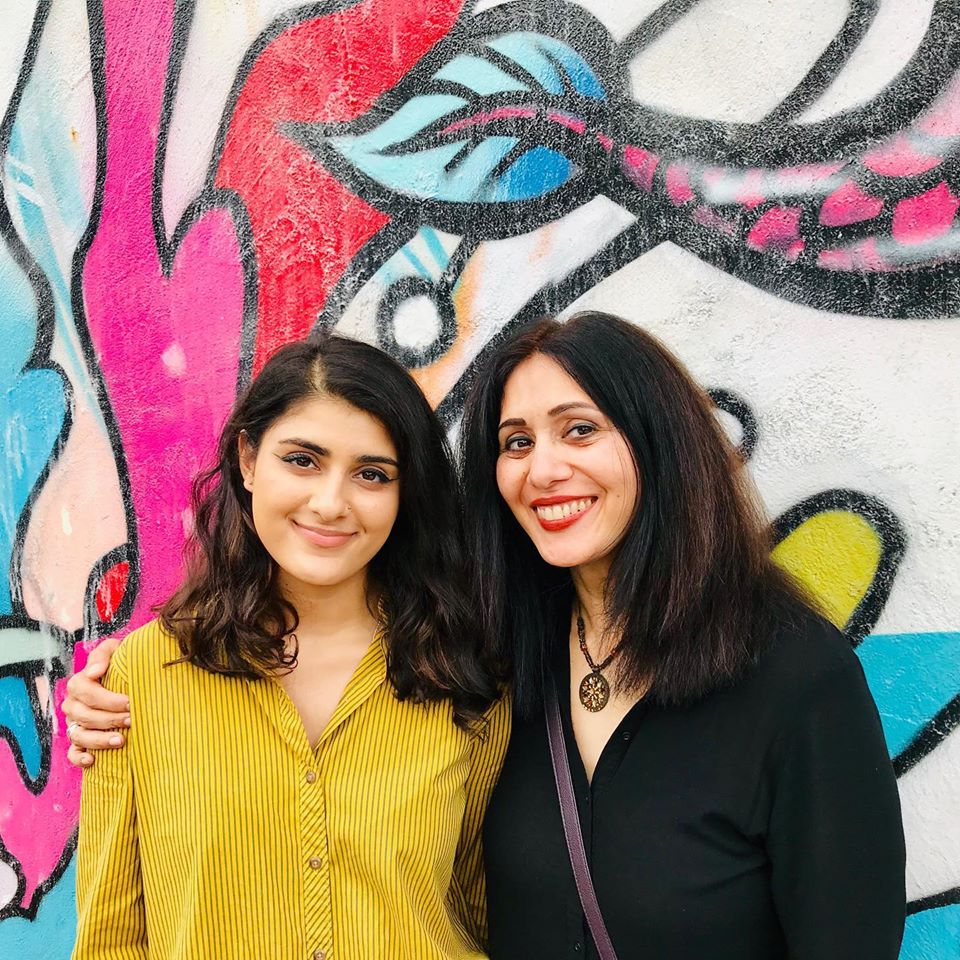
celebrating eid with wonderful friends and family in toronto. with my daughter near artisan market on queen street.
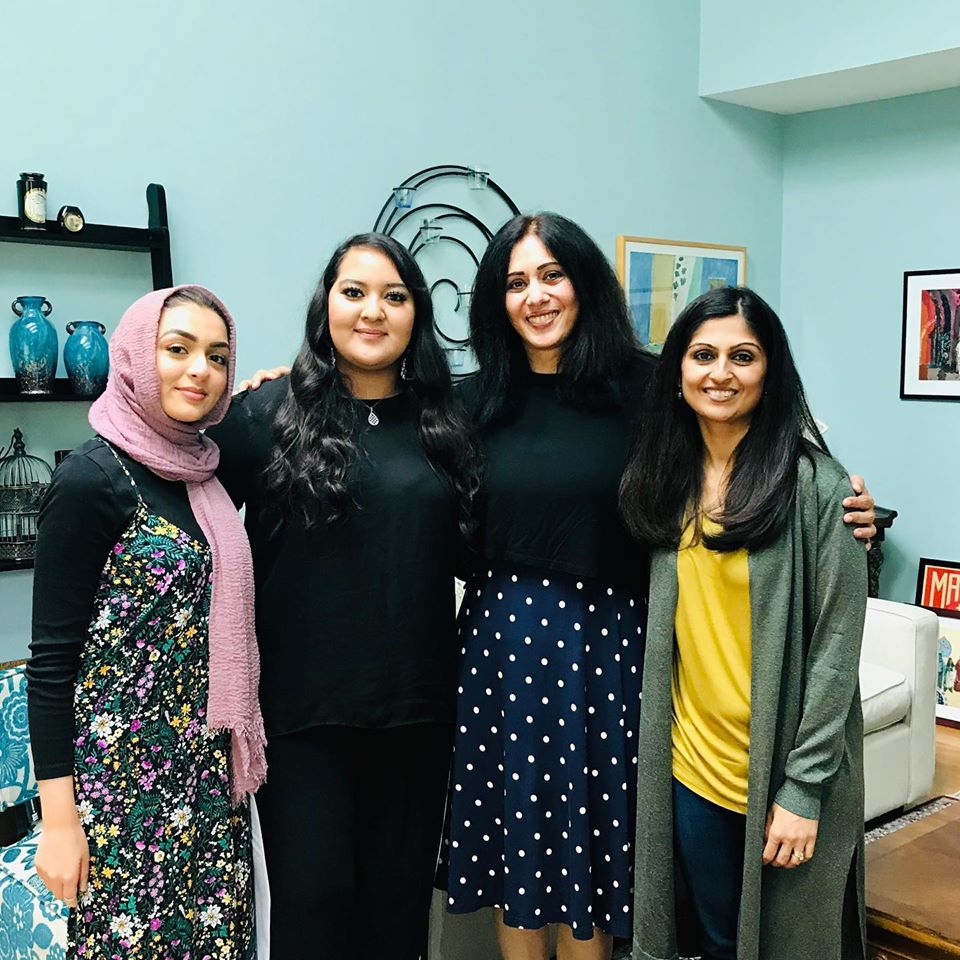
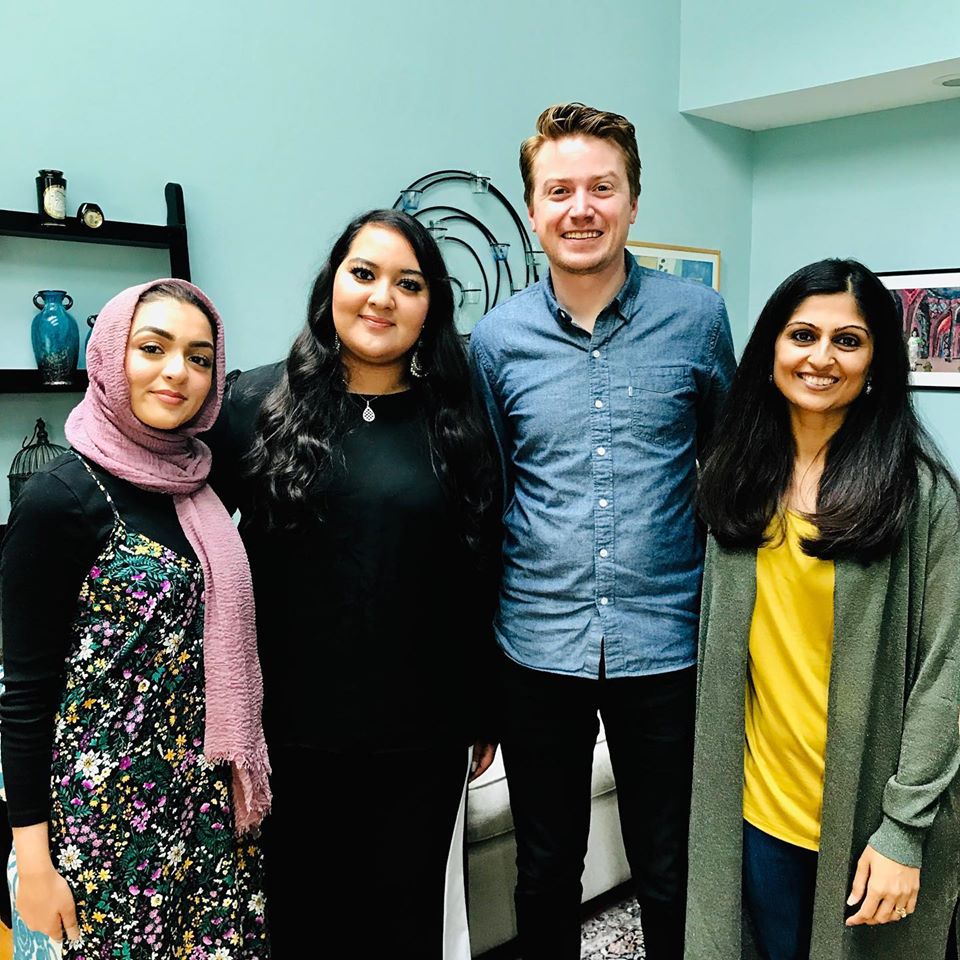
fantastic shoot yesterday, filmed by the brilliant dylan toombs, of a group #discussion between Fatimah Arshad, Sumayia Islam and Urvashi Bhattacharya for a film about the colonial depiction of women from south asia – can’t wait to see the footage.
back at monroe’s where ammi abbu love the food
Love, thick and dark as Alaga syrup, eased up into that cracked window. I could smell it—taste it—sweet, musty, with an edge of wintergreen in its base—everywhere in that house. It stuck, along with my tongue, to the frosted windowpanes. It coated my chest, along with the salve, and when the flannel came undone in my sleep, the clear, sharp curves of air outlined its presence on my throat. And in the night, when my coughing was dry and tough, feet padded into the room, hands repinned the flannel, readjusted the quilt, and rested a moment on my forehead. So when I think of autumn, I think of somebody with hands who does not want me to die.
[Toni Morrison, The Bluest Eye]
SIDDHARTHA DEB: I think there is a great deal of distress within India in terms of agriculture, in terms of livelihood. There are no jobs. There is drought. India seesaws between drought in large parts of the country and these unpredictable monsoons and floods. And so, there is a great deal of poverty and migration. And I think, in part, in Kashmir, what Modi has tried to do is two things.
For the poor in India, there has always been this story, this fake news produced by the BJP, that Kashmiri Muslims get special privileges. And the very raw example of this would be a political street address that I heard in Kolkata in passing, many years ago, where the BJP speaker was saying that, Kashmiris get subsidized meat from the Indian government for a price that you won’t even be able to buy dog meat in Kolkata. This is clearly directed at the large masses of the Indian poor, that Kashmiris — and this is said of other groups as well, including Indian Muslims— that they get special privileges. It’s similar to the “welfare queen” comments that Americans make about black minorities, that they get special privileges. And it plays into the same kind of majoritarianism, the same kind of sectarian nationalism. So, that’s one part of it.
The other part of it is for India’s BJP support, which is more elite, the business crowd. Now you can go into Kashmir and buy land. Social media is filled with Hindu right-wing supporters of Modi saying, “We will now marry Kashmiri women.” And you can see the settler-colonial, racist, sexist rhetoric at the heart of it. The idea is that they can now purchase land in Kashmir and basically turn it into an investment destination. So, that’s what Modi is doing – we are going to let more Hindus move into Kashmir.
I will just say one thing, though. Kashmir is not alone in this kind of protection of land rights. This is common in many border parts of India where there are minorities or indigenous people. This is true in many parts of the northeast, including the state where I grew up, in Meghalaya, where similar protection is in place and you cannot buy land if you are not from the indigenous groups there, in order to protect them from being swamped by people with much more access to capital. More here.
samosa chaat with ammi abbu

i know about activism fatigue, but what’s happening in kashmir is terrifying. after 70 years of colonial oppression, modi’s government has scrapped provisions in the indian constitution that guaranteed a measure of autonomy and allowed the jammu and kashmir legislature to define permanent residents (in essence, who could buy land and property in the valley). with this unconstitutional presidential order, we can expect complete annexation and settler colonialism in kashmir, as hindu settlements begin to encroach on and change the muslim-majority demographics of the region. think palestine. all of this is happening under the cover of a complete media and communications blackout that has cut off kashmiris from the rest of the world. what has been most striking though is the reaction from ordinary indians, most of whom have broken into a cheap nationalist dance and can be found, on social media, using the white man’s vocabulary of ‘islamofascism’ and ‘islamic terrorism’ to describe kashmiri resistance to half a million indian troops stationed on their land and the torture, rape, disappearances and mass graves that have come to embody their brutal occupation. there’s something particularly rancid about the racism of people of color. it’s unsettling on so many levels. as we remember toni morrison today, we should pay attention to language and the violence it can enact. from her nobel lecture: ‘it is the language that drinks blood, laps vulnerabilities, tucks its fascist boots under crinolines of respectability and patriotism as it moves relentlessly toward the bottom line and the bottomed-out mind.’ one can feel it. #standwithkashmir
“We die,” she said. “That may be the meaning of life. But we do language. That may be the measure of our lives.”
(Toni Morrison)
heartbroken. what a staggering loss for all of us.
The celebrated novelist Toni Morrison died Monday night, according to her publisher, Knopf. She was 88 years old. According to Knopf, the author died peacefully, surrounded by loved ones, following a “short illness.” More here.
‘Dominant U.S. social movements often perceive US imperialism and settler colonialism as separate much in the same way that they only tend to imagine racism as a form of violence specific to the domestic United States and as the result of slavery and native genocide and conquest while conceptualizing the violence and killing produced by the global War on Terror as a product of mere political conflict.
It is with this dilemma that we argue that the Muslim Travel Ban, and the anti-Muslim policies that reinforce it, are an outgrowth of U.S. imperial racism that take shape in the context of post-Cold War expansion into Muslim-majority countries. Yet since anti-Muslim racism operates through an incongruous conflation of nationality, race, and religion, we contend that there has been a troubling inability to define, conceptualize, and resist anti-Muslim racism. Indeed, mobilizations against the targeting of persons perceived to be Muslim by the U.S. government have been ongoing, especially those led by Arab, Muslim, and South Asian activists and their immediate allies. Yet much of U.S. progressive and left activism committed to racial and social justice has failed to assert a consistent response, rising up only in moments of emergency, like the widespread national protests at U.S. airports when the Muslim Ban was first announced, and failed to integrate an analysis of anti-Muslim racism into the growing joint struggles against racism in the aftermath of the Trump presidency.’ More here.
“If we really want to tackle this ideology, our governments need to take the threat seriously. The media has got to stop inciting against minorities. We have to end America’s wars. We need to stop with the neoliberalism and austerity. And we have to offer a platform to the left. I’m not saying we can win over white supremacists. But we need to offer a vision of inclusion that tells the truth about why the world is the way it is and who is really to blame: Not immigrants, not Muslims, not the other. But a capitalistic system that exploits them and promotes war.”
Watch here.
Hafsa Kanjwal: Article 370 is a part of the Indian constitution and gives special status to Kashmir, giving it some level of autonomy to conduct its own affairs. It is, technically, the only ‘legal’ link that connects Kashmir to India. It has effectively been undermined over the past 70 years. But why is it so important now? Scrapping it marks the complete colonization and occupation of Kashmir.
[…] For Kashmiris, this means that settler colonialism is in full effect. India, of course learns its colonizing strategies from its best friend, Israel, and now we can expect Hindu-only settlements propping up in the region (by the way, the land was already populated with over half a million Indian troops, who had taken over huge swathes of the region with their cantonments, bunkers, etc). The long term plan is to populate the region with enough Hindus so as to make the current Muslim-majority political aspirations for freedom obsolete. #StandWithKashmir
More here.
my brilliant friend Sharon Dwyer Buzard’s gorgeous artwork is now on display at the #littletheatre #rochesterny – hope u can check it out

Kamala Kelkar: By 1790, a Naturalization Act declared that “all male white inhabitants” would become citizens, a time when the country started enforcing its hierarchy of whiteness.
“Nordic was purest,” Moya said. “Eastern and Southern Europeans were ‘undermining the purity’ of the American stock.”
In 1882, the U.S. passed the Immigration Act, which imposed a 50 cent a head tax for every person who the country deemed “undesirable” and was sent back. That same year, it passed the Chinese Exclusion Act, declaring a moratorium on Chinese labor immigrants.
Public health inspectors would enforce this by making snap judgments at the border, picking out people who they thought looked peculiar, had the capacity for lunacy, criminality, or promiscuity or looked ugly. Italians, Slavs, and Jewish and Irish people were eyeballed for their ability to bolster the economy and either sent back or stigmatized. More here.
dinner at benucci’s and then walk along the erie canal with ammi abbu
