
my son was listening to this today. so cute.
Month: January 2013
lecture about partition film and artwork from “this heirloom”
just spoke to a PEO chapter, here in pittsford, about my third film “partition stories” and the new series of artwork inspired by it. showed them clips from the film and a collage from “this heirloom.” excellent audience, great questions. more about PEO here.
Prosperity Under Occupation?
brilliant analysis of what lies beneath shiny examples of occupation-induced consumerism/prosperity. reminds me of “kabubble – counting down to economic collapse in the afghan capital” by matthieu aikins, published in harper’s magazine. what aikins describes (uneven development dependent on foreign aid, without the necessary infrastructure to sustain it) seems to apply to ramallah as well. more here.
I am the artist
more than 800 hazaras have been killed in quetta. no arrests have ever been made. it’s important to mention that balochistan is occupied by the pakistani army. as we know, occupiers like to divide and rule. it’s also necessary to remember general zia’s contribution to this tragedy, in the 1980s, when the sunni-shia rift was stoked for political gain.
I am the artist from Dawn.com on Vimeo.
The World Until Yesterday by Jared Diamond – review
Cultures do not exist in some absolute sense; each is but a model of reality, the consequence of one particular set of intellectual and spiritual choices made, however successfully, many generations before. The goal of the anthropologist is not just to decipher the exotic other, but also to embrace the wonder of distinct and novel cultural possibilities, that we might enrich our understanding of human nature and just possibly liberate ourselves from cultural myopia, the parochial tyranny that has haunted humanity since the birth of memory.
Boas lived to see his ideas inform much of social anthropology, but it wasn’t until more than half a century after his death that modern genetics proved his intuitions to be true. Studies of the human genome leave no doubt that the genetic endowment of humanity is a single continuum. Race is a fiction. We are all cut from the same genetic cloth, all descendants of a relatively small number of individuals who walked out of Africa some 60,000 years ago and then, on a journey that lasted 40,000 years, some 2,500 generations carried the human spirit to every corner of the habitable world.
It follows, as Boas believed, that all cultures share essentially the same mental acuity, the same raw genius. Whether this intellectual capacity and potential is exercised in stunning works of technological innovation, as has been the great historical achievement of the West, or through the untangling of the complex threads of memory inherent in a myth – a primary concern, for example, of the Aborigines of Australia – is simply a matter of choice and orientation, adaptive insights and cultural priorities. There is no hierarchy of progress in the history of culture, no Social Darwinian ladder to success. The Victorian notion of the savage and the civilised, with European industrial society sitting proudly at the apex of a pyramid of advancement that widens at the base to the so-called primitives of the world, has been thoroughly discredited – indeed, scientifically ridiculed for the racial and colonial notion that it was, as relevant to our lives today as the belief of 19th-century clergymen that the Earth was but 6,000 years old. (Wade Davis) More here.
Can non-Europeans think?
As all other people, Europeans are perfectly entitled to their own self-centrism. The imperial hubris that once enabled that Eurocentricism and still produces the infomercials of the sort we read in Al Jazeera for Zizek are the phantom memories of the time that “the West” had assured confidence and a sense of its own universalism and globality, or as Gramsci put it, “to a type of civilisation for whose coming he is working”.
But that globality is no more – people from every clime and continent are up and about claiming their own cosmopolitan worldliness and with it their innate ability to think beyond the confinements of that Eurocentricism, which to be sure is still entitled to its phantom pleasures of thinking itself the centre of the universe. The Gramscian superimposed “similar conditions” are now emerging in multiple cites of the liberated humanity.
The world at large, and the Arab and Muslim world in particular, is going through world historic changes – these changes have produced thinkers, poets, artists, and public intellectuals at the centre of their moral and politcial imagination – all thinking and acting in terms at once domestic to their immediate geography and yet global in its consequences.
Compared to those liberating tsunamis now turning the world upside down, cliche-ridden assumption about Europe and its increasingly provincialised philosophical pedigree is a tempest in the cup. Reduced to its own fair share of the humanity at large, and like all other continents and climes, Europe has much to teach the world, but now on a far more leveled and democratic playing field, where its philosophy is European philosophy not “Philosophy”, its music European music not “Music”, and no infomercial would be necessary to sell its public intellectuals as “Public Intellectuals”. More here.
Hazara killings: ‘divide and rule policy prevents unification’
this seminar took place in april 2012 but the points it raises are still v relevant: “Hazara killings have been framed as an example of ‘sectarian violence’. We think this sort of framing is unfortunate, because it fails to appreciate the link between the broader violence that is being inflicted on Balochistan, and the killings of the Hazara people” (Alia Amirali) More here.
Modern art was CIA ‘weapon’
For decades in art circles it was either a rumour or a joke, but now it is confirmed as a fact. The Central Intelligence Agency used American modern art – including the works of such artists as Jackson Pollock, Robert Motherwell, Willem de Kooning and Mark Rothko – as a weapon in the Cold War. In the manner of a Renaissance prince – except that it acted secretly – the CIA fostered and promoted American Abstract Expressionist painting around the world for more than 20 years. […] The existence of this policy, rumoured and disputed for many years, has now been confirmed for the first time by former CIA officials. Unknown to the artists, the new American art was secretly promoted under a policy known as the “long leash” – arrangements similar in some ways to the indirect CIA backing of the journal Encounter, edited by Stephen Spender. The decision to include culture and art in the US Cold War arsenal was taken as soon as the CIA was founded in 1947. Dismayed at the appeal communism still had for many intellectuals and artists in the West, the new agency set up a division, the Propaganda Assets Inventory, which at its peak could influence more than 800 newspapers, magazines and public information organisations. (Oct 1995) More here.
Zero Dark Thirty: Selling Extra Judicial Killings by Deepa Kumar
In short, at the exact point that a strategic shift has been made in the war on terror from conventional warfare to targeted killing, there comes a film that justifies this practice and asks us to trust the CIA with such incredible power. No doubt the film had to remake the CIA brand dispelling other competing Hollywood images of the institution as a clandestine and shady outfit. The reality, however, is that unlike the film’s morally upright characters Brennan is a liar and an unabashed torture advocate (except for waterboarding). As Glenn Greenwald notes, Brennen has “spouted complete though highly influential falsehoods to the world in the immediate aftermath of the Osama bin Laden killing, including claiming that bin Laden “engaged in a firefight” with Navy SEALS and had “used his wife as a human shield”.”
Zero Dark Thirty, nominated for the “best picture of year” Oscar award, is a harbinger of things to come. The National Defense Authorization Act (NDAA) signed into law by Obama earlier this month includes an amendment, passed in the House last May, that legalizes the dissemination of propaganda to US citizens. Journalist Naomi Klein argues that the propaganda “amendment legalizes something that has been illegal for decades: the direct funding of pro-government or pro-military messaging in media, without disclosure, aimed at American citizens.”
We can therefore expect not only more such films, but also more misinformation on our TV screens, in our newspapers, on our radio stations and in social media websites. What used to be an informal arrangement whereby the State Department and the Pentagon manipulated the media has now been codified into law. Be ready to be propagandized to all the time, everywhere.
We live in an Orwellian world: the government has sought and won the power to indefinitely detain and to kill US citizens, all wrapped in cloud of secrecy, and to lie to us without any legal constraints. The NDAA allows for indefinite detention, and a judge ruled that the Obama administration need not provide legal justification for extra judicial killings based on US law thereby granting carte blanche authority to the president to kill whoever he pleases with no legal or public oversight. Such a system requires an equally powerful system of propaganda to convince the citizenry that they need not be alarmed, they need not speak out, they need not think critically, in fact they need not even participate in the deliberative process except to pull a lever every couple of years in an elaborate charade of democracy. We are being asked, quite literally, to amuse ourselves to death. (Deepa Kumar) More here.
Voice of Art – Migration Is Beautiful
Meet powerhouse artist/activist Favianna Rodgriguez — a leading voice in the movement of artists raising awareness about U.S. immigration issues. Favianna is a co-founder of both Presente.org and Culture Strike, two groups pushing back against the wave of anti-immigrant rhetoric and legislation that has recently swept the nation. Pulitzer Prize winning author Jose Antonio Vargas explains the ironies of anti-immigration hysteria in a country founded by immigrants. Favianna participates in a visual campaign using the Monarch Butterfly as a symbol of the beauty and dignity of migrants.
The inspiring heroism of Aaron Swartz
That’s a major part of why I consider him heroic. He wasn’t merely sacrificing himself for a cause. It was a cause of supreme importance to people and movements around the world – internet freedom – and he did it by knowingly confronting the most powerful state and corporate factions because he concluded that was the only way to achieve these ends. […] Whatever else is true, Swartz was destroyed by a “justice” system that fully protects the most egregious criminals as long as they are members of or useful to the nation’s most powerful factions, but punishes with incomparable mercilessness and harshness those who lack power and, most of all, those who challenge power. Swartz knew all of this. But he forged ahead anyway. He could have easily opted for a life of great personal wealth, status, prestige and comfort. He chose instead to fight – selflessly, with conviction and purpose, and at great risk to himself – for noble causes to which he was passionately devoted. That, to me, isn’t an example of heroism; it’s the embodiment of it, its purest expression. It’s the attribute our country has been most lacking. (Glenn Greenwald) More here.
Aaron Swartz keynote – “How we stopped SOPA” at F2C:Freedom to Connect 2012, Washington DC on May 21 2012:
stratford-upon-avon
near shakespeare’s birth place…

last day in london
was interviewed by andrea gordon at TV apex studios in essex yesterday about my film work and activism. it was a lot of fun. in the evening we saw “the silence of the sea”, a powerful three character play about the awfulness of occupation and the doomed relationship between occupied and occupier (v true for nazi-occupied france but can people make the connection to current occupations in which they themselves are complicit?).
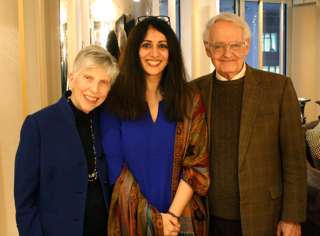
today “julius caesar” at the donmar (love the idea of an all female cast) and harold pinter’s “old times” with kristin scott thomas and rufus sewell. thank u to dr russell peck and his beautiful wife ruth for inviting me to be a part of this theater course. it was a once in a lifetime experience. this is professor peck’s last trip to london as a leader of this class. he’s been doing it for 23 yrs. we gave him a much deserved standing ovation (along with some chocolate cake). long live thought-provoking theater!
uncle vanya and matilda
today “uncle vanya” at vaudeville theatre, a reception at the w hotel near leicester square and then matilda, the musical. not sure about matilda, altho i’m told it’s thrilling.
twelfth night and richard III
twelfth night and richard III at the apollo theatre yesterday – a transfer from shakespeare’s globe, “original practices” and all male cast, mark rylance and stephen fry, complete fidelity to the original text. simply magnificent.